REVIEW · ACCADEMIA GALLERY
Florence: 2-Hour Accademia Gallery Private Tour
Book on GetYourGuide →Operated by CAF Tour & Travel · Bookable on GetYourGuide
Michelangelo in two hours feels like a sprint. This private Accademia Gallery tour uses fast entry so you spend less time waiting and more time focusing on the works that everyone comes to see. You get a guide for the full 2 hours, then you’re free to wander at your own pace.
I love two things here: the private guide attention and the way the tour zeroes in on Michelangelo’s David and the surrounding story. Even if you’ve seen photos, hearing the context behind the sculpture’s creation and meaning makes it click fast.
One possible drawback: two hours goes by quickly, and if your guide’s pace is brisk, you may feel a bit time-pressed in the galleries.
In This Review
- Key things to look for
- Fast-Entry at the Accademia: Why Waiting Hurts More Than You Think
- Your Private Guide’s Michelangelo Hit List
- David and the Making of a Florentine Symbol
- The Other Sculptures: I Prigioni, San Matteo, and Palestrina Pietà
- I Prigioni
- San Matteo
- Palestrina Pietà
- Earphones, Crowd Flow, and Getting Your Two Hours to Count
- Exploring on Your Own After the Guided Portion
- Price and Value: Is $149.54 Worth It?
- Who Should Book This Tour (and Who Might Be Frustrated)
- First Sunday Reality Check: Free Entry Isn’t Automatically Easy
- Should You Book This Accademia Gallery Private Tour?
- FAQ
- How long is the Florence Accademia Gallery private tour?
- Does this tour include skip-the-line entry?
- What’s included besides the guide?
- Which Michelangelo works will the guide cover?
- What happens after the guided tour ends?
- What languages are available for the live guide?
- Is the Accademia Gallery free on the first Sunday of each month?
- Are there rules for food and drinks inside the museum?
- Is this tour suitable for people with mobility impairments?
Key things to look for
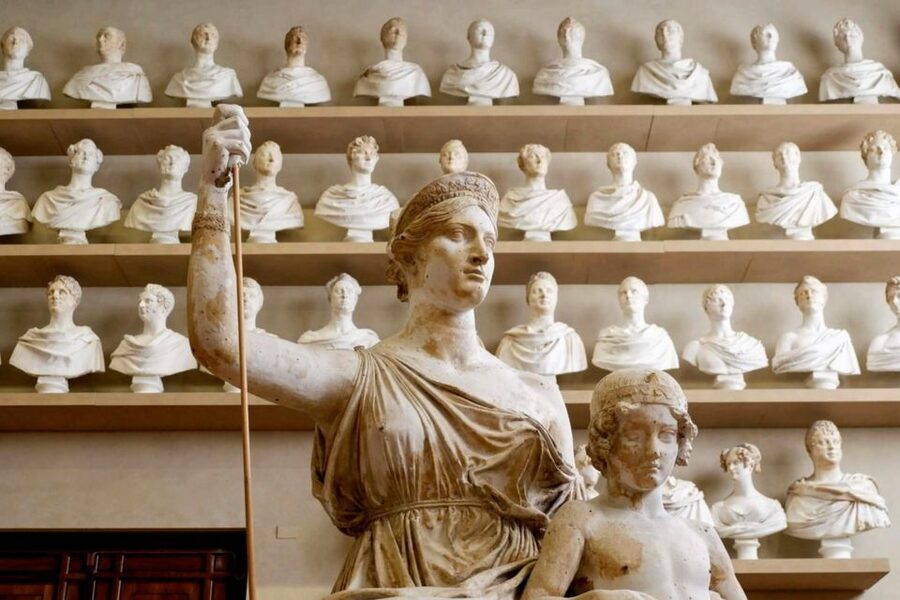
- Skip-the-line access at the Accademia entrance reserved for booking holders
- Earphones so you can hear your guide clearly during the museum visit
- Focused Michelangelo walkthrough centered on David, plus I Prigioni, San Matteo, and the Palestrina Pietà
- Built-in context for why David mattered to Florence and the Renaissance mindset
- Private group format for a more personal pace (no competing for attention)
- After the tour, free exploration to linger where your interests pull you
Fast-Entry at the Accademia: Why Waiting Hurts More Than You Think
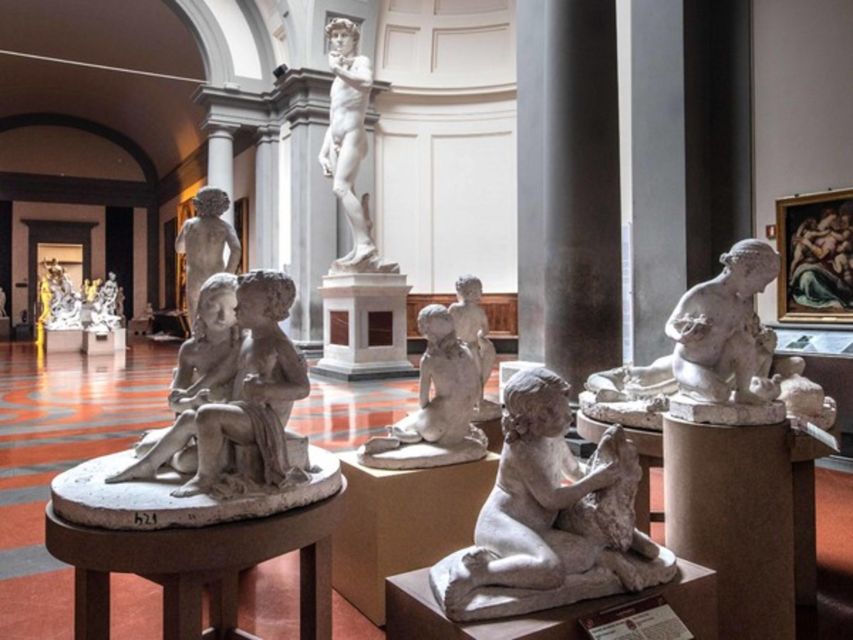
The Accademia Gallery is famous for one reason: Michelangelo’s David is hard to ignore. The catch is that the museum also attracts crowds, and crowds turn time into something you can’t get back. That’s why I like this setup: you get skip-the-line entrance using the Accademia entrance reserved for booking holders. Less queuing means more looking, and more looking means more understanding.
Once you’re inside, the visit works better than a typical “see everything” museum plan. Instead of spending your limited time scanning the room for the one thing you recognized from Instagram, you get structured time with a guide for the specific Michelangelo works that matter most. It’s a practical choice if you’re in Florence for a few days and want your museum moment to pay off immediately.
Also, earphones are included. That sounds small until you’re in a room where people keep shifting positions, and you’re trying to hear art explanations over footsteps and soft chatter. The earphones help you stay in the conversation without doing that awkward head-turning dance.
You can also read our reviews of more tours and experiences in Accademia Gallery.
Your Private Guide’s Michelangelo Hit List
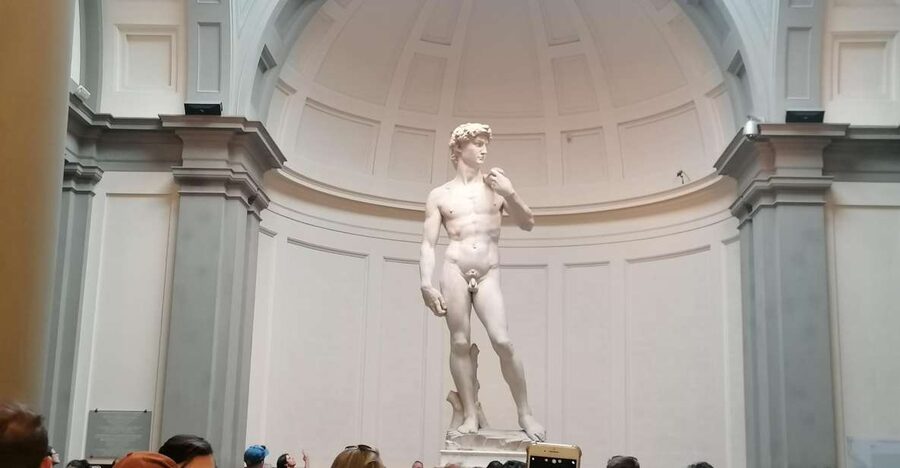
This isn’t a museum tour where the guide talks while you drift past the key pieces at a distance. You’re guided through the works that define the Accademia experience, with a human voice filling in the gaps.
For the 2-hour guided portion, the spotlight includes Michelangelo’s David, I Prigioni, San Matteo, and the Palestrina Pietà. You also get a guided look at what makes these works feel so different from each other—same sculptor, yet completely different moods, poses, and spiritual ideas.
What I like about this approach is that it sets you up for better self-guided wandering afterward. When you know what you’re looking at, your second pass through the museum stops being random. You start noticing details: gestures, faces, the tension in bodies, and how the sculptor uses expression to carry meaning.
And because it’s private, the guide can adjust to your pace. If you want a minute longer on David, you can usually ask. If you’re more curious about a lesser-known work like I Prigioni, the guide can spend more time there instead of racing through a checklist.
David and the Making of a Florentine Symbol
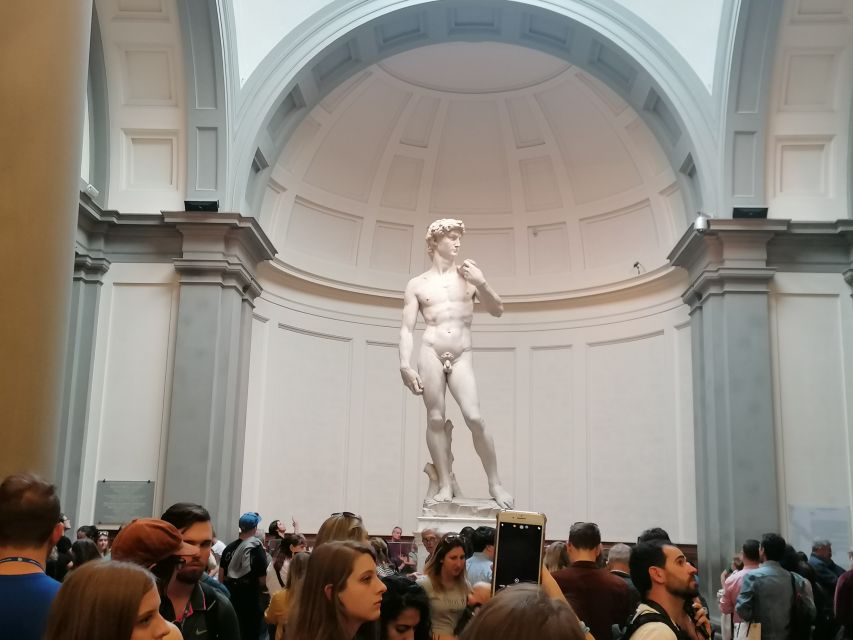
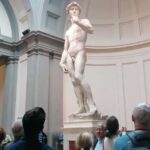
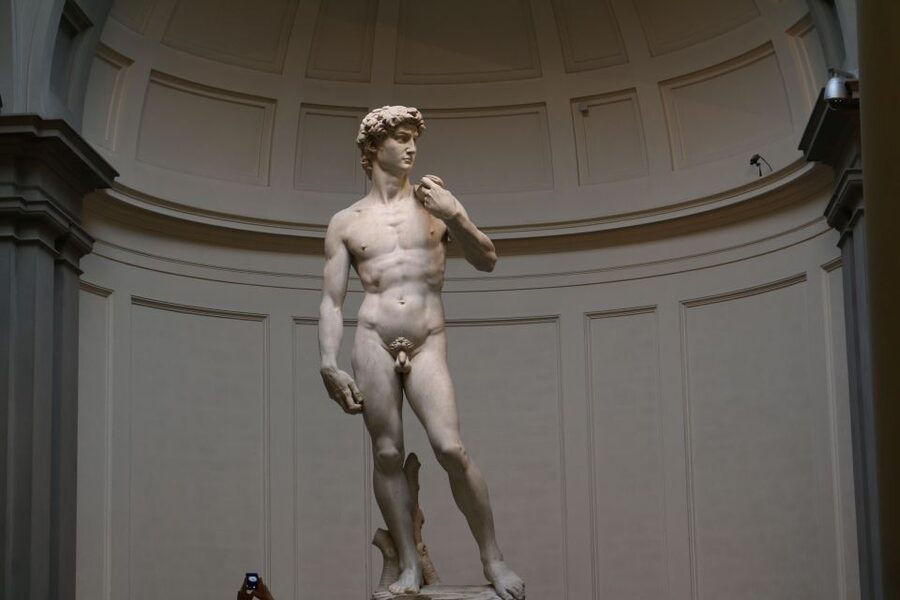
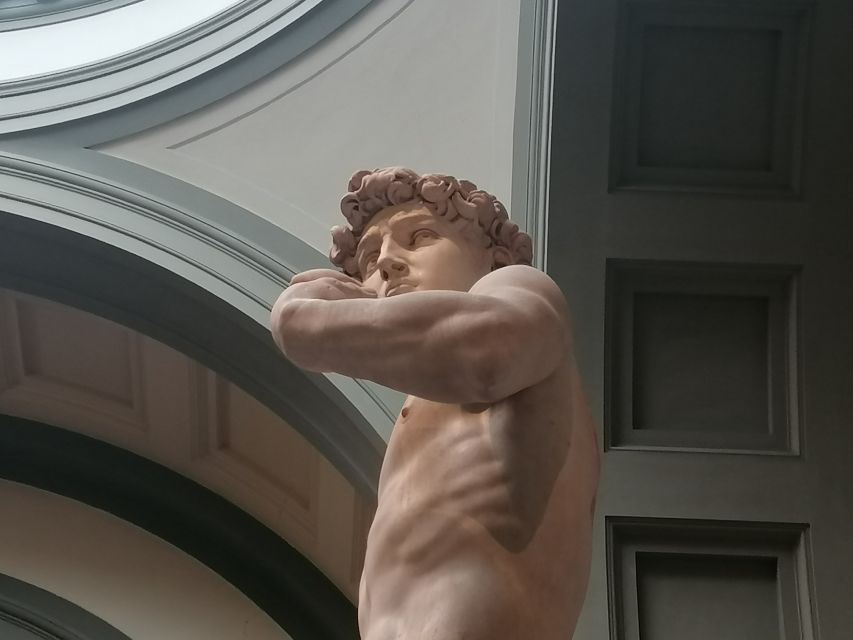
The centerpiece is Michelangelo’s David, and the tour doesn’t treat it like a photo backdrop. You’re guided to understand why it became so important.
You’ll hear the story of how David was sculpted by a young Michelangelo over about three years, carved from a massive block of marble. That detail matters because it changes your visual impression. Standing near the sculpture, you stop thinking of it as a finished statue and start imagining the physical challenge: the carving, the planning, and the nerve it takes to release form from raw stone.
The guide also focuses on what the figure communicates. David isn’t presented as a calm hero. He shows strength and courage, and his expression reflects a kind of faith—an unwavering confidence tied to belief in God. That combination is one reason the sculpture keeps working emotionally, even if you know the biblical story already.
Then comes the part that makes Florence feel personal: David wasn’t just art for art’s sake. It became a symbol associated with the power and invincibility of the Florentine Republic at its peak. When your guide connects the sculpture to the city’s civic identity, the statue starts to feel less like a museum piece and more like a statement aimed outward at the world.
If you want a practical way to enjoy this moment, here’s what to do when you reach David: don’t rush the face first. Step back and take in the full body, then come closer for the eyes and expression. The guide’s explanations usually make that second look land harder.
The Other Sculptures: I Prigioni, San Matteo, and Palestrina Pietà
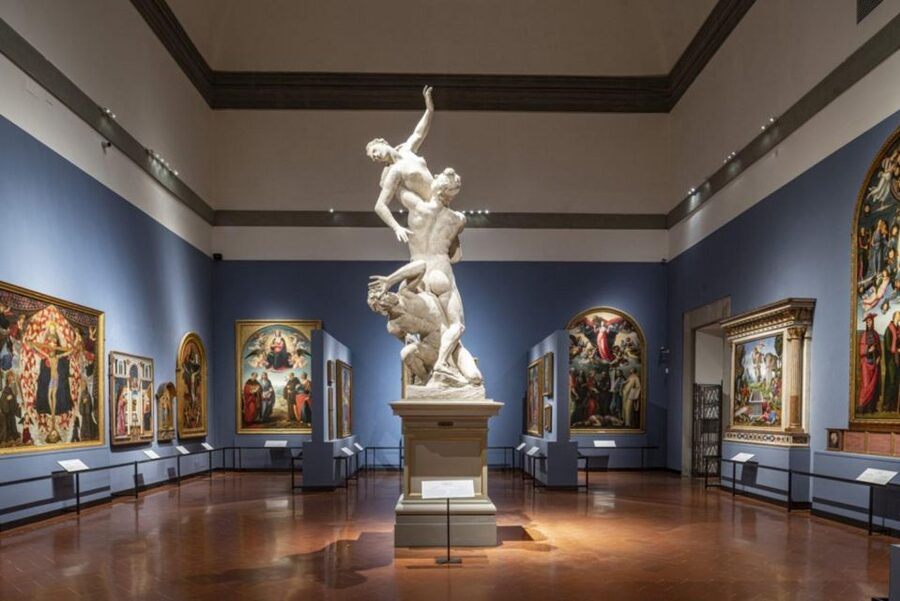
It’s easy to show up for David and then mentally “check out” right after. This tour helps you avoid that letdown by giving you time with three additional Michelangelo works.
I Prigioni
These works are often the ones people pass quickly because they’re not the single most photographed piece. But that’s exactly why they’re worth your guided attention. The tour frames what you’re seeing so the “prisoners” concept feels less like an abstract title and more like a set of bodies struggling with form and space.
Look for how movement and restraint show up in the figures. You’ll likely notice how Michelangelo uses tension—how the carved surfaces create the sense that someone is trying to break free. With a guide, it’s easier to see why these sculptures feel emotionally loaded rather than simply decorative.
You can also read our reviews of more museum experiences in Accademia Gallery
San Matteo
San Matteo gives you a different kind of presence: a religious figure with a more direct spiritual tone than the heroic confidence of David. Your guide’s explanation helps connect posture and expression to the idea of witnessing and interpretation—how sacred figures communicate without words.
This is a good moment to slow down, because it’s easier to get meaning wrong when you’re rushing. If you’re the type who likes to understand symbols, this section rewards patience.
Palestrina Pietà
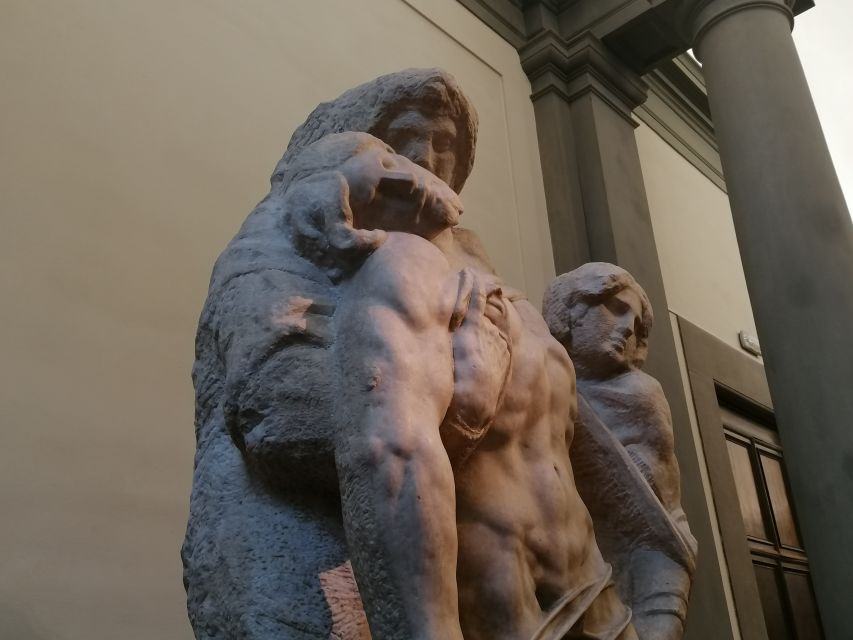
The Palestrina Pietà shifts the mood again. A pietà is about grief and devotion, and Michelangelo’s approach can feel intense in person. With the guide’s context, you can focus on how the sculpture holds emotion—how the weight of sorrow sits in posture, and how the arrangement of figures leads your eyes across the scene.
Even if you’re not a die-hard art history fan, this section tends to work because grief is universal. The guide’s job is to explain the choices that make it specifically Michelangelo, rather than generic religious art.
Earphones, Crowd Flow, and Getting Your Two Hours to Count
A 2-hour private tour sounds straightforward, until you remember that museum time includes bottlenecks: doors, rooms with limited space, and crowds shifting like slow weather. Here, earphones and a guided route help you stay focused.
Earphones mean you can keep your attention on the sculpture rather than searching for where the guide stands or where your voice loses signal. They also make it easier to hear explanations even when other people are moving through the room.
Now, about pacing. The goal is that you get the core Michelangelo story while it’s still fresh in your head—especially the David creation story and the civic symbolism tied to Florence. That’s what makes the after-tour wandering actually enjoyable. You’re not back in the “where do I look?” zone. You’re in the “oh, I know what that is” zone.
One caution: because the tour is short by design, you should arrive ready to focus. Plan to be at the meeting point on time, and treat the 2 hours like a guided lecture with a museum viewpoint, not like a casual stroll where you can stop for snacks every five minutes.
Exploring on Your Own After the Guided Portion
After the guided portion ends, you’re free to explore the museum on your own. I like this structure because it prevents both extremes: no one-hour chaos and no endless guided talking.
When you go solo after the guide, you can choose what to revisit. If David hit you emotionally, you can spend extra time comparing details from different angles. If I Prigioni kept calling you back, you can return and look for the specific tensions and gestures your guide highlighted. If San Matteo or the Palestrina Pietà left you with questions, you can take your time letting the expressions and compositions sink in.
This is also where you get to match the museum to your style. Some people like broad scanning. Others want close looking. Your guided experience sets a foundation; your independent time lets you adjust your learning to how you actually think.
If you’re practical (and you’ll be happy you are), keep an eye on museum rules so your solo time doesn’t get interrupted at security. The Accademia rules are straightforward: only a bottle of water is permitted, up to 0.5 liters, and drinking isn’t permitted inside exhibition rooms. Bottled or canned drinks will be taken away at security, so bring water in the right form—or skip it.
Price and Value: Is $149.54 Worth It?
Let’s talk money, since this is a private tour. At $149.54 per person for a 2-hour experience, you’re paying for three main things: a private local professional guide, skip-the-line admission, and earphones.
Here’s how I think about value. If you’re the kind of person who likes context—how and why art was made—then a private guide can save you time and confusion. You get the Michelangelo story stitched together in a way that’s hard to replicate if you’re reading placards while crowds push past you.
Skip-the-line also has real value. You’re not just buying convenience; you’re buying back attention. When you arrive already oriented to what you’re about to see, you look longer and remember more. That’s the point of the fast-entry.
Earphones are the “small” inclusion that improves the whole experience. Museum audio can be tricky, and hearing your guide clearly turns a good tour into a great one.
Is it expensive? Yes. But if you’re going with a partner or friend and you want Michelangelo’s David explained clearly without spending your limited Florence time fumbling through crowds, this price can feel fair.
If you’re a self-guided museum person who enjoys learning at your own pace, you might decide you don’t need the guide. But if your goal is to understand Michelangelo in a compact, structured visit, this is the kind of setup that earns its cost.
Who Should Book This Tour (and Who Might Be Frustrated)
This tour is a strong match if you:
- Want a guided focus on Michelangelo’s David and related works rather than a broad museum sprint
- Have limited time in Florence and want the key stories delivered efficiently
- Appreciate explanation that connects art to place and meaning, not just description
- Prefer a private group experience where the guide can respond to your questions
You might feel less happy if you:
- Want to spend most of your day at the museum with no structure
- Are determined to roam freely right away
- Need mobility accommodations, because it’s not suitable for people with mobility impairments
One more practical note: the tour is available in multiple languages, including English, French, German, Italian, and Spanish. If you’re choosing between options, language comfort matters. Michelangelo’s story lands better when you’re listening in a language you don’t have to work for.
Also, the schedule can vary by starting time, so check availability when you plan your day. This tour is designed to fit into a tight Florence itinerary.
First Sunday Reality Check: Free Entry Isn’t Automatically Easy
It’s worth knowing the museum has a first Sunday free admission rule. On the first Sunday of each month, entrance is free of charge. The trade-off is important: tickets can’t be reserved ahead of time, and entry isn’t guaranteed.
If you’re traveling on a first Sunday, don’t assume you can just show up and walk in. A reserved fast-entry tour approach helps you avoid that uncertainty and makes your timing more dependable.
Should You Book This Accademia Gallery Private Tour?
I’d book this tour if your priority is a focused, high-return visit to Michelangelo. The combination of skip-the-line access, a private guide for 2 hours, and earphones makes it a practical choice for seeing David with context and then continuing on your own with more confidence.
I’d think twice if you’re expecting a long, slow museum day. Two hours is enough for the key Michelangelo story, but it’s not enough for everyone’s full museum bucket list. Also, if you’re extremely sensitive to pacing, ask yourself whether you’ll be okay with a structured experience.
If you want a smarter Florence strategy—get the Michelangelo explained first, then look deeper where your interests pull you—this is a solid way to do it.
FAQ
How long is the Florence Accademia Gallery private tour?
The guided portion is 2 hours.
Does this tour include skip-the-line entry?
Yes. You get an Accademia Museum skip-the-line entrance ticket.
What’s included besides the guide?
You also receive earphones at the Accademia Gallery.
Which Michelangelo works will the guide cover?
The guide covers Michelangelo’s David, I Prigioni, San Matteo, and the Palestrina Pietà.
What happens after the guided tour ends?
You can explore the museum on your own after the 2-hour guided portion.
What languages are available for the live guide?
The tour is available in English, French, German, Italian, and Spanish.
Is the Accademia Gallery free on the first Sunday of each month?
Yes, entrance is free on the first Sunday of each month. However, tickets can’t be reserved in advance, so entry isn’t guaranteed.
Are there rules for food and drinks inside the museum?
Only one bottle of water is permitted inside, up to 0.5 liters. Drinking is not allowed inside exhibition rooms, and bottled or canned drinks will be taken away at security.
Is this tour suitable for people with mobility impairments?
No, it is not suitable for people with mobility impairments.