
REVIEW · NAPLES
Naples Essentials: Monuments, Local Life & Street Art
Book on GetYourGuide →Operated by insolitotour.napoli · Bookable on GetYourGuide
Naples can feel loud, fast, and complicated. This walk turns it into a story you can actually follow. I like how it pairs major sights with real street corners, not just postcard stops. I also like the guide-style storytelling—one guide named Davide is specifically praised for humor and for making monuments and neighborhoods feel personal.
There’s one catch: it’s moderate walking on busy, uneven streets, and it’s not meant for everyone. If you’re traveling with a stroller, have mobility limits, or hate crowded alleys, plan carefully.
In This Review
- Key highlights you’ll care about
- Piazza del Plebiscito: where Naples flexes its royal side
- Royal Palace exterior to San Carlo: history with names and attitude
- Castel Nuovo (Maschio Angioino) and the Arch of Triumph
- Galleria Umberto I: a quick Belle Époque reset under glass
- Quartieri Spagnoli: narrow streets, laundry lines, and real voices
- Maradona murals: why street art matters in Naples
- Via Toledo and the Bank of Naples area: where old and new touch
- Price and value: is $28 worth it?
- What to bring (and what to plan around)
- Best fit: who should choose this walk
- Should you book Naples Essentials?
- FAQ
- How long is the tour?
- Where does the tour start?
- What’s included in the price?
- Is entry to attractions included?
- Are food and drinks included?
- What languages is the live guide available in?
- Does the tour run in bad weather?
- What should I bring?
- Can I cancel for a full refund?
Key highlights you’ll care about
- Piazza del Plebiscito start with major landmarks like the Royal Palace exterior, San Francesco di Paola, and Teatro di San Carlo
- Castel Nuovo (Maschio Angioino) plus the Arch of Triumph framing Naples as a Mediterranean power
- Galleria Umberto I under its glass dome, a classic Belle Époque pause on your feet
- Quartieri Spagnoli street life with laundry overhead, narrow alleys, and local voices filling the walk
- Maradona murals and the cultural meaning behind why Neapolitans still celebrate him
- Toledo finish at the Metro Art Station, where you end with style, not just sightseeing
Piazza del Plebiscito: where Naples flexes its royal side
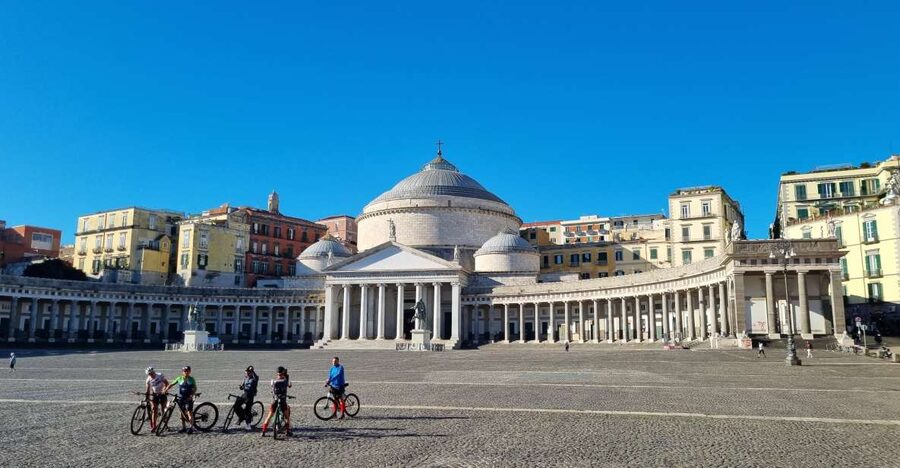
The tour kicks off at Piazza del Plebiscito, and that matters. This square is a meeting point for everyday Naples, but it also sets the tone for everything you’ll see next. Even if you only look around for a minute, you’ll feel how the city balances official power with street energy.
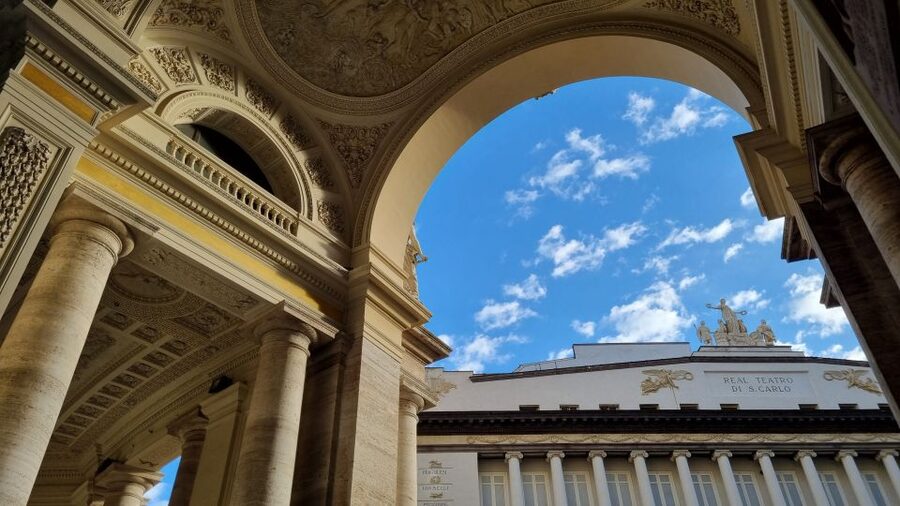
From here, you get the exterior views that work well on a short walking route: the Royal Palace area, the grand Basilica of San Francesco di Paola, and the famously still-in-use Teatro di San Carlo. The key is that you don’t just look—you get a narrative for why these places exist together. That combo makes the whole first stretch feel like orientation, not just sightseeing.
Teatro di San Carlo is the kind of landmark that can easily get “noticed and ignored” on other tours. Here, it’s treated like a living institution, which helps you connect opera culture to Naples beyond a single building photo. It’s also a good spot to catch your bearings before the walk shifts from public ceremony to older streets.
A few more Naples tours and experiences worth a look



Royal Palace exterior to San Carlo: history with names and attitude
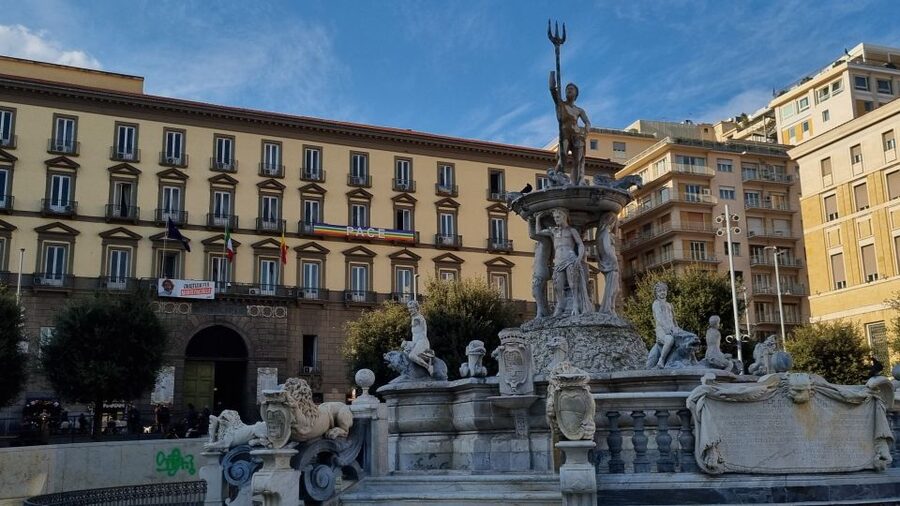
After the big square opens up, the pacing keeps you moving without feeling rushed. This is where the guide’s job becomes obvious. You’re learning stories about royal ambitions and civic pride, but the tour keeps it grounded in what you can see outside the walls.
Seeing the Basilica of San Francesco di Paola from the outside gives you context without needing tickets. And since entry to attractions isn’t included, this part is designed to be satisfying without gate lines. You’ll get the vibe first, then the tour moves you toward heavier history symbols and the city’s older “layers.”
If you’re the type who gets lost when there’s too much architecture and not enough explanation, this section is built to help. It gives you anchors—places with names—and then links them with why Naples developed the way it did. That’s the difference between walking through a city and learning it.
Castel Nuovo (Maschio Angioino) and the Arch of Triumph
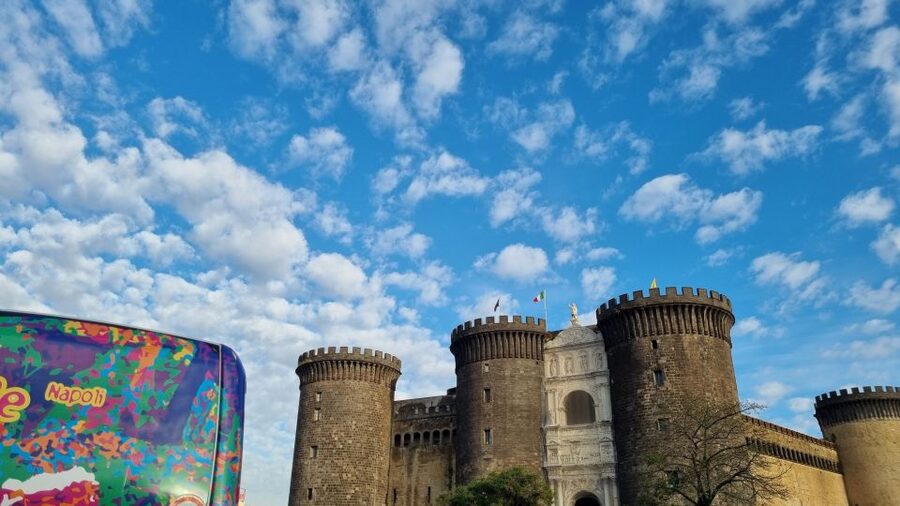
Next stop: Castel Nuovo, also known as Maschio Angioino. This is a medieval symbol of the city, and it’s the kind of stop that instantly shifts your brain into “Naples has always been important” mode. The fortress-like presence helps you understand that Naples isn’t just a modern street scene; it’s been a crossroads for a long time.
You also get a close look at the Arch of Triumph. Even without going inside anywhere, it works because it’s a reminder of Naples’ role as a powerful Mediterranean capital. That theme keeps echoing as the walk continues—Naples as both street-level reality and big-picture history.
One reason I like this part: Castel Nuovo gives you a clean transition from grand squares to the more compressed, older-feeling streets ahead. It’s like changing gears. You’ll feel it as soon as you step away from the open plaza space.
Galleria Umberto I: a quick Belle Époque reset under glass
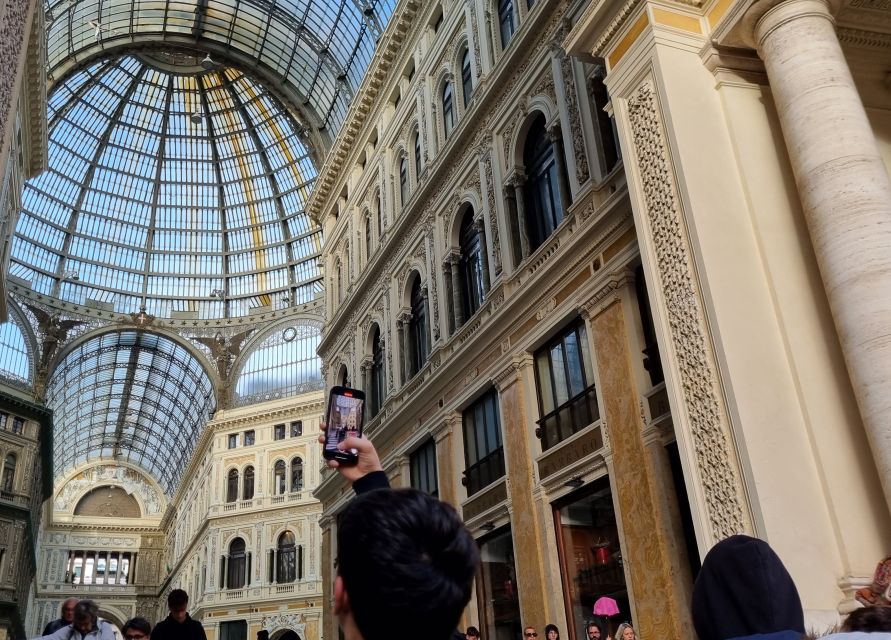
Then comes a different kind of Naples: the Galleria Umberto I. The standout here is the spectacular glass dome and that Belle Époque atmosphere people associate with elegant European arcades.
This is a smart inclusion on a short, two-hour tour because it gives you a visual break from narrow alley shapes. You still get city texture, but with a roof and a sense of order for a moment. It’s also a good place to slow down for a second, even if you don’t stop long.
In practical terms, it helps your legs. After the open plaza and the fortress stop, the galleria offers a calmer-feeling space within the walking flow. It’s one of those stops that feels like “quality time” without requiring extra cost or tickets.
Quartieri Spagnoli: narrow streets, laundry lines, and real voices
Now the tour flips from monuments to everyday Naples. The Quartieri Spagnoli is where you feel the neighborhood rhythm—narrow streets, character-filled corners, laundry hanging overhead, and local voices bouncing down the alleys.
This is where the tour earns its title about local life. You’re not being sent to a museum version of Naples; you’re seeing Naples as it’s actually lived. And you get guidance for how to interpret what you’re looking at, including the street art.
The streets here can be crowded and uneven, so keep your pace steady. It’s not the tour’s fault—this is just how the area works. If you bring comfortable shoes and expect a more physical walk, you’ll enjoy this section more.





Maradona murals: why street art matters in Naples
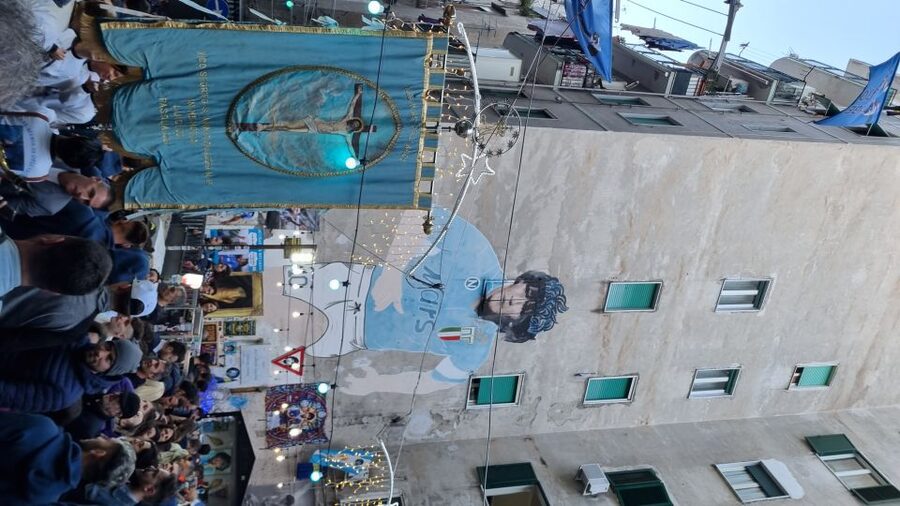
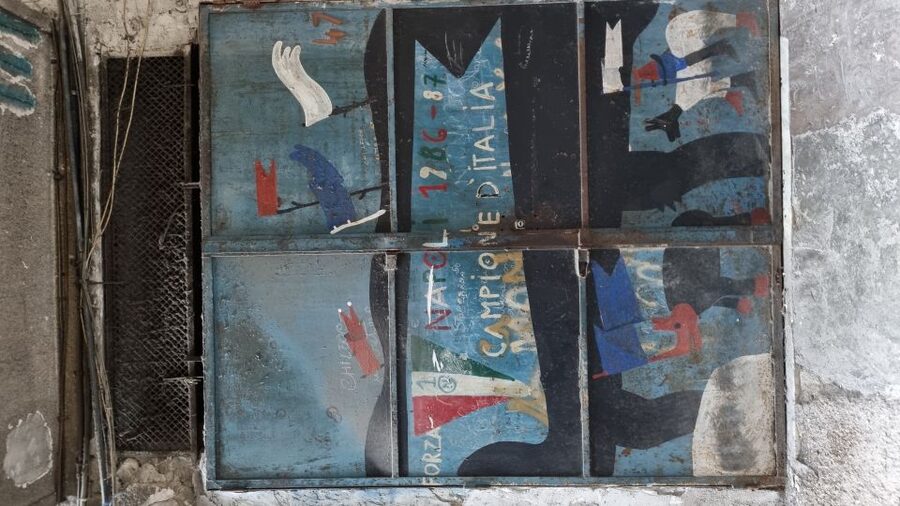
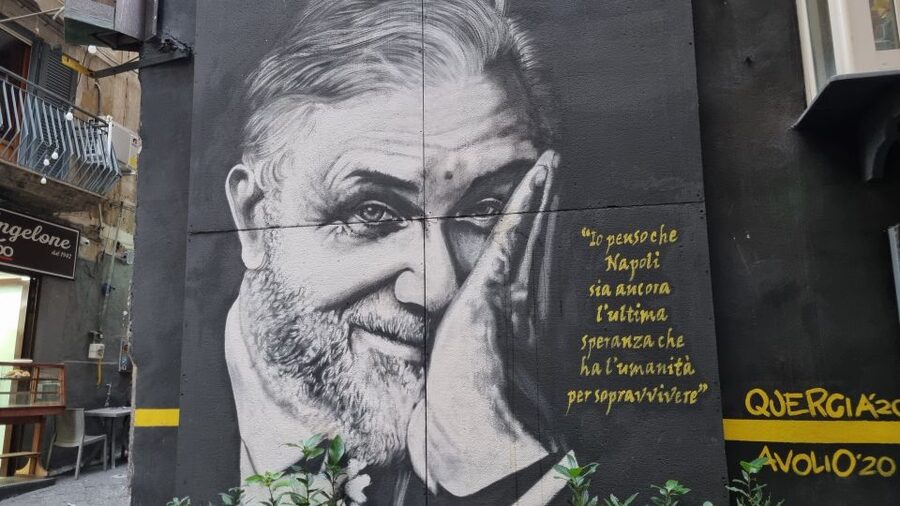
The headline street art moments are the famous Maradona murals. The tour doesn’t treat them like random “cool paintings.” You learn the cultural meaning behind why Diego Armando Maradona is still deeply loved and celebrated by Neapolitans.
That context is what makes the murals worth stopping for. Without it, you might see color and style and move on. With it, you understand them as a symbol of identity—sports fame turned into local pride, and pride turned into public art.
You’ll probably notice how the guide uses sports stories and local references to keep the tour lively. Some people even get a light, playful comparison vibe in the Maradona talk—because in Naples, football talk doesn’t stay purely historical. It’s emotional. The murals are part of that emotional landscape.
This section is also a strong reason to take the tour early in your trip. Once you understand the neighborhood’s symbols, everything you see after—conversations, signs, artwork—clicks into place faster.
Via Toledo and the Bank of Naples area: where old and new touch
To wrap up, the tour heads along Via Toledo, one of Naples’ main streets. It’s a natural finishing point because it connects what you’ve seen: royal-era landmarks, medieval power imagery, and neighborhood reality all lead into this busy, central artery.
You’ll pass the historic Bank of Naples area, giving you another layer of “Naples used its location to grow,” tied back to the Mediterranean theme you started with. This stop isn’t about one building detail; it’s about the city’s ongoing momentum.
And then the tour lands at the Toledo Metro Art Station. This is the kind of finale that feels like a reward: a metro stop treated as art, where the architecture and design give you a final wow without needing tickets.
It’s a practical ending too. A metro station finish means you can regroup quickly and continue exploring without needing to backtrack.
Price and value: is $28 worth it?

At $28 per person for a 2-hour guided walk, this is priced like a focused introduction, not a full-day “do everything” plan. Here’s why that’s good value:
- You get a licensed local guide who ties monuments to street life, which is the part most people struggle to do on their own.
- You get headsets when required, which matters in crowded areas—clarity keeps the tour from becoming noise.
- The itinerary is built to be satisfying even without entry tickets, since entry is not included.
The main trade-off is that it’s short. You’re not going to linger for long in every place. But that’s also the point. If you want a compact, high-signal Naples overview—monuments, Quartieri Spagnoli street art, and a standout metro station—this fits the job.
What to bring (and what to plan around)
This tour runs in all weather conditions, and you’ll want to be ready. Bring a comfortable pair of walking shoes—the streets can be uneven, and you’re doing a moderate walking route through busy areas. An umbrella is also a smart idea.
A few rules matter in daily life terms: no luggage or large bags, and electric wheelchairs aren’t allowed. Also, the tour is not suitable for children under 10 and not suitable for wheelchair users.
If you’re traveling light and you can handle crowding, you’ll move through smoothly. If you’re hoping for a relaxed stroll with wide pavements, you’ll probably find this route more demanding than you expect.
Best fit: who should choose this walk
This tour is a strong match if you:
- want a first-time introduction to Naples that covers both monuments and neighborhood life
- care about street art with context, especially the Maradona murals
- like guided storytelling that connects history to what you see today
It may feel less ideal if you:
- need minimal walking or fully even surfaces
- want food stops included (food and drinks aren’t part of this tour)
- prefer to spend time inside attractions, since entry isn’t included
For families with older kids (but not under 10), it can work well because the pacing mixes big landmarks with the kind of colorful details that keep attention. Just remember the age limit is explicit.
Should you book Naples Essentials?
If your goal is to understand Naples quickly—without building your own mini curriculum—this is a smart booking. I’d especially recommend it early in your trip because it gives you a framework: royal squares and opera culture, medieval power imagery, then neighborhood street art with Maradona’s cultural meaning.
Skip it only if you know you can’t handle uneven streets or crowded alleys. Otherwise, the balance is the strength: history meets street life, and you end with a visually fun metro finish that makes the whole day feel intentional.
You’re paying for a guide who can connect the dots, and for a route that’s designed to help you see more than you pass by.
FAQ
How long is the tour?
The duration is 2 hours.
Where does the tour start?
The meeting point may vary depending on the option booked.
What’s included in the price?
It includes a licensed local guide, the guided walking tour, and headsets for clear audio when required.
Is entry to attractions included?
No. Entry to attractions is not included.
Are food and drinks included?
No. Food and drinks are not included.
What languages is the live guide available in?
The live tour guide is available in English, Spanish, and Italian.
Does the tour run in bad weather?
Yes, it runs in all weather conditions.
What should I bring?
Bring comfortable shoes and an umbrella.
Can I cancel for a full refund?
Yes. You can cancel up to 24 hours in advance for a full refund.