REVIEW · NAPLES
Rione Sanità Street Art and Traditions Tour for Small Groups
Book on Viator →Operated by Around with A Local · Bookable on Viator
If you only see Naples from the postcard, you miss this. This small-group Rione Sanità street art and traditions tour (max 12) takes you right into a quieter corner of town where baroque palazzi, a stunning church dome, and neighborhood stories all share the same street. I like that it’s built for real interaction, not a march-and-pray lecture, and that you’ll also get coffee/tea and a Fiocco di Neve snack along the way. One heads-up: the pace is walking-focused, and if you’re chasing major-ticket sights, a couple stops are brief.
Two things I especially like: first, you start with an entrance door to ancient Neapolis (10th century) and then hit two historic Palazzo stops with free admission—Palazzo Dello Spagnolo and Palazzo Sanfelice—so you’re learning architecture at close range without paying extra. Second, Santa Maria della Sanità is the star: that majolica dome can hold your attention for a long time. The possible drawback is that the optional catacombs (San Gaudioso) cost extra, and the Casa Natale di Totò stop is notable even though it’s in rough condition.
You’ll also want decent walking stamina for about 2 hours 30 minutes, and the experience requires good weather. If rain cancels it, you’ll either get a new date or a full refund.
In This Review
- Key highlights to know before you go
- Walking into ancient Neapolis from Via Porta S. Gennaro
- Palazzo Dello Spagnolo and Sanfelice: baroque without the crowds
- Santa Maria della Sanità: the majolica dome that earns its hype
- Totò’s birthplace, street art, and the neighborhood’s regeneration story
- Catacombs of San Gaudioso: optional, extra, and worth deciding early
- Food, pacing, and who this tour is perfect for
- Should you book Rione Sanità street art and traditions?
- FAQ
- How long is the Rione Sanità Street Art and Traditions tour?
- What does the tour cost?
- Is the tour offered in English?
- How big is the group?
- What is included in the price?
- Are the catacombs included?
- Where is the meeting point?
- Do I need good weather?
- Are service animals allowed?
Key highlights to know before you go
- Small-group size (up to 12) keeps the tour conversational and easy to follow.
- Free admissions at several stops means you get more Naples per dollar.
- Santa Maria della Sanità’s majolica dome is genuinely eye-catching.
- Optional catacombs (San Gaudioso) let you choose how deep you want to go.
- Snacks and coffee/tea keep the walk comfortable, not rushed.
- Neighborhood storytelling connects street art and local traditions to today’s Naples.
Walking into ancient Neapolis from Via Porta S. Gennaro
I like that this tour starts where you can feel the layers of time right away. You meet at Via Porta S. Gennaro, 2 in Naples, and you begin with an entrance door to ancient Neapolis, created in the 10th century. It’s a small moment, but it sets the tone: you’re not just collecting pictures, you’re building a sense of place before you even reach the bigger monuments.
From there, the walk is structured in short, digestible stops—think about 10 minutes at the palazzi and about 20 minutes at the church and Totò house. That matters because Sanità isn’t a “one huge attraction” neighborhood. It’s a network of buildings, alleys, and details. Short stops help you actually look, ask questions, and move with the rhythm of the district.
Another practical plus: the tour includes a mobile ticket, and it runs in English. It’s also described as being near public transportation, which is helpful if you don’t want to plan your entire day around a long taxi ride.
Bring the usual city-walking kit: good shoes, a camera, and a light layer. In a neighborhood like this, you’re moving through streets where the charm is in close-up details, not wide open views. And because the tour requires good weather, I’d plan it on a day when you’re not already stressed about rain.
A few more Naples tours and experiences worth a look



Palazzo Dello Spagnolo and Sanfelice: baroque without the crowds
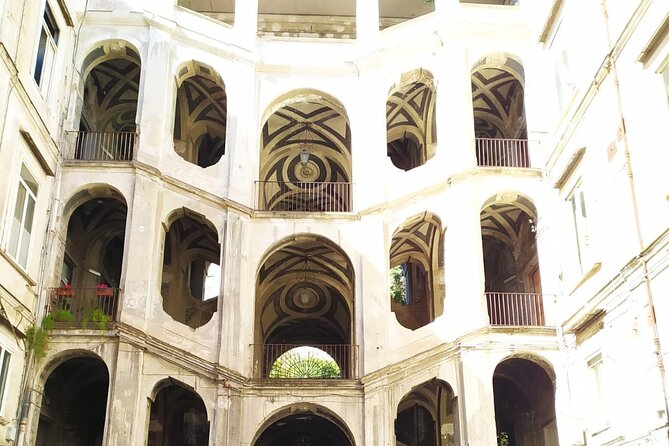
The first palazzo stop is Palazzo Dello Spagnolo, a national monument building with Neapolitan Baroque architecture from the 1700s. Even with only about 10 minutes, you’ll get the key idea: baroque here isn’t just decoration. It’s a style that tries to impress, calm the eye, and show status—so when you notice shapes, symmetry, and the feel of the facade, you’re reading social history in stone.
Admission at this stop is free (with an admission ticket listed as free), which helps make the “value per hour” strong. This is how you should shop your time in Naples: pay for guided interpretation, not ticket fees to stand in line.
Next you go to Palazzo Sanfelice, tied to the historic architect Sanfelice from the early 1700s. Again, it’s about 10 minutes, and again, admission is free. I like this pattern because you’re not stuck in a single building. You’re learning how local architecture changes as you move—subtle shifts in style and emphasis become easier to spot when you keep walking.
A note if you’re the type who likes deep interior visits: the tour’s structure is outside/at the doorway kind of focused at these palazzi. If you want museum-style time inside every building, this may feel like a “look and learn” tour rather than an all-day architectural marathon. Still, with a small group, you can usually ask the guide where to look and what to notice fast.
Santa Maria della Sanità: the majolica dome that earns its hype
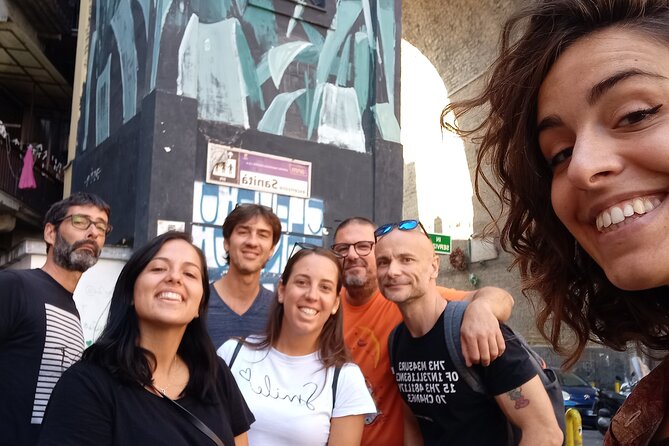
If there’s one stop that I’d build the whole day around, it’s Santa Maria della Sanità. This church is described as having bewitching, evocative architecture, and that’s accurate in plain terms: when the tour hits this part of Naples, it’s easy to understand why people linger. You’ll have about 20 minutes here, with free admission listed.
The standout feature is the majolica dome. Majolica is that glazed ceramic look—color, pattern, shine. A dome like this doesn’t just decorate the space; it changes how light hits the interior and how your eyes move. If you like visual details, you’ll have time to actually register the colors instead of rushing past.
Just as important, Santa Maria della Sanità isn’t framed as a cold sightseeing stop. The tour approach ties the church to the neighborhood around it—how a religious building sits inside daily life, and how locals value it through changing decades. In other words, you’re not just looking at a dome. You’re watching how a place gathers meaning.
One practical tip: since this is a church stop, dress and behavior matter. Go with respectful basics (covered shoulders if needed, calm volume, no sprinting for the best photo angle). And if you want photos, aim to shoot after you let the guide point out what to look for—otherwise you’ll spend the dome minutes hunting a camera position and miss the “why this matters” moment.
Totò’s birthplace, street art, and the neighborhood’s regeneration story
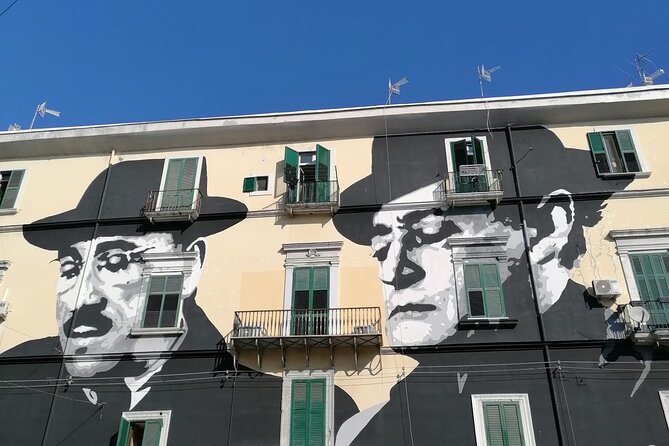
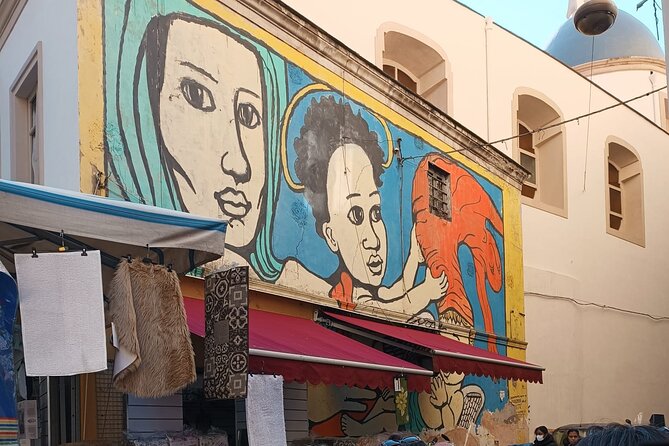
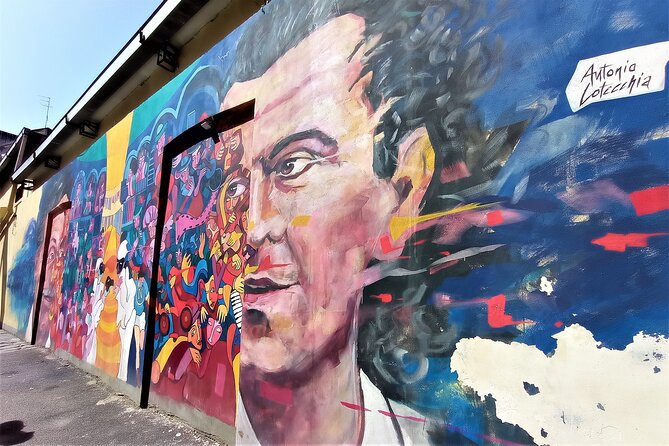
After the church, the tour keeps moving through the heart of the Sanità district—a zone where street art and traditions are part of everyday identity. You’ll visit Casa Natale di Toto, the house associated with the birthplace of Totò, the father of Italian theatre. This stop is also listed as free admission and lasts about 20 minutes.
Here’s the honest bit: the house is described as being in disastrous condition. So if your idea of a great stop means polished interiors and tidy visitor flow, this won’t fit that fantasy. But I think it still works for the right traveler because it becomes a conversation about memory, fame, and place. You’re not just honoring a celebrity; you’re seeing what happens when culture lives in a neighborhood that has faced neglect—and what it takes to keep identity alive.
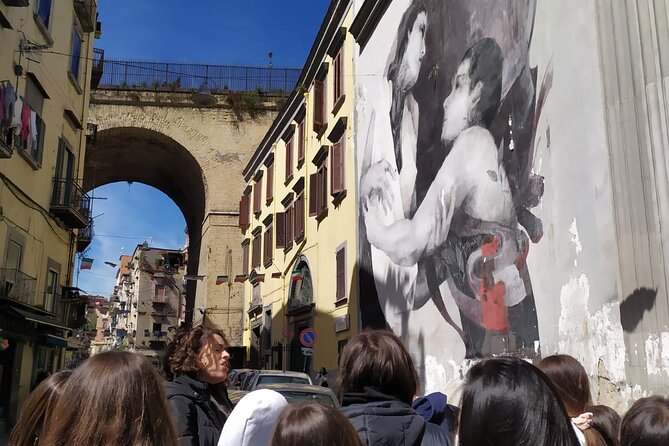
This is also where the tour’s personality shows up. Multiple guide-led examples focus on murals and art tied to Italian cultural figures like De Filippo, Troisi, and Totò, plus mentions of a young artist named Jago and his sculpture Veiled Son. Even if you don’t catch every artwork clearly in a first pass, the point is that street art in Sanità isn’t random. It’s a way of speaking publicly—about who belongs, what matters, and how the neighborhood is changing.
The storytelling also isn’t frozen in “old times only.” The tour is set up to discuss current issues such as urban regeneration and migration, with the tone described as funny at moments and genuinely touching at others. I like that balance. Naples can be overwhelming if you only get old ruins and loud chaos. This approach gives you a Naples that explains itself while it’s still actively being rebuilt.
And there can be friendly neighborhood introductions along the way, including named local personalities (like Zio Pepe is mentioned in examples), plus meeting people connected to the guide’s ties in the area. That’s a big reason to choose a guided walk here instead of wandering alone: you learn names, context, and the human layer that turns alleys into stories.
Catacombs of San Gaudioso: optional, extra, and worth deciding early
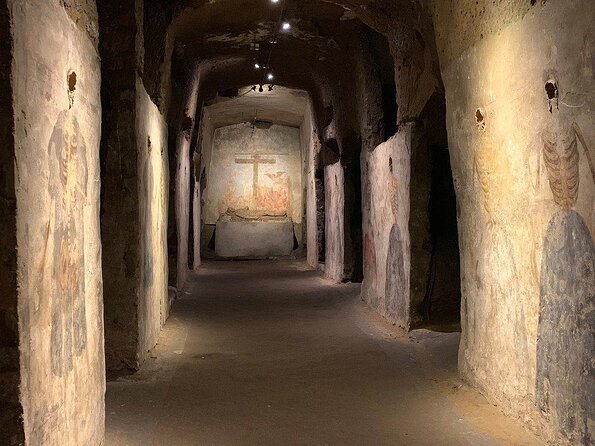
The tour includes a chance to visit Catacombe di San Gaudioso, described as the second early Christian cemetery in Naples, located under the Basilica of Santa Maria della Sanità. This stop is listed as 10 minutes, with entry available only at the end of the tour if you pay an extra €11 per person. So it’s not built into the main flow.
That optional structure is smart. Catacombs aren’t for everyone, and they can change the feel of your entire walk: they’re more enclosed, often cooler, and emotionally heavier. If you love early Christian sites and want the full “under the city” feeling, go for it. If you’re already museum’d out, skip it and keep the day light.
One small planning note: because it’s at the end, you should keep a little energy in reserve. Don’t schedule a tight dinner right after, and if you’re the kind who needs frequent breaks, consider whether the extra €11 is worth the additional time and effort.
Also remember: the main tour already packs in key sights. You don’t need catacombs to get a strong understanding of Sanità. The dome, the palazzi architecture, and the Totò-focused stop give you a complete guided arc—catacombs just add a darker, deeper layer.



Food, pacing, and who this tour is perfect for
This tour is very “walkable Naples,” lasting about 2 hours 30 minutes. That length is a sweet spot: long enough to feel like you got somewhere, short enough to still enjoy the rest of your day. And since the tour ends back at the meeting point, you’re not stuck figuring out how to get home after you’ve covered a few neighborhood blocks.
Included refreshments matter more than people think on a long walking day. You get coffee and/or tea, plus a snack called Fiocco di Neve from Poppella. In practice, that’s a morale boost and a nice local touch, not just a sugary filler. If you’re sensitive to big walking gaps, the snack helps keep you steady.
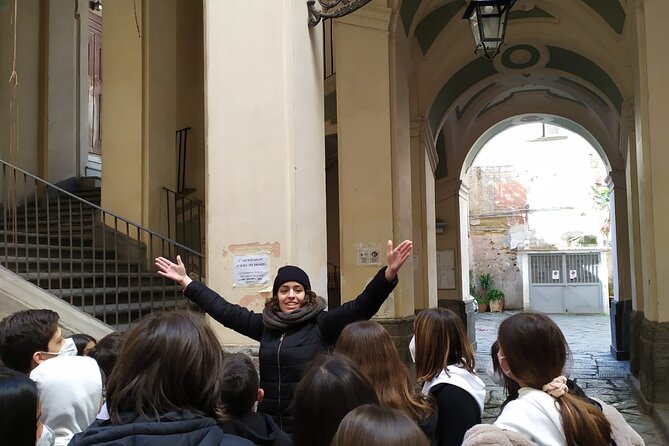
The tour also keeps group size small—maximum 12. That changes the whole experience. You can ask questions without shouting, and the guide can adjust pacing if someone lags behind. I also like the tone described in guide-led examples: not a point-and-recite route, but something closer to an engaging conversation with stories, humor, and local social context.
Who it fits best:
- You want Naples beyond the obvious monuments.
- You like street art and want to understand what it’s saying.
- You enjoy architecture, but don’t want a rigid museum checklist.
- You like human-scale history—how neighborhoods change.
Who might consider other options:
- You want mostly inside visits with long time in each building.
- You don’t enjoy walking through residential streets for long stretches.
- You only want major, ticketed attractions (since many stops are free, and one major optional stop costs extra).
Should you book Rione Sanità street art and traditions?
Yes, if your idea of a great Naples day includes real neighborhoods, not just famous landmarks. At $50.60 per person, you’re paying for guided context, small-group access, and the chance to look closely at places you’d likely pass without interpretation. The free admissions on several key stops make it feel like good value, and the included coffee/tea plus Fiocco di Neve is a nice bonus that keeps the pace comfortable.
I’d especially book it if you care about how Naples is changing right now. The tour’s mix of street art, architecture, and talk about regeneration and migration gives you more than scenery. You leave with names, themes, and a better “why this matters” feeling for the Sanità district.
One last tip for best results: wear comfortable shoes and plan this for a weather-safe slot. If the tour gets canceled due to poor weather, take the reschedule. This is the kind of walking experience that works best when you can enjoy the street-level details without rushing.
FAQ
How long is the Rione Sanità Street Art and Traditions tour?
It runs for about 2 hours 30 minutes.
What does the tour cost?
The price is $50.60 per person.
Is the tour offered in English?
Yes, it is offered in English.
How big is the group?
The maximum group size is 12 travelers.
What is included in the price?
Coffee and/or tea are included, along with snacks: Fiocco di Neve from Poppella.
Are the catacombs included?
No. Entry to Catacombe di San Gaudioso is optional and costs €11 per person if you choose to visit at the end of the tour.
Where is the meeting point?
The tour starts at Via Porta S. Gennaro, 2, 80138 Napoli NA, Italy and ends back at the same meeting point.
Do I need good weather?
Yes. The experience requires good weather, and if it’s canceled due to poor weather you’ll be offered a different date or a full refund.
Are service animals allowed?
Yes, service animals are allowed.