REVIEW · NAPLES
Naples: National Gallery of Capodimonte Tour
Book on GetYourGuide →Operated by Grand Tour Experience · Bookable on GetYourGuide
Naples can be loud, but Capodimonte slows you down. This private 2-hour tour is a smart way to see the museum’s big-name masterpieces without getting lost, and I especially like the Farnese Collection walk and the way the guide connects the dots between eras. You’ll also get to appreciate the building itself, from its royal-palace roots to the monumental stairs that shape how you experience the art. One thing to consider: with only 2 hours, you’ll leave with standout impressions more than a full museum sweep.
What makes this experience feel worth your time is the guided format: you’re with a live art historian style guide, covering Italian painting from Naples and beyond, with special attention to Renaissance and Baroque giants. You’re also seeing it in a park setting, so the visit feels less like a rushed queue-and-clock run.
Price-wise, it’s not a budget ticket, but for a private group (up to 1) it can be excellent value if you want clear explanations and faster decision-making. If you’re the type who likes to wander room-to-room for hours on your own, you may feel the time limit.
In This Review
- Key points you’ll actually care about
- Arriving at Capodimonte: where the tour starts
- Royal palace design: how the museum’s architecture guides your eyes
- The Farnese Collection: the first floor that sets the standard
- Neapolitan painting and Baroque drama on the second floor
- Contemporary contrast: Warhol’s Vesuvio on the third floor
- How the 2-hour pace works (and where you might wish you had more time)
- Skip the line: how it changes the whole mood of the visit
- Price and value: what $249.23 buys you
- Who this tour suits best in Naples
- Should you book the Naples Capodimonte National Gallery tour?
- FAQ
- Where does the tour start?
- How long is the guided tour?
- Do I need to buy museum tickets separately?
- Is transportation included?
- Is this a private tour?
- What languages are available for the live guide?
- Is there an option to skip the ticket line?
- Is the museum tour wheelchair accessible?
- When should I arrive before the start time?
Key points you’ll actually care about

- Skip-the-line entry so you spend time looking, not waiting
- Farnese Collection highlights including Tiziano, Masolino, and Masaccio, plus drawings by Raffaello and Michelangelo
- Caravaggio’s Flagellation as a clear second-floor destination
- Warhol’s Vesuvio on the top floor to show how the museum evolves
- A live English/Italian guide with a museum focus and room-by-room guidance
- Royal palace architecture inside the museum, not just paintings on walls
Arriving at Capodimonte: where the tour starts
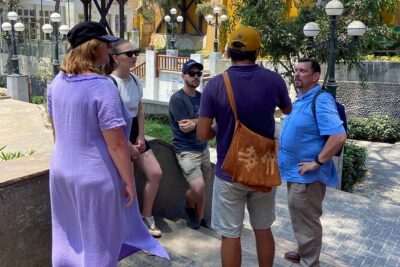
Your tour begins at Museo e Real Bosco di Capodimonte. Plan to arrive 10 minutes early. That small buffer matters here, because the site is part museum and part royal grounds, and you want a calm start before you start climbing and walking.
Even before you reach the galleries, the location sets the tone. Capodimonte isn’t just a building plopped downtown. It’s set in a park, and you’ll feel that shift as you move from Naples street energy to a quieter, more spacious setting. That helps when you’re visiting a major art museum—your brain can actually process what it’s seeing.
The tour is private, so it’s built around a guided pace rather than a herd rhythm. And because it’s scheduled as a tight 2 hours, your time gets focused fast. This is ideal if you want to hit the museum’s strongest art stories without losing half your day.
You can also read our reviews of more museum experiences in Naples


Royal palace design: how the museum’s architecture guides your eyes
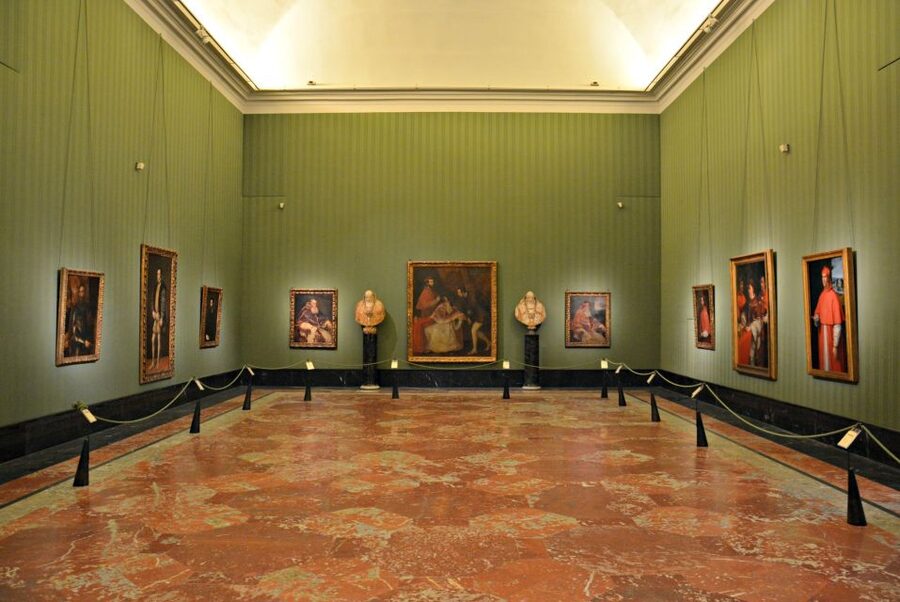
Capodimonte matters for more than its canvases. The museum grew from the Royal Palace, and the rooms were intended to hold the legacies of the Kings of Naples over centuries. That palace origin shapes everything you feel in the building.
You’ll start moving through the monumental interior approach, including the monumental stairs that set up the visit. That sounds basic, but it’s a big deal. Staircases in palaces are not just for access—they’re part of the storytelling. They create a rhythm: arrive, rise, then enter the galleries with your attention already tuned.
The guide helps you read that layout. You’re not only asked to look; you’re guided to notice where collections sit and why that matters. In a museum this size, that kind of framing can be the difference between a pleasant visit and a memorable one.
You’ll also have guided interpretation during planned moments like a break time and a photo stop, which keeps the tour from turning into nonstop walking. In other words, you get structure without feeling trapped.
The Farnese Collection: the first floor that sets the standard

One of the best reasons to choose this tour is how it organizes the “must-see” art into a clear path. The first floor leads you into the Farnese Collection, a major highlight of Capodimonte.
This is where you’ll encounter:
- Tiziano (Titian)
- Masolino
- Masaccio
- drawings by Raffaello (Raphael) and Michelangelo
If you like Renaissance art, this is the floor that makes your eyes feel smart. The paintings and drawings aren’t just names in a guidebook. They show you how Renaissance artists thought about form, composition, and drama—long before the Baroque explosions take over.
The guide’s value here is practical. Instead of listing artists, you get help connecting them to what you’re seeing. You’ll start noticing patterns: how faces are built, how light behaves, and how style shifts as you move through the collection.
And because this first level ends with the Royal Apartments, you get a useful contrast. You’re not only in art halls; you’re stepping into the palace’s “royal living” story. That makes the museum feel less like a storage facility for masterpieces and more like a place where power, taste, and collecting all came together.
If you’re short on time, I’d focus your expectations on this first-floor arc. It’s where Capodimonte’s reputation becomes real.
Neapolitan painting and Baroque drama on the second floor

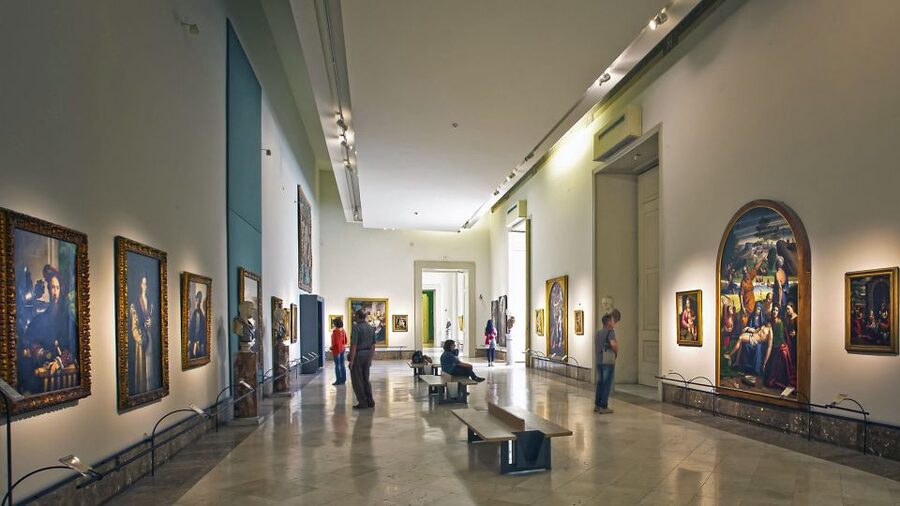
The second floor is where the museum shifts into a Naples-specific story. You’ll move through Neapolitan art, from the Medieval Ages through Renaissance and Mannerism, right toward a big payoff at the end of the corridor: Caravaggio’s Flagellation.
That layout matters. Ending with Flagellation gives the visit a narrative shape: earlier styles and transitions up front, then Baroque intensity as your closing image. Instead of seeing a random list of works, you get a sense of progression.
Caravaggio is a practical magnet. Even if you think you only know his name from famous reproductions, seeing Flagellation in a major museum space changes the experience. His dramatic lighting and tense human presence tend to feel more physical in person, especially when you’ve already seen the styles that come before.
The guide helps you read it. You won’t just look at the painting—you’ll understand what changed in the way artists made emotion and attention work. That’s especially helpful for Caravaggio, where the drama isn’t decorative. It’s the point.
If you’re traveling with limited time in Naples and want a museum moment that feels unmistakably Italian, this is the section to prioritize.
Contemporary contrast: Warhol’s Vesuvio on the third floor
Capodimonte also plays the long game. The third floor hosts the contemporary collection, where one of the main works is Andy Warhol’s Vesuvio.
This is a smart placement for a tour like this, because it prevents the museum from feeling stuck in the past. After Renaissance and Baroque focus, Warhol lands with a different kind of attention: repetition, modern interpretation, and how contemporary artists respond to big cultural forces.
You’ll likely appreciate the contrast more if you’ve just come from Caravaggio. That’s the emotional trick of the building: the museum keeps you moving through time, so modern art doesn’t feel like an unrelated add-on. Instead, it feels like a continuation of collecting and storytelling.
Your guide’s role here is useful if you want clarity without needing extra reading beforehand. You’ll get enough context to understand why this modern work belongs in the same institution as centuries-old masterpieces.






How the 2-hour pace works (and where you might wish you had more time)
This tour is 2 hours, private, and guided. That’s a good match for people who:
- want the highlights but don’t want to plan a complicated self-guided route
- like explanations as you go, not a printed audio guide
- are pairing Capodimonte with other Naples activities
In a museum of this size, 2 hours means you’re not doing everything. You’re doing what the tour is designed to do: give you the strongest art sequence and a coherent arc through floors and collections.
The planned rhythm helps: start on-site, move through museum highlights, and build in a break time plus photo stop. That keeps energy up so you can still care when you reach the second and third floors.
One consideration: if you’re the type who needs to linger over details, you may find the schedule tight. In that case, think of this tour as the fast introduction that makes a return visit much more rewarding.
Skip the line: how it changes the whole mood of the visit
Capodimonte is a popular museum, and this experience includes skip-the-ticket-line access. That sounds like a small perk, but it’s actually a big stress reducer.
When you skip the waiting, you arrive ready to look. You also keep the tour timing smoother, which matters for a guided experience where the guide is keeping the group (your private group) moving floor to floor.
If you’ve ever arrived at a major museum and felt your day start slipping away in a line, you know why this matters. Here, that problem is reduced.
Price and value: what $249.23 buys you
The price shown is $249.23 per group up to 1, for a 2-hour private tour with entrance tickets included and a live guide (English or Italian).
How does that translate into value?
- You’re paying for guidance. You’re not just buying entry; you’re buying someone who organizes the art into a clear story across floors.
- Tickets are included. That removes one layer of planning and cost.
- Private format speeds decisions. You don’t need to design your own route or guess what matters most for your time limit.
Is it expensive? It can be. But if you’re visiting Naples with limited museum hours, and you want the Farnese → Royal Apartments → Neapolitan art → Flagellation → Warhol arc, you’re buying convenience and interpretation as much as you’re buying access.
If you’re traveling solo and want a private art lesson without spending a day figuring out logistics, the math can start to make sense fast.
Who this tour suits best in Naples
This experience fits best if you:
- want a focused, high-impact museum visit in 2 hours
- prefer a guided explanation over self-guided wandering
- care about seeing major names spanning Renaissance, Baroque, and modern
- appreciate museum architecture as part of the experience, not just the paintings
It’s also a great choice if you’re interested in how Naples artists and collecting shaped Italian art across centuries, since the museum’s emphasis runs from the 15th to the 19th century (with a contemporary collection layer on top).
If you’re traveling with mobility needs, good news: the tour is wheelchair accessible. That makes the guided format even more valuable, because you’re not left figuring out the building on your own.
Should you book the Naples Capodimonte National Gallery tour?
I’d book it if you want Capodimonte to feel organized, explained, and efficient. The museum is huge and the art can overwhelm you if you go in cold. This tour gives you a clean path across floors, with major works like Caravaggio’s Flagellation and Warhol’s Vesuvio placed where they make narrative sense.
Skip it if you’re the type who needs hours to slow-walk every room independently, or if you don’t care about guided interpretation and would rather set your own pace.
Bottom line: if you want the strongest Capodimonte impressions in 2 hours, with tickets handled and a live guide steering you to the right rooms, this is an easy yes.
FAQ
Where does the tour start?
The tour starts at Museo e Real Bosco di Capodimonte.
How long is the guided tour?
The duration is 2 hours, with starting times depending on availability.
Do I need to buy museum tickets separately?
No. Entrance tickets are included in the tour price.
Is transportation included?
No. Transportation is not included.
Is this a private tour?
Yes. This activity is a private group.
What languages are available for the live guide?
The live tour guide offers English and Italian.
Is there an option to skip the ticket line?
Yes. Ticket line skipping is included.
Is the museum tour wheelchair accessible?
Yes. The tour is wheelchair accessible.
When should I arrive before the start time?
Please arrive 10 minutes before the starting time. The activity ends back at the meeting point.