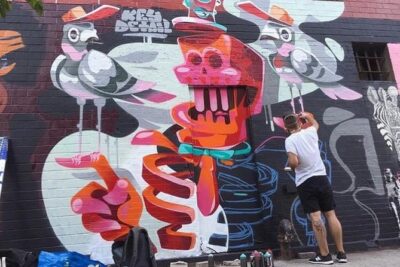
REVIEW · MADRID
Madrid: Street Art Tour with Local Graffiti Hunter
Book on GetYourGuide →Operated by Cooltourspain · Bookable on GetYourGuide
Graffiti in Madrid is street-level storytelling. This 2-hour guided street art walk turns Lavapiés, Embajadores, and La Latina into an outdoor gallery where you learn how stencils, stickers, and big murals work in real neighborhoods. I especially like the way you get insider context from local graffiti writers and the chance to stop at iconic wall spaces like La Tabacalera. One watch-out: it’s a walking tour, so comfy shoes matter.
Because the route is built around specific wall scenes (not just random photos), you’ll notice details you’d otherwise miss. I also like that guides weave in the neighborhood side—history, community, and why artists choose certain spots—so the art lands with more meaning. The only real drawback to plan around is that it’s English-speaking only, so bring a willingness to follow along at street speed.
In This Review
- Key points to know before you go
- Why Lavapiés graffiti feels like Madrid, not decoration
- Getting started at Teatro Valle Inclán (and why that matters)
- Lavapiés and Embajadores: how to read tags, stencils, and stickers
- Calle Argumosa and Calle de Embajadores: the walk that teaches location
- La Tabacalera: former tobacco-factory walls built for public art
- Esta es una Plaza and Plaza del Sombrerete: learn to read street art context
- Free workshops in the mix: why community keeps street art alive
- Calle Sombrete and a big Center District mural moment
- Guides, pacing, and the small-group feel
- Price and what you get for $29
- Who should book this street art walk (and who should rethink it)
- Final call: should you book it?
- FAQ
- How long is the Madrid street art tour?
- What does the tour cost?
- Where do I meet the guide?
- Is the tour in English?
- What is included in the ticket price?
- Are beverages included?
- What should I bring?
- Is the tour wheelchair accessible?
Key points to know before you go
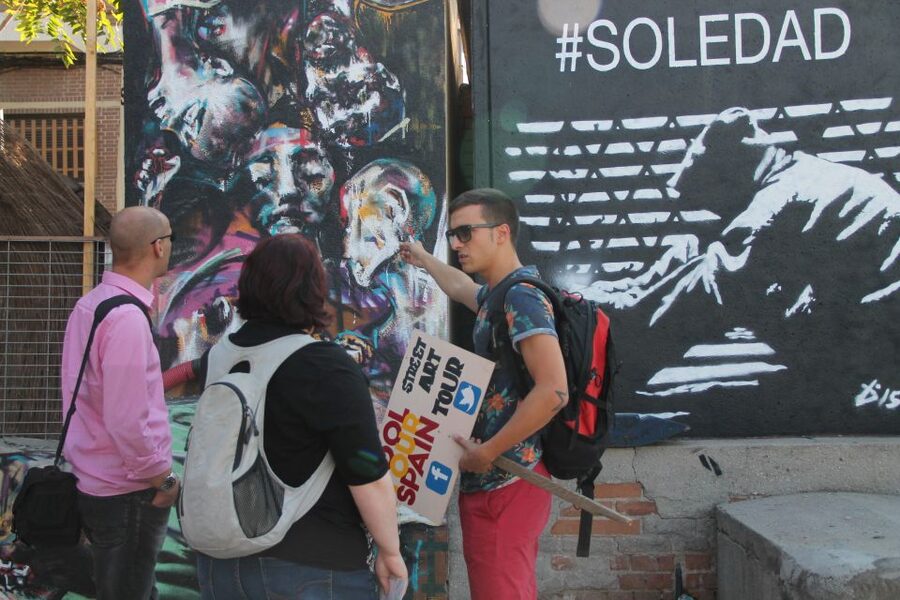
- Lavapiés + Embajadores street art focus: you’ll walk the blocks where the style and the community are inseparable
- La Tabacalera stop: former tobacco-factory walls that make murals feel “scaled for real life”
- Plaza del Sombrerete (Esta es una Plaza): an art-reading lesson, not just a sightseeing stop
- Calle Sombrete: a look at newer talent and evolving street trends
- Big mural energy in the Center District: a payoff moment after all the smaller details earlier
Why Lavapiés graffiti feels like Madrid, not decoration
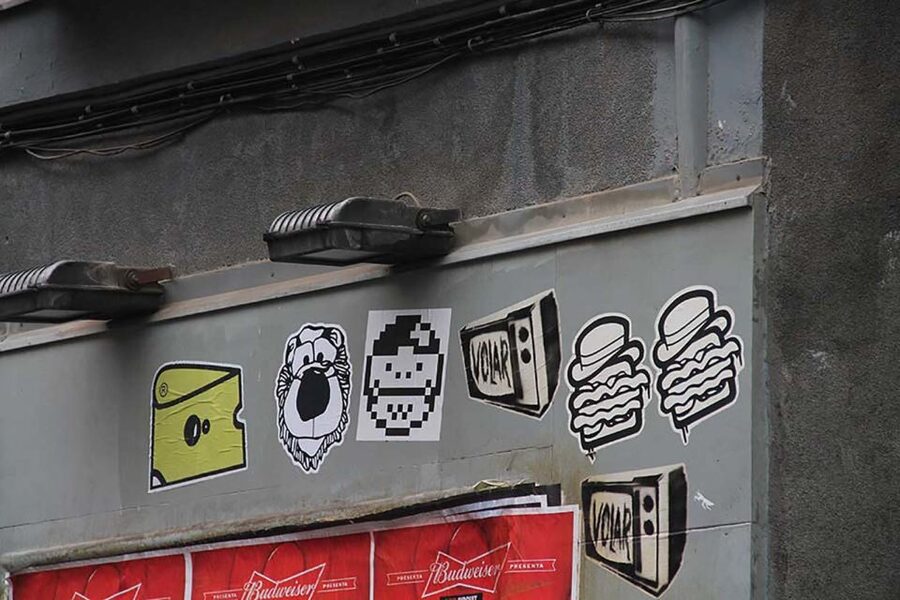
Madrid’s major museums are great, but street art hits a different nerve. On this tour, you’re not just looking at murals. You’re learning how artists communicate in public space—through quick sticker hits, sharp stencils, layered graffiti tags, and larger community-facing pieces.
I like that the tour treats street art like part of the city’s social fabric. That means you hear the “why” behind styles and locations, not just the “what.” Guides on this kind of walk often connect the art to the neighborhoods it lives in, and you can feel the difference when you’re standing where the work was made to be seen.
A few more Madrid tours and experiences worth a look


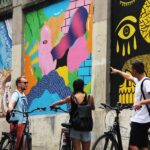
Getting started at Teatro Valle Inclán (and why that matters)
You meet at the entrance of Teatro Valle Inclán, Calle de Valencia, 1 (28012 Madrid). The closest metro station is Lavapiés.
This is a practical choice. Starting near Lavapiés keeps you out of long transit waits, and it puts you close to the neighborhood texture right away—people, storefront energy, side streets, and the visual rhythm that street artists respond to. If you like your tours to start with momentum, this one does.
Bring your passport or ID card, and wear shoes that can handle uneven sidewalks. That’s not a “tour rule” so much as a basic street-walking reality in Madrid.
Lavapiés and Embajadores: how to read tags, stencils, and stickers
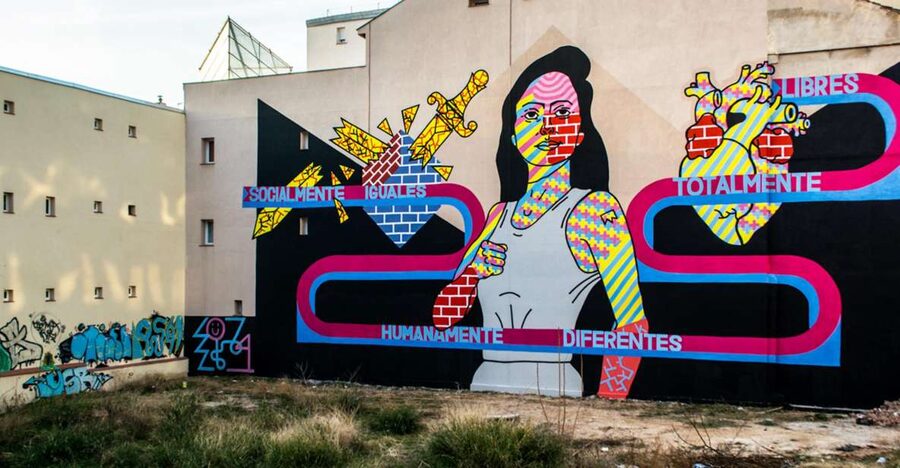
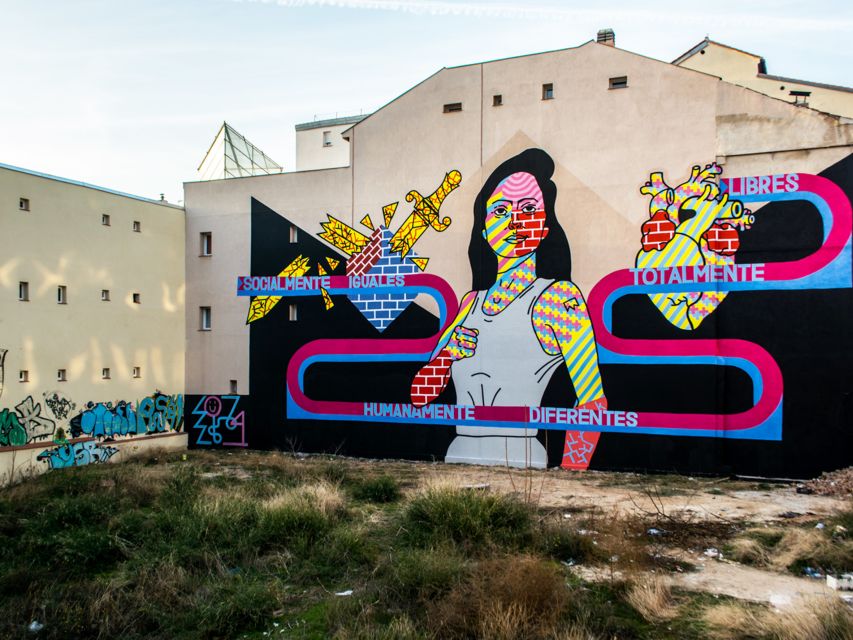
The core of the experience is a guided stroll through Lavapiés and Embajadores, where you’ll see Spain’s underground street art culture up close. The route is built around what makes these styles different.
Here’s what you’ll be training your eye for:
- Graffiti walls and lettering choices: where the artist prioritizes readability, speed, or style
- Stencils: crisp edges and repeatable designs that can spread an idea fast
- Sticker art: quick-impact visuals that feel like messages left for future passersby
- Placement: the way a piece fits the wall surface, nearby foot traffic, and the neighborhood mood
Guides with strong local ties tend to explain not only technique, but also how street art moves through a community. You might hear names of artists and festivals connected to the scene, and you’ll also get the sense that these aren’t random walls. They’re marked points in an ongoing cultural conversation.
Calle Argumosa and Calle de Embajadores: the walk that teaches location
Two streets mentioned in the route—Calle Argumosa and Calle de Embajadores—are more than just connectors. On a good street art tour, the “in-between” blocks matter, because that’s where you see how art changes from micro to mural scale.
As you walk, pay attention to how the art density shifts. Some walls feel like personal signature zones (smaller, frequent changes). Others feel like statement spaces—where a bigger piece has room to breathe and where the neighborhood’s gaze lands.
This is one reason the tour works well even if you’re not a street art superfan. You’ll start seeing patterns in how artists claim space, and how locals absorb it.
La Tabacalera: former tobacco-factory walls built for public art
One of the most memorable stops is the urban art on the walls of the former tobacco factory of La Tabacalera.
The value here is the setting. Factory-scale buildings change how you experience street art. Walls are broad, textures are varied, and the space feels like it was waiting for a different kind of museum. Instead of art behind glass, you get art in a full-scale environment.
This is also a good moment to reflect on what you learned earlier. If you’ve been noticing stencil edges and layered tags, you’ll likely spot how larger works use color blocking and composition differently. It’s not just bigger. It’s built to live at street distance and still communicate.





Esta es una Plaza and Plaza del Sombrerete: learn to read street art context
The tour includes an insider guide to the street art around Esta es una Plaza, Plaza del Sombrerete.
This is where the experience moves from looking to understanding. Instead of treating each mural like an isolated artwork, you get help interpreting themes and the “street logic” behind them. You’ll be asked to notice things like repetition, symbolism, and why certain styles show up where they do.
And you’ll feel the practical benefit: once you learn a few ways of reading street art, Madrid’s walls start to make sense even after the tour ends. That’s the kind of souvenir that doesn’t take up luggage space.
Free workshops in the mix: why community keeps street art alive
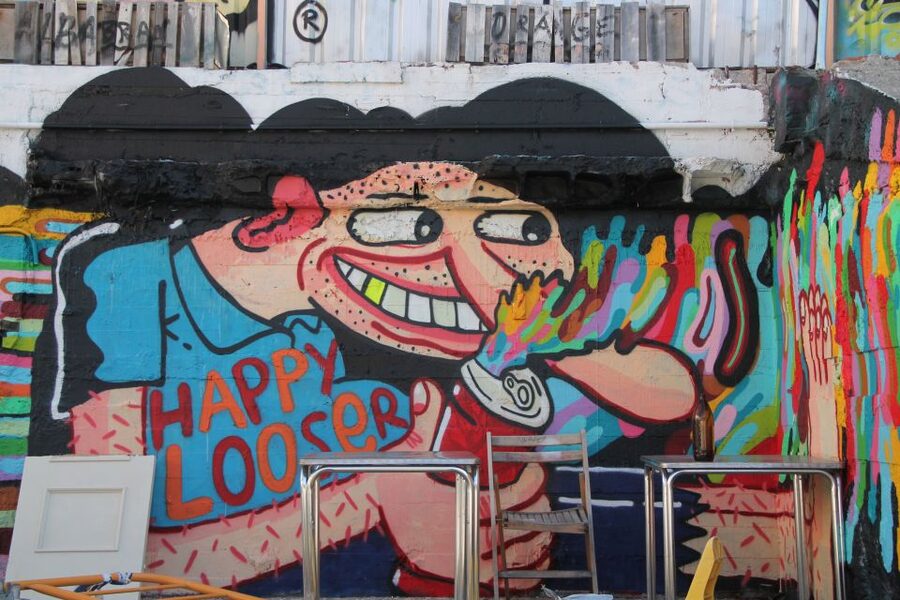
As you move through the neighborhood, you’ll learn about free workshops offered in areas like photography, dance, yoga, cycling, longboarding, and more.
This part matters because it reframes street art. It’s not just images on walls. It’s also skill-building and community participation. Even if you don’t sign up for workshops, you’ll understand why the scene keeps renewing itself: there’s training, social connection, and creative outlets beyond graffiti alone.
If you like tours that show how culture is practiced—not just displayed—this makes the walk feel grounded.
Calle Sombrete and a big Center District mural moment
The route also includes Calle Sombrete, described as a place to learn about up-and-coming talents, alongside veteran work at other stops.
By including both established names and newer energy, the tour avoids one common street art mistake: only chasing the most famous pieces. You get a sense of the timeline—how styles evolve, how artists move through stages, and how new work responds to what’s already there.
The tour also highlights a chance to see the biggest mural in Madrid’s Center District. That kind of payoff usually lands after you’ve spent time noticing smaller details. By the time you see the large piece, you’ll be able to appreciate it for more than scale—you’ll recognize how composition and placement do their job.
Guides, pacing, and the small-group feel
A lot of the tour quality comes from the guide. In the mix of praised guides, you’ll see names like Ester, Esther, Julian/Julien, Santiago, Hector, Ana, Yago, and Maria, with common strengths: clear storytelling, strong English, and keeping the walk interactive.
You’ll also notice a pattern in what people value: the pace feels right. You’re not rushed, and there’s time for questions. A couple guides are even described as street artists themselves, which can be a bonus because they explain technique with first-hand perspective.
Since the duration is 2 hours, the pacing matters. This tour generally works because it stays focused. You get variety without feeling like your feet are carrying you through an endless route.
Price and what you get for $29
At $29 per person for 2 hours, this is solid value for Madrid if you care about understanding what you’re seeing. You’re paying for more than walking time—you’re paying for:
- an English-speaking local guide
- context around the works in specific neighborhoods
- targeted stops like La Tabacalera and Plaza del Sombrerete
- an eye-opening street art “decoder” you can use after the tour
It’s not a museum ticket, and it’s not a private tour. But at this price point, it’s a good way to spend your time if you want something more human than a checklist of landmarks.
One practical note: beverages are not included, so plan accordingly if you’ll be out in warmer or sunnier conditions.
Who should book this street art walk (and who should rethink it)
Book it if you:
- want a neighborhood experience rather than a postcard route
- enjoy street art styles like graffiti, stencils, and stickers
- like learning the social side of art, not just the visuals
- want a tour that helps you keep noticing details after you leave
Consider a different type of tour if you:
- dislike walking (this is a 2-hour stroll)
- need the tour in a language other than English
- expect indoor, climate-controlled stops
Also, the tour is marked wheelchair accessible, which is a helpful factor if you need that.
Final call: should you book it?
If your ideal Madrid day includes listening to the city, looking closely, and getting a local take you can actually remember, I’d book this. The best part is the combination: street art variety plus context from local scene voices, with meaningful stops like La Tabacalera and Plaza del Sombrerete.
Just go in with the right mindset. Wear comfortable shoes, bring your ID, and be ready to notice what’s on walls—not only what’s on maps. For $29 and two hours, it’s one of the easier ways to turn Madrid’s streets into something you can read.
FAQ
How long is the Madrid street art tour?
It lasts 2 hours.
What does the tour cost?
The price listed is $29 per person.
Where do I meet the guide?
You meet at the entrance of Teatro Valle Inclán, Calle de Valencia, 1, 28012 Madrid. The nearest metro station is Lavapiés.
Is the tour in English?
Yes, the guide is English-speaking and the tour operates in English.
What is included in the ticket price?
The tour includes an English-speaking guide.
Are beverages included?
No, beverages are not included.
What should I bring?
Bring your passport or ID card and wear comfortable shoes.
Is the tour wheelchair accessible?
Yes, it is marked wheelchair accessible.