REVIEW · MADRID
Madrid: Prado Museum Art Tour with Expert Guide
Book on GetYourGuide →Operated by Amigo Tours Spain · Bookable on GetYourGuide
The Prado is Spain’s art homework, without the pain. In just 90 minutes, you get a focused guided tour of masterpieces like Las Meninas and Bosch’s El Jardín de las Delicias, plus the context that makes them click. I like that you’re not just staring at paintings, you’re learning how to read them like a pro.
Two things I really like: the skip-the-line entry that protects your time, and the way the guide ties each work to its technique and historical moment. You’ll hear about major Spanish names like Velázquez, Goya, El Greco, and José de Ribera, and you’ll also get European art beyond Spain from artists such as Titian, Raphael, and Rubens.
One drawback to factor in: the tour runs 1.5 hours, and the guide may need a little extra time up front to organize entry and handle quiet logistics. That means your walkthrough can be tight, so show up ready to move and listen.
In This Review
- Key Highlights You’ll Care About
- Why the Prado in 90 Minutes Feels Worth It
- Finding the Velázquez Statue Meeting Point Fast
- How the Tour Starts Inside: Tickets, Quiet, and a Smart Pace
- The Prado’s Spanish Power Trio: Velázquez, Goya, and El Greco
- Las Meninas: How to Spot the Techniques Behind the Magic
- Goya and The Third of May 1808: Art as History’s Conscience
- Saturn Devouring His Son and the Dark Side of Symbolism
- Bosch’s El Jardín de las Delicias: Read the Chaos
- Beyond Spain: Titian, Raphael, Rubens, and the European Bridge
- Art Movements From Gothic to Romanticism (Through Real Paintings)
- What You Can Do After the Guide Finishes
- Price, Pace, and Group Size: Is $46 Good Value?
- The Guides Matter: How Cristian and Borja’s Style Can Change the Visit
- Who This Tour Fits Best (and Who Might Want Something Else)
- Should You Book This Prado Museum Art Tour?
- FAQ
- How long is the Prado Museum Art Tour?
- Is skip-the-line entry included?
- Where do I meet the guide?
- What languages is the tour offered in?
- Is the tour sometimes run in both languages at once?
- Can I take photos inside the Prado Museum?
- Can I stay in the museum after the guided portion ends?
- Is there hotel pickup or drop-off?
- FAQ
- Is the tour wheelchair accessible?
Key Highlights You’ll Care About
- Skip-the-line Prado entry so you spend less time queuing and more time looking
- Las Meninas explained with the techniques and visual tricks behind Velázquez’s fame
- Bosch’s Earthly Delights on the radar, including how symbolism works in his scenes
- A “who’s who” of European masters, from Spanish giants to Italian and Flemish painters
- Art movements from Gothic to Romanticism, traced through the Prado’s permanent collection
Why the Prado in 90 Minutes Feels Worth It
The Prado Museum sits in an elegant 18th-century Neoclassical building, and the collection is so big that you can easily burn a whole day wandering. This tour chooses a smarter plan: it focuses on the paintings that most strongly shape European art, then uses those works to teach you how to see.
The price, $46 per person, makes sense because it’s not a casual “look and go” visit. You’re paying for a professional local guide, entrance to the museum, and a structured walkthrough that points you toward the stories, symbols, and methods behind famous pieces. If you’ve ever stood in front of Las Meninas thinking, I’m missing the point, this kind of guidance is the difference between staring and understanding.
Also, the Prado is famous for drawing big crowds. Skip-the-line entry matters here. Even a short tour becomes frustrating if you lose the first chunk of time to queues.
You can also read our reviews of more guided tours in Madrid

Finding the Velázquez Statue Meeting Point Fast
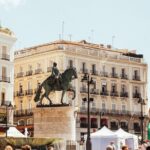
You’ll meet the guide at the Velázquez Statue on Paseo del Arte, on the side of the museum. The guide carries an Amigo Tours sign, so you’re not stuck playing museum-sherlock for too long.
This is one of those details that can quietly make or break your experience. If you show up late, you can end up rushed at the start, and then you lose the benefit of a guided rhythm. Plan to get there with enough buffer to settle and start listening.
One practical note: the tour starts at a very recognizable spot, but the Prado area can feel busy. The sign (Amigo Tours) is your anchor.
How the Tour Starts Inside: Tickets, Quiet, and a Smart Pace
Once you’re in, the guide leads you through a curated path across the Prado’s permanent collection. The tour runs 1.5 hours, and the guide may need some extra minutes at the start to organize tickets and handle quiet/low-disruption logistics.
That extra setup time is worth knowing because it affects pacing. In other words: don’t assume you’ll get the same amount of time in front of every artwork. You’ll see key works and learn the “why it matters” for each one, but you’ll need to keep moving and stay focused.
This is also a small-group experience. That helps because questions are easier to manage, and the guide can adjust pacing without herding everyone like luggage.
The Prado’s Spanish Power Trio: Velázquez, Goya, and El Greco
The heart of the tour is Spanish art, and the guide uses the biggest names to teach you how European painting evolved.
You’ll spend time with works linked to:
- Diego Velázquez, including Las Meninas
- Francisco de Goya, connected to major historical images like The Third of May 1808
- El Greco, whose style helped shape how later artists understood drama and emotion
- José de Ribera, another key Spanish figure in the Prado’s European story
The point isn’t just to say the names. It’s to understand what these artists changed. One guide-led moment in front of a famous painting can teach you more than hours of random gallery wandering, because the guide points out specific visual choices you might otherwise miss.
Las Meninas: How to Spot the Techniques Behind the Magic
Las Meninas (by Velázquez) is the kind of painting that can feel like a puzzle box. From a distance it’s impressive. Close up, it becomes complicated in a good way.
On this tour, you’re not left to guess. The guide helps you understand the secrets behind famous paintings, including how composition, perspective, and figure placement create that “wait, who is looking at who?” feeling. You’ll learn how Velázquez’s choices steer your eyes through the scene, so the painting stops being a single moment and starts becoming a visual conversation.
If you like art that rewards attention, this is a standout stop. And if you don’t know much about painting technique, it still works because the guide connects the technical decisions to the story the image is trying to tell.
You can also read our reviews of more museum experiences in Madrid


Goya and The Third of May 1808: Art as History’s Conscience
Goya’s work is never just decoration, and The Third of May 1808 is a prime example. This tour treats the painting as a historical statement, tied to turbulent times when art was forced to respond to real events.
What you’ll get from the guide here is context plus interpretation. The aim is to help you see why this image hit so hard in its era and why it still lands today. You should come away with a clearer sense that European painting wasn’t only about beauty. It was also about power, conflict, and the moral weight of what people chose to depict.
Even if you’re not a “serious art person,” this stop is emotionally direct, and it’s one of the reasons the Prado matters so much beyond Spain.
Saturn Devouring His Son and the Dark Side of Symbolism
Another key painting you’ll encounter is Saturn Devouring His Son (linked to Francisco de Goya). This is the kind of image that makes people lean in, because it feels both mythic and horrifyingly personal.
On a guided visit like this, you’re not just looking at a figure. You’re learning how symbolism works, how artists use anatomy and expression to communicate fear or control, and how those themes fit into broader European artistic thinking.
The Prado’s strength is that it lets you compare. You can see how different artists handle emotion and narrative differently, then notice the patterns that later painters inherited or reacted against.
Bosch’s El Jardín de las Delicias: Read the Chaos
If you want something visually wild and intellectually challenging, pay attention when the tour turns to Hieronymus Bosch and works like El Jardín de las Delicias (The Garden of Earthly Delights).
This is not a single-scene painting where you just find the main subject and call it done. Bosch is packed with symbols, odd creatures, and layered meaning. With a guide, you can start mapping what you’re seeing instead of getting lost in the detail.
This tour also frames Bosch as part of a bigger European conversation. The Prado places Spanish masters next to Italian and Flemish works, and that makes it easier to notice how styles and symbol systems shift across regions.
Beyond Spain: Titian, Raphael, Rubens, and the European Bridge
One of the smartest parts of this Prado tour is that it doesn’t trap you in Spain-only art. You’ll also see key works by:
- Titian
- Raphael
- Rubens
- and other Italian and Flemish artists
The guide uses those artists to explain European art movements and how ideas traveled. That context helps you understand the Prado as more than a Spanish showcase. It becomes a crossroads.
If you care about how art history connects across countries, this is where you’ll feel the most value per minute. Instead of reading about Renaissance or Baroque later, you’ll actually see how the style changes and why.
Art Movements From Gothic to Romanticism (Through Real Paintings)
The tour walks you through an evolution of artistic styles, from Gothic and Renaissance into Baroque and Romanticism. That matters because it gives your visit a backbone.
When you know what to look for—lighting style, emotional tone, figure movement, composition—you stop treating each painting like a separate event. You start recognizing trends. That makes the museum easier to navigate even after the guided portion ends.
This is the “take home” value: learning how to see. Then, when you return on your own time, you’ll notice more than you would have without the guide’s starting framework.
What You Can Do After the Guide Finishes
When the guided visit ends, you can stay inside and explore at your own pace. That’s a big deal for the Prado, because the guided portion is only 90 minutes, and your personal interests might pull you toward different wings or styles.
So use the tour to get your bearings fast, then follow your curiosity. If you were most drawn to Spanish masters, you’ll know where to head next. If Bosch was your favorite, you’ll likely spot related themes and works more quickly.
One important rule: photography inside the Prado Museum is not allowed, so plan to rely on memory, mental notes, and what your guide points out.
Price, Pace, and Group Size: Is $46 Good Value?
Here’s the honest value math: $46 is not “cheap,” but it also isn’t just ticket price. You’re getting:
- museum entrance
- a professional local guide
- the guided storyline in English or Spanish
- skip-the-line access
If you attempted this alone, you’d still pay for entry and you’d likely spend time trying to figure out which paintings deserve your attention first. A good guide acts like a translator. For the Prado, that translation is about technique, symbolism, and context.
The pace can feel brisk because it’s 90 minutes, and the guide may use extra minutes for ticket organization and quiet logistics. Still, the upside is that you’ll leave with a structured understanding of the museum’s biggest hits and why they matter.
If you’re the type who likes to stop, read, and question, this tour works best when you enter prepared to listen and keep moving.
The Guides Matter: How Cristian and Borja’s Style Can Change the Visit
The experience is led by a professional local guide, and the tone of the tour can swing depending on the guide’s teaching style.
Some guides associated with this tour, including Cristian and Borja, are described as especially strong at making explanations feel natural and easy to follow. In practical terms, that means you’re more likely to walk away with clear takeaways: what technique you just saw, what symbol is doing, and what historical moment shaped the image.
You won’t control who your guide is, but you can control your side of the bargain: be present, ask questions if your group can, and lean into the guide’s pointers in front of the artworks.
Who This Tour Fits Best (and Who Might Want Something Else)
This Prado Museum art tour is a great fit if:
- you want the museum’s top masterpieces with actual explanation
- you like Spanish art but also want the European context
- you don’t want to plan a whole self-guided route
- you’re short on time in Madrid and want high impact per hour
It might not be ideal if:
- you prefer slow, quiet looking with lots of unstructured time
- you’re hoping to spend long stretches in front of dozens of paintings
- you want photography for personal reference (it’s not allowed inside)
Think of it as a guided map plus an art history primer you can carry into the rest of your museum visit.
Should You Book This Prado Museum Art Tour?
Yes, if you want a smarter first look at one of the world’s most important art collections. The combination of skip-the-line entry, an expert guide, and a storyline that connects Spanish masterpieces to wider European art movements is strong value for 90 minutes.
Book it especially if you’ve ever felt lost in a museum full of famous works. This tour helps you read the paintings, not just see them. If you’re in Madrid with limited time, it’s one of the cleanest ways to get meaningful Prado highlights without turning your day into a spreadsheet of galleries.
FAQ
How long is the Prado Museum Art Tour?
The tour lasts 90 minutes.
Is skip-the-line entry included?
Yes. Skip-the-line entry is included, along with museum entrance.
Where do I meet the guide?
Meet at the Velázquez Statue on Paseo del Arte (on the side of the museum). The guide will carry an Amigo Tours sign.
What languages is the tour offered in?
The tour is guided in English or Spanish.
Is the tour sometimes run in both languages at once?
During the winter months, the tour may be simultaneously held in English and Spanish due to low demand.
Can I take photos inside the Prado Museum?
No. Photography inside the Prado Museum is not allowed.
Can I stay in the museum after the guided portion ends?
Yes. After the guided visit, you can stay to explore the museum independently.
Is there hotel pickup or drop-off?
No. Hotel pickup and drop-off are not included.
FAQ
Is the tour wheelchair accessible?
Yes, the tour is wheelchair accessible.