REVIEW · ROME
Golf Cart Tour Timelapse Through History
Book on Viator →Operated by Not boring tours · Bookable on Viator
Rome history, but no foot-slogging. This golf cart tour strings together the best stops in a smooth, efficient route—so you can get your bearings fast and still hear clear stories along the way. It’s also built for comfort, with a small group and an English guide.
What I really like: the comfort of cruising from area to area without turning your day into a walking test. Second, I love the small-group feel, where the guide can actually tailor the pace and answer questions—plus one guide named Salvo stands out for making the whole lesson feel funny, not like homework.
One thing to consider: you’re seeing a lot of Rome in short photo-and-look moments, and Colosseum admission isn’t included. If you want long, slow time inside specific churches or museums, this format may feel a bit brisk.
In This Review
- Key Things to Know Before You Go
- A Rome Golf Cart Tour That Gets You Oriented Fast
- Your Route: From St. Peter’s Streets to the Roman Core
- Largo Argentina: The Julius Caesar Moment (Short Stop, Big Payoff)
- Colosseum View: Photos and a Fast History Hit
- San Pietro in Vincoli: Moses by Michelangelo and the Chains Theme
- Terrazza del Pincio: Your Rome Photo Reset
- Santa Maria Sopra Minerva: Saint Catherine’s Grave and Another Michelangelo Christ
- Pantheon: Standing in Front of the Story
- St. Peter’s Brothers Church and the Shift Toward Everyday Rome
- Campo de’ Fiori: From Execution Site to Fruit Market
- Price and Value: Is $135.78 Worth It?
- Who This Tour Fits Best (And Who Might Skip It)
- Tips to Get the Most From Each Stop
- Should You Book This Rome Golf Cart Tour?
- FAQ
- How long is the Golf Cart Tour Timelapse Through History?
- How much does the tour cost?
- Is the tour offered in English?
- What are the start and end points?
- What’s the maximum group size?
- Is a mobile ticket used?
- Does the tour include admission fees?
- Are service animals allowed?
- Can I cancel for a full refund?
Key Things to Know Before You Go
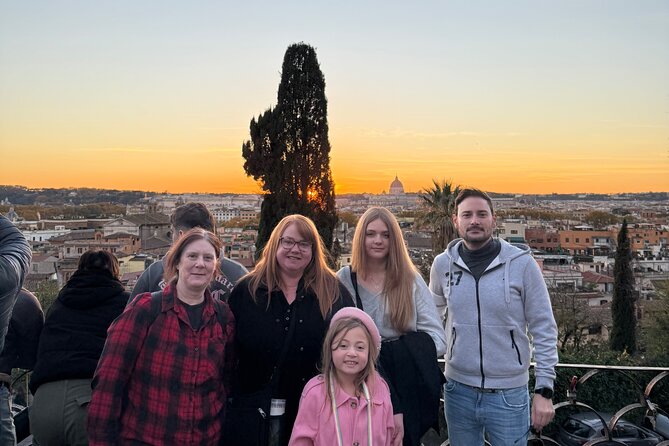
- Small group (max 14): easier flow, more personal guidance, and less chaos at each stop
- English mobile-ticket tour: no paper scramble, just show your ticket on your phone
- A history route that’s efficient: from Largo Argentina to the Pantheon area without spending hours transferring
- Top-photo viewpoints included: Terrazza del Pincio gets you the “Rome looks like a postcard” angle
- Michelangelo sightings in churches: Moses on the chain theme, plus Christ sculptures in Santa Maria Sopra Minerva
- Some admissions not included: you’ll need to budget for Colosseum entry if you plan to go inside
A Rome Golf Cart Tour That Gets You Oriented Fast
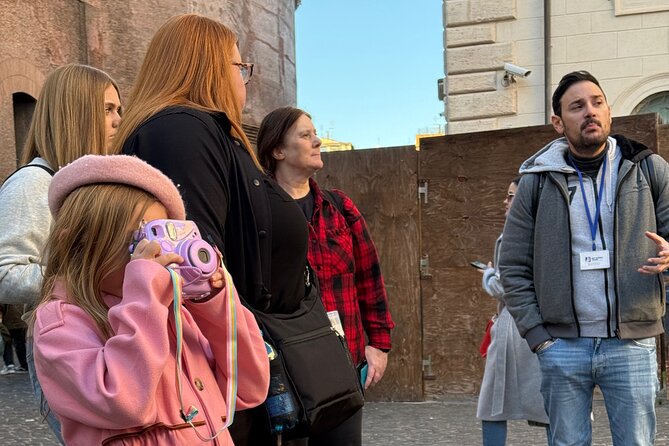
Rome can overwhelm you. Streets twist, landmarks drift apart, and by hour two you’re tired and still not sure where you stand. This tour is built to fix that. You cover major sights quickly, then pause just long enough to take pictures and get the key context from your guide.
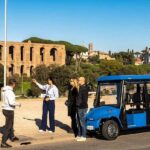
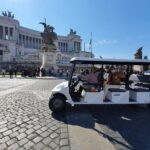
The golf cart format is the main practical win. You’re not stuck in lines or doing big distance walks while your energy drains. Instead, you ride, learn, stop, look, and move on. That rhythm matters in Rome, where a “quick” stroll can turn into a long detour because you’re trying to find the next exact entrance.
And because the group size stays small (up to 14), you’re less likely to feel like a number. The best part is how your guide keeps the information moving. The reviews on this experience highlight guides who can explain Roman history in a way that doesn’t drag, with real personality. One name you’ll hear a lot is Salvo—praised for both knowledge and humor—so if you’re lucky enough to get him, you’re in good hands.
You can also read our reviews of more historical tours in Rome
Your Route: From St. Peter’s Streets to the Roman Core
The day starts by driving through the area that leads toward St. Peter’s Basilica. Even if you’re not going in at this moment, the tour uses the approach road to frame what’s ahead. You get a sense of how Rome’s Christian center sits over older layers of the city.
From there, the route heads past Hadrian’s mausoleum, and it later becomes a fortress used by popes. Castel Sant’Angelo is one of those places where you can feel the change over centuries just by looking at the shape of the structure—more than one “Rome” is packed into one building. This pass-by stop is a smart way to give you the timeline before you hit the archaeology and the big classical sites.
Then the tour pivots into the heart of ancient Rome with a series of stops where the guide can connect names, events, and art pieces. The overall structure works well for first-time visitors. You learn the story of Rome’s layers without having to bounce between tickets, bus routes, and long walks.
Largo Argentina: The Julius Caesar Moment (Short Stop, Big Payoff)
Your first proper stop is Area Sacra di Largo Argentina, where you’ll see the area connected to Julius Caesar’s assassination. This is one of those locations that sounds famous—then hits you harder when you’re standing near the ruins.
The stop time here is brief (around 5 minutes). That means you won’t get a deep archaeological dig, but you will get orientation: who was involved, what happened, and why it mattered. In Rome, events like this connect the political drama of the Republic to the later shift toward empire.
Practical tip: keep your camera ready, but also listen. This stop works best when you’re not just photographing the stones. You’re trying to understand why the site is still referenced in Roman history again and again.
Colosseum View: Photos and a Fast History Hit
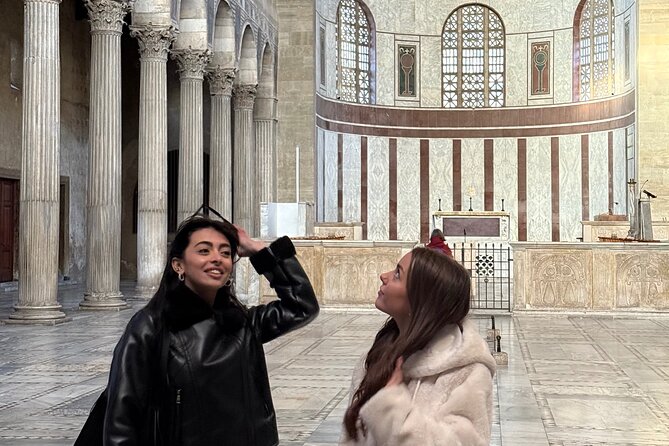
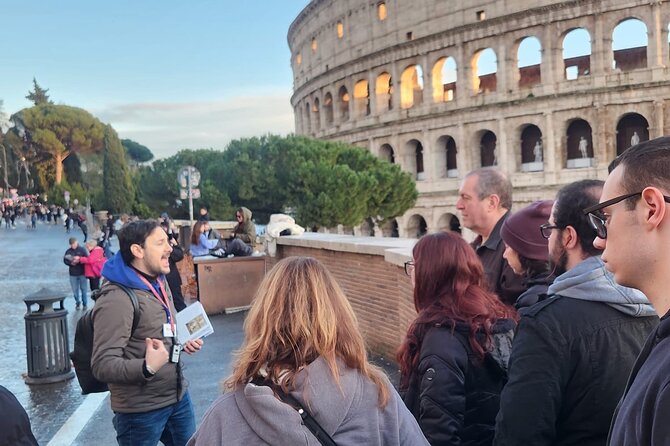
Next comes the Colosseum. Instead of a long inside visit, you get an overlook for photos and a quick history talk. Stop time is about 10 minutes.
If you’ve never been to the Colosseum, this can be a very good first introduction. You’ll see it from the outside in a way that’s easier to digest than a full, ticketed visit on a first day. It also sets up what you’ll hear about later—how Rome’s architecture and power imagery played on the crowd.
The drawback is right in the details: Colosseum admission isn’t included. So if your goal is to walk the arena floor and explore fully, you’ll need to plan separately. But if your goal is to get a strong visual reference plus the story, this stop hits the sweet spot.
Also, you might get a chance to grab a coffee at times depending on flow. If you care about timing, consider having caffeine before you get to the area. Rome moves at a human pace—your schedule should, too.
San Pietro in Vincoli: Moses by Michelangelo and the Chains Theme
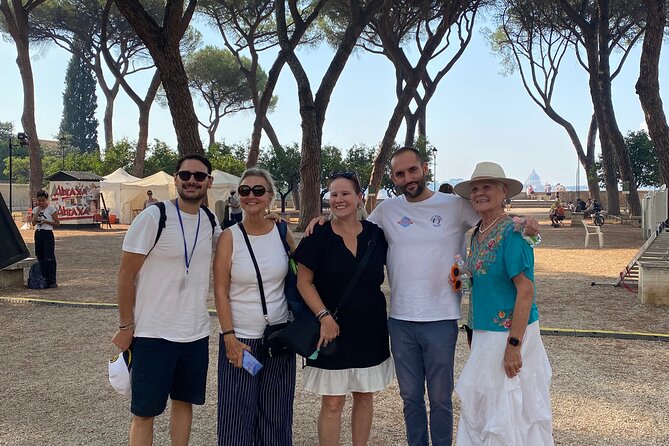
The tour heads to San Pietro in Vincoli, with a focus on the famous theme: Saint Peter’s chains and Moses by Michelangelo.
This is one of the stops that often feels less like a “standard sight” and more like a personal art moment. Even when you only have around 10 minutes, the story behind Michelangelo’s work can make what you see much more meaningful. The connection to Peter also helps anchor the site in Rome’s Christian narrative, without losing the art history thread.
Because the stop is short, don’t expect a slow wander through every chapel detail. Expect the guide to point you to the key pieces and explain what to notice. For many people, that’s exactly what you want on a tour like this: a guided spotlight rather than a self-guided sprint.


Terrazza del Pincio: Your Rome Photo Reset
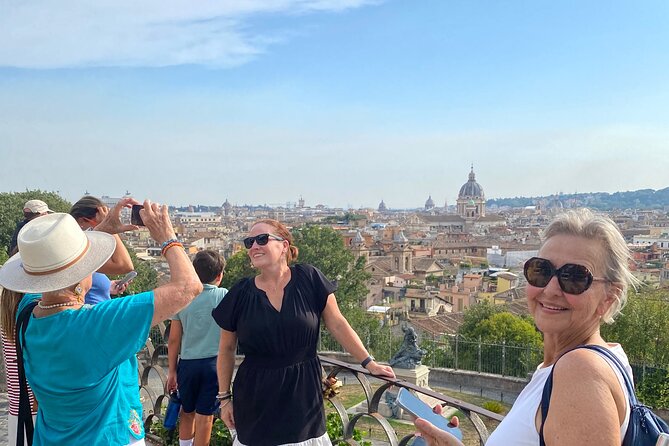
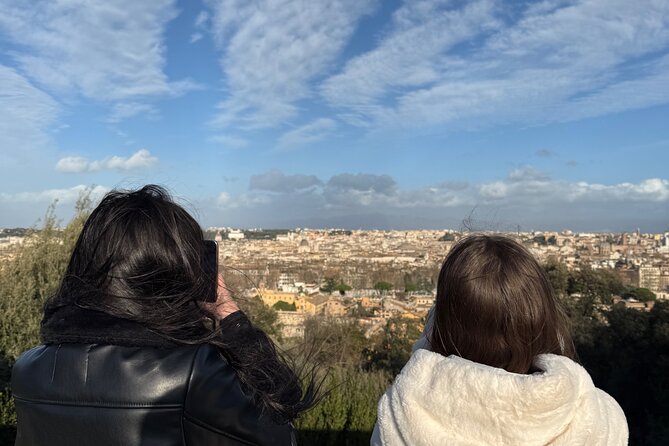
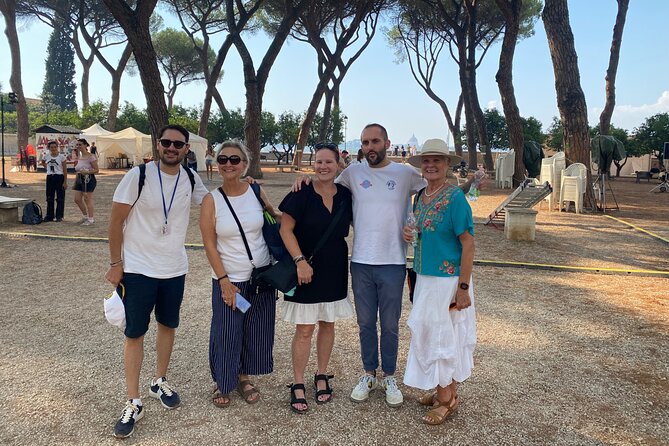
Then you reach Terrazza del Pincio, a viewpoint that delivers big-card energy. Stop time is about 10 minutes, and it’s built for photos.
This is the part where the tour earns its “comfort” reputation. You’re not burning energy climbing steep streets just to get a view. You arrive, you look, and you photograph. If you’ve been staring at Rome’s streets all morning, this gives your brain a wide-angle reset.
Practical advice: bring a lens option if you have one, and take photos in layers. One shot wide for the panorama, then a couple tighter shots of key rooftops and domes if the angle allows. Views like this look different depending on whether the light is early or late.
Santa Maria Sopra Minerva: Saint Catherine’s Grave and Another Michelangelo Christ
Next is Chiesa Di Santa Maria Sopra Minerva, with attention on Saint Catherine’s grave and a Michelangelo statue of Christ.
This stop has a strong “two-in-one” advantage. It connects religious history (who is buried here and why people come) with the art world you came to Rome to see. Michelangelo shows up again, which helps if you’re tracking the way different churches hold different masterpieces.
Since the stop is around 10 minutes, the value is in the guided focus. You’ll want to look where the guide directs you. If you miss that, you might still enjoy the church—but you may not get the full impact of why this one is singled out.
Pantheon: Standing in Front of the Story
After the viewpoint stop, the tour brings you to the Pantheon, with a history talk while you’re standing in front of it. Stop time is about 10 minutes.
Even without going inside, the Pantheon is a powerful anchor point. It’s one of the places where Roman design still feels precise and alive. A quick talk here helps you understand what makes the Pantheon different—its engineering, its symbolism, and why people keep returning to it.
If your dream is a slow Pantheon visit with time inside, then plan that for another day. But as part of this golf-cart route, the exterior conversation helps you build the mental map. It turns the building from a “wow” into a “wow, now I know what I’m seeing.”
St. Peter’s Brothers Church and the Shift Toward Everyday Rome
There’s also a pass-by stop for St. Peter’s brothers church. The tour doesn’t frame it as a long stop, so it’s likely meant to keep the route fluid while adding one more thread to the Christian Rome storyline.
This is actually a good reminder: Rome isn’t only big museum-ticket sites. The city works because its religious landmarks sit in neighborhoods where everyday life happens. Even the brief pass-by moments help connect your “Rome history” day to the actual city you’ll walk around after the tour ends.
Campo de’ Fiori: From Execution Site to Fruit Market
Finally, the tour reaches Campo de’ Fiori, where you’ll see today’s modern fruit marketplace area—once an execution site.
This is one of the most striking contrasts on the route. You’re standing in a place people shop and linger, while the guide frames what the square used to represent. In Rome, that contrast is part of the city’s power. The past isn’t sealed behind a fence; it’s layered into daily routines.
Stop time is about 10 minutes. That’s enough for a meaningful context snapshot and some photos of the square’s atmosphere. If you want to explore more after the tour, this is a great area to linger because it’s lively and central.
Price and Value: Is $135.78 Worth It?
At $135.78 per person for roughly 2 hours 50 minutes, this tour isn’t the cheapest way to see Rome. But value here isn’t only price—it’s time and stress management.
Here’s how I’d judge whether it fits you:
- If you want to see multiple major landmarks in one morning-to-afternoon chunk, the golf cart transport earns its fee.
- If you hate the logistics of figuring out the best order of sights, the guided route does the thinking for you.
- If you care about history explanations that don’t feel dry, the praised guide style (including Salvo’s humor) can make the experience click.
It also matters that many stops are free for admission (as listed for your route), which helps keep the day from turning into an expense chain. The one clear note is Colosseum admission isn’t included, so don’t assume you can walk in without paying extra elsewhere.
In plain terms: this costs more than self-guiding, but it can save you energy and make the day feel organized instead of chaotic.
Who This Tour Fits Best (And Who Might Skip It)
This is a strong choice if you:
- are a first-time Rome visitor who wants major sights without burning your legs
- love history and want someone to connect names and art in a clear way
- prefer a small-group experience (up to 14) with a guide who keeps things lively
- want a “high return on time” route
It may be less ideal if you:
- want long, inside visits at every major site
- like quiet, independent wandering with no schedule pressure
- are specifically planning a full Colosseum interior day (since admission isn’t included)
Tips to Get the Most From Each Stop
A tour like this is all about what you pay attention to. You’ll see a lot, so you need a game plan.
- Keep your camera ready, but don’t forget to listen. The context is what makes the photos matter later.
- Wear comfortable shoes anyway. Even with a golf cart, you’ll still be stepping on and off and moving in short bursts.
- If Michelangelo art is your focus, slow your pace mentally at the two Michelangelo-relevant stops (San Pietro in Vincoli and Santa Maria Sopra Minerva). Even brief time can be rewarding if you know what to look for.
And if your guide is Salvo (one of the most praised names connected to this experience), lean into the humor. It makes the history land faster, and it keeps you alert through the busy route.
Should You Book This Rome Golf Cart Tour?
If you want a comfortable, efficient route that hits key Rome landmarks and comes with a guide who can tell the story in an engaging way, this is an easy yes. The small-group size and the fast-hit stop plan make it especially friendly for people who don’t want to spend the whole day fighting transit and long walks.
If your priority is deep museum time and long inside visits, you might pair this with a separate day of slower sightseeing—especially if Colosseum is on your must-list for the full interior experience.
My call: book it if you want Rome to feel organized and fun on day one or two. Skip it only if you hate tight stop times and already know you want to spend hours inside each major site.
FAQ
How long is the Golf Cart Tour Timelapse Through History?
It lasts about 2 hours 50 minutes.
How much does the tour cost?
The price is $135.78 per person.
Is the tour offered in English?
Yes, it’s offered in English.
What are the start and end points?
It starts at Via Santamaura, 12, 00192 Roma RM, Italy and ends at Piazza Campo de’ Fiori, 00186 Roma RM, Italy.
What’s the maximum group size?
The tour has a maximum of 14 travelers.
Is a mobile ticket used?
Yes, you receive a mobile ticket.
Does the tour include admission fees?
As listed for the route, multiple stops are free, but Colosseum admission is not included.
Are service animals allowed?
Yes, service animals are allowed.
Can I cancel for a full refund?
You can cancel up to 24 hours in advance for a full refund.