REVIEW · ROME
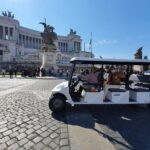
Rome: Golf Cart Tour Timelapse through History
Book on GetYourGuide →Operated by NotBoringTours · Bookable on GetYourGuide
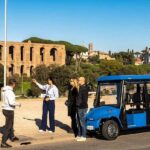
Rome changes every time you turn a corner—this golf cart tour runs a history time-lapse across Colosseum, Pantheon, and Campo de’ Fiori with a live guide calling the shots. You get a guided narrative that moves with you, so the city’s story clicks fast instead of getting lost in ruins and street signs.
I love how Salvo often leads the storytelling with real momentum, connecting the mythic beginnings through the Kingdom, Republic, Empire, Dark Ages, Renaissance, and Baroque years. I also like the short hop-on stops, which give you moments to look close and take photos without turning the day into an endurance test.
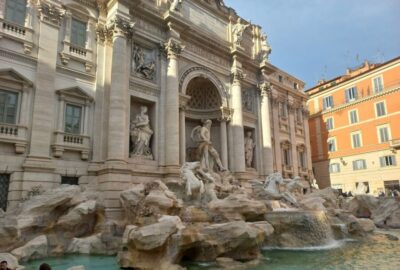
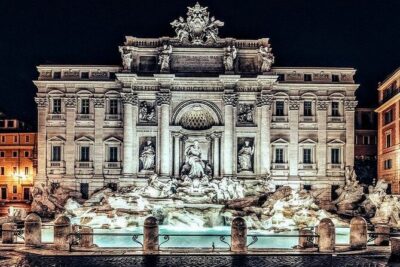
The main thing to plan for is that entry to sites isn’t included, and the route also skips Trevi Fountain because it’s too crowded for this format. If Trevi is your #1 must-see, you’ll want a separate plan.
In This Review
- Key things I’d plan around
- Rome, but your legs get a day off: how the golf cart format helps
- Where the tour starts, and how to find it fast
- The story the guide builds: from Romulus and Remus to Baroque Rome
- Vatican edge: St. Peter’s Basilica and Castel Sant’Angelo on the move
- Largo di Torre Argentina: a photo stop with ancient roots
- Piazza Venezia, Trajan’s Market, and Rione Monti: the “between stops” that matter
- Colosseum area: the stop you’ll remember most
- Arch of Constantine and Palatine Hill views: power, perspective, and height
- Pincio Terrace: a guided aerial-feel moment with 15 minutes to breathe
- San Pietro in Vincoli and Michelangelo’s Moses (time permitting)
- Pantheon: the temple-to-church transformation you can actually feel
- Santa Maria Sopra Minerva: Gothic details in the middle of the timeline
- Campo de’ Fiori: the lively end of the route
- The Aventine Hill Orange Garden: the view you earn at the end
- What you should bring (and why it matters in Rome)
- Price and value: why $64.01 can be a good deal
- Who this tour is best for
- Should you book this Rome golf cart history tour?
- FAQ
- Where do I meet for the golf cart tour?
- How long is the tour?
- What’s included in the price?
- Is entry to the Colosseum, Pantheon, or other stops included?
- Does the tour stop at Trevi Fountain?
- Is the tour wheelchair accessible?
Key things I’d plan around
- Salvo-style storytelling that links Rome’s eras, not just dates and names
- Hop-on photo stops at big hitters like the Colosseum, Pantheon, and key churches
- View breaks at Pincio Terrace and the Aventine Hill Orange Garden
- A smooth route that strings Vatican-area landmarks to the Imperial core and beyond
- Works well in bad weather, since you stay in motion by cart instead of waiting around on foot
- No Trevi Fountain stop, so you don’t waste time hunting it on this itinerary
Rome, but your legs get a day off: how the golf cart format helps
A Rome history tour can go one of two ways: you either walk yourself into a nap, or you race from stop to stop with no context. This golf cart setup solves the first problem. You still get out at key points, but the cart keeps the pace sane.
The value is in coverage. In 3 hours, you can hit the Colosseum area, the Pantheon zone, and the Campo de’ Fiori end of the center without spending your energy on long stretches of pavement. This is a smart way to see a lot when you’re short on time or you don’t want sore feet to steal your evenings.
You can also read our reviews of more historical tours in Rome
Where the tour starts, and how to find it fast
You meet at the operator office on Villa Santa Marta 12. If that office is closed on the day, you meet next door at the bar called Expresso.
From there, the tour begins at Via Santamaura, 12. I’d arrive a few minutes early and keep your water bottle ready; Rome sun and cobblestones don’t wait for anyone.
The story the guide builds: from Romulus and Remus to Baroque Rome
What makes this tour feel different is that it’s structured like a “time-lapse” of Rome. Instead of random stops, you’re traveling through Rome’s timeline: mythic origin (Romulus and Remus), the Kingdom of Rome, then the Republic, and the huge cultural shift under the Empire.
The guide doesn’t leave you stuck in ancient Rome either. You also get the turn of events through the Dark Ages, then the Renaissance and Baroque eras—so the city you’re seeing doesn’t feel like only a museum of leftovers. It feels like a place that kept changing.
The best part? It’s delivered as story. Salvo and the team (including Mike in some runs) have a way of keeping the facts moving, so you’re not staring at buildings like they’re homework.
Vatican edge: St. Peter’s Basilica and Castel Sant’Angelo on the move
The route starts by heading toward the Vatican area. You pass St. Peter’s Basilica during a short scenic drive, which is useful because it gives you orientation for where the city’s power centers shifted over time.
Then you head to Castel Sant’Angelo, with a guided stop and context. Even when you’re not doing a full-on museum visit, this kind of stop helps you understand why certain landmarks sit where they do—and why later Rome built on top of earlier Rome.
This section is a good warm-up. You’re just getting your eyes trained, and the cart keeps things from becoming a shuffle.
Largo di Torre Argentina: a photo stop with ancient roots
At Largo di Torre Argentina, you get a photo stop and a guided moment, plus the chance to hop on and off. This stop works because it’s the kind of place where the city’s layers show themselves quickly, even if you’re only standing there briefly.
If you like when a tour slows down for just long enough to let you look around, this is one of those moments. You get a snapshot of ancient Rome, and the guide ties it back to the broader story.
Practical tip: wear shoes you can stand in. You’re not doing a marathon, but a little time upright adds up.



Piazza Venezia, Trajan’s Market, and Rione Monti: the “between stops” that matter
You’ll hit Piazza Venezia next, with guided context and scenic views while you move through. This is a nice checkpoint because it helps you map your mental geography: you start to see how the monumental sites connect.
Then there’s Trajan’s Market as a pass-by. You don’t spend the whole time there, but the cart window view is exactly what you want for this kind of stop—quick, informative, and efficient.
After that you cruise through Rione Monti by scenic drive. Monti is one of those areas where you can feel the city’s history without needing a ticket. The cart keeps you moving while the guide helps you read what you’re seeing.
Colosseum area: the stop you’ll remember most
No Rome tour is real without the Colosseum zone. Here, Colosseum is a photo stop and guided stop, with hop-on time. This is where the story of Rome’s engineering and public power becomes physical. You’re not just told it existed; you’re seeing the scale.
A quick reality check: you’re getting guided time at the stop, but entry to sites isn’t included. So if you’re imagining going inside the Colosseum itself on this tour, plan to buy separate tickets or pair it with a different experience later.
Still, even from outside, this is worth your attention. The guide’s narrative makes the stones easier to interpret. And if you want photos, the hop-on format makes it simpler than trying to find a good angle while your cart is waiting in traffic.
Arch of Constantine and Palatine Hill views: power, perspective, and height
Right after the Colosseum, you pass the Arch of Constantine for scenic views. It’s a short moment, but it matters because it ties into Rome’s history of propaganda and symbolism. The guide can explain why these arches weren’t just decorative.
Then comes Palatine Hill as scenic views. Palatine is one of those places where being able to see across the rooftops and toward the old imperial core gives you context you can’t get from flat street level. You’re learning the story by geography.
If you like photography, you’ll likely enjoy this section even without a long stop. It helps you connect what you saw at ground level to the larger “where everything was” picture.
Pincio Terrace: a guided aerial-feel moment with 15 minutes to breathe
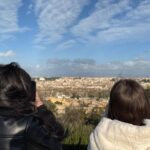
Pincio Terrace is one of the tour’s key breathers. You get a photo stop, guided explanation, and an aerial view, with about 15 minutes to hop on and off.
This is where many people reset their brains. It’s not another museum stop. It’s a viewpoint where the city makes sense again. You can take your time looking, and the guide’s notes help you understand what you’re actually seeing.
If you love skyline photos, bring your camera settings ready. This is the kind of spot where the right angle makes the whole trip feel worth it.
San Pietro in Vincoli and Michelangelo’s Moses (time permitting)
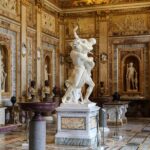
Next is San Pietro in Vincoli with a photo stop, guided stop, and hop-on time for about 15 minutes. This is the church tied to Michelangelo’s Moses, and the itinerary notes it’s time permitting.
I like this stop because it shifts you from ancient Rome to art and memory—proof that Rome’s story isn’t frozen in antiquity. It also gives you a change of pace from outdoor ruins and viewpoints.
If the timing doesn’t allow extra viewing inside, you’ll still get the guided context that connects why this work matters in the bigger timeline.
Pantheon: the temple-to-church transformation you can actually feel
Then you reach the Pantheon for a photo stop, guided visit, and hop-on opportunity. The Pantheon is one of Rome’s most famous structures for a reason: it shows how the city repurposed and rebuilt through centuries.
You’re not doing a long ticketed entry experience as part of this tour. Entry isn’t included, so if you plan to go inside, keep that in mind. But the guided approach helps you understand the transformation theme, which is the whole point of making this stop part of a timeline tour.
This is a great place to slow down for a moment, look up, and let the scale do some work for you.
Santa Maria Sopra Minerva: Gothic details in the middle of the timeline
Santa Maria Sopra Minerva comes next with photo time, a guided stop, and hop-on time. The highlight here is the Gothic treasure angle—an architectural shift that fits perfectly with the tour’s Republic/Empire → medieval → Renaissance/Baroque storytelling.
Even if you’re not the type who nerds out about styles, this stop can land because the guide connects the building to the era change you’ve already been tracking. You feel the timeline moving.
Campo de’ Fiori: the lively end of the route
At Campo de’ Fiori, you get a photo stop, guided time, and hop-on option for about 10 minutes. This is an important finale because it’s a different kind of Rome: the kind that lives in the present while still carrying old layers underneath.
You’ll finish in the Campo de’ Fiori area. The operator also notes the activity ends back at the meeting point, so expect a ride back to the office area after the final stop.
If you want to extend your evening, this area is a convenient place to do it.
The Aventine Hill Orange Garden: the view you earn at the end
One of the tour highlights is Aventine Hill Orange Garden, reached for panoramic views. Even though it’s not listed as a long, ticket-based stop, it’s exactly the kind of payoff a cart tour needs: a place where you can look out over Rome and understand why the skyline has always pulled people in.
Bring your camera and your patience for warm light. Orange gardens aren’t about speed—they’re about letting the city stretch out in front of you.
What you should bring (and why it matters in Rome)
This tour is built for outdoor time plus short walking sections at hop-on stops. Pack light but smart:
- Comfortable shoes
- Hat and sunscreen for sun-heavy moments
- Camera
- Water
Also note what you can’t do: no alcohol and no drugs. Keep it simple, keep it respectful, and you’ll enjoy the tour more.
Price and value: why $64.01 can be a good deal
At $64.01 per person for about 3 hours, the value isn’t just the sites—it’s the way the cart reduces time waste. You’re paying for a guide-led route that links major monuments into a clear story while saving your legs for the viewpoints and photo moments that actually benefit from being up close.
Two things affect value for you personally:
1) Entry to sites isn’t included. If you’re planning multiple inside visits, you’ll need to budget extra on top.
2) The route skips Trevi Fountain. If Trevi is your top priority, the price may not feel as efficient, because you’ll need a separate plan.
If your goal is to see major Roman landmarks, understand how they connect across eras, and still have energy for dinner, this price can feel fair fast.
Who this tour is best for
This is a strong match if you:
- Want a structured history narrative without turning Rome into a footrace
- Prefer short stopouts to long museum marathons
- Have limited time and want to cover big targets like the Colosseum and Pantheon
- Would rather spend energy on photos and viewpoints than endless walking
It may be less ideal if you:
- Only care about ticketed interior visits, since entry isn’t included
- Want a Trevi-centric itinerary, since Trevi isn’t part of this route
- Are traveling with a very young child (it’s not suitable for children under 3 years)
For wheelchair users: the tour is wheelchair accessible, but wheelchairs can’t be brought on the cart due to limited space and must be left at the office. Guests who rely fully on a wheelchair will need to stay on the cart throughout.
Should you book this Rome golf cart history tour?
I’d book it if you want the clearest path through a lot of Rome in a single afternoon. The guide-led storytelling—often with Salvo and Mike—seems to be the secret sauce, because it keeps you from feeling like you’re just seeing famous buildings.
It’s also a smart pick when you want to avoid the sore-feet spiral. The golf cart format is the whole point: you still get real stops, but you’re not sacrificing your day to distances.
Skip it only if your plan is built around inside-ticket experiences at multiple sites, or if Trevi Fountain is non-negotiable. Otherwise, for $64-ish and about 3 hours, this is a practical way to get your bearings and learn how Rome became Rome.
FAQ
Where do I meet for the golf cart tour?
You meet at the operator office at Villa Santa Marta 12. If the office is closed, you meet next door at the bar called Expresso.
How long is the tour?
The tour duration is 3 hours. Starting times vary, so you’ll need to check availability for the day you’re going.
What’s included in the price?
The tour includes a live tour guide and the golf cart ride through Rome’s historical sites.
Is entry to the Colosseum, Pantheon, or other stops included?
No. Entry to sites is not included, so you’ll need to plan separate tickets if you want to go inside specific attractions.
Does the tour stop at Trevi Fountain?
No. This tour does not go to the Trevi Fountain due to crowding.
Is the tour wheelchair accessible?
Yes, it is wheelchair accessible. However, wheelchairs can’t be brought on the golf cart due to limited space and must be left at the office. Guests who rely fully on a wheelchair will need to stay on the cart throughout the tour.