REVIEW · FLORENCE
Private Tour of Florence on a Golf Cart Tour
Book on Viator →Operated by Florencyatour · Bookable on Viator
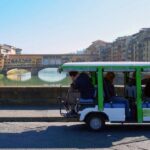
Florence from a golf cart is a cheat code. In about an hour, you get quick bearings and close-up stops at the city’s big icons without turning it into a marathon. I especially like the Arno-side photo moments and the way the guide mix (live talking plus recorded segments) helps you connect the dots fast.
The main drawback to plan around: this is a fast-hit highlight route. Even though some sites have free entry, several major stops are view-only with tickets not included, so you won’t get long, sit-down time inside places like Palazzo Pitti or the Duomo dome.
In This Review
- Key highlights worth caring about
- How a Florence golf cart hour actually helps
- Meeting at Mercato Centrale and what you’ll feel in the first 10 minutes
- Santa Maria Novella and Piazza Ognissanti: the classic Florence opening scene
- Santa Trìnita bridge and the Arno river story
- Ponte Vecchio: why this stop is more than a postcard
- Santo Spirito and the Oltrarno feel: a calmer Florence angle
- Palazzo Pitti and the Medici thread: seeing power in brick
- National Central Library, Uffizi area, and why not everything is a free ticket
- Piazza Santa Croce and the Duomo area: the Florence you came for
- Basilica di San Lorenzo and San Niccolò: where the tour hints at deeper neighborhoods
- How guides really shape this tour (Simone, Farina, Freddy, Joseph, Johnny, Moin)
- Price and value: what $60.34 buys you in Florence
- Who should book this tour, and who should skip it
- Should you book this Florence golf cart highlights tour?
- FAQ
- How long is the Florence private golf cart tour?
- Is this tour private?
- What language is the tour offered in?
- Where is the meeting point?
- Do I need to buy tickets for the stops?
- Is there a mobile ticket?
- Can I cancel for a full refund?
- Is the tour suitable for most people and service animals?
Key highlights worth caring about
- Private group, short pacing: about one hour, built for first-day orientation.
- Free-entry windows at several stops: Santa Maria Novella, Santo Spirito, Santa Croce, and the Duomo area.
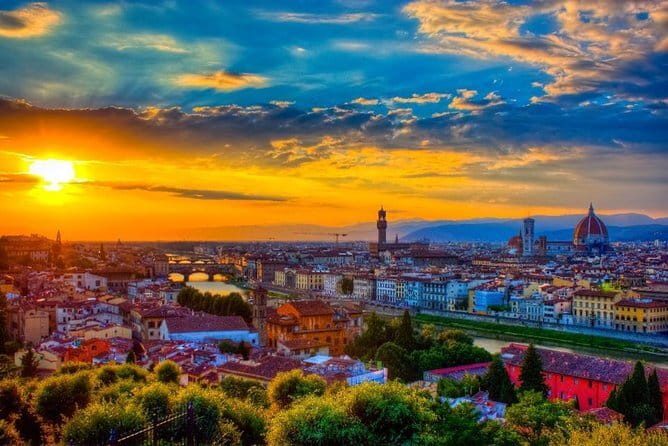
- Iconic river views included: Ponte Vecchio plus nearby bridge scenery like Santa Trìnita.
- English-friendly storytelling: narration is often a blend of guide talk and audio.
- Best use case: hot afternoons, cold snaps, or when walking lots of steep streets is not your plan.
How a Florence golf cart hour actually helps
If Florence is your first stop in Italy, your biggest problem is usually time. The streets are pretty, but they’re also dense, directional, and full of detours that can quietly eat your day. A golf cart tour fixes that by cutting the travel between viewpoints and letting you focus on what matters most.
This one is especially useful because you’re not just passing through one neighborhood. You bounce between Florence’s classic center and areas like Oltrarno, so you get a better sense of how the city changes once you cross key streets and rivers. It’s a good move if you’re arriving from a train that ran late or if you want a calm start before you start climbing stairs and committing to tickets.
Also, this tour format works for different energy levels. Several guides have been praised for making it feel relaxed and personal, and the carts can be a lifesaver if your legs need a break. In winter or on chilly days, though, expect that open-air vibes can be cold; one guest noted the lack of side covers when it was colder than expected.
You can also read our reviews of more private tours in Florence
Meeting at Mercato Centrale and what you’ll feel in the first 10 minutes
You start at Piazza del Mercato Centrale, 39 R, 50123 Firenze FI. It’s a practical pickup point because it’s near a big transit hub and in the general central area—handy when you’re moving from a hotel, station, or dinner plan.
Because the tour is private, you’re not stuck doing the “wait for the slowest group” shuffle. In practice, that means you can settle in quickly, get oriented, and then let the guide steer the rhythm. The tour runs about 1 hour, but keep in mind that a short duration can go two ways:
- If your guide keeps a steady pace, you’ll feel like you saw “the best of Florence.”
- If there’s any delay, traffic, or extra talking mid-route, the tour may feel shorter than what you pictured.
Either way, you should go in with the right expectation: this is not a deep museum day. Think of it as an illustrated city walk, with wheels.
Santa Maria Novella and Piazza Ognissanti: the classic Florence opening scene
The tour begins with Piazza Santa Maria Novella, dominated by the Basilica of Santa Maria Novella. This area is a perfect opener because it anchors you in the geography of the center. You can stand in the square and understand Florence’s “shape” before you’re whisked into narrower streets.
Right after that comes Piazza Ognissanti, set along the Arno side of central Florence. It’s a quieter, more local-feeling pause than some of the bigger headline squares. One benefit of starting with these plazas is that you get a feel for the way Florence mixes grand architecture with everyday street life.
What you should watch for here: if your guide offers photo stops, take them. Early on, your brain is still mapping the city, and those reference photos help later when you’re deciding where to go next.
Santa Trìnita bridge and the Arno river story
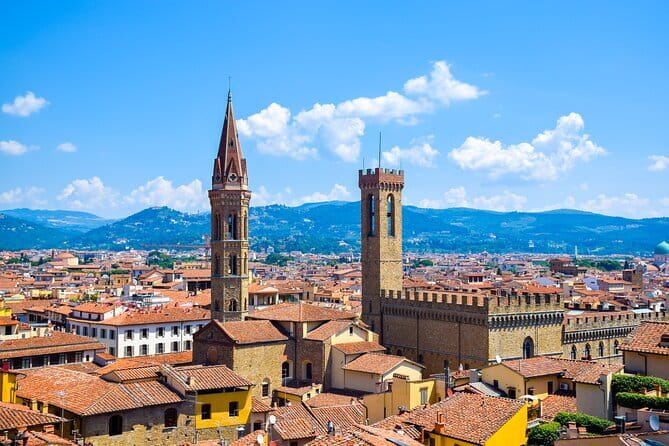
This tour gives you a strong “river moment” sequence. You pass through the area around the Santa Trìnita bridge, often singled out as one of the prettiest bridges in Italy. Even without long stops, bridges are where Florence’s perspective snaps into place: the water, the buildings, and the sense of layered streets all show up at once.
Then you’re set up for the main event.
Ponte Vecchio: why this stop is more than a postcard

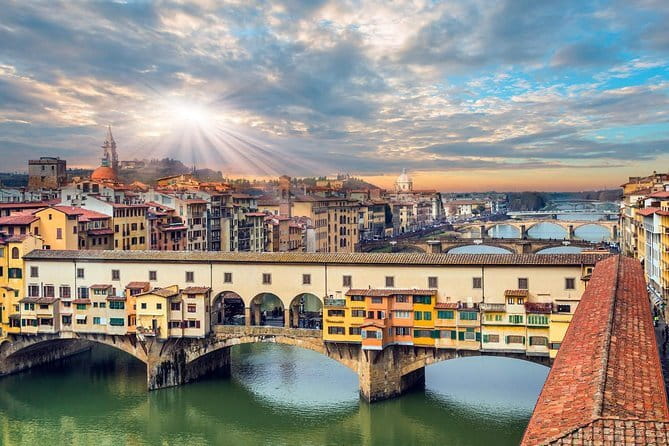
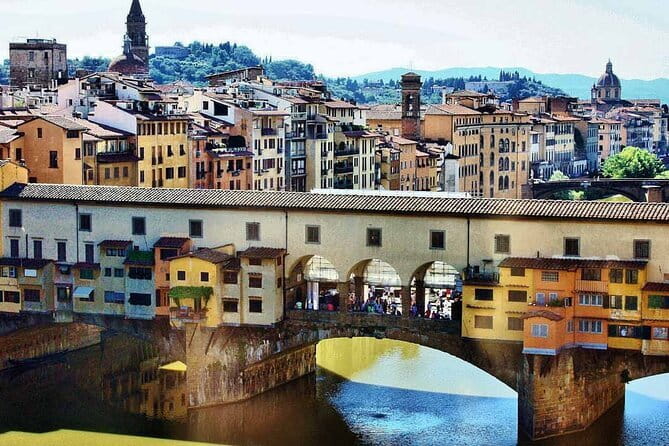
You’ll reach Ponte Vecchio, Florence’s signature bridge over the Arno. It’s one of those places you’ve probably seen in photos for years—then you arrive and realize photos don’t capture how it feels in real time. The scale, the walking lanes, and the way the shops and arches frame the river make it hard not to grin.
This stop also tends to be where guides excel because it’s visually strong and easy to narrate. Some guides have been especially good at mixing quick historical context with practical tips like where to stand for a good angle and when to snap photos so you’re not fighting crowds.
One more reason Ponte Vecchio matters on this kind of tour: it’s a turning point. After the bridge, your next stops start to feel more like “Florence’s layers”—historic churches, Medici-era influence, and neighborhoods with different vibes.

Santo Spirito and the Oltrarno feel: a calmer Florence angle
Next comes Santo Spirito, a major basilica in Oltrarno. Its facade is simple compared to the city’s more dramatic facades, and that’s part of why it works. It gives you a more human, lived-in Florence moment rather than only the museum-level wow.
There’s also a theme shift here. Oltrarno has a different rhythm than the main historic center, and this tour uses that shift to keep your hour from feeling like a checklist. A few guests have specifically liked the Oltrarno direction because it makes the day feel more than just a set of famous landmarks.
Keep your expectations practical: even if you’re stepping into a church, this tour’s stop times are short. You’ll get impressions more than extended wandering. If you want longer time for interior details, you’ll likely need a separate visit later.
Palazzo Pitti and the Medici thread: seeing power in brick

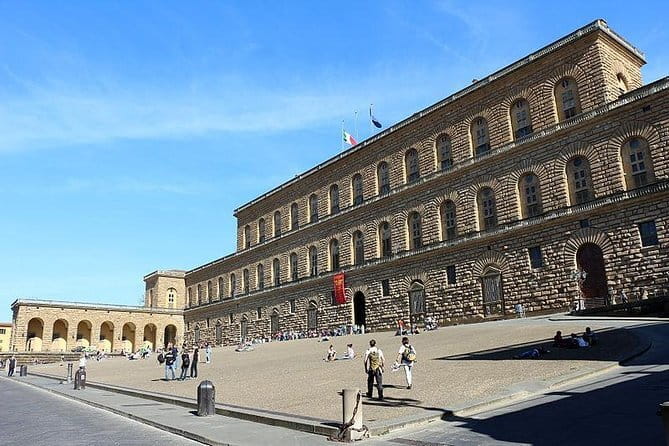
You’ll stop around Palazzo Pitti, purchased in 1550 by Cosimo I de’ Medici and Eleonora of Toledo to turn it into the new Grand Ducal residence. This is where Florence’s political storytelling becomes architecture you can point at. Even if you don’t go inside (tickets here are not included), the location helps you understand why the Medici era shaped so much of what you see.
This section is also where you’ll start noticing how the tour connects sites. The Medici name shows up again later in the route area with the Medici chapels.
If you’re a person who likes context, pay attention here. When the guide ties the Medici influence to what you’re seeing now, you’ll have an easier time navigating Florence afterward without relying on random plaques.
National Central Library, Uffizi area, and why not everything is a free ticket
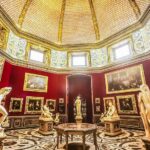
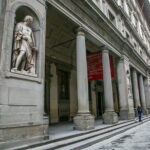
As you keep moving, the tour passes by major institutions like the National Central Library and the Uffizi Gallery complex. These stops are useful for orientation—basically “this is where the art power is”—but they aren’t set up as long museum entries.
That’s a big deal for value. The free-entry parts of the tour are limited to select stops (and some are explicitly free), while big-ticket sites like the Uffizi, Palazzo Pitti, and the Medici chapels area typically need separate planning. So if you’re hoping to knock out major museum time in one hour, this tour won’t do that.
Still, I like this approach because it prevents ticket regret. You get a sense of what’s worth buying deeper later.
Piazza Santa Croce and the Duomo area: the Florence you came for
The tour ends up at Piazza Santa Croce, one of the city’s main squares, dominated by the basilica of Santa Croce. This is a good moment to breathe for a minute, because the square setting makes it easier to understand the city’s street network.
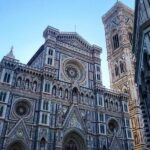
Then comes the big religious and visual anchor: the Duomo area. You’ll stop near Santa Maria del Fiore, Florence’s cathedral symbol. Some related stops include free entry, and the tour also references Brunelleschi’s dome (the dome cover of the cathedral experience). Tickets for the dome itself are not included, so treat this as a “stand here and get the mental picture” moment more than a full interior plan.
A practical tip: when you reach the Duomo area, you’ll be surrounded by people doing their own thing. A good guide helps you pick the right vantage point and keep you from losing time. Several guests specifically praised guides who managed photo stops well, which matters here because it’s one of the most photographed places in the city.
Basilica di San Lorenzo and San Niccolò: where the tour hints at deeper neighborhoods
On the route, you’ll also pass Basilica di San Lorenzo (near the San Lorenzo market area) where ticket entry is not included. San Lorenzo is worth knowing about even if you don’t step inside, because it’s tied to the daily-life side of Florence.
The tour also references San Niccolò, an area noted for preserving a medieval atmosphere. That matters because Florence isn’t only about the big monuments. San Niccolò helps you feel the city’s older bones—especially if your guide adjusts and includes time for viewpoints.
That viewpoint angle is one of the most consistent perks mentioned by guests. Some guides have accommodated requests to reach places like Piazza Michelangelo when time allows. If you want that golden-hour style view, ask early and be flexible on timing.
How guides really shape this tour (Simone, Farina, Freddy, Joseph, Johnny, Moin)
With a short golf cart tour, the guide becomes the difference between a neat ride and a memorable one. The strong theme in the feedback is that guides often do more than read a script. Named guides like Simone, Farina, Freddy, Joseph, Johnny, and Moin were singled out for being friendly, providing real context, and making time for photos.
A few examples of what that looks like in practice:
- You get extra photo moments, not just quick stops.
- You hear the story behind why a bridge or church looks the way it does.
- The guide adjusts to the group, like adding a viewpoint request when possible.
Now for the balanced part: narration isn’t always perfect. Some people noted that the English audio recording could have playback issues, and a few felt the tour leaned too heavily on recorded narration. That doesn’t mean it’s bad, but it does mean you should think of this as guided more than lecture-style. The best guides bring it to life.
Price and value: what $60.34 buys you in Florence
At $60.34 per person for a private, roughly one-hour tour, you’re paying for convenience and a tight, curated route—not for deep museum coverage. Whether it’s a great deal depends on how you plan to spend the rest of your day.
Here’s the value math that usually makes sense:
- If you’ll only have one day in Florence (or you’re doing multiple neighborhoods), this tour can help you decide where to spend money on separate tickets.
- If you’re traveling with kids, older adults, or you’re simply tired of walking hills, the golf cart saves energy and makes the route feel doable.
- If you’re obsessed with long interior time at major sites, you may feel underwhelmed because some of the most famous places aren’t included for entry.
I’d also consider group size. Since it’s private, the cost per person can feel more reasonable when split among friends or family, especially compared with repeated taxis or other ways of stitching together sightings quickly.
Who should book this tour, and who should skip it
This works best if you:
- Want a first-day orientation in a short window
- Prefer to see many neighborhoods without long walking breaks
- Like iconic “stand here, take the photo, move on” style travel
- Travel with mobility limits or just want an easier day
You might want to skip it (or book it with different expectations) if you:
- Want hours inside museums or churches in one go
- Really dislike audio-recorded narration
- Are picky about vehicle comfort, since a few guests have flagged carts as old or uncomfortable
Should you book this Florence golf cart highlights tour?
If your goal is to get your bearings fast and see Florence’s must-have scenes—Santa Maria Novella, Ponte Vecchio, Santo Spirito, Santa Croce, and the Duomo area—this is a strong fit. The best experiences seem to come from guides who add personality and photo-friendly moments, and that can be exactly what you want when you’re short on time.
My advice: book it for the orientation value, then plan your deeper ticketed visits separately (Uffizi, Palazzo Pitti, Medici chapels, dome access) based on what you liked most on the cart ride. And on travel-day logistics, show up a bit early at Piazza del Mercato Centrale with your mobile voucher ready, because Florence streets can be chaotic and pickups can be sensitive to timing.
FAQ
How long is the Florence private golf cart tour?
It’s listed at about 1 hour.
Is this tour private?
Yes. It’s a private tour/activity, so only your group participates.
What language is the tour offered in?
The tour is offered in English.
Where is the meeting point?
The tour meets at Piazza del Mercato Centrale, 39 R, 50123 Firenze FI, Italy.
Do I need to buy tickets for the stops?
Some stops are listed as free or with admission included, while others are listed as not included (such as Palazzo Pitti, Cupola del Brunelleschi, and others).
Is there a mobile ticket?
Yes, it includes a mobile ticket.
Can I cancel for a full refund?
Free cancellation is available up to 24 hours in advance for a full refund.
Is the tour suitable for most people and service animals?
The tour states that most travelers can participate, and service animals are allowed.
If you’d like, tell me your travel month and how many people are in your group, and I’ll suggest a smart follow-up plan for where to spend your ticket time after the cart tour.