REVIEW · BELFAST
Belfast Troubles : Murals, Street Art, and Peace Wall Tour
Book on GetYourGuide →Operated by Belfastology Walking Tours · Bookable on GetYourGuide
Belfast’s street art reads like a living map. This 3-hour walk links political murals and modern street art across West Belfast, then slows down at the peace lines so you can see what art is doing for communities today. I love how the tour gives you real context for the murals—especially the Troubles—and I also love the small-group size (limited to 8), so questions feel welcome instead of rushed.
The only real caution: you’ll cover a fair amount on foot and it runs in rain or shine, so pack for weather and wear comfortable walking shoes. Also, the tour is delivered in English and assumes a good level of understanding, since the subject is complex right from the start.
In This Review
- Key highlights you’ll notice fast
- Murals as Belfast’s public language
- Getting your bearings: from 10 Exchange St W to Shankhill Road
- West Belfast street art and the Re-imaging murals project
- Shankhill Road, peace gates, and what the loyalist side teaches
- Falls Road murals, the international wall, and the Peace Wall
- Divis Road viewpoints and finishing near City Hall
- Price and value: what $35 buys in three hours
- Should you book Belfast Troubles: Murals, Street Art, and Peace Wall?
- FAQ
- Where do I meet the guide?
- How long is the tour?
- How much does it cost?
- What parts of Belfast does the tour cover?
- Do we visit the Peace Wall?
- Is the tour guide speaking English?
- What should I wear or bring?
- How big is the group?
- Is there free cancellation or pay-later options?
Key highlights you’ll notice fast
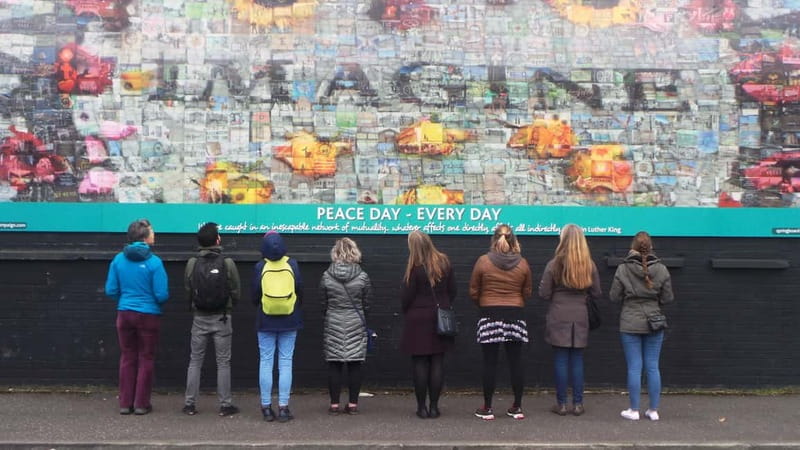
- Political murals with background, not guesswork, so symbols actually make sense.
- Re-imaging murals that reflect what local communities want people to see.
- Shankhill Road and the loyalist peace lines with viewpoints along the way.
- The Peace Wall and peace gates, including both international and political mural sections.
- Falls Road murals (nationalist/republican side) with stops made for sight and photos.
- A tight 3-hour route that finishes near the center, close to City Hall.
Murals as Belfast’s public language
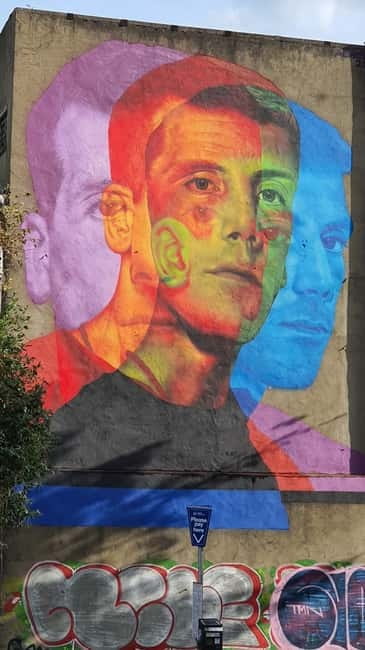
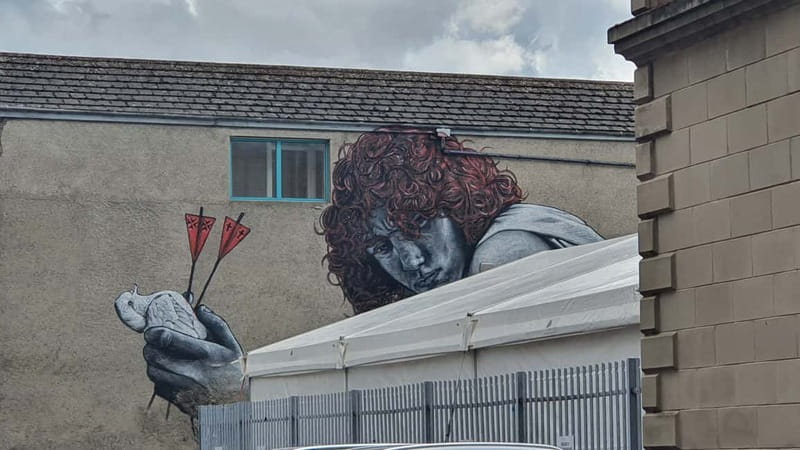
Belfast’s mural walls aren’t just decoration. They’re a kind of public memory—messages painted large enough to be seen from the street, repeated across decades, and changed when communities want the story to shift. On this walk, you’ll see modern street art too, including work associated with international artists, which helps explain why Belfast has become known for this mix of graffiti culture and political artwork.
What makes this tour more useful than a quick photo stop is the way it treats the art as evidence. Instead of asking you to interpret symbols on your own, the guide sets the stage early and keeps reconnecting the murals to what Northern Ireland went through and what people are doing now. You’ll hear how Northern Ireland works with locals toward peace through projects and community input, and you’ll see that idea made visible on the walls.
One more thing I appreciate: the tour doesn’t pretend the past is simple. The art you’ll see can be sobering, because it’s tied to real political movements. But it also makes room for what comes after—how communities try to manage peace, and how art can help people tell their own stories instead of letting history harden into slogans forever.
A few more Belfast tours and experiences worth a look
Getting your bearings: from 10 Exchange St W to Shankhill Road
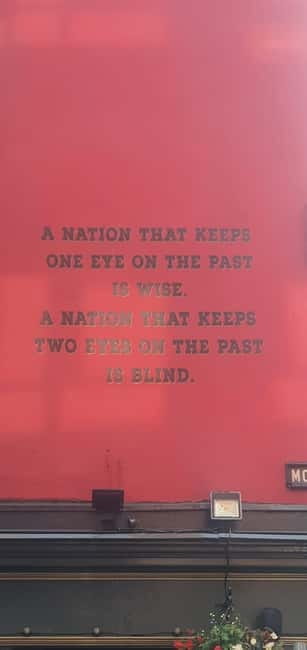
You start at 10 Exchange St W, meeting your guide at the entrance to the Mac. Look for the guide with a blue checkered backpack. That sounds small, but it matters. When you step out with the guide, you’re not just walking between murals—you’re building a sense of direction, knowing where you are and why each block is a piece of the story.
From there, the route heads into West Belfast toward Shankhill Road, with scenic views along the way. Those views aren’t just for photos; they help you understand the geography of the area. In cities shaped by divisions, where the streets climb, where the walls run, and where you’re facing relative to the other side changes how you read what you see.
This is also where the tour’s pacing starts to make sense. You’re not sprinting from one wall to another. You’re learning how to look: where to stand to take a clear photo, what mural details matter, and how the art fits into the political landscape without turning the walk into a lecture.
If you like tours that give you context early, and then let the city do the explaining, this section sets you up well for what comes next.
West Belfast street art and the Re-imaging murals project
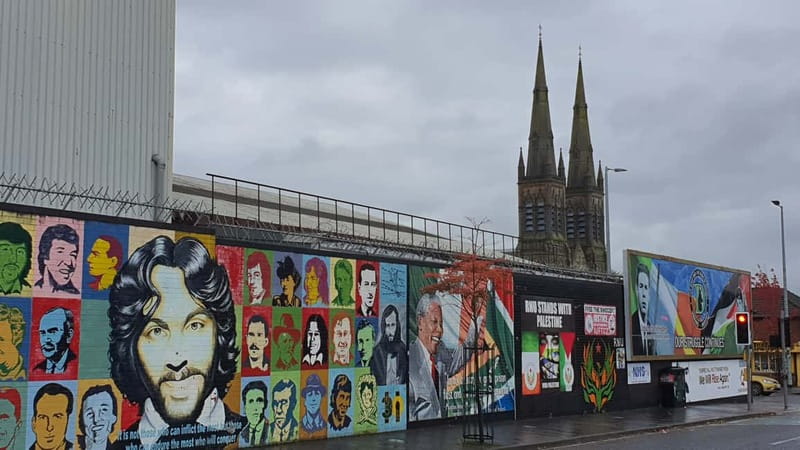
Once you’re in the core West Belfast zone, the tour leans into what people mean when they say Belfast is now known for street art. You’ll see modern murals and international-influenced street art alongside the more controversial political artwork. That contrast is part of the point: the city isn’t stuck in one style or one message.
A key stop in this section is the Re-imaging murals concept. The idea is simple but powerful: instead of murals being painted for outsiders, the focus is on putting up art that local communities want to share with all who pass by. On a wall, that changes everything. It shifts murals from being only about conflict or identity to being about participation—letting people shape how they’re seen.
You’ll also hear how communities and Northern Ireland are working to move toward peace. The murals become a visual timeline: what was painted to communicate power, what was painted to remember, and what’s now being painted to support a future where people can live side by side.
Practical note: plan time to pause. This is the part of the tour where you’ll want to get your phone camera ready, because the walls are packed with readable details—faces, text, symbols, and layered imagery. The good thing is the tour is built around photographic opportunities, so you’re not constantly getting yanked forward before you’ve finished looking.
Shankhill Road, peace gates, and what the loyalist side teaches
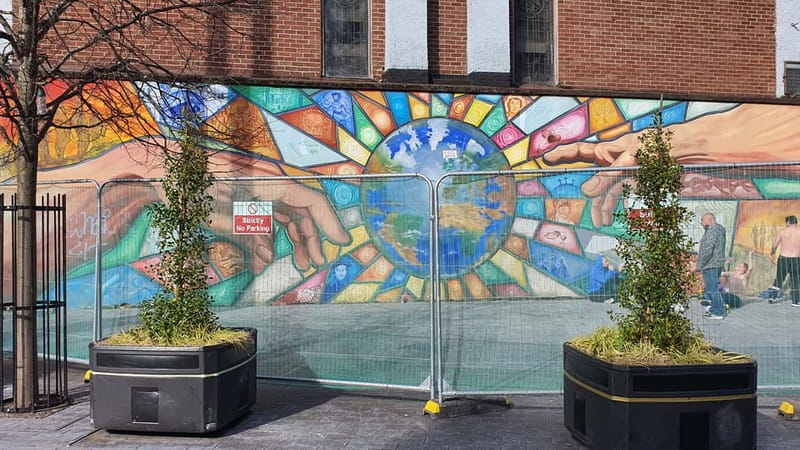
Next comes Shankhill, a loyalist area that plays a major role in understanding the division—and how that division has been physically managed in the streets. As the walk moves through Shankhill Road, you’ll get close enough to see mural scale, brushwork, and how different sections of walls relate to each other.
Then the tour brings you toward the peace gates and the peace lines. This is one of the emotional “hinge points” of the whole walk. You’re not just seeing art now; you’re seeing how lines were drawn in everyday life—how public space was shaped by tension, and how communities attempt to keep going through it.
The value here is balance and framing. The guide’s job is to explain the history and the meaning of what you’re seeing, while also pointing out the present-day focus on peace. In other words, you’re not left staring at a wall with a puzzle you can’t solve. You’ll get the connections, the motivations behind the artwork, and what peace-building looks like in practice.
One possible drawback to keep in mind: because Shankhill and the peace lines are tied to political conflict, the mood can feel heavy. If you’re sensitive to political topics, give yourself a little time to reset at the end of this segment—step back, breathe, and remember why you’re here: to understand, not just to photograph.
Falls Road murals, the international wall, and the Peace Wall
After Shankhill, the route crosses toward the nationalist/republican side via the Falls Road. You’ll have about 30 minutes on the Falls Road for sightseeing and mural viewing. This is where you’ll see the political murals clearly linked to nationalist/republican falls-area themes, plus the wider mural scene Belfast is becoming known for.
You’ll also see the Peace Wall, including the international wall section. This part often hits people because it reframes the story. Instead of only seeing political messages aimed at opponents, you’ll encounter art that speaks outward—international influences, human themes, and the idea that people can use walls to communicate peace rather than only threat.
The tour gives you about 20 minutes for the Peace Wall portion as you walk it and take it in. That timing matters. Too little time and you only skim. Too much and you get mural fatigue. Here, the pace is long enough to take photos and absorb details, but short enough to stay engaged.
If you want a practical tip: use your first minute or two at each major wall as a “scan.” Look for the biggest symbols first, then move in for the details once you know where to focus. The murals are often layered—what seems like a single image from a distance can turn into multiple messages when you stand close.
This is also where the tour’s peace message becomes more concrete. You’re walking through a real, physical reminder of division, and you’re also seeing how art has been used to manage the emotional weight of that division—helping communities keep talking instead of just hardening.
Divis Road viewpoints and finishing near City Hall
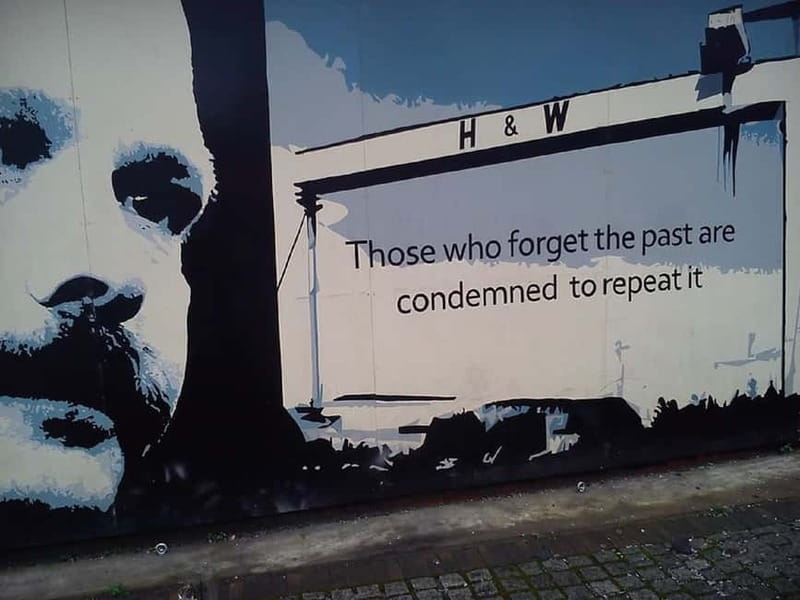
Next you’ll head via Divis Road, with about 20 minutes for sightseeing. This is a useful “bridge” segment. By the time you reach Divis, you’ve seen both sides of the divide in mural form, plus the Peace Wall itself. Now the tour can land the lesson: how people live with the past while working toward peace.
The Divis area also helps you keep your sense of place. It’s easier to understand the city when you’ve walked from one side of the divide to the other rather than reading about it. And the route design—moving between areas rather than sticking to one street—prevents the tour from feeling like a single-topic stop-and-go.
You end the tour not far from central landmarks, finishing at 2 Royal Ave. That makes it convenient to keep exploring afterward, especially if you want to get a first look at the city center after the neighborhoods and wall sections.
If you’re planning the rest of your day, I’d treat this as a “main activity.” The tour is long enough to reshape how you see Belfast afterward. It’s also long enough that you’ll want dinner or a drink afterward without immediately planning a second major outing.
Price and value: what $35 buys in three hours
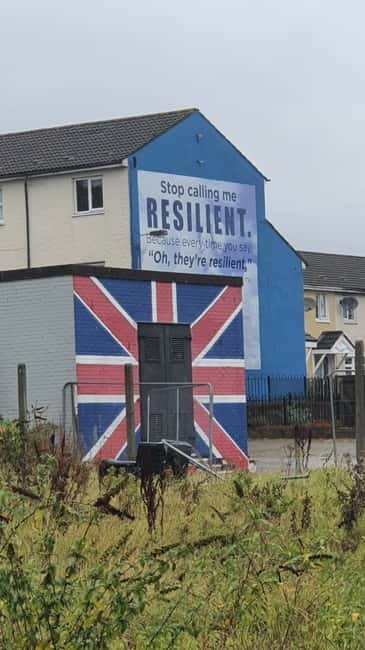
At $35 per person for 3 hours, this isn’t a bargain tour, but it also isn’t priced like a luxury experience. The value comes from three things that are hard to recreate on your own:
- Context delivered in real time. You get an in-depth explanation of the Troubles at the beginning and throughout the walk, which helps you understand the murals instead of treating them like anonymous street art.
- A route that hits the important physical references—Shankhill Road, the peace gates, Peace Wall areas, and the Falls Road mural zones—within one coordinated loop.
- Small-group focus (max 8 participants), which makes it easier to ask questions and actually learn why a mural exists, not just what it looks like.
You’re also getting lots of photographic opportunities, which matters if you like street art documentation. One recent group clocked around 7,500 steps during the tour, so you’re not paying for a quick stroll—you’re paying for a guided walk that covers meaningful ground.
Who does this best? If you enjoy street art and you also want the political and cultural context behind it, this tour gives you a serious framework. If you want only entertainment and nothing political at all, you’ll likely feel uncomfortable here. And if your English level is limited, the tour’s detailed early explanations could be challenging.
Should you book Belfast Troubles: Murals, Street Art, and Peace Wall?
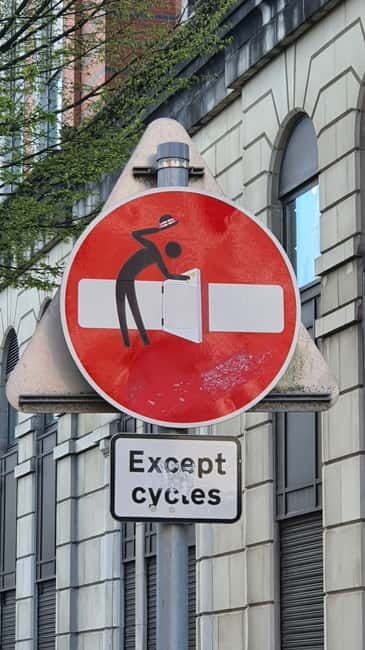
Book it if you want Belfast to make sense. This is a strong choice when you care about street art as communication, and you want to understand how communities use murals and community projects—like Re-imaging murals—to move toward peace while still honoring the past.
Skip it if you don’t want political context, or if you’re not up for walking in changeable weather. Comfortable shoes are a must, because this is a real neighborhood walk with stops designed for viewing and photos, not just passing by.
If you do book, go with two mindsets: first, look slowly at the walls, and second, ask yourself what changed—what messages stayed, what messages evolved, and how peace is represented on brick and concrete. That’s where the tour earns its value.
FAQ
Where do I meet the guide?
Meet at the entrance to the Mac, with the starting point listed at 10 Exchange St W. The guide will have a blue checkered backpack.
How long is the tour?
The tour lasts 3 hours.
How much does it cost?
The price is $35 per person.
What parts of Belfast does the tour cover?
You’ll walk through West Belfast, including Shankhill Road, the Falls Road, areas connected with peace lines/peace gates, and you’ll also visit viewpoints around Divis Road.
Do we visit the Peace Wall?
Yes. The tour includes a Peace Wall visit, including the peace lines and peace gates, plus an international and political mural area on the Falls Road side.
Is the tour guide speaking English?
Yes, the live tour guide delivers the tour in English.
What should I wear or bring?
Wear comfortable shoes. Dress appropriately for weather because it can be changeable, and the tour runs in rain or shine.
How big is the group?
The group is small, limited to 8 participants.
Is there free cancellation or pay-later options?
Yes. You can cancel up to 24 hours in advance for a full refund, and you can reserve now & pay later.