REVIEW · ROME
Borghese Gallery Small-Group Tour with Canova’s Masterpieces
Book on Viator →Operated by Walks - Italy & Spain · Bookable on Viator
Villa Borghese feels calm, even on a busy day. This small-group tour gets you into the Galleria Borghese at your assigned time, then an art historian guide walks you through the collection’s biggest hits with context and stories that make the art easier to read. I especially love how the museum’s timed-entry system keeps the rooms from feeling packed, and how the tour targets major works like Canova’s Pauline Bonaparte and Bernini’s Rape of Proserpina without turning it into a rush. One possible drawback: if a guide needs extra time at the start—or if part of the museum is temporarily unavailable—you might not see every room.
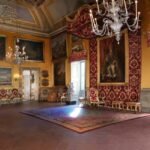
You’ll meet in front of the gallery’s double staircase, then step into an interior that feels more like a private palace than a standard museum. The building’s past matters here: it was created by Cardinal Scipione Borghese in the 1600s to house a personal art collection that once belonged to royals and dignitaries. The space today is intentionally intimate, and that intimacy is the whole point.
In This Review
- Key things I’d plan around
- Villa Borghese works best when you keep your expectations smart
- Meeting at the double staircase: what to do before you go in
- Skip the line, then step into a palace-sized art lesson
- The main gallery loop: what “highlights” look like in real life
- Canova and the shock of polish
- Caravaggio’s intensity: not just paintings, but stage light
- Raphael and the calmer weight of narrative
- Bernini in person: the art that moves toward you
- What you might miss (and how to handle it without stress)
- The time math: how to make 90 minutes feel like two hours
- How much this costs, and why it can be worth it
- Reviews you can translate into your planning (without overthinking it)
- Who should book this Borghese small-group tour?
- Should you book the Borghese Gallery Small-Group Tour?
- FAQ
- How long is the Borghese Gallery small-group tour?
- Is the tour in English?
- Where do I meet for the tour?
- Is the admission ticket included?
- What group size is this tour?
- Is this a walking tour?
- Can wheelchair users join?
- What’s the cancellation policy?
Key things I’d plan around
- Timed-entry calm: The museum admits visitors in 2-hour intervals, so your tour doesn’t get swamped.
- An art historian guide: You’ll get interpretation, not just a list of titles and artists.
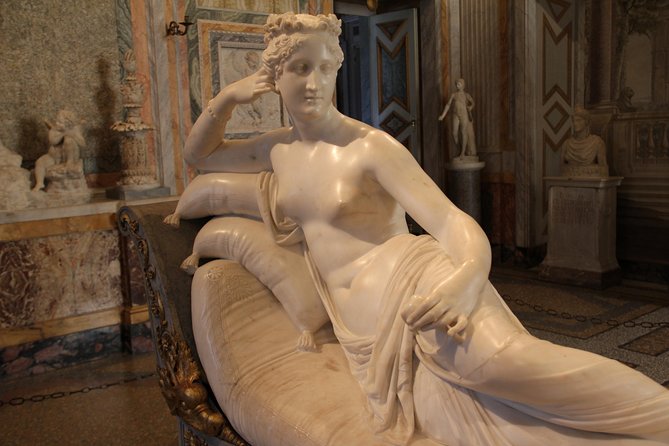
- Top works in context: You’ll see big names like Caravaggio, Raphael, and Bernini, plus Canova’s famous sculpture Pauline Bonaparte.
- Small group size (max 15): Better pacing, more room for questions.
- Headset help (when needed): You’ll use a headset for groups over 6.
- Walking tour, moderate pace: You’ll move room-to-room in the museum at a steady, not sprinting, rhythm.
Villa Borghese works best when you keep your expectations smart
The Galleria Borghese isn’t a “grab photos and go” museum. It’s a collection where closeness matters—because the works are powerful, and the details are worth seeing more than once. That’s why I like this tour’s basic setup: you don’t arrive and hope for the best. You arrive with pre-reserved tickets and a designated time slot.
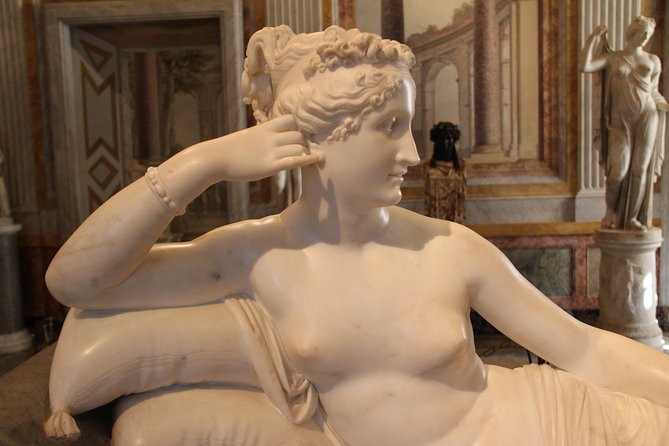
The real value is that the gallery keeps visitor numbers low on purpose. That means you can actually stand and look. You can read the way faces are carved, the tension in a sculpture’s body, or the theatrical lighting that makes Caravaggio feel so alive. If you’re the type who wants to understand what you’re seeing, this tour gives you a solid framework fast.
You can also read our reviews of more museum experiences in Rome
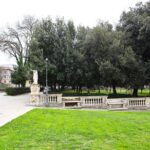

Meeting at the double staircase: what to do before you go in
Meet at Galleria Borghese, Piazzale Scipione Borghese, 5, 00197 Roma. You’ll gather in front of the museum—near the famous double staircase—then go in with your group.
A small practical note: this is a walking tour. You should be able to move at a moderate pace without long breaks. If you’re bringing mobility equipment, the experience can accommodate mobility impairment or wheelchair users, but you need to email the Guest Experience team at booking so they can arrange it properly.
Also, museum rules can be strict. Plan on going light. In practice, this kind of museum visit often means bag checks and tight limits on what you carry inside, so keep your bag small and your “must-haves” minimal.
Skip the line, then step into a palace-sized art lesson
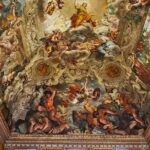
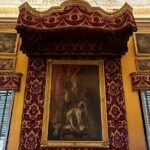
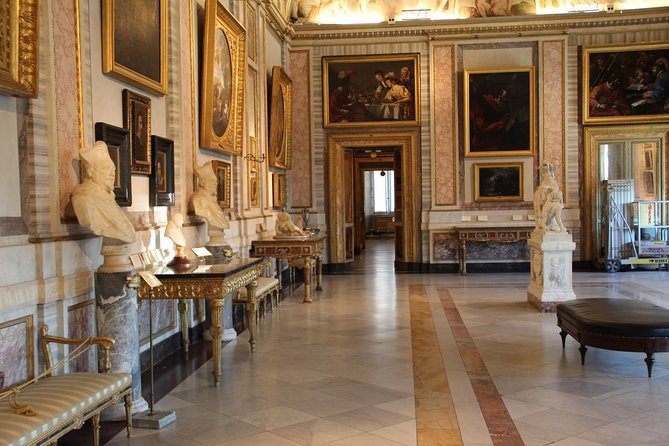
Once you’re inside, the first thing you notice is the building itself. The tour starts with the architecture and the decorative feel of the gallery—opulent, ceremonial, and clearly meant for a different kind of audience than everyday museumgoers.
Then your guide ties the rooms together: the collection was built around Cardinal Scipione Borghese’s collecting tastes, and those choices shaped what you see. Your guide’s job is to translate that collector’s mindset into something you can recognize while you’re standing there.
Two things I think you’ll really appreciate:
- How the guide slows the room down. Instead of racing through highlights, you’ll get a few key stops explained in a way that makes the rest make more sense.
- How folklore and history get used as interpretation. This isn’t just dates and names. It’s why certain pieces mattered to the people commissioning them and how stories helped viewers “read” the art.
The main gallery loop: what “highlights” look like in real life
Your guided visit focuses on the most famous and most important works in the Galleria Borghese. The tour is about 1 hour 30 minutes, and it loops back to the original meeting point when you finish.
In a museum like this, “highlights” can still feel vague if the guide only points and names. Here, you should expect interpretation and guided viewing. The tour is designed so you leave feeling like you got something you couldn’t have picked up alone, even if you’re new to Baroque art.
Canova and the shock of polish
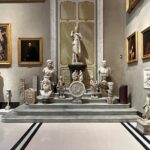
A standout is Canova’s Pauline Bonaparte. This sculpture is famous for a reason: the surface finish and the lifelike presence create an immediate response. Your guide should help you see how this work fits the collector’s taste—beauty and drama, but controlled and courtly.


Caravaggio’s intensity: not just paintings, but stage light
Caravaggio’s John the Baptist (and related works described on the tour) bring a different mood. Caravaggio works like he’s directing a scene: dramatic contrast, tight focus, and faces that feel close enough to talk back to you.
The tour framing matters here. If you only know Caravaggio as dark and moody, your guide’s explanations can help you understand what’s happening visually—how gestures and expression carry the moment.
Raphael and the calmer weight of narrative
Raphael’s work on this visit includes The Deposition. This piece helps balance the emotional punch of Caravaggio and Bernini by bringing out a more structured storytelling style.
Even if you don’t know Raphael well, your guide’s role is to help you notice what Raphael is doing with composition and emotion—without requiring you to have studied art history first.
Bernini in person: the art that moves toward you
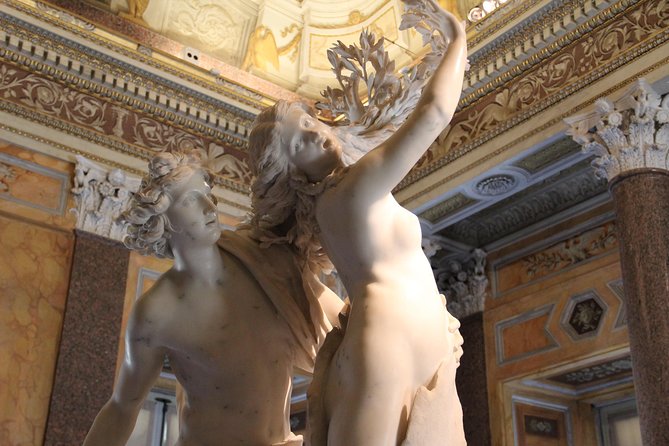
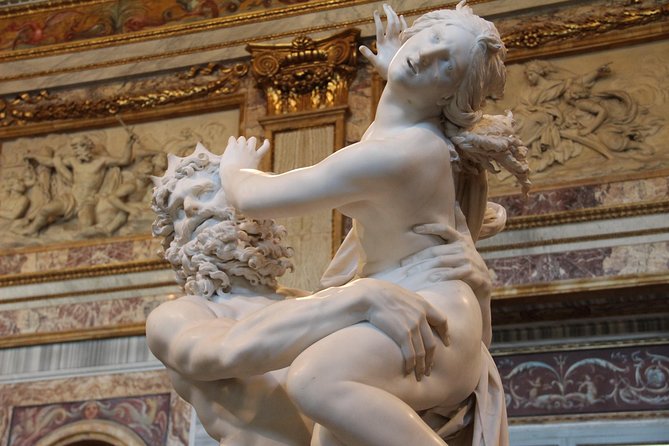
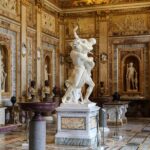
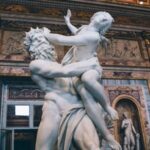
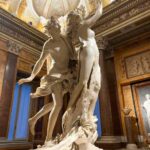
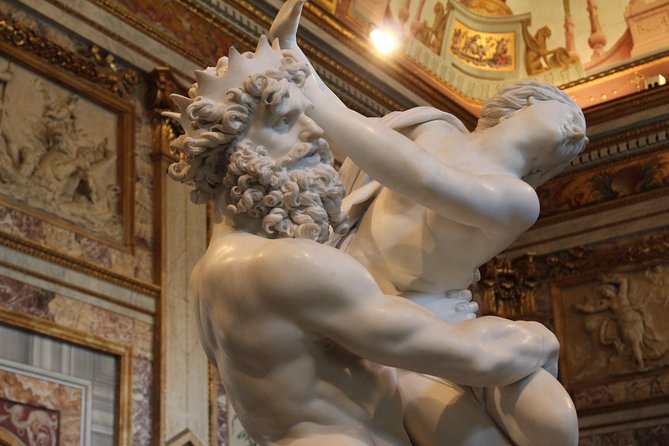
If you want to understand why Bernini became Bernini, seeing his sculptures in the flesh is a big deal. The tour includes Bernini’s Apollo and Daphne and The Rape of Proserpina.
Bernini’s power is physical. Your guide should help you see how posture, twisting bodies, and expressions create motion even though nothing is actually moving. On a small-group tour, you can usually get into a viewing position and stay long enough to really read the work rather than just snap a picture and shuffle onward.
What you might miss (and how to handle it without stress)
This museum is not always identical from one day to the next. Some floors can be closed due to renovation, and sometimes changes happen that affect what’s available at that time. I can’t promise access to every room in every condition, so here’s the smart way to plan:
- Treat the tour as a guided pass through the museum’s most famous works.
- If something is unavailable, rely on the guide to redirect you to the works that are open and still hit the core themes of the collection.
- If you’re the type who absolutely needs specific rooms or floors, build in buffer time for a self-guided revisit later.
Also, pacing can affect what feels “complete.” If your guide spends longer than average on a first stop, the rest of the tour may feel more compressed. That’s not a disaster, but it’s worth knowing your time is finite in a 90-minute experience.
The time math: how to make 90 minutes feel like two hours
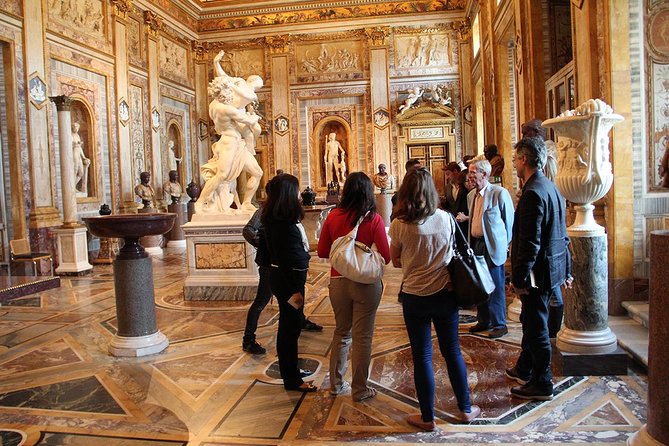
Ninety minutes sounds short until you realize how tightly the Galleria Borghese is managed. Rooms aren’t endless, and the experience is built around timed entry and controlled capacity.
Still, you can make this tour work better for you:
- Come ready to look. If you arrive stressed, you’ll rush your own viewing.
- Ask one or two questions early. With a small group, your guide can respond without derailing the whole schedule.
- Pick your priorities beforehand: for me, it would be Bernini + Caravaggio, then fill in the rest with curiosity.
The headset feature (for groups over 6) helps here. If the group gets louder, you won’t lose the explanation. You can focus on the work instead of hunting for the guide’s voice.
How much this costs, and why it can be worth it
At $65.33 per person, this isn’t the cheapest way to visit Villa Borghese. But it’s also not paying just for entrance.
You’re paying for:
- Pre-reserved entry in a museum that controls daily capacity.
- A guide who can connect works to collecting motives, symbolism, and Baroque-era storytelling.
- A group size that stays under control (max 15), which matters in a gallery where standing in the right spot is part of the experience.
If you’re someone who enjoys reading labels but wants more meaning, you’ll likely feel this price makes sense. If you only want to tick off famous works quickly, you might question whether guided interpretation is worth it. My take: this tour is best value when you actually plan to slow down and learn, not just to look.
Reviews you can translate into your planning (without overthinking it)
A pattern that comes through clearly is that guide quality heavily shapes the feel of the tour. Guides like Marta, Emily, Francesco, Laura, Angela, and Siri have been praised for energetic explanations, strong art-history context, and making sculptures and paintings feel easier to understand.
That’s good news for you because it suggests the tour’s “engine” is the guide’s ability to explain. If you’re choosing a time slot, the best strategy is to pick one that matches your energy. Late-day tours can sometimes feel more rushed, especially if access or room availability changes.
Another point: a few visitors noted operational hiccups (like guide lateness or confusion around exchanging vouchers). It’s not the norm in what most people report, but it’s real enough that you should bring a calm, flexible mindset. Arrive a few minutes early so you’re not starting from a deficit.
Who should book this Borghese small-group tour?
I’d point you toward this tour if:
- You want high-impact art (Canova, Caravaggio, Raphael, Bernini) without spending your whole day reading.
- You like guides who can connect stories and symbols to what you’re seeing.
- You prefer a quieter museum experience with space to stand and actually look.
You may want to reconsider if:
- You’re very sensitive to walking and crowd flow (it is a walking tour at a moderate pace).
- You don’t want to be guided and would rather explore at your own speed without any structured timing.
- You’re going mainly for a broad “see everything” checklist and don’t want any chance of missing a room due to temporary closures.
Should you book the Borghese Gallery Small-Group Tour?
Yes, if you want the fastest path to understanding the museum’s best works in a manageable amount of time. The combination of timed-entry calm, a small group, and interpretive guidance is exactly what makes the Galleria Borghese click.
If you’re on the fence, here’s the decision rule I’d use: if you can imagine standing in front of The Rape of Proserpina and wanting to know what you’re looking at beyond the obvious, book it. If you just want quick photos and you already feel confident reading art labels on your own, you could skip a guided tour.
If you do book, go light with bags, arrive ready to walk, and treat the 90 minutes as a guided spotlight on the collection’s greatest hits.
FAQ
How long is the Borghese Gallery small-group tour?
It runs about 1 hour 30 minutes.
Is the tour in English?
Yes. This experience is offered in English.
Where do I meet for the tour?
You’ll meet at Galleria Borghese, Piazzale Scipione Borghese, 5, 00197 Roma RM, Italy.
Is the admission ticket included?
Yes. The tour includes an all-inclusive ticket for the Galleria Borghese.
What group size is this tour?
The maximum is 15 travelers. Headsets are provided for groups over 6.
Is this a walking tour?
Yes, it’s a walking tour with a moderate pace. Most people can participate, as long as you can walk at a steady rhythm.
Can wheelchair users join?
The experience can accommodate mobility impairment and wheelchair users. Email the Guest Experience team at the time of booking for the right arrangements.
What’s the cancellation policy?
You can cancel for a full refund up to 24 hours before the experience starts. If you cancel less than 24 hours before, the amount paid is not refunded.