REVIEW · FLORENCE
Best of Florence walking tour & Accademia Gallery- monolingual small group tour
Book on Viator →Operated by Ciao Florence Tours Srl · Bookable on Viator
Florence can feel like a blur of domes and statues. This tour gives it a clean shape fast, then lands you at the right time for Accademia priority access and the real reason most people come: David. I like that it’s small-group and monolingual (English), so the story stays coherent and you’re not relying on guesswork.
Two things I especially appreciate: the guide-led walking between Florence’s big squares (so you get your bearings), and the Accademia visit structured around Michelangelo’s work in a way that actually changes how you look. The only real drawback to plan for is that on peak days you might still face short museum entrance delays, and audio can depend on the guide setup even with group equipment.
In This Review
- Key takeaways before you go
- Florence’s big art tour, minus the wasted time
- Getting oriented: Republic, Signoria, and the Duomo area
- Piazza della Repubblica: elegant, central, and useful
- Piazza della Signoria: open-air museum energy
- Duomo Square: the view you’re meant to understand
- Accademia Gallery: priority access that changes the mood
- The Hall of Prisoners: why unfinished art hits harder
- Practical note inside
- Seeing David up close without feeling rushed
- How long is enough? The 3–4 hour reality check
- Monolingual English small group: what it changes
- When audio matters (and why earphones help)
- Price and value: is $80.60 worth it?
- Who should book this tour?
- Practical stuff that will save you stress
- Should you book Best of Florence walking tour & Accademia priority access?
- FAQ
- What language is the tour offered in?
- How long is the tour?
- Is this a small group tour?
- Does the tour include skip-the-line access to the Accademia?
- Are museum audio devices included?
- Does the price include Accademia admission?
- Is the cathedral entrance included?
- What if the museum entrance is delayed on busy days?
- Where does the tour start and end?
Key takeaways before you go
- Priority skip-the-line access at the Accademia helps you avoid the worst of the queue stress.
- Small group cap of 15 plus monolingual English usually means more focused explanations.
- Accademia is taught in layers: first the Hall of Prisoners, then David, then related masters.
- Duomo Square gets its context so you understand what you’re seeing before you wander off.
- You end ready to keep exploring in the historic center rather than feeling “done” after the gallery.
- Earphones for bigger groups can make a big difference in museum noise levels.
Florence’s big art tour, minus the wasted time
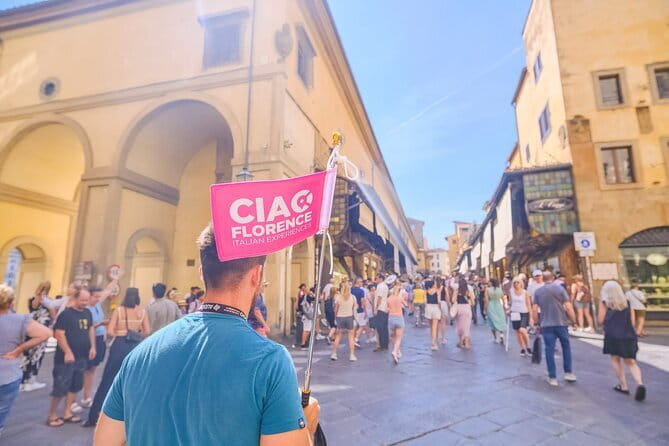
This is built for the first full day in Florence. You get a guided walk that connects the dots between places—Republic Square, Signoria Square, and the Duomo area—so the city stops being random photo spots. Then the tour pivots to the Accademia, where you’re not just standing in front of one famous sculpture. You’re learning how Michelangelo’s thinking shows up in multiple works, including his unfinished Prisoners.
For your time and energy, that mix is the practical win. If you’ve only got a half-day (or you just want a smart on-ramp), the pacing stays manageable. It’s long enough to give you a real story, but short enough that you can keep going afterward on your own.
And since this is an English-only tour with a maximum of 15 people, you’re less likely to lose details in translation. One of the best moments is the “how to look” part: the guide explains what you’re seeing and what to notice, not just dates and names.
You can also read our reviews of more walking tours in Florence

Getting oriented: Republic, Signoria, and the Duomo area
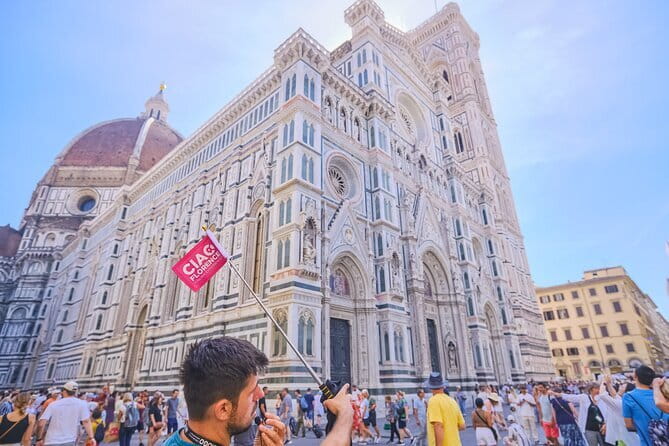
The walking portion moves quickly through high-impact squares. You’re not stuck in one place for an hour waiting for something to happen. Instead, you get the “why this place matters” behind each stop.
Piazza della Repubblica: elegant, central, and useful
Piazza della Repubblica is one of Florence’s polished, café-and-shopping squares. It’s a good first stop because it’s central and easy to imagine as a meetup point later. You’ll learn how this area fits into Florence’s layout and civic life, which makes the next stops feel less like sightseeing and more like following a thread.
What to watch for: spend a few seconds scanning the square’s edges. Florence rewards people who look up, but it also rewards people who note where streets funnel you toward the next landmark.
Piazza della Signoria: open-air museum energy
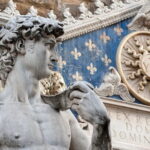
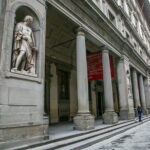
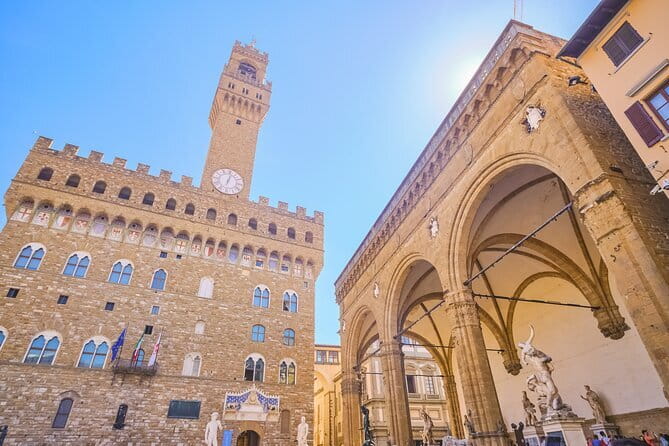
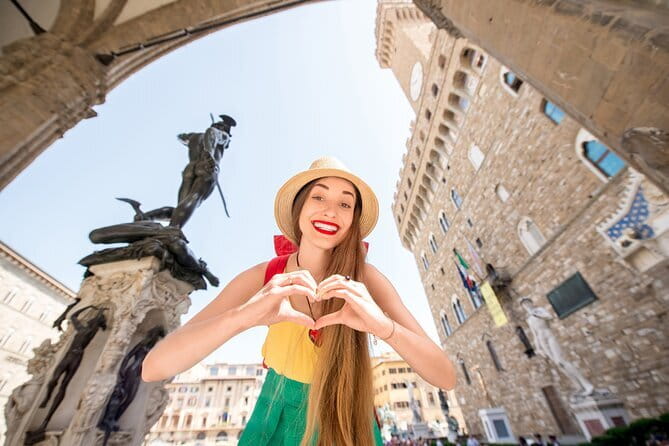
Piazza della Signoria is the heart of the action. It’s an outdoor sculpture corridor, with big-name works like Cellini’s bronze Perseus and Giambologna’s Rat of the Sabine women. You also stand near Palazzo Vecchio and the colonnade that points toward the Uffizi area.
This stop works well because it teaches you to read Florence as a collection of art in public space. Even before you get indoors at the Accademia, you start seeing sculpture as part of civic identity—not just museum content.
Duomo Square: the view you’re meant to understand
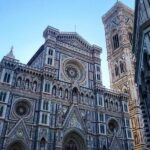
The tour culminates near the Duomo area, with time for questions and an explanation geared toward what you’re looking at. You’ll see references to the Baptistery’s Gates of Paradise, Giotto’s Bell Tower, and Santa Maria dei Fiori Cathedral, crowned by Brunelleschi’s dome.
This matters because the Duomo zone can look overwhelming. Without context, you end up taking the tallest-domes-and-tallest-towers approach. With context, you start spotting how the complex reads as one grand statement of the Renaissance city.
One thing to consider: the tour’s Duomo time is brief. If you want to go in (especially for the cathedral interior), you’ll need to plan that extra visit yourself since the cathedral entrance fee isn’t included.
You can also read our reviews of more museum experiences in Florence
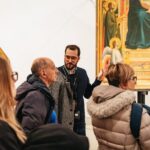
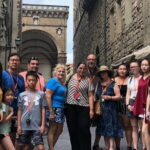
Accademia Gallery: priority access that changes the mood
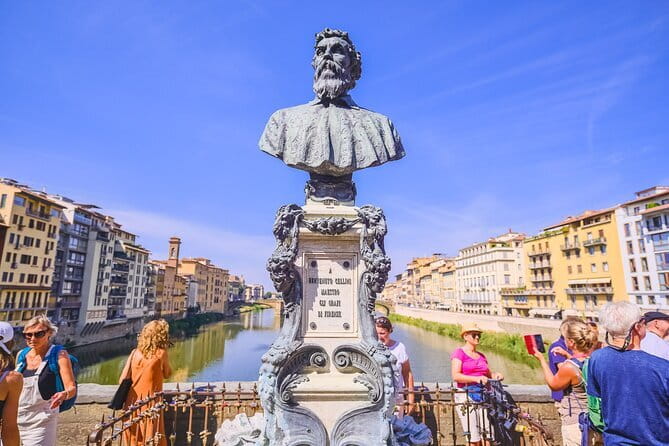
At the Accademia, the tour’s big promise is simple: skip the long entrance lines. That sounds like a small benefit until you’re standing in a queue watching your day shrink.
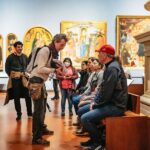
You’ll also get a guided visit that’s paced as a guided lesson, not a rush through rooms. The experience runs you through about an hour inside, which is exactly enough time to feel anchored—without draining you for the rest of the day.
On the busiest days, there can be short delays entering museums. The priority ticket helps, but it doesn’t erase crowds entirely. Still, compared with showing up cold, priority access is often the difference between enjoying the morning and grumbling into your coffee.
The Hall of Prisoners: why unfinished art hits harder
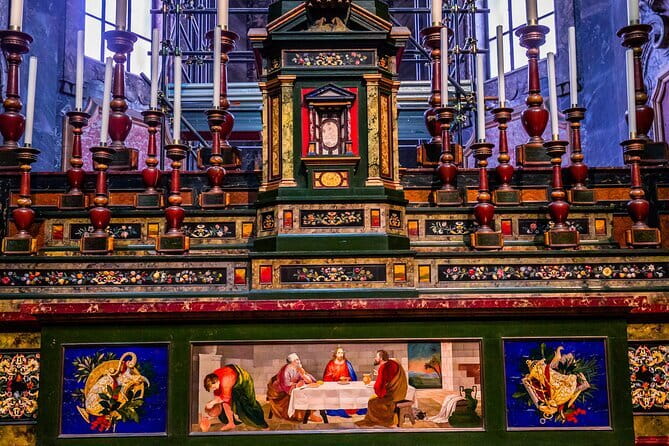
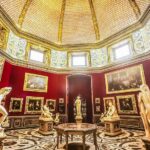
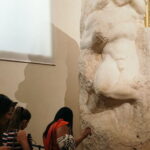
One of the tour’s strongest choices is the order. You don’t jump straight to David. You start in the Hall of Prisoners, Michelangelo’s unfinished marble sculptures often referred to as his Prisoners series.
This is where the tour earns its place. The guide explains the idea of non-finito—unfinished forms where you can sense the characters trapped in stone, waiting to emerge. When you stand there with that explanation in your head, the sculptures stop being “cool blocks of marble” and start feeling like tense drama.
What makes this stop special: the guide points out how Michelangelo worked—where his tools likely left marks, and how incompletion becomes part of the story. It’s a rare moment where the tour can change how you feel about art, not just what you know about it.
Practical note inside
The Hall of Prisoners can be busy, and sound can bounce. The tour includes earphones for bigger groups, which helps you catch the guide’s wording when there’s background noise. If you’re sensitive to audio, make sure your earphones fit correctly and that you can hear clearly early on.
Seeing David up close without feeling rushed

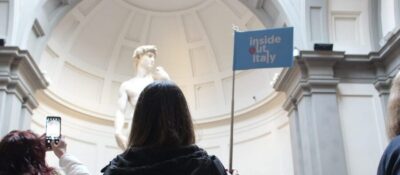
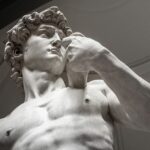
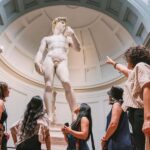
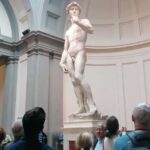
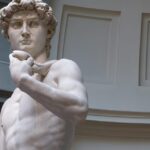
Then comes David—the reason most people book this gallery visit in the first place. You’ll see it dominating the room, with size that’s hard to understand from photos. The tour gives you the essentials: David weighs over 12,000 pounds and stands about 17 feet tall. You’ll also learn that Michelangelo finished it when he was 26.
That age detail matters. It turns the statue into a human achievement instead of a monument. With the guide’s framing, you’re not just admiring skill; you’re tracking how a young artist became the center of a new artistic era.
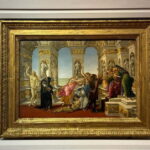
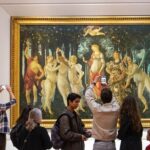
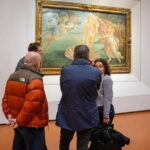
You’ll also hear stories that connect David to other works you’ll see on the same visit, including Giambologna’s Rape of the Sabines and additional Renaissance masters represented in the collection (the tour includes works by artists such as Sandro Botticelli, Jacopo di Cione, and Pacino di Buonaguida).
How long is enough? The 3–4 hour reality check
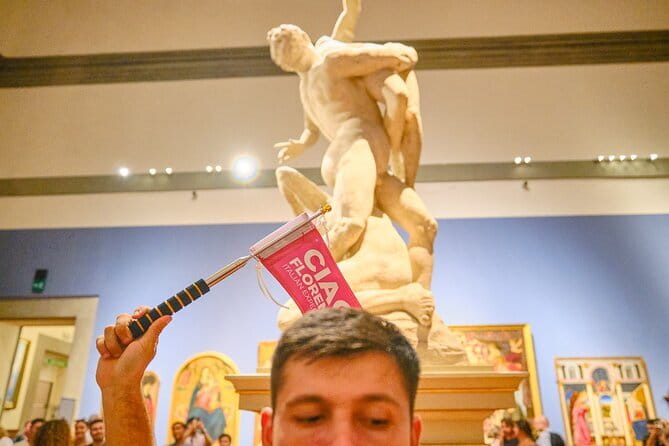
The whole experience runs about 3 to 4 hours. That’s a sweet spot: enough structure to get value from the guide and enough leftover energy to wander afterward.
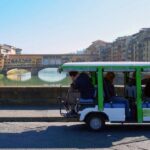
You end either inside the Accademia area or back in the historic center, depending on the option you select. Either way, you’re set up to keep exploring. This is ideal if you plan to spend the rest of your day on your own—maybe grabbing a church visit, the Uffizi area, or time around the Ponte Vecchio zone afterward.
For your planning: wear comfortable shoes. The walking and museum time add up, especially if you’re mixing Florence hills and cobblestones with a timed gallery entrance.
Monolingual English small group: what it changes
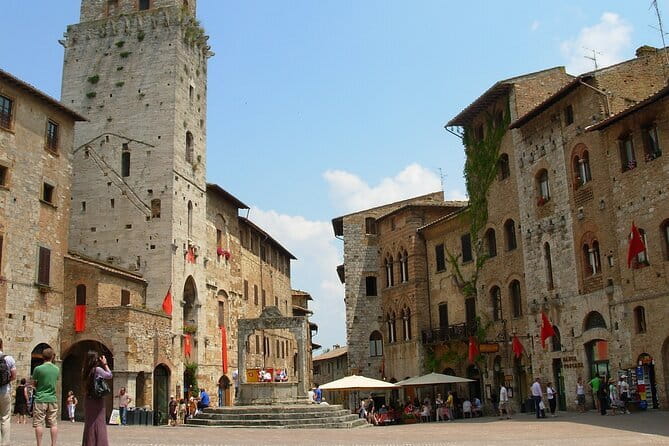
This tour is marketed as monolingual English and capped at 15. In practice, that usually means fewer interruptions, fewer “wait while everyone catches up” moments, and better flow in the guide’s explanations.
It also means your questions—if you ask them—are more likely to get answered in a way that connects to the guide’s narrative. That’s the kind of thing you feel in the museum when you’re standing still. If the guide’s story is coherent, you know what to look for during the pauses.
When audio matters (and why earphones help)
There’s at least one cautionary experience tied to microphone setup. In one case, a guide’s microphone placement made it hard to hear once inside noisy areas; another guide for a non-English group used a headset, which improved clarity. I can’t control the equipment your guide uses, but you can control your end: use the earphones if provided and don’t be shy about raising a hand if you can’t hear.
Price and value: is $80.60 worth it?
At $80.60 per person, this tour isn’t the cheapest way to see Florence and the Accademia. But it’s also not trying to be. The value comes from three bundled advantages:
- A professional guide for both the street narrative and the museum explanations.
- Accademia skip-the-line priority access, which saves time in a high-crowd location.
- Time-efficient museum pacing focused on what most visitors come for, plus related works that deepen the story.
If you arrive at the Accademia on your own, you’re managing ticket lines, figuring out what matters, and deciding how to prioritize David versus the rest. This tour gives you a ready-made plan. The guide’s explanations—especially in the Hall of Prisoners—are often what makes it feel like more than a checklist.
You’ll also want to factor in that the cathedral interior entrance is optional and not included. If you plan to go inside, budget extra. If you mainly want exterior views plus the square context, you can keep costs tighter.
Who should book this tour?
This works especially well if:
- You’re a first-time Florence visitor who wants a structured introduction.
- You have limited time and want the Accademia without spending half your morning in a line.
- You like explanations that help you look—not just snap pictures.
- You prefer small-group settings with English-only guidance.
It’s also a smart choice if you’re traveling with family and want something that doesn’t feel like a lecture. The tour includes earphones (helpful for mixed group sound levels) and keeps the walking segments fairly short between big stops.
If you’re a hardcore museum power-user who already knows every detail and prefers total independence, you might decide to go on your own. But if you want a guide-driven day that sets you up for a smoother rest of your trip, this is a solid value.
Practical stuff that will save you stress
- Meeting point: Via Camillo Cavour, 18, 50122 Firenze FI.
- Where you end: near Galleria dell’Accademia (Via Ricasoli, 58/60) or back in the historic center, depending on your selected option.
- Duration: about 3 to 4 hours.
- Tickets: you’ll have a mobile ticket.
- What to bring: comfortable shoes, and plan for crowds.
- Expect a little flexibility: the order of visits may change.
- If you get delayed at the museum entrance: short waits can happen on busiest days, even with priority access.
And one more small tip: if you’re arriving early in Florence, don’t try to solve everything in one day. This tour is your anchor. Save the slower wandering for after you’ve learned what you’re looking at.
Should you book Best of Florence walking tour & Accademia priority access?
I’d book it if you want the efficient, guided “starter course” to Florence: squares first, then the Accademia with real attention to how Michelangelo’s masterpieces connect. The priority access and small-group English format are the practical reasons, while the Prisoners framing is the artistic reason.
I’d think twice if you’re extremely sensitive to audio variability or if you’re hoping for deep, long stays inside every site. This tour is built for a focused half-day format, not for sitting in front of each artwork until your feet give up.
If you’re coming to Florence for the first time or you want to maximize a short trip, this is one of the more sensible ways to do the heavy-hitters without turning your day into a line-standing contest.
FAQ
What language is the tour offered in?
The tour is offered in English.
How long is the tour?
It runs about 3 to 4 hours.
Is this a small group tour?
Yes. It’s a monolingual small group tour with a maximum of 15 guests.
Does the tour include skip-the-line access to the Accademia?
Yes. You get a skip-the-line ticket for the Accademia Gallery.
Are museum audio devices included?
Yes. Earphones are provided for bigger groups.
Does the price include Accademia admission?
Yes. Entrance for the Accademia Gallery is included as part of the tour.
Is the cathedral entrance included?
The entrance to the Cathedral of Florence is optional and not included. The tour includes an external explanation of Duomo Square.
What if the museum entrance is delayed on busy days?
On the busiest days, there may be some short delays entering the museums.
Where does the tour start and end?
It starts at Via Camillo Cavour, 18, 50122 Firenze FI, Italy and ends at the Accademia area near Via Ricasoli, 58/60, 50129 Firenze FI. Depending on the option selected, it might end inside the Accademia Gallery or in the historic center of Florence.