REVIEW · NEW YORK CITY
Chelsea Architecture and Art Tour with Award Winning NYC Guide
Book on Viator →Operated by New York Art Tours · Bookable on Viator
New York’s art scene has a new route. This tour links Chelsea architecture with what’s happening in museums and galleries, guided by a licensed NYC pro. I like the way it moves from big-name building designs to the street-level details you normally miss.
Two things I especially liked: first, the focus on contemporary “starchitects” like Frank Gehry and Zaha Hadid, tied to the neighborhood around them. Second, the balance of indoor and outdoor moments, with a Whitney Museum stop plus the High Line walking sections.
One drawback to plan for: it’s almost entirely outside, so you’ll want to dress for weather and pace yourself for city sidewalks.
In This Review
- Key things to look for on this tour
- A 2-hour sprint through Chelsea, Meatpacking, and the High Line
- Star architects in plain sight: what you’ll actually notice
- Whitney Museum stop: modern American art meets big-city design
- The High Line: sculpture, history, and the edge between old and new
- Chelsea’s art-galley season: exhibitions when the calendar is right
- Price and guide value: getting $49 worth of structure and context
- Getting the most out of an outdoor walk (without getting worn out)
- Who this tour is best for
- Should you book this Chelsea architecture and art tour?
- FAQ
- What’s the tour duration?
- What language is the tour offered in?
- How much does it cost?
- What’s included in the price?
- Is museum admission required for the stops?
- What’s the meeting point and where does the tour end?
- What’s the cancellation policy?
Key things to look for on this tour
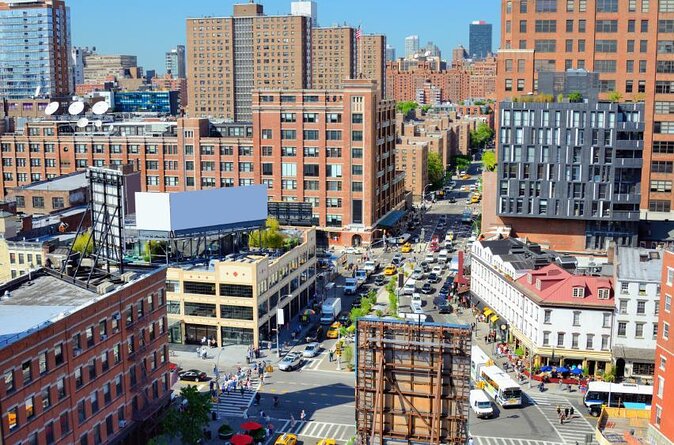
- Licensed NYC guide with art-critical credentials: your guide is licensed by New York City’s Department of Consumer Affairs and is a member of AICA USA.
- Small group format: capped at 10 travelers, which makes questions easier and the pace more comfortable.
- Whitney Museum + High Line in one flow: you connect modern art and design to the elevated park story.
- Architecture with names and context: you’ll see major works associated with Frank Gehry, Jean Nouvel, and Zaha Hadid.
- Chelsea gallery-season bonus: during Sept–June, the tour may add one or two key exhibitions in repurposed or new spaces.
A 2-hour sprint through Chelsea, Meatpacking, and the High Line
This is a short, smart way to get oriented in one of Manhattan’s most design-forward areas. You start in Lower Manhattan and work your way toward Chelsea and the area around the High Line, ending near 10th Avenue in the mid-20s.
At about two hours, the tour fits easily into a bigger NYC plan. It’s also a good choice if you want the art-and-architecture connection without committing to a full day of museum wandering.
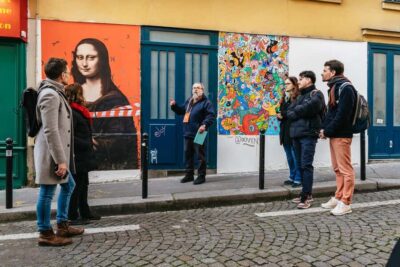
Because the tour takes place rain or shine and is almost entirely outdoors, you’ll get the “walking view” of the city. That’s a plus if you like seeing buildings in their real setting—crosswalks, street corners, and block-by-block sightlines are part of the story.
You can also read our reviews of more tours and experiences in New York City.



Star architects in plain sight: what you’ll actually notice
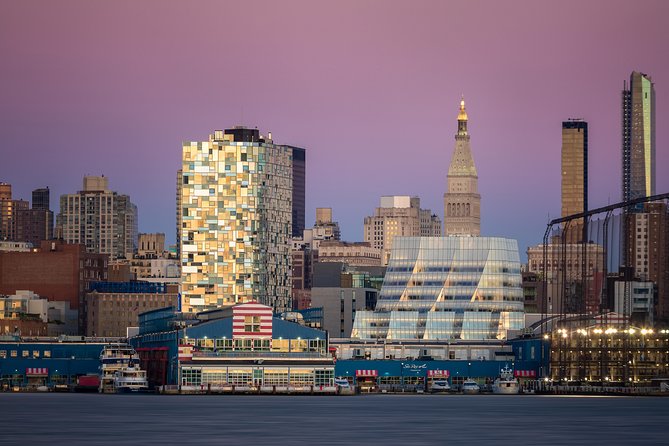
The headline is contemporary architecture by major figures, and the payoff is learning how to see it. You’ll talk about the buildings and the ideas behind them as you’re standing near the entrances, facades, and street-facing massing.
Here’s how I think about it: when you only look at photos, famous names can blur together. On this tour, you’re nudged toward practical visual clues—what the form is doing, how the structure reads at street level, and how the neighborhood around it shapes what you perceive.
You’ll also cover multiple architects, including Frank Gehry, Zaha Hadid, and Jean Nouvel, plus others in the same orbit. That variety matters. It shows how different architectural styles still end up contributing to the same city conversation: modern design, public attention, and cultural branding.
If you like modern art, you’ll probably enjoy this angle even if you’re not an architecture person. The goal isn’t to memorize jargon. It’s to connect what you see with why it’s placed where it is, and how it changes the mood of a block.
Whitney Museum stop: modern American art meets big-city design
The tour’s first stop is at the Whitney Museum of American Art, timed into the walk through the Meatpacking and Chelsea area. This is a strong anchor point because the Whitney sits at the intersection of culture and architecture-driven New York.
Admission is free for this tour stop, which helps you keep the day’s cost in check. Even if you don’t plan to go super deep into galleries on your own, the guide’s framing can help you choose what to notice if you enter at all.
A key benefit here is how the discussion connects contemporary architecture to a place that already signals cultural status. You’re not just ticking off a museum name. You’re using the museum area as a base to understand why the neighborhood draws designers, artists, and visitors in the first place.
One practical note: museums can be sensory—crowds, signage, and indoor lighting. Since the tour is largely outdoors, treat the Whitney moment like a controlled break, not your entire plan for museum time.
The High Line: sculpture, history, and the edge between old and new
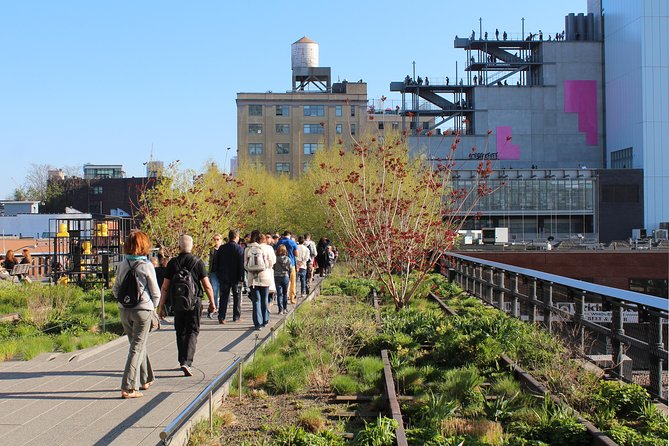
After the Whitney, you head toward the High Line, discussing its history as you move north. The High Line is one of those places where the park design and the surrounding city both matter, and this tour uses it that way.
You’ll also check out the park’s public sculpture program. That matters because the High Line isn’t just a walkway; it’s a changing outdoor gallery. Seeing sculpture in this context helps you understand why art and architecture keep blending in Chelsea.
The tour also ties the High Line to neighborhood evolution. You’ll look at the “handsome 19th-century residences and buildings” that still give the area character, even as newer developments shape what the district feels like today.
What I like about this stop is that it gives you a spatial lesson. From the elevated viewpoints, you can spot the geometry of streets below and how buildings face the park. It’s one of the quickest ways to grasp how Chelsea’s city blocks connect visually.
If your feet get tired, this is still manageable because the entire day is built around walking segments rather than long museum line marathons. Just plan for uneven sidewalks and the stop-and-go rhythm of a guided tour.
Chelsea’s art-galley season: exhibitions when the calendar is right
Chelsea is famous for gallery density, and this tour uses that reality. In art season, from September through June, the guide may include a visit to one or two important exhibitions happening at the moment.
That optional museum/galleries layer can be a big value add. It turns the tour from a pure architecture talk into a live snapshot of what New York’s art world is spotlighting right now.
Also, Chelsea spaces often feel special because many are repurposed or newly built. Even without guessing specific galleries, the key idea is that you’re seeing art in environments designed—or re-designed—to support it.
This part of the experience is most appealing if you like the idea of current exhibitions more than long-term collections. If you’re the type who enjoys seeing what’s new, the seasonal gallery stop is your best bet.
If you’re visiting outside Sept–June, expect the architecture and walk elements to carry the day. That’s still worthwhile, because the neighborhood’s building story doesn’t depend on the calendar.






Price and guide value: getting $49 worth of structure and context
At $49 per person for about two hours, the price is reasonable for a guided walk that links museum area talking points to major public spaces. The short duration also helps: you’re buying focus and context, not spending a half-day guessing what’s worth your time.
The guide is doing more than narrating. The tour includes taxes and fees, and it’s run with the kind of professional background that shows in pacing and question-handling. Your guide is a licensed NYC tour guide and an AICA USA member, which usually means you’ll get art-focused commentary that stays grounded and practical.
One detail from a previous guide experience that I’d treat as a green flag: a guide named Merrily was praised for being professional, comfortable, and great at answering questions. That’s exactly what you want in a tour like this, because architecture questions can get specific fast.
Another value point: group size is capped at 10 travelers. Smaller groups tend to mean fewer long pauses and more real conversation—especially when people ask follow-ups about a building, an artist, or why a place is important.
You’re also using a mobile ticket, which is convenient on a trip where you’ll likely be juggling transit, museum tickets, and reservations.
Getting the most out of an outdoor walk (without getting worn out)
Since this tour is almost entirely outside, you should plan like it’s a walk-first day. Wear comfortable shoes you trust on city pavement, and bring a light layer even if the forecast looks mild.
Weather can change fast in NYC, so if it’s cold or rainy, think about a rain jacket and gear that won’t slow you down. The tour runs rain or shine, so your job is to show up prepared, not optimistic.
Because you’ll be walking and stopping often, it helps to arrive a few minutes early. The tour start time is 11:00 am, and you’ll want time to locate the meeting spot.
Speaking of meeting spots, the exact location is confirmed by email about a week prior. You’ll start in the Lower Manhattan, New York, NY 10014 area and finish near 10th Avenue in the mid-20s—useful info if you’re planning dinner or another attraction right after.
For transit, the tour is described as near public transportation. That matters because a two-hour tour that ends in the mid-20s can save you time versus backtracking to downtown.
Who this tour is best for
This is a great fit if you want architecture and art together, and you don’t want to spend hours figuring it out on your own. You’ll enjoy it if you like modern design, contemporary museums, and the story of how neighborhoods evolve.
It also works well for first-time visitors who are already familiar with the classic sights but want a more design-centered New York view. The combination of Whitney-area context and a High Line walk gives you both cultural credibility and a sense of city layout.
If you’re traveling with limited time and want a guided structure, the two-hour format helps a lot. And if you like asking questions, the small group size gives you more chances to get clear answers.
Should you book this Chelsea architecture and art tour?
Yes—if you want a guided, design-and-art-focused walk that connects famous contemporary architecture to real neighborhoods. For $49, you’re getting a licensed guide, a structured path through Chelsea and the Meatpacking area, and a High Line experience that includes the sculpture program.
I’d skip it only if you want a long museum day or you strongly prefer fully indoor sightseeing. Since it’s almost entirely outdoors and built around walking segments, it’s not the best choice for a traveler who hates cold wind, rain, or busy sidewalks.
If your trip window includes September through June, the potential gallery/exhibition stop adds extra value. Either way, you’ll leave with a sharper eye for how NYC’s architecture shapes its art scene—and how the city’s “cool” districts make that connection on purpose.
FAQ
What’s the tour duration?
It runs for about 2 hours.
What language is the tour offered in?
The tour is offered in English.
How much does it cost?
The price is $49.00 per person.
What’s included in the price?
It includes a local tour guide and all taxes and fees.
Is museum admission required for the stops?
Admission for the Whitney Museum of American Art stop is free on this tour.
What’s the meeting point and where does the tour end?
You start in Lower Manhattan near New York, NY 10014, and the tour ends near 10th Avenue in the mid-20s. The exact meeting details are confirmed by email about one week before the tour.
What’s the cancellation policy?
You can cancel for a full refund up to 24 hours before the experience starts. If you cancel less than 24 hours before, the amount paid is not refunded.