REVIEW · ROME
Exclusive Golf Cart tour of Rome (3hrs)
Book on Viator →Operated by Limousine Service in Italy · Bookable on Viator
Rome by golf cart feels like getting a shortcut. In a few hours you hit major icons without burning energy on constant walking. I like the private, customizable setup (you won’t be stuck with strangers), and I also love the time-saver of using a cart to move between areas quickly. One thing to weigh: admission tickets aren’t included, and the Colosseum can sell out when you book.
You can also build this day around what you care about most. The route stacks classic Rome highlights—from the Colosseum area to Piazza Navona, the Spanish Steps, Trevi Fountain, and up into the Vatican zone and Capitoline Hill—so first-time Rome is less chaotic. Just keep in mind the description lists both about 3 hours and a 5-hour private driving window, so confirm the exact time you’ll be out before you go.
In This Review
- Key reasons this golf cart Rome tour works so well
- What you actually get from a 3-hour golf cart Rome route
- Colosseum views without the bottleneck: quick outside orientation
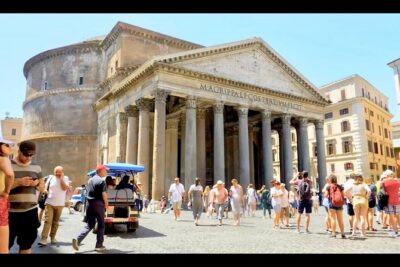
- Pantheon in a tight window: why 20 minutes matters
- Piazza Navona and the Spanish Steps: classic piazzas, built for lingering
- Circus Maximus: seeing the first and largest stadium scale
- Trevi Fountain: a 20-minute “look, then really look” stop
- Roman Forum from the Capitol: big ruins, smart vantage point
- Via del Corso, Piazza Venezia, and Forum Boarium: the drive-by history that clicks
- St. Peter’s Square and Piazza del Campidoglio: Vatican scale plus Michelangelo’s punch
- St. Peter’s Square
- Piazza del Campidoglio
- Price and value: is $264.35 per person a smart use of limited time?
- How to plan your day so the stops feel satisfying
- Who should book this private golf cart Rome tour?
- Should you book this golf cart tour of Rome?
- FAQ
- How long is the Exclusive Golf Cart tour of Rome?
- What is included in the tour price?
- Are admission tickets included for the main sights?
- Does the tour combine groups?
- Is the tour available in English?
- Do you get pickup from the airport?
- What if Colosseum tickets are sold out when I book?
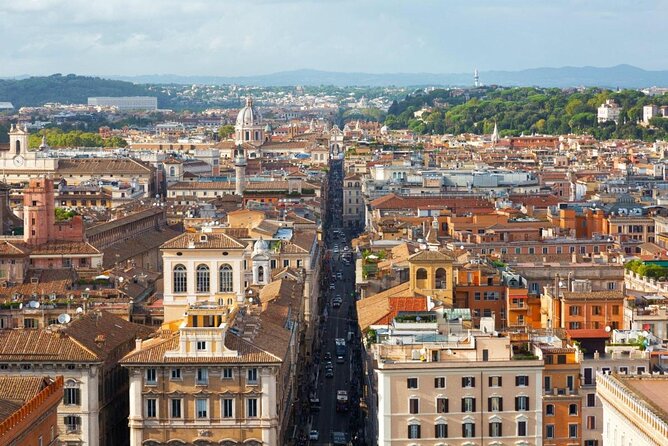
Key reasons this golf cart Rome tour works so well
- Less walking, more seeing between scattered landmarks
- True private attention from an English-speaking driver (no combining groups)
- A flexible itinerary with short pauses where you can linger if something grabs you
- Real Roman anchors like Pantheon, Trevi Fountain, St. Peter’s Square, and the Capitoline area
- Free stops add up, including Trevi Fountain and several piazzas
- Guide name recognition from real tours, with Nicola and Alessandra both earning top marks
What you actually get from a 3-hour golf cart Rome route
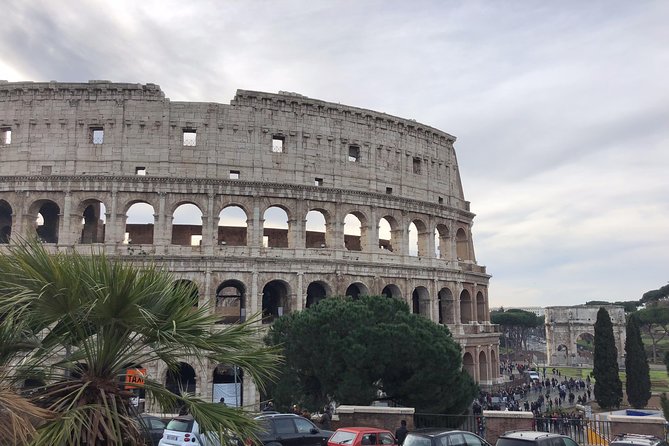
This tour is built around motion, not marching. The big idea is simple: you’re using a golf cart to connect major sites so you spend your day looking at Rome instead of negotiating sidewalks, crowds, and long distances.
The experience is private and customizable, and it’s designed for an English-speaking driver. That matters because Rome isn’t one straight line. Even if you only have a short window, a driver who can keep the day moving helps you get orientation fast—especially around the Colosseum/Pantheon side, then out toward Piazza Venezia and eventually the Vatican.
One small but important note: the published duration reads as about 3 hours, while the included description also mentions a 5-hour private driving tour. I’d treat that as a “confirm exact duration” moment. When you’re paying per person and planning your day, you want clarity on how long you’ll be on the clock.
You can also read our reviews of more tours and experiences in Rome.

Colosseum views without the bottleneck: quick outside orientation
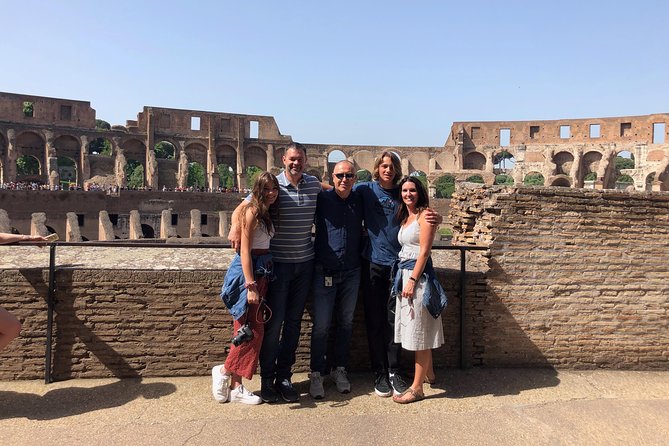
Your Colosseum moment is short and focused. You see the Colosseum from the outside for about 20 minutes, and admission isn’t included. That can sound like a tease—until you remember how much time the real planning takes in Rome.
In this format, the value is orientation. In roughly the time you’d normally spend walking over and then getting your bearings, you get:
- A landmark view that tells you where you are in the ancient city
- Time to frame photos and understand the scale
- A starting point for any additional Colosseum plans you might want later
If you want to go deeper than an exterior stop, you’ll need to handle entry yourself. The tour also warns that Colosseum tickets may already be sold out at booking time, and the office will share what’s actually available for your slot. So if you’re dreaming of a full interior visit, don’t treat it as automatic.
Pantheon in a tight window: why 20 minutes matters
The Pantheon stop is also listed as about 20 minutes, with admission not included. Even in a short visit, this is one of the strongest “Rome on first contact” experiences because it’s not just ruins—it’s a working church built on earlier foundations.
The facts you’ll hear on-site connect the dots: it was completed by Emperor Hadrian and likely dedicated around 126 AD. It began as an earlier temple commissioned by Marcus Agrippa during Augustus’ reign, so you’re standing at a site with layered Roman continuity.
Practically, a 20-minute stop is enough for a few key things:
- See the interior space and dome scale (even briefly)
- Get a quick timeline of who built what, and when
- Decide on the spot if you want to return later with more time
Because admission isn’t included, plan to buy or access entry as needed on your side. The tour can get you there; you handle the ticket part.
Piazza Navona and the Spanish Steps: classic piazzas, built for lingering
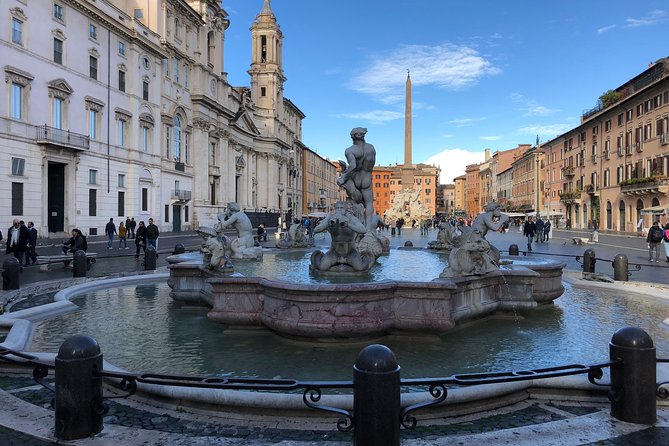
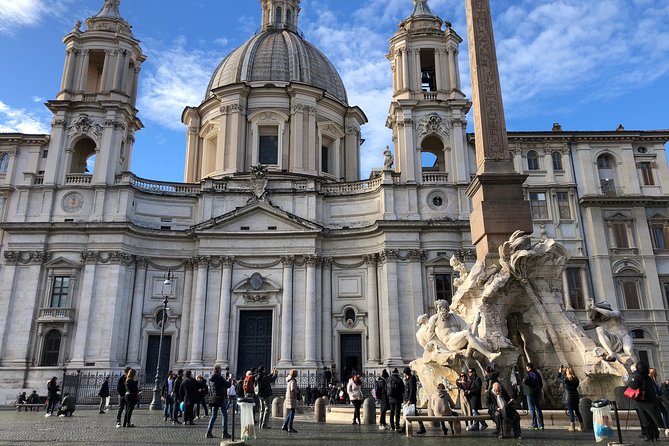
You’ll stop at Piazza Navona, an open plaza on the site of the Stadium of Domitian from the 1st century AD. That shape matters: the plaza follows the old stadium layout, and in ancient Rome it was known as Circus Agonalis, where people went to watch games.
Then comes the Spanish Steps—about 15 minutes, and admission is free. You’ll climb between Piazza di Spagna at the bottom and Piazza Trinità dei Monti at the top, with a monumental stairway of 135 steps. The story here is unusually specific, and it helps you look at it differently: the stairs were funded in the 1723–1725 period by a bequest from Étienne Gueffier, and the design is credited to Francesco de Sanctis and Alessandro Specchi.
This combo is good if you like Rome at street-level. You get architecture, crowd energy, and the kind of vantage points where you can reset your day without committing to a museum line.
Circus Maximus: seeing the first and largest stadium scale
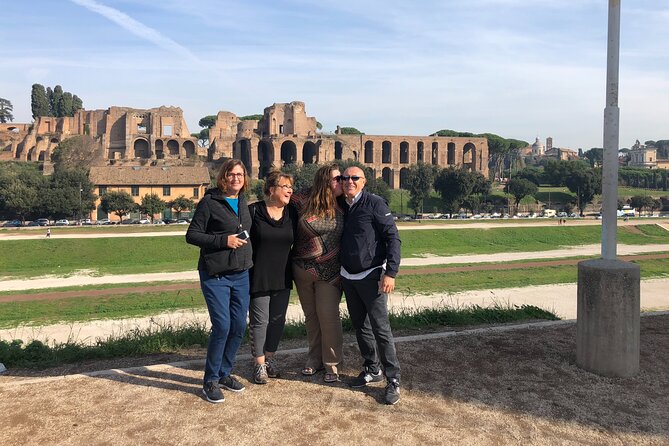
Next up is Circus Maximus, the ancient chariot-racing stadium and mass entertainment venue. It’s located in the valley between the Aventine and Palatine Hills, and it’s described as the first and largest stadium in ancient Rome and later the Empire.
Your time here is brief—about 10 minutes—and it’s listed as free. But don’t underestimate what a short stop can do. Circus Maximus is huge in concept even when you’re seeing it from the modern streets. A brief orientation stop can help your brain connect the “big arena” idea to where you actually are in today’s Rome.
If you’re the type who enjoys visual scale—how big the city once was compared to what you see now—this is a quick win.
Trevi Fountain: a 20-minute “look, then really look” stop
Trevi Fountain is one of the few places where the famous object is famous for a reason. You’ll have about 20 minutes here, and it’s free.
The tour’s background facts give you a better lens:
- The fountain is tied to ancient water infrastructure built around 19 BC
- Aqua Virgo was built by Agrippa to supply water for Roman baths
- The water source is about 14 miles outside Rome
- The fountain is 26 meters tall and 49 meters wide
- The style is Baroque
That’s the kind of detail that turns a quick photo stop into a moment. You can spend your time understanding what you’re seeing—the scale, the craftsmanship, and the system behind it—without getting trapped in endless wandering.
Roman Forum from the Capitol: big ruins, smart vantage point
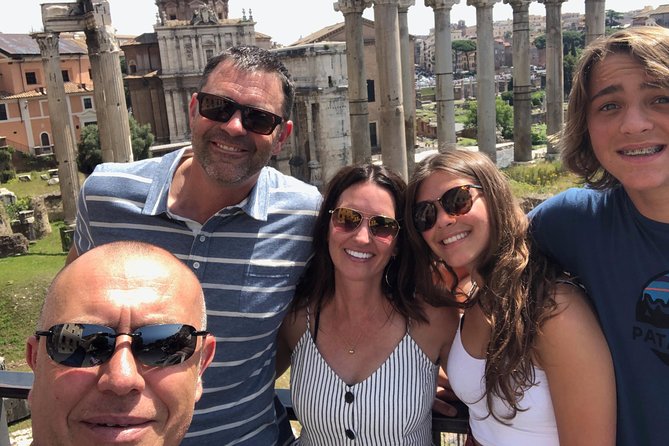
The Roman Forum stop is designed around viewpoint rather than a deep ruin walk. You get about 20 minutes, and the admission isn’t included. The key line: you’ll see the largest monumetal area of ancient Rome from the top of the Capitol.
That approach is practical. The Forum is a whole landscape of ruins and government buildings, and for most people the challenge isn’t missing it—it’s trying to interpret it in a limited day.
From the Capitol viewpoint, you get:
- A broad sense of how the Forum sits at the center of ancient Rome
- A quick mental map of the ruins’ relationship to each other
- Time to refocus on what you want to learn later (instead of getting lost on the ground)
The Roman Forum itself is described as a rectangular forum surrounded by ruins of important government buildings, originally a marketplace. It’s also called Forum Romanum and Forum Magnum in different references. Even a brief glance becomes more meaningful when you know what kind of space it used to be.
Via del Corso, Piazza Venezia, and Forum Boarium: the drive-by history that clicks

Not every stop is a long stay. Along the route, you also get context connected to the city’s main arteries.
You’ll pass by or see references tied to:
- Via del Corso, which began in 220 BC when Gaius Flaminius built a road linking Rome with the Adriatic Sea
- Piazza Venezia, the central hub where several thoroughfares meet, named after Palazzo Venezia
- Forum Boarium, the cattle forum venalium by the Tiber near the Capitoline, Palatine, and Aventine hills, known for commercial activity and earlier docks
You’re not stuck in interpretation mode all day, but the value of these “in-between” moments is that you stop treating Rome like a list of monuments. You start to feel how the city functioned: where people moved, traded, and gathered.
St. Peter’s Square and Piazza del Campidoglio: Vatican scale plus Michelangelo’s punch
After the Rome core, the day moves into Vatican territory and then toward Capitoline viewpoints.
St. Peter’s Square
St. Peter’s Square is about 15 minutes and free. It sits directly in front of St. Peter’s Basilica in Vatican City. The square’s center includes an ancient Egyptian obelisk erected at the site in 1586, and the square’s design is tied to Bernini, who worked on the colonnades nearly 100 years later.
What you’ll notice in the facts you’re given:
- Doric colonnades are designed to embrace visitors, four columns deep
- A granite fountain constructed by Bernini in 1675 matches another designed by Carlo Maderno in 1613
- The whole space is named for Saint Peter, tied to Catholic tradition
Even if you only have a short moment here, it’s enough to register why people react the way they do—this is Rome switching from ancient ruins to monumental religious theater.
Piazza del Campidoglio
Then you head to Piazza del Campidoglio for about 20 minutes, free. The Capitoline Hill is the smallest of Rome’s seven hills, but it carried heavy religious and political weight since the city’s founding. The current square is tied to Pope Paul III in the Middle Ages, and the existing design is credited to Michelangelo Buonarroti.
This stop is especially good at the end of a day because it gives you a designed viewpoint and a sense of closure. You’re in the same orbit as the Roman Forum stop, but from a different angle—ancient center, re-planned and reshaped through time.
Price and value: is $264.35 per person a smart use of limited time?
At $264.35 per person, you’re paying for four things more than the sightseeing list:
- Private transport that reduces walking time between major sites
- Undivided attention from an English-speaking driver
- Pickup and drop-off options (hotel, Airbnb, or Termini)
- A day designed for short-stay efficiency with the option to customize
What’s not included is just as important: admission fees are not part of the tour price, including skip-the-line tickets. So your total day cost can rise depending on which entries you choose to add.
The value is strongest if your schedule is tight or you don’t want your Rome day to turn into a battle against distance. One review highlighted that Nicola handled a dense route with confidence, and that the comfort of the vehicle helped the day feel fast—even with many stops. Another review from a family account praised Alessandra for being engaging for kids and for using a book to compare ruins then versus now, plus picture-based explanations for what they’d see in the Vatican area.
That’s the practical benefit of a private, customizable tour: you can steer the day toward what fits your group, and you don’t lose time waiting on other people.
Also, keep in mind the Colosseum ticket warning. If you’re hoping for specific timed entry, it can affect what’s possible on your date. The operator says they’ll let you know what availability really looks like.
How to plan your day so the stops feel satisfying
Because the time at each landmark is limited, you’ll get more out of the day if you go in with decisions.
Here’s my advice that tends to work best with this kind of itinerary:
- Pick your top 2 must-do sites. Use the golf cart to reach them, then decide if you’ll add paid entry later.
- Use the short stops for orientation and photos. Don’t treat 15–20 minutes as your “final word” on any one monument.
- If something surprises you (a view, a detail, a piazza corner), use your guide’s flexibility to adjust where possible.
- If you’re traveling with kids, look for a guide style that can make details visual. Alessandra’s approach in one family review—using a book and kid-friendly explanations—shows how much that can matter.
And yes, wear comfortable footwear anyway. Even with a cart, you still have to walk between points and stand in public spaces.
Who should book this private golf cart Rome tour?
This is a great fit if:
- You want to see a lot without turning the day into a long-distance hike
- You value private attention over group logistics
- You have a short Rome stay and want a well-structured overview
- You’re traveling with kids and want the day paced so it stays fun, not exhausting
If you’re the type who loves slow museum time and deep ruin walking for hours, you may find the stops too brief. In that case, treat this tour as the “get your bearings fast” day, then build a second day around a couple of places you want to revisit.
Should you book this golf cart tour of Rome?
If you’re trying to make Rome work in limited time, I’d say yes—especially at this price point where you’re paying for private transport and a tight route through the main hits. The biggest reason to book is the pacing: the cart helps you cover far more than you’d manage comfortably on foot in a half day.
I’d hold off if admission entries are your top priority and you need specific tickets on a specific schedule. Since admission isn’t included and Colosseum availability can be tight at booking time, you could spend the day close to your dream sites without getting inside the way you planned.
FAQ
How long is the Exclusive Golf Cart tour of Rome?
The experience is listed at about 3 hours, though the included description also mentions a 5-hour private driving tour. Confirm the exact time window when you book.
What is included in the tour price?
You get a private, customizable tour with an English-speaking driver and hotel/Airbnb/Termini pickup and drop-off. A mobile ticket is also provided.
Are admission tickets included for the main sights?
No. Admission fees are not included, and skip-the-line tickets are not included.
Does the tour combine groups?
No. It’s described as a private tour/activity where only your group participates.
Is the tour available in English?
Yes. The driver is English speaking.
Do you get pickup from the airport?
Airport pickup is available for FCO or CIA as a one-way option for an extra charge of Eur 90,00 cash per van.
What if Colosseum tickets are sold out when I book?
The tour notes that Colosseum tickets may be sold out at booking time. The office will inform you about the actual availability for your tour.