REVIEW · FLORENCE
Exclusive Uffizi Gallery Private Visit
Book on Viator →Operated by Florence Tours by Made of Tuscany · Bookable on Viator
One of Europe’s best art stops can still feel personal. This exclusive Uffizi private tour lets you move through Florence’s Renaissance masterworks with a guide who helps you see the why, not just the what.
I like the straightforward setup: skip-the-line entry and a true private group, so you’re not stuck waiting or getting rushed. I also love the way the tour is built around the Uffizi’s core strengths, especially Botticelli, Leonardo, Michelangelo, and Raphael.
One thing to consider: the Uffizi is a crowded museum in general, and if sound carries or English clarity matters a lot to you, you may want to plan for that.
In This Review
- Key takeaways before you go
- Why this Uffizi private visit works (and who it’s for)
- Meeting in Piazza della Signoria: start smart in Florence
- Skip-the-line entry: what you gain in real time
- The Uffizi setting: from Medici offices to Renaissance power
- Your 3-hour itinerary: the stops that shape the Renaissance story
- Botticelli’s Venus and Primavera
- Giotto’s Maestà: where the Renaissance road starts
- Michelangelo: Doni Tondo and the energy of form
- Leonardo’s Annunciation: the quiet miracle
- Titian’s Venus of Urbino: sensuous, but not shallow
- Caravaggio’s Medusa: drama that punches
- A route that covers the big names without the chaos
- Choosing morning vs afternoon: when you’ll feel the difference
- Guide quality: the real reason private tours feel worth it
- A note on language clarity
- Price and value: what $299.30 really buys you
- Comfort and practical details you’ll care about
- Should you book this Uffizi private tour?
- FAQ
- FAQ
- How long is the Uffizi private visit?
- Where do we meet for the tour?
- Is admission included?
- Is this a private tour?
- What language is the tour offered in?
- Is skip-the-line entry included?
- How much does it cost?
Key takeaways before you go
- Private, not crowded-by-design: only your group joins the guide.
- Morning or afternoon: pick the time that fits your Florence day best.
- Skip-the-line access: less standing around in the heat and chaos.
- 3 hours on the real highlights: Botticelli, Leonardo, Michelangelo, Raphael and more.
- Built for the big story of Renaissance art: you’ll see works mainly from the 12th–17th centuries.
- Meet at Piazza della Signoria: a great start point for orientation in the center.
Why this Uffizi private visit works (and who it’s for)
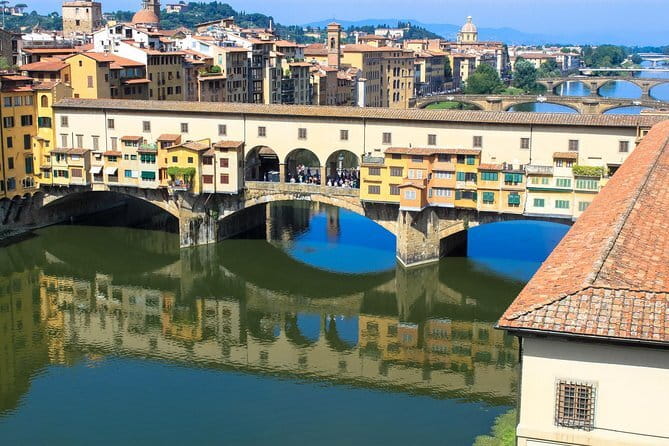
The Uffizi is famous for a reason, but fame can also mean friction. This tour matters because it cuts one of the biggest problems at major museums: waiting in lines with everyone else. You still get the full museum experience, but with less friction and more time spent looking.
This is a great fit if you care about art beyond selfies. A good guide can point out patterns—how artists changed style over time, what symbolism meant, and why certain paintings became famous enough to survive centuries. It’s also a nice option for families, because you can keep attention when someone is telling the story in a clear, human way.
If you’re the type who just wants to wander slowly on your own, a private tour might feel a bit structured. But if you want to see the right works in the right order, and you’d like help understanding them, you’ll probably feel this is money well spent.
You can also read our reviews of more private tours in Florence


Meeting in Piazza della Signoria: start smart in Florence
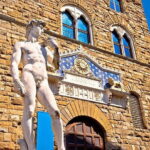
You meet at Piazza della Signoria, right near the Uffizi. This is useful because it’s central and easy to orient from. Also, starting in the square helps you absorb the setting before you head indoors; you’re stepping into the Florence that made these artists so in-demand.
Your tour ends back at the same meeting point. That’s a small detail, but it helps your day plan. You’re not dealing with a complicated drop-off or a long walk back across town after 3 hours inside.
From a practical point of view, you’re also near public transportation. So if you’re building the rest of your itinerary with buses/trams in mind, this is easier than tours that start in far-flung neighborhoods.
Skip-the-line entry: what you gain in real time
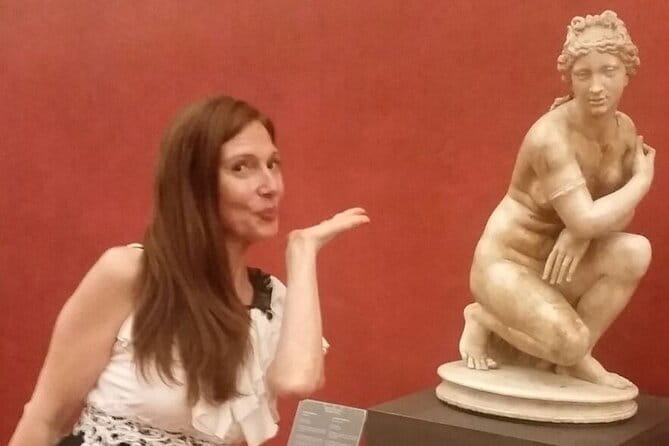
Skip-the-line isn’t just a perk. It’s a difference in how your visit feels. The Uffizi is popular, and if you’re forced to wait, the museum’s big impact gets delayed. With skip-the-line access, you spend your limited Florence time looking at paintings instead of staring at a crowd.
You also get admission included as part of the experience. That takes one more “what did we forget?” item off your mental checklist. And because the tour is private, you avoid that awkward moment when large groups split and reunite while the guide tries to keep everyone moving.
The duration is about 3 hours, which is long enough for real context but not so long that you’re totally fried by the end. Think of it as a guided tasting, not an all-day buffet.
The Uffizi setting: from Medici offices to Renaissance power
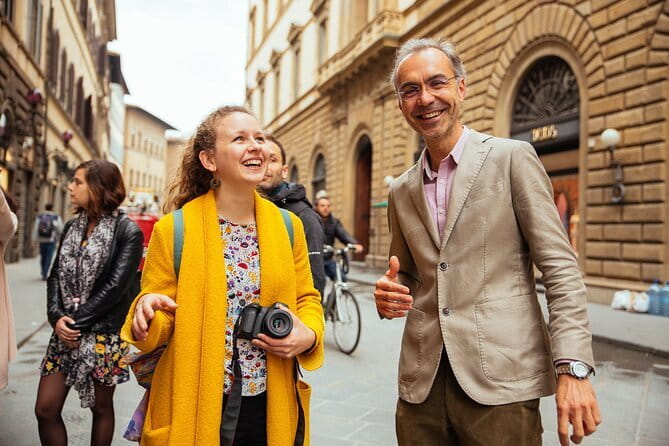
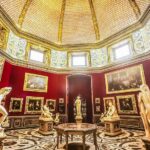
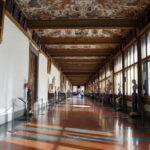
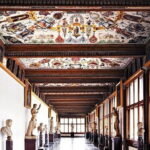
The Uffizi isn’t just a warehouse of famous art. It’s housed in rooms that once served the Medici government, which gives the building a different vibe than a modern museum. You’re walking through ornate halls and chambers that carry political weight, and that helps explain why Florence treated art like serious business.
Another thing I like about an organized route here: the museum tells you how Renaissance art learned to “think.” You’ll see works mainly from the 12th through 17th centuries, and you’ll feel the shift in style as you move through the collection.
If you’re worried about being overwhelmed, don’t be. A strong guide helps you focus on the few paintings that make the timeline click. And in the Uffizi, that timeline matters.
Your 3-hour itinerary: the stops that shape the Renaissance story
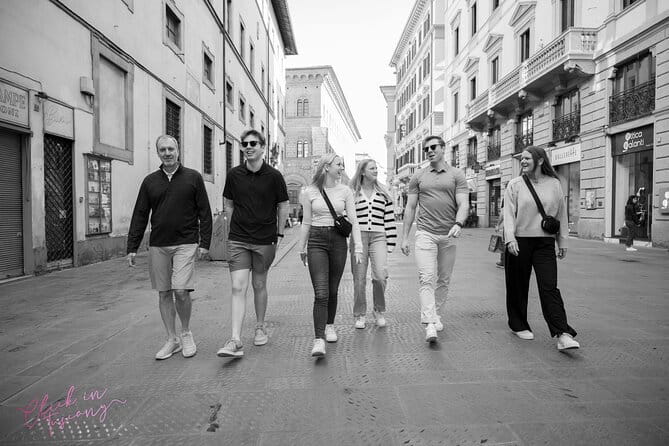
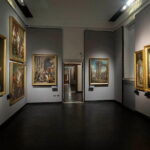
This private visit follows a highlights-focused route through the Uffizi. Expect to see major works and learn how each fits into larger changes in painting—technique, symbolism, patronage, and style.
You can also read our reviews of more museum experiences in Florence



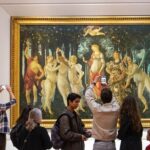
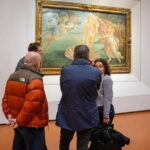
Botticelli’s Venus and Primavera
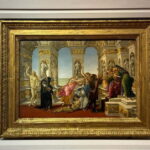
Botticelli is usually a headline act, and this tour leans right into that. You’ll have time for The Birth of Venus and Primavera, among other famous Botticelli works.
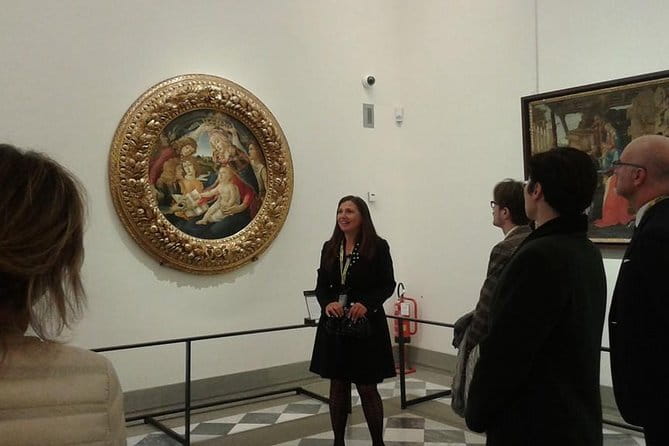
What makes Botticelli interesting in person is how expressive the details can be. Even if you’ve seen images online, seeing them at museum scale helps you catch the elegance of composition and the feeling of myth made visible. A good guide also helps you decode what’s going on, so you’re not just admiring beauty—you’re understanding meaning.
Practical note: these are crowd magnets inside the museum. With private pacing, you’re less likely to get trapped behind a wall of people while trying to make sense of brushwork.
Giotto’s Maestà: where the Renaissance road starts
You’ll also see Giotto’s Maestà. This matters because Giotto represents an earlier turning point—an evolution toward more human emotion and clearer spatial thinking than what came before.
If Botticelli and Leonardo feel like later fireworks, Giotto is part of the “building the engine” phase. A guide can help you spot that difference quickly, which is one reason a guided route can feel more rewarding than random walking.
Michelangelo: Doni Tondo and the energy of form
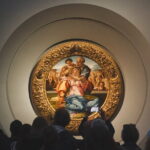
Michelangelo shows up with Michelangelo’s Doni Tondo. Michelangelo is often described as muscular and dramatic, but in a museum visit what you notice is structure: how bodies and poses create rhythm, and how the artist makes form feel alive.
This is the kind of work where a guide can slow you down just enough to see what you’d otherwise miss. Without help, you might see “famous Michelangelo” and move on. With help, you start noticing the design logic.
Leonardo’s Annunciation: the quiet miracle
Leonardo’s Annunciation is a perfect counterweight to Michelangelo’s punch. Leonardo can be mesmerizing because of how he blends observation with storytelling. The painting tends to feel thoughtful, not loud.
If you’re the type who likes to stand and look, this is your moment. With a guide, you’ll get pointers about what’s going on in the scene—so your gaze has a job.
Titian’s Venus of Urbino: sensuous, but not shallow
You’ll also see Titian’s Venus of Urbino. This painting often draws attention for obvious reasons, but the better reward is understanding the cultural context and how Titian handles flesh tones, light, and personality on the canvas.
A good guide helps you avoid reducing it to just a famous nude. You get the artistry plus the historical story behind why the work mattered.
Caravaggio’s Medusa: drama that punches
Then comes Caravaggio’s Medusa. Caravaggio is known for dramatic lighting and emotional intensity, and Medusa is a strong example. Even if you’ve only seen Caravaggio through books or documentaries, the impact of the painting in person can be sharper than you expect.
A guide can help you notice how Caravaggio uses contrast and expression to create tension. It’s one of those works that makes you realize why this artist changed the rules for what painting could do.
A route that covers the big names without the chaos
The tour also references other major works like Caravaggio’s Medusa and the big-name Renaissance roster across different styles. The overall collection focus is on the 12th–17th centuries, so you’re not just seeing individual paintings—you’re getting a sense of how art evolves.
That’s the real value of a 3-hour guided highlights route: you walk out with a framework, not just a memory of famous images.
Choosing morning vs afternoon: when you’ll feel the difference
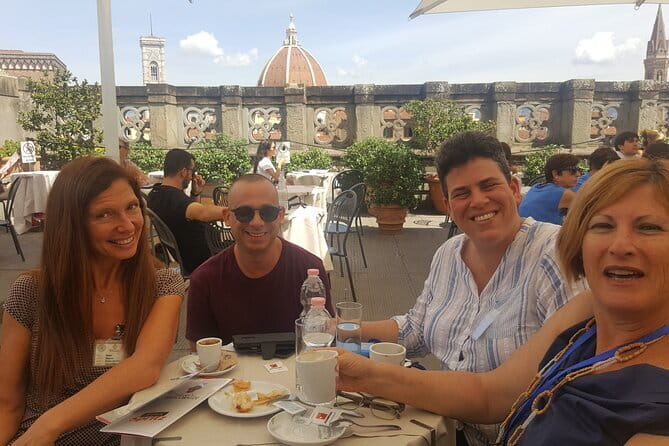
You can pick a morning or afternoon time slot. Here’s how you should think about it:
- Morning can be easier if you want calmer viewing and a fresher start before Florence gets hot and busy.
- Afternoon may work better for your schedule, especially if you’re pairing this with other daytime plans.
One of the best experiences I’d aim for is starting early and keeping your head clear. Even in a private setting, getting there earlier tends to improve how comfortably you can look at paintings.
Guide quality: the real reason private tours feel worth it

This is a guided private tour with a professional guide. The guide experience shows up in how smoothly the tour flows and how well the art becomes understandable.
In past visits, guides like Giacomo have been described as passionate and entertaining, with a sense of humor and real depth. Another guide, Mike, stood out for tailoring the morning to a guest’s must-see interests and helping you get close to key works without feeling pushed. Viktoria Tröger has been praised for bringing stories behind artworks to life, keeping people listening for the full session.
You should expect the guide to spend time helping you interpret the art—what to look for, how style changes across periods, and why these artists became central to the Renaissance story.
A note on language clarity
Most tours offered here are in English. Still, one traveler pointed out that a guide’s English can be harder to understand. If you’re sensitive to this, choose the time slot that works best for your comfort and bring your best listening focus. And if you usually rely on captions, you might want to use your own strategies to catch key points (like asking for slower explanations at the start).
Price and value: what $299.30 really buys you
At $299.30 per person, this isn’t a budget impulse buy. The value depends on what you’re comparing it to.
You’re paying for three things that matter in Florence:
- Skip-the-line entry (less waiting time)
- A professional guide (context that helps paintings make sense)
- A private setup (your group only, so your pace is yours)
If you’d otherwise do a self-guided visit, consider this: the Uffizi can feel like a maze of masterpieces. A guide helps you pick the thread that connects them. That’s what turns famous rooms into something you remember as a story.
If you’re traveling as a small group with shared interests—Renaissance art lovers, history buffs, or families with teens who want something more than wandering—this price can feel fair fast.
And if art is a priority for your trip, this tour is closer to investing in your experience than just paying for access.
Comfort and practical details you’ll care about
Admission is included, and the tour is about 3 hours. You should plan for a long indoor walking stretch, plus time spent standing in front of paintings.
Service animals are allowed, and the meeting point is near public transportation, so you’ll likely find it easy to get there. Since the tour returns to the meeting spot, it’s simple to continue your day right after.
If you tend to get bothered by noise in crowded museums, keep in mind that the Uffizi can feel loud and busy. A private tour helps because the guide sets the pace, but you still share gallery space with other visitors.
Should you book this Uffizi private tour?
Book it if you want the Uffizi to feel like a guided narrative, not a race. This is especially strong if you care about major names like Botticelli, Leonardo, Michelangelo, and Raphael, and you want help noticing what makes them different.
Skip it if you just want free-form wandering and you’re happy reading a museum guidebook on your own. Also skip if the idea of structured pacing feels stressful. Three hours is focused time, and it’s meant to be used.
If you’re torn, use this rule: if you want your visit to make sense when you leave, this tour is built for that.
FAQ
FAQ
How long is the Uffizi private visit?
It lasts about 3 hours.
Where do we meet for the tour?
The meeting point is Piazza della Signoria in Florence, near the Uffizi.
Is admission included?
Yes. An admission ticket is included.
Is this a private tour?
Yes. It’s a private tour/activity, so only your group participates.
What language is the tour offered in?
The tour is offered in English.
Is skip-the-line entry included?
Yes. The experience includes skip the line access.
How much does it cost?
The price is $299.30 per person.