REVIEW · FLORENCE
Florence: Accademia Gallery & David by Michelangelo Tour
Book on GetYourGuide →Operated by EU Tours · Bookable on GetYourGuide
Michelangelo’s David hits hard in person. This 1-hour Accademia Gallery tour is built around that moment, with skip-the-line entry and a licensed local, art historian-style guide explaining what you’re seeing and why it mattered in Renaissance Florence. I love the focus on the big names without making you slog through the museum aimlessly, and I also like that the pace includes supporting works like the unfinished Prisoners story, not just a quick photo-and-go. One thing to consider: in crowded rooms, the audio can be tough to hear, so ear-planning helps.
Because the group is small (limited to 10 people) and you get both live commentary and an included audio guide in multiple languages, you’re set up to actually understand the art instead of just passing it. If you’re sensitive to noise, you might want to arrive with a slightly patient mindset for the louder, busier gallery stretches, since the museum draws serious crowds.
In This Review
- Key Things To Know Before You Go
- Entering Via Ricasoli: Finding Your Group Fast
- Skip-The-Line Access To Accademia: Why It’s Worth It
- Michelangelo’s David: What To Focus On During Your Viewing
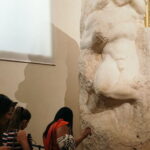
- The Unfinished Prisoners Story: Understanding Michelangelo’s Thinking
- Accademia Beyond David: Paintings And Lesser-Known Florentine Artists
- Small Group Pace: Listening Instead Of Sprinting
- Languages And Audio Guide Support For Your Comfort
- Price And Value: Is $66 A Good Deal?
- What To Do Before And During The Tour (Simple Tips That Help)
- Who Should Book This Accademia Gallery Tour?
- Should You Book This Tour?
- FAQ
- How long is the Florence Accademia Gallery & David tour?
- Where is the meeting point?
- Is there skip-the-line entry?
- What’s included in the price?
- What languages are available?
- What is the group size and is it wheelchair accessible?
Key Things To Know Before You Go
- Priority skip-the-line entrance means you spend more time inside Accademia and less time waiting outside.
- Art-focused live commentary helps you connect Michelangelo’s life, David’s symbolism, and the unfinished Prisoners.
- Small group of up to 10 keeps questions possible and the tour less chaotic than big-group museum schedules.
- 14th to 17th-century paintings plus Florentine artists round out the experience beyond David.
- Audio guide in many languages (including Spanish, French, German, Italian, Chinese, Japanese, Korean, Portuguese, Traditional Chinese) supports what your guide is saying.
- Wheelchair accessible so more people can get the same highlights.
Entering Via Ricasoli: Finding Your Group Fast
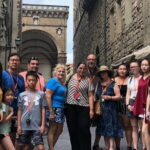
The meeting point is straightforward: stand at the front of via Ricasoli, 43, where your guide is holding a getyourguide sign. That little detail matters because Accademia day is busy, and losing 10 minutes in the wrong spot can scramble the start of your tour.
If you’re prone to arriving early and pacing, you’ll still be fine. Just don’t linger so long that you drift away from the sign-holder. And if you truly can’t locate the group, there’s a direct contact option provided through the activity link (w.app/eutours) so you can message or call for help.
You can also read our reviews of more museum experiences in Florence
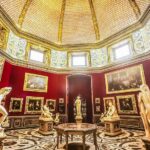

Skip-The-Line Access To Accademia: Why It’s Worth It
Accademia is one of those places where the waiting can eat into your sightseeing day. This tour solves that by using skip-the-line entry through a separate entrance, then getting you into the museum with a guide leading the flow.
For you, the benefit is simple: in a 1-hour format, every minute counts. A lot of Florence tours feel longer because they include transit, wandering, and line time. This one trims the dead time so you can spend your “inside the museum” minutes on the art that’s actually the point of the visit—especially Michelangelo’s David.
The skip-the-line setup also helps with attention. When you’re not stressed about making up time, you’re more likely to notice the small visual cues your guide points out: proportions, angles, and the way the sculpture’s face reads from different viewpoints.
Michelangelo’s David: What To Focus On During Your Viewing
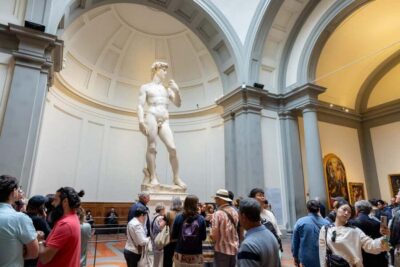
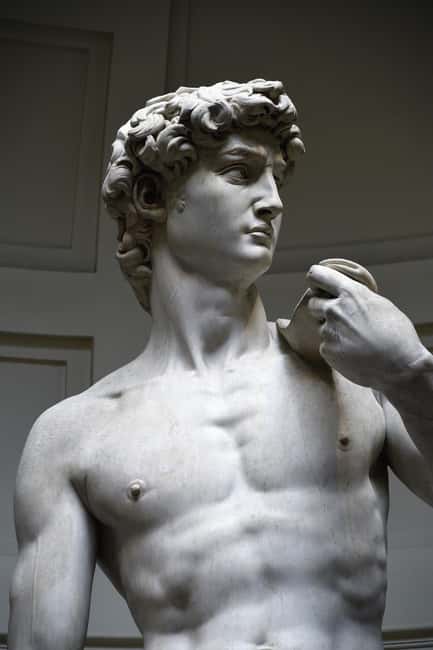
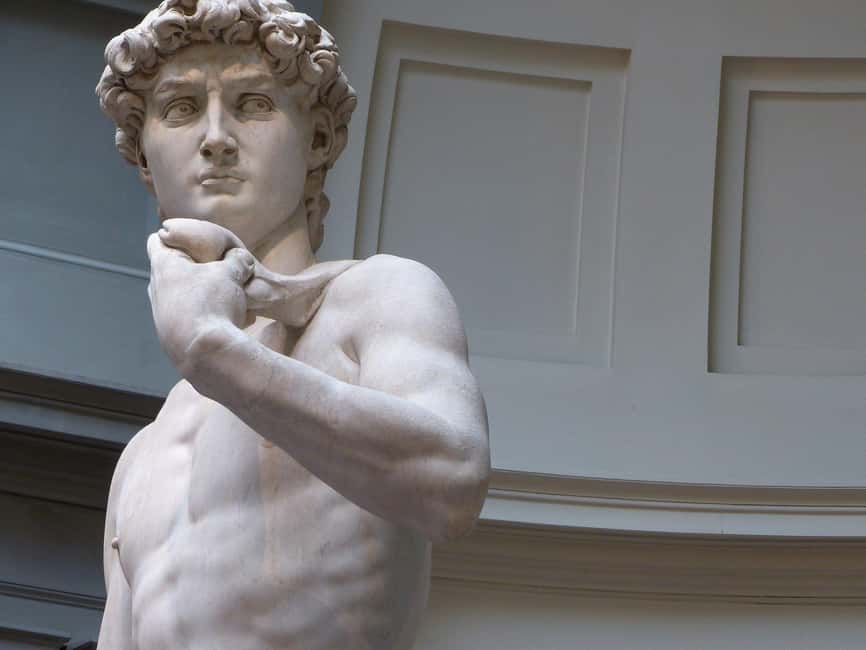
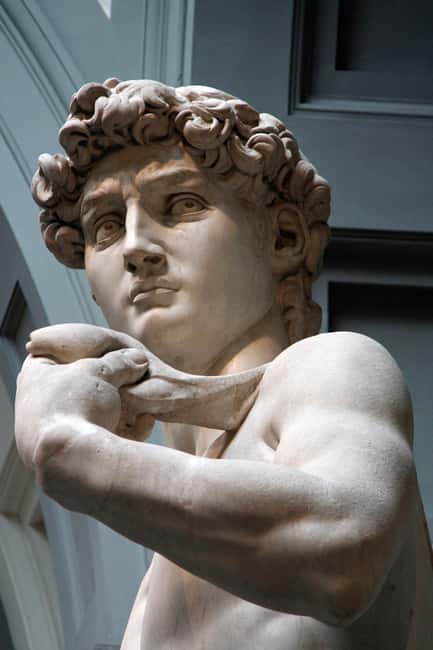
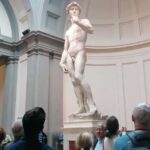
Yes, David is famous. But your experience gets better when you stop treating it like a single postcard pose and start treating it like a sculpture designed to be read.
Here’s what I’d train your eyes to do while you’re standing there:
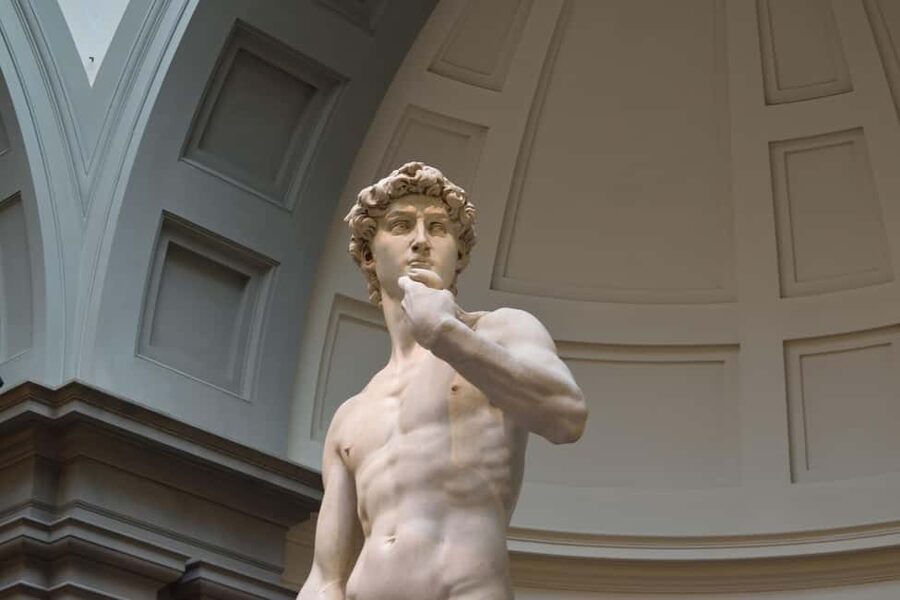
- Look at the overall silhouette first. Even if it’s just a quick glance, it helps you understand the body’s balance before you get lost in detail.
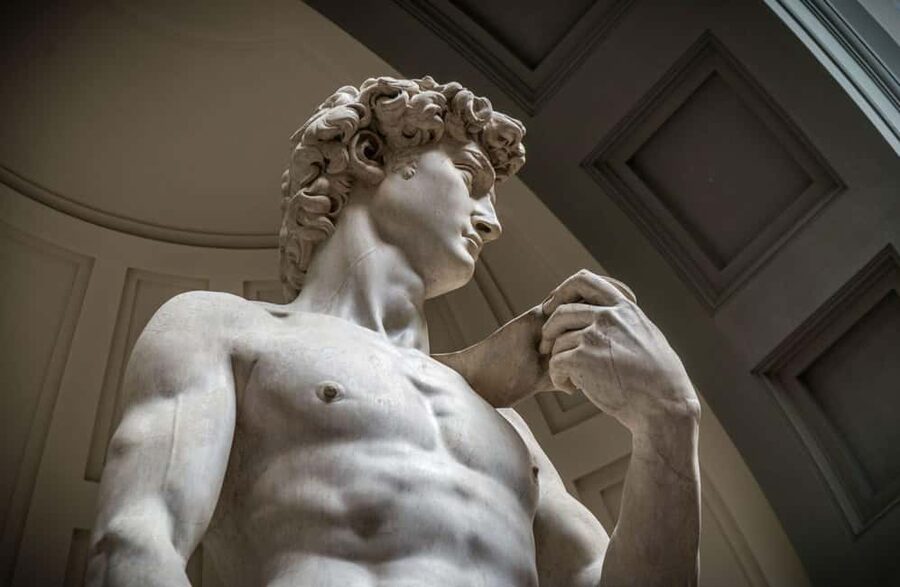
- Then check the face and expression. David’s calm intensity is part of why it became a symbol of ideal human perfection. Your guide’s commentary should help you connect that expression to what Michelangelo was doing with the figure’s “readability.”
- Notice how the pose creates tension. The stance is stable, but the body feels poised. That contradiction is one reason this sculpture still grabs people who think they already know the story.
Because this tour includes commentary from a licensed local guide (and the tour is positioned as art-historian informed), you’ll get more than “it’s by Michelangelo.” You should expect context about why the sculpture mattered culturally and how Renaissance patrons and artists thought about human form and ideal proportion.
Also, the group size helps. With a small group, you’re less likely to feel like you’re fighting for space or being forced into a rigid “stop for 20 seconds” routine.
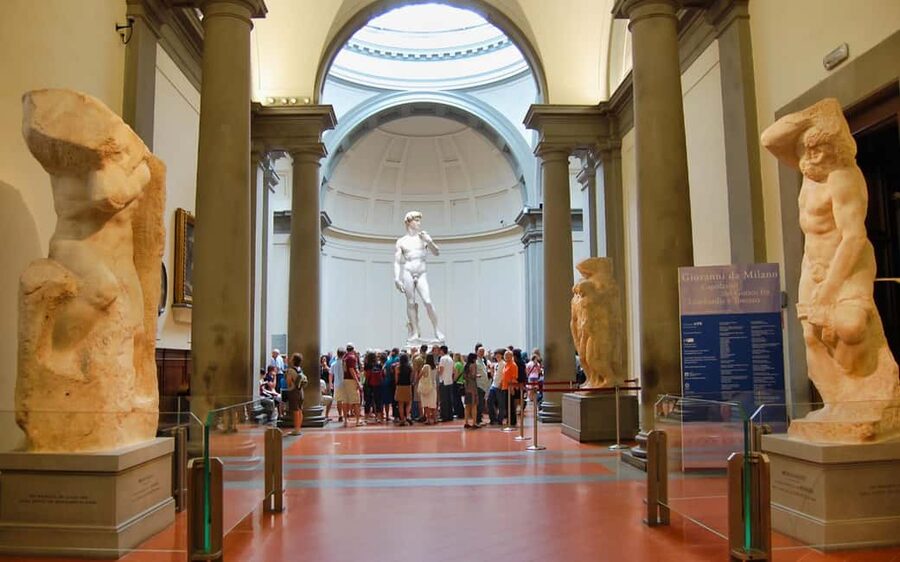
The Unfinished Prisoners Story: Understanding Michelangelo’s Thinking
One of the most useful parts of this tour isn’t just that it names Michelangelo—it explains how to read his work. You’ll hear the story behind the unfinished Prisoners, which is included as a highlight.
Why this matters: when you know Michelangelo was thinking in terms of bodies trapped in stone and forms that suggest motion, you start to see David differently. David isn’t only a finished masterpiece. It’s the outcome of the same artistic language—muscle, gesture, and energy—Michelangelo used across other projects, including works that didn’t reach completion.
If you only ever saw David through museum-ticket hype, the Prisoners context gives you a way to interpret David with more depth. You’re not just looking at an icon. You’re looking at an artist’s system of ideas about the human body.
Accademia Beyond David: Paintings And Lesser-Known Florentine Artists
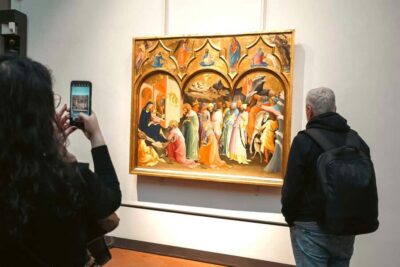
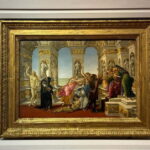
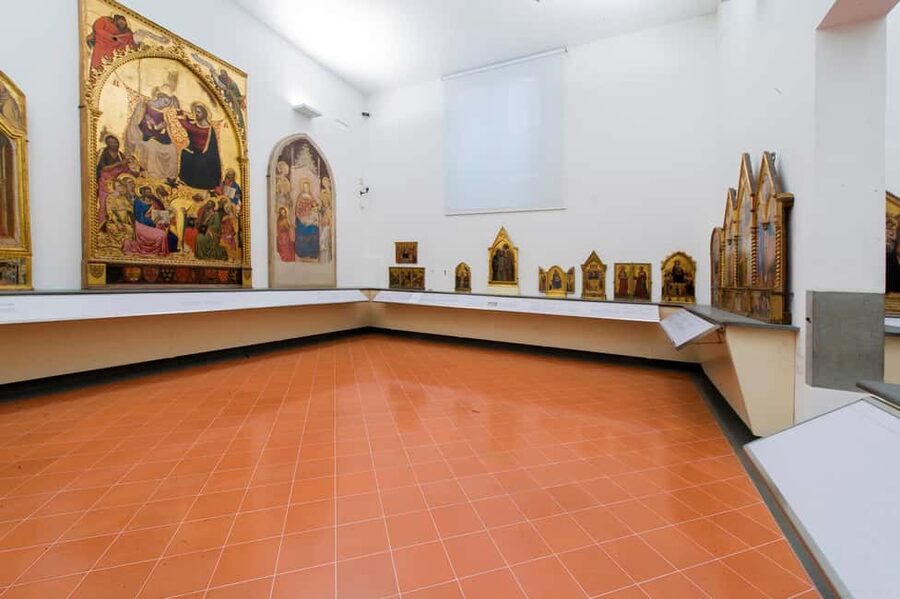
The tour doesn’t stop at one sculpture. It’s designed to help you make sense of Accademia as a whole, including 14th to 17th-century paintings and references to Florentine artists beyond the most famous name.
This is where you’ll get value if you’re the type who likes to connect the dots across art forms. Your guide’s job is to point out lesser-known pieces and help you understand why they belong in the same story as Michelangelo’s work. Even when a painting isn’t as instantly recognizable as David, the guide’s framing makes it easier to notice details instead of letting your brain switch off after the big moment.
Think of this as the “brain on” part of the visit. You’ll likely leave with more than a single image in your head. You should come away with a sense of what Florence’s art world looked like across different decades, and how themes and techniques traveled through studios and patrons.

Small Group Pace: Listening Instead Of Sprinting
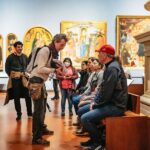
This is a small group tour, limited to 10 participants, and that changes how the hour feels.
In a small group:
- You’re more likely to stay together.
- You get better odds of catching the guide’s commentary even when the room is busy.
- The pace tends to feel guided rather than rushed.
That matters because Accademia’s most famous stops can be chaotic. The guide is there to help you through the busiest moments, keeping your attention where it counts.
One small caution based on feedback connected to the experience: in crowded, noisy spaces, the audio volume can be an issue. If you’re sensitive to hearing challenges, I’d bring simple backup habits like adjusting where you stand to face the guide and keeping your attention on what’s being said rather than what you assume you already know.
Languages And Audio Guide Support For Your Comfort
Your live guide is listed with English, Italian, and Spanish, Portuguese. On top of that, there’s an included audio guide with multiple language options: Spanish, French, German, Italian, Chinese, Japanese, Korean, Portuguese, and Traditional Chinese.
For you, the practical value is flexibility. If the live narration comes too quickly for your comprehension, the audio can help you catch up. If you’re part of a mixed-language group, you’re not stuck with dead time while everyone else listens.
This also makes the tour friendlier for visitors who prefer to read and listen at their own speed. The hour is short, but having audio support can make the difference between walking out impressed and walking out understanding.
Price And Value: Is $66 A Good Deal?
At $66 per person for a 1-hour tour, this isn’t a bargain-basement option. But it can be good value if you care about two things: time and guidance.
Here’s why the price can make sense:
- It includes entry ticket plus a licensed local guide, not just a meetup.
- You get skip-the-line priority, which is a real time-saver in high-demand places.
- The group is capped at 10, which usually means more control over the experience than large bus-style visits.
If you’re the kind of person who wants to stand at David, take a few photos, and move on, then a guided tour might feel like overkill for the price. But if you want the context—Michelangelo’s intent, the Prisoners story, and how the paintings and Florentine artists fit together—then this format is efficient. You’re paying to avoid the “I saw it, but I don’t really know what I just saw” problem.
What To Do Before And During The Tour (Simple Tips That Help)
Accademia moves fast. Here are a few practical tactics to make the hour work for you:
- Arrive a few minutes early so you’re not checking your phone while the group forms.
- Pick one spot to stand near David and let the guide’s explanation land before you start shifting for photos.
- Listen for the story beats, not just facts. The tour is built around connecting David with Michelangelo’s broader sculptural thinking, including the unfinished Prisoners.
- If you notice sound issues in crowded rooms, adjust your position toward the guide’s direction and keep your focus on the spoken narration. Your audio guide can be your backup, not your main plan.
And if you’re balancing this stop with other must-sees in Florence, remember: this tour is designed for high-impact sightseeing in a short time window. It’s a good choice when you want a structured “best of Accademia” without giving up half your day.
Who Should Book This Accademia Gallery Tour?
This tour is a strong fit if you:
- want a guided look at Michelangelo’s David with explanation, not just an icon check
- appreciate Renaissance context and would like the unfinished Prisoners story connected to what you see
- prefer a small group where you can listen without constant jostling
- like museum experiences where the guide helps you notice paintings and lesser-known works too
It may be less ideal if you:
- only want to browse independently and hate structured pacing
- plan to spend most of your time taking photos and moving at your own speed
Should You Book This Tour?
I’d book it if you want priority entry and a one-hour plan that targets the real payoff of Accademia: David plus the Michelangelo context that makes David more meaningful. The $66 price can feel fair when you factor in what’s included—ticket, licensed guide, skip-the-line access, and audio support—especially in a city where lines can eat your day.
If your main goal is to move fast, get a photo, and leave, then skip-the-line alone might not justify the guided narration. But if you want to understand what you’re looking at, this is the kind of short, focused tour that leaves you satisfied instead of just impressed.
FAQ
How long is the Florence Accademia Gallery & David tour?
The tour duration is 1 hour.
Where is the meeting point?
Meet your guide in front of via ricasoli, 43, where the guide will be holding a getyourguide sign.
Is there skip-the-line entry?
Yes. You get skip-the-line access through a separate entrance.
What’s included in the price?
Included are the entry ticket and a licensed local guide. An audio guide is also included.
What languages are available?
The live tour guide is available in English, Italian, Spanish, and Portuguese. The audio guide includes Spanish, French, German, Italian, Chinese, Japanese, Korean, Portuguese, and Traditional Chinese.
What is the group size and is it wheelchair accessible?
The tour is a small group limited to 10 participants and it is wheelchair accessible.