REVIEW · FLORENCE
Florence: Accademia Gallery David Entry & Audio Guide App
Book on GetYourGuide →Operated by Tours About · Bookable on GetYourGuide
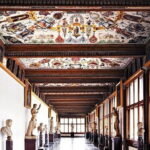
Michelangelo’s David pulls you in fast. I like the timed entry that cuts down the ticket-office chaos, and I love that this package includes the POP Guide audio app to help you pace the museum on your terms. You get a full slice of the Accademia: sculpture (including David), original plaster work, Medici-era instruments, and Medieval-to-Renaissance paintings.
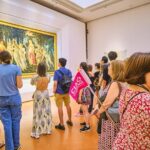
The main thing to plan for is crowds. Even with a reserved time, security and museum capacity rules can slow entry when lots of people arrive together, so expect some waiting outside.
In This Review
- Key things to know before you go
- Timed entry near Carrefour: how you actually get in
- David in the main hall: what you’re really seeing
- Gipsoteca and Medici instruments: the Accademia surprises
- Painting galleries: how Giotto and Botticelli fit together
- Top-floor altarpieces: the quiet payoff at the end
- POP Guide on your phone: the audio experience that makes or breaks it
- Timing, heat, and walking: what to plan day-of
- Value check: why $38 can feel fair (or not)
- Should you book this Accademia David entry with POP Guide?
- FAQ
- Where is the meeting point for this Accademia entry?
- What do I get with my ticket?
- Do I need to bring headphones?
- Do I need to download the audio app before arriving?
- Does the audio guide work offline?
- How do I use the voucher?
- Is this a true skip-the-line ticket?
- Are bags, luggage, or pets allowed?
- Is there a discount for children and what ID is required?
Key things to know before you go
- Timed admission with a separate entrance to reduce the worst lines
- David plus unfinished works in the main hall for a rare big-sculpture experience
- Gipsoteca plaster models for a behind-the-scenes look at how sculptors worked
- Medici collection instruments, including Stradivarius pieces, for music-meets-art context
- Painting galleries and top-floor altarpieces that show the move from Medieval to Renaissance styles
- Audio setup depends on your phone (internet and your own headset matter)
Timed entry near Carrefour: how you actually get in
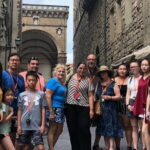
This visit starts with a very specific meet-up point in central Florence: Via Ricasoli 115, outside the Carrefour Express supermarket. Your host meets you in front of that storefront and exchanges your GetYourGuide voucher for a physical ticket. Look for staff holding a white flag that says ENJOY ROME.
The big value here is that your ticket is tied to a timed slot, and you use a separate entrance rather than fighting for the main ticket office line. In practice, that can still mean some waiting. The museum controls how many people enter at once, and if capacity is tight, entry may be slightly postponed.
Here’s the practical move: arrive early enough that you’re not rushing while you figure out where the flag is. The entrance process can feel a bit chaotic at first—there’s voucher exchange, then you get funneled toward your timed group. If you’re sensitive to tight schedules, build in extra buffer time.
You can also read our reviews of more guided tours in Florence
David in the main hall: what you’re really seeing
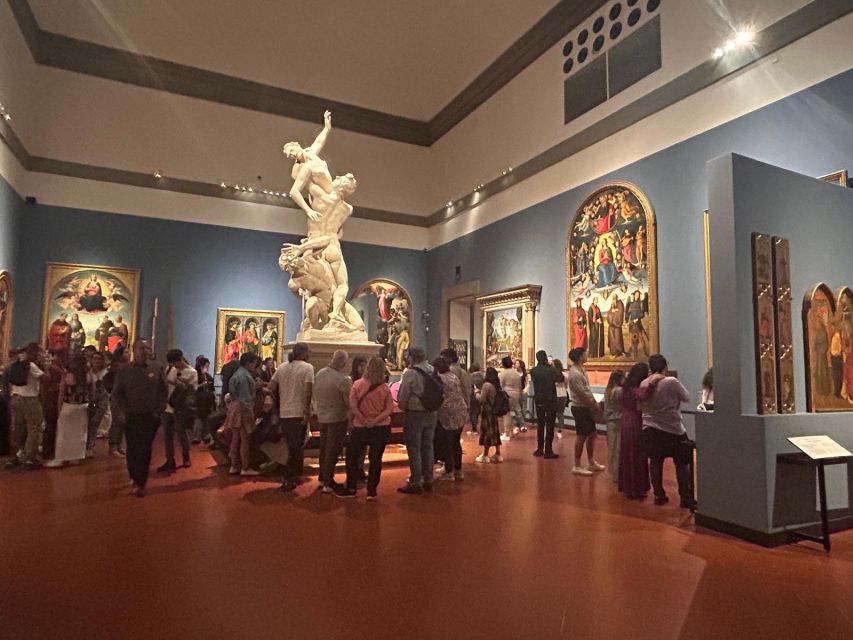
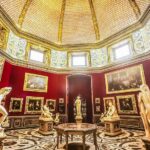
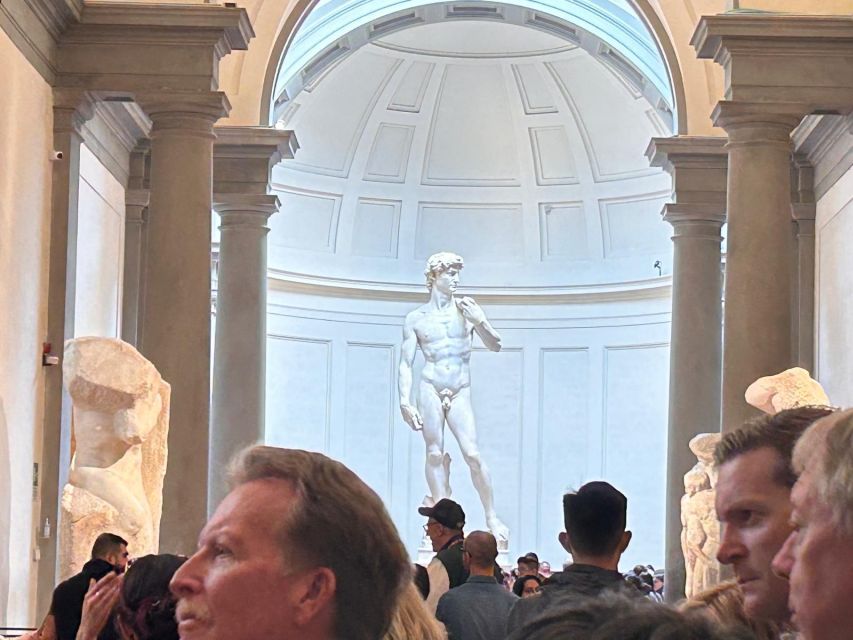
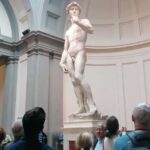
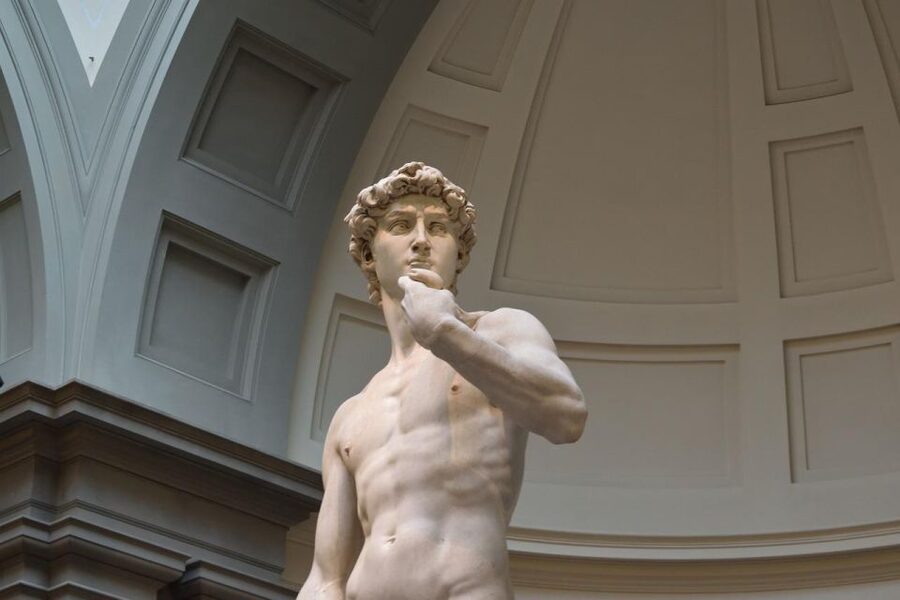
Once you’re through, the core payoff is the main exhibition hall with Michelangelo’s David. You’ll see why this statue is famous even if you think you know the image already. In person, the scale and focus are the whole point: it’s not just a masterpiece, it’s a presence.
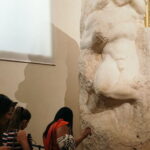
You’ll also find some of Michelangelo’s unfinished works in that main area. That matters because it changes how you read David. Instead of treating the finished statue as an untouchable final product, you’re seeing the workshop reality—forms in progress, decisions still visible in the material.
This is a great stop for first-timers who want “the headline” plus a small taste of process. It’s also a good moment to slow down. David’s impact is instant, but the more you look, the more you notice how the museum’s lighting and spacing affect the way the sculpture reads.
Gipsoteca and Medici instruments: the Accademia surprises
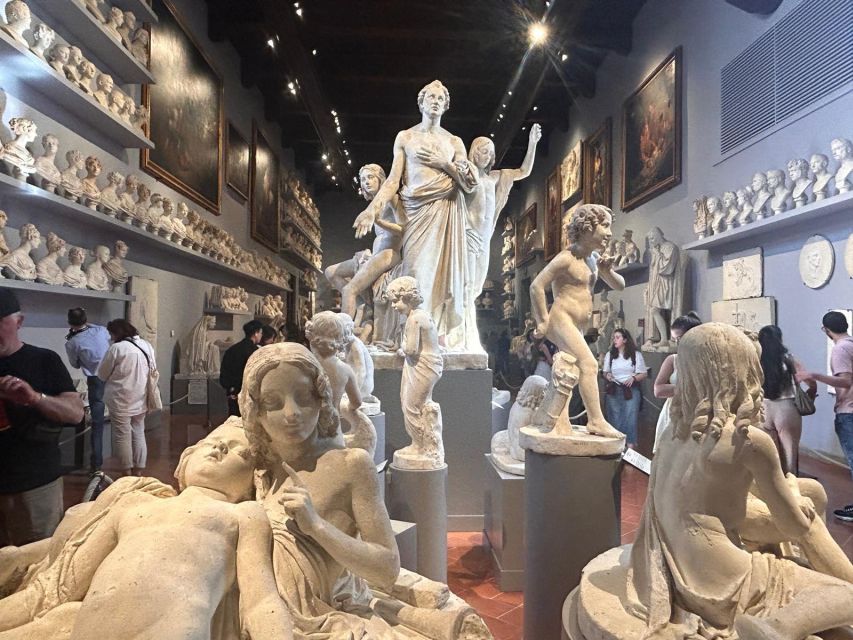
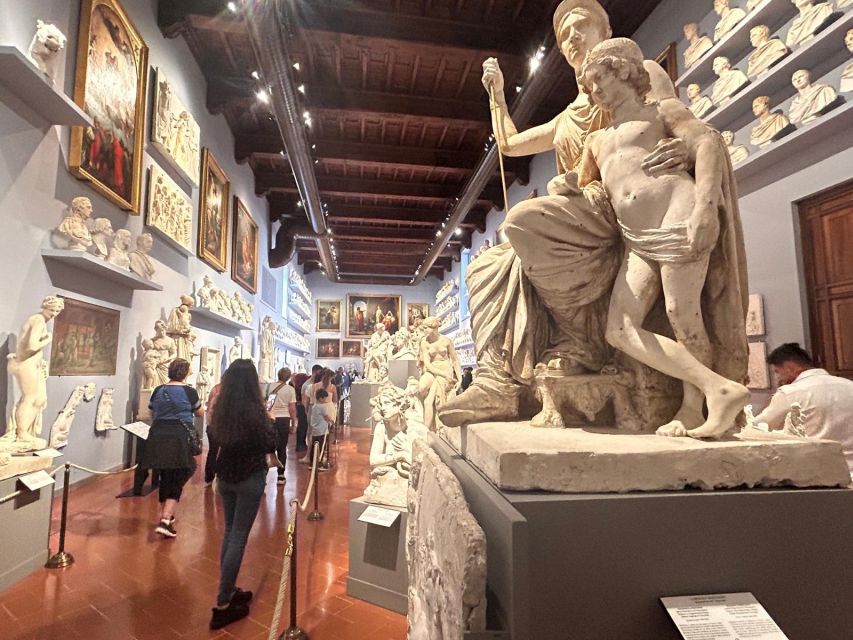
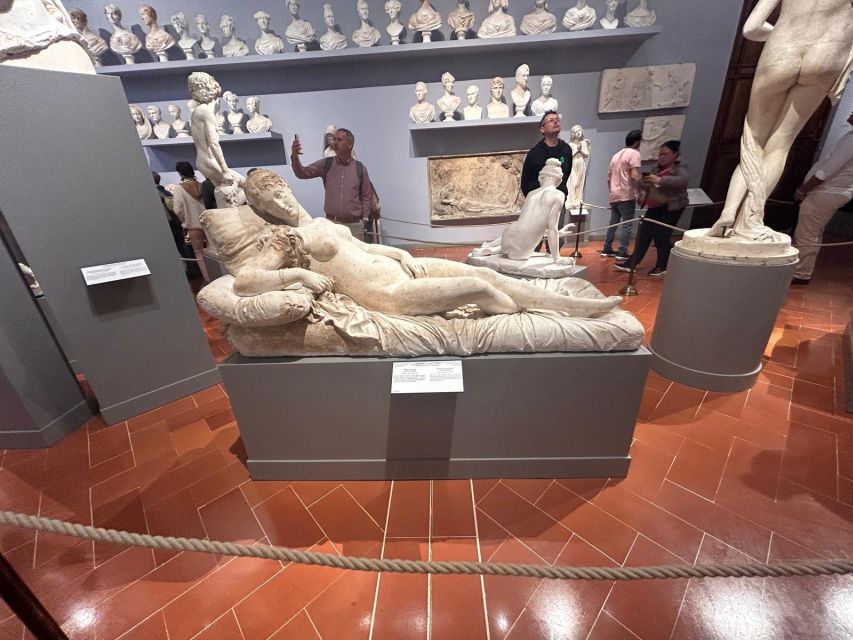
The Accademia isn’t only about marble giants. A standout detour is the Gipsoteca, where you can see original plaster models made by 19th-century Florentine sculptors. This part is powerful because it turns the museum from display-only into something closer to a training ground.
Plaster models can feel technical or “less glamorous” than marble from a distance, but up close they help you understand how sculptors planned shape and volume. If you like art that explains its own making, this is where your brain goes, ah, I see the workflow.
Then comes another curveball: the musical instruments from the Medici collection, including three Stradivarius instruments. You don’t go to the Accademia expecting a mini music museum, but the pairing works. It adds a cultural layer: Florence wasn’t only producing sculpture and painting—it was backing the arts in multiple forms.
If you have limited time in Florence and you’re choosing between “just David” and a more complete museum experience, this section is one reason to pick the full route.
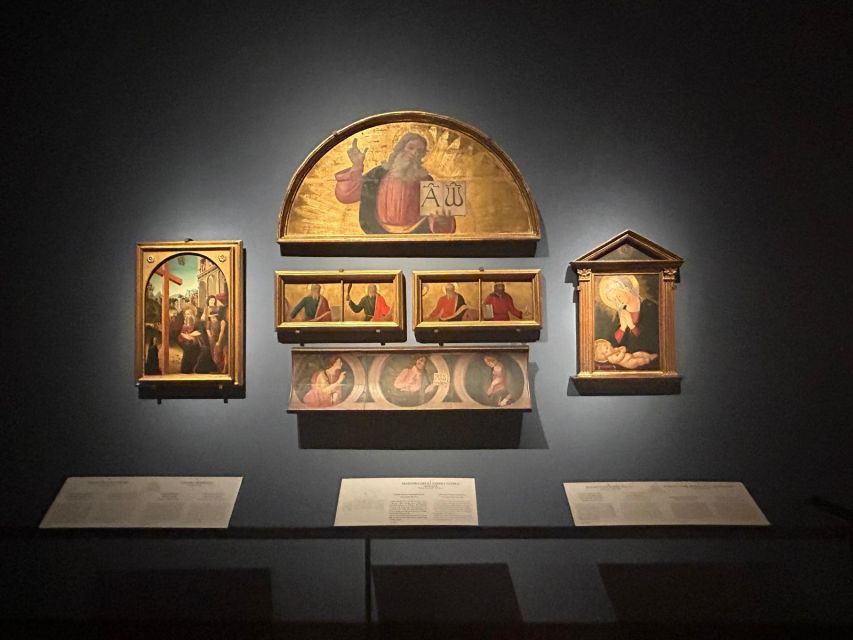
Painting galleries: how Giotto and Botticelli fit together
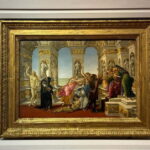
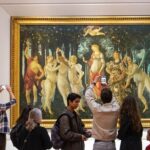
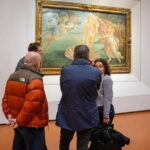
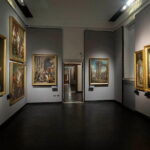
After the sculpture and instruments, the museum shifts into its painting galleries. This is where the Accademia becomes more than a single attraction. You’ll move through works from Medieval and Renaissance-era artists, including artists like Giotto and Botticelli.
What I like about this setup is that it helps you feel the change in style without needing a lecture. Medieval art tends to have a different emotional tone and visual logic than later Renaissance painting. Renaissance painting leans more toward naturalism, space, and human presence.
This matters if you’re the type who gets lost in museums. With paintings, a quick audio explanation can help you connect the dots: who painted, what period you’re in, and what changed over time. Even if you’re not a strict art-history person, that context makes the gallery route feel like a story rather than a checklist.
Top-floor altarpieces: the quiet payoff at the end
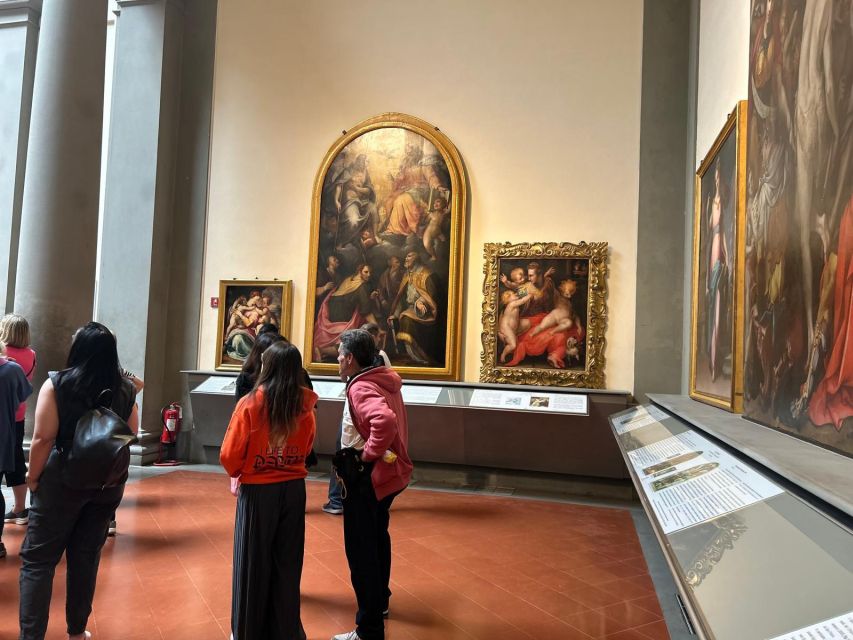
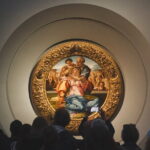
Head to the top floor for the altarpieces. This part often feels calmer because many people speed through after they’ve hit their main goals. But the altarpieces reward you if you slow down for visual structure—compositions, symbolism, and how the panels guide your eye.
Altarpieces can look like “big religious art” at first glance, but in the Accademia setting they land as a final chapter. You’ve already seen how the museum handles sculpture process and how painting evolves across periods. The top-floor works then tie together the museum’s themes: craft, devotion, and a long artistic evolution in Florence.
If you want the most satisfying ending, save some stamina for this floor. It’s the section that often turns a quick museum stop into a meaningful visit.
You can also read our reviews of more museum experiences in Florence

POP Guide on your phone: the audio experience that makes or breaks it
Your ticket includes the POP Guide Audio Guide app. You’ll need a working smartphone and a bit of prep.
Important practical points:
- Download the POP Guide app before you reach the meeting point.
- At the meeting point, staff provide your login credentials.
- You should bring your own headphones—they aren’t included.
Some visitors found that they couldn’t download if they lacked data connection, and others reported that the audio isn’t reliable offline even when told it might work. So I strongly suggest you treat this like a “phone-dependent” experience: plan on having internet and test the app before you settle into the galleries.
Also, the app’s map can be confusing. It doesn’t always match the museum layout perfectly. That’s not fatal—just don’t rely on the map alone. Use it as a support tool, not your only compass.
If the audio app fails, you’ll still see the art. But you’ll lose a layer of guidance that helps you understand what you’re looking at while you wander at your own pace.
Timing, heat, and walking: what to plan day-of
This experience is timed entry plus a museum route that involves a lot of walking. Wear comfortable shoes. Bring water if you’re visiting in warm weather—outside waits can be hot, and once you’re inside, you’ll still cover ground.
You should also plan for strict entry timing. The museum can manage access by controlling the number of people inside, and entry can shift if crowd levels run high. That means your start time is a real start time, not a vague recommendation.
Bags are another practical issue. Luggage or large bags aren’t allowed, and pets are also not allowed. So travel light. If you’re carrying a small bag, check whether it’s within acceptable limits for the site—this activity specifically says bags are not allowed, which suggests you should assume anything bag-like could be rejected.
If you’re bringing kids, note that for discounted tickets (ages 6–17), you need valid photo ID showing the birth date.
Value check: why $38 can feel fair (or not)
At $38 per person, you’re paying for three things:
- A reserved ticket that reduces the worst lines via a separate entrance
- Entry to the Accademia galleries (which is the whole point, obviously)
- The POP Guide app included with your admission
For many people, the math works because this museum can be time-sensitive. If you show up without a reserved slot, the ticketing line can swallow hours, and you end up rushing once you finally get in. In that sense, the timed entry has real value even if it doesn’t eliminate every wait.
Where the value tilts depends on your style of learning. If you love independent museum time, audio support can be enough—especially when it explains what you’re looking at as you move from hall to hall. If you want maximum detail and back-and-forth questions, you may eventually wish you’d booked a licensed live guide instead. One sign is whether you rely on audio plus your own interpretation, or whether you want a person to shape the story for you.
One more heads-up: there can be shortfalls. Some people reported the app didn’t work or needed extra help with download. If you’re someone who hates tech friction, have a Plan B mindset. The art is the main event.
Should you book this Accademia David entry with POP Guide?
Book it if you want the best chance of a smooth visit to David, plus the chance to see more than just the headline statue—especially the Gipsoteca plaster models and Medici instruments. This is also a strong choice if you prefer to move at your own pace and use audio to understand what’s in front of you.
Skip it (or be cautious) if you’re likely to run into phone trouble. You need to download the app and use headphones you bring yourself, and internet access can matter. Also, if you’re very schedule-tight, remember that entry can be slightly postponed when the museum manages capacity.
If you’re flexible, the experience is a good value play: you pay for reserved access and a guided-by-your-phone framework that helps you make sense of the collection from sculpture to painting. And if your plans change, it comes with free cancellation up to 24 hours in advance.
FAQ
Where is the meeting point for this Accademia entry?
You meet in front of the Carrefour Express supermarket at Via Ricasoli 115. The host is holding a white flag that says ENJOY ROME.
What do I get with my ticket?
Your admission includes entry to the Accademia Gallery and the POP Guide Audio Guide app.
Do I need to bring headphones?
Yes. Headphones are not included, so you should bring your own.
Do I need to download the audio app before arriving?
Yes. You’re instructed to download the POP GUIDE app before you arrive at the meeting point. Staff then provide login credentials at the meeting point.
Does the audio guide work offline?
Based on information shared with this experience, the audio guide may not work offline reliably, and internet/data may be needed to download it.
How do I use the voucher?
At the meeting point, you exchange your GetYourGuide voucher for a physical ticket with the host.
Is this a true skip-the-line ticket?
It’s designed to skip the ticket office line by using a separate entrance, but entry can still slow down if the museum controls access when it’s busy.
Are bags, luggage, or pets allowed?
No. Pets are not allowed, and luggage or large bags and bags are not allowed.
Is there a discount for children and what ID is required?
Yes. For ages 6–17, you need valid photo ID with the birth date to get the discounted ticket. Without it, you may need to buy the adult ticket.