REVIEW · FLORENCE
Florence: David’s Accademia Gallery Guided Tour
Book on GetYourGuide →Operated by Nicom Tours · Bookable on GetYourGuide
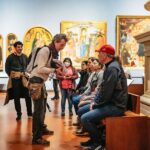
Florence has a talent for big moments, and this one is Michelangelo’s David. This guided visit to the Accademia Gallery is built to get you inside fast, then focus your eyes on Renaissance and Gothic masterpieces with an expert guide explaining what you’re actually looking at. You’re not just standing in front of famous art here; you’re learning the why behind it.
What I like most is the way the tour pairs a skip-the-line entrance with live commentary, so you start seeing the collection right away instead of losing your energy to crowds. I also really appreciate the practical support: you get audio equipment, which means it’s easier to hear the guide even when the rooms get busy.
One thing to watch: the museum runs security checks, and the rules around bags and metal items can slow you down if you show up with the wrong stuff. Add in that meeting details can shift slightly, and you’ll want to arrive with a little slack in your schedule.
In This Review
- Quick hits: what makes this Accademia tour worth it
- Accademia Gallery in One Hour: what you actually see
- Priority entry and security rules that can change your arrival
- First stop energy: walking in with momentum instead of crowd math
- Michelangelo’s David: why the guide’s framing makes the sculpture click
- Gothic and Renaissance art: how you’ll learn to spot the shift
- Botticelli and Ghirlandaio: paintings you’ll actually understand while standing there
- Michelangelo’s Prisoners/Slaves: the bonus works that deepen the story
- Guide experience matters: names you may hear, and what the best ones do
- Price and timing: is $53 for 1 hour good value?
- Who should book this Accademia tour (and who might not)
- Should you book this Accademia Gallery guided tour?
- FAQ
- How long is the Accademia Gallery guided tour?
- Does the tour include skip-the-line entry?
- Is there a guide and audio included?
- What languages are the tours offered in?
- What should I bring to the museum?
- Are there security or bag rules before entering?
Quick hits: what makes this Accademia tour worth it
- Priority entry via a separate entrance helps you beat the long lines.
- Audio equipment keeps the guide’s narration clear in busy rooms.
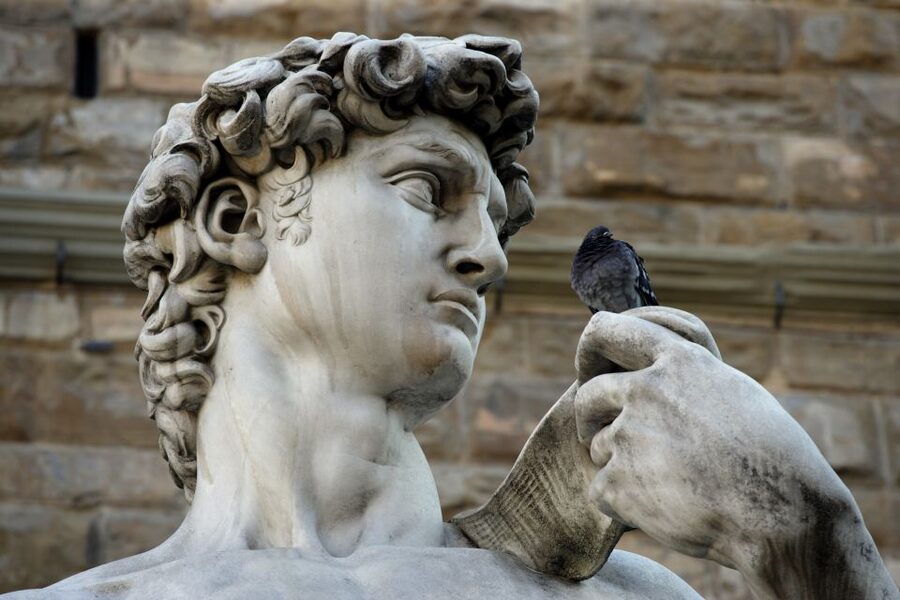
- Michelangelo’s David is the headline, framed by context on Renaissance ideas.
- Gothic to Renaissance comparisons help you notice style changes, not just famous names.
- Botticelli and Ghirlandaio paintings show up alongside the sculpture focus.
- Michelangelo’s Prisoners/Slaves are included for extra depth beyond the big icon.
Accademia Gallery in One Hour: what you actually see
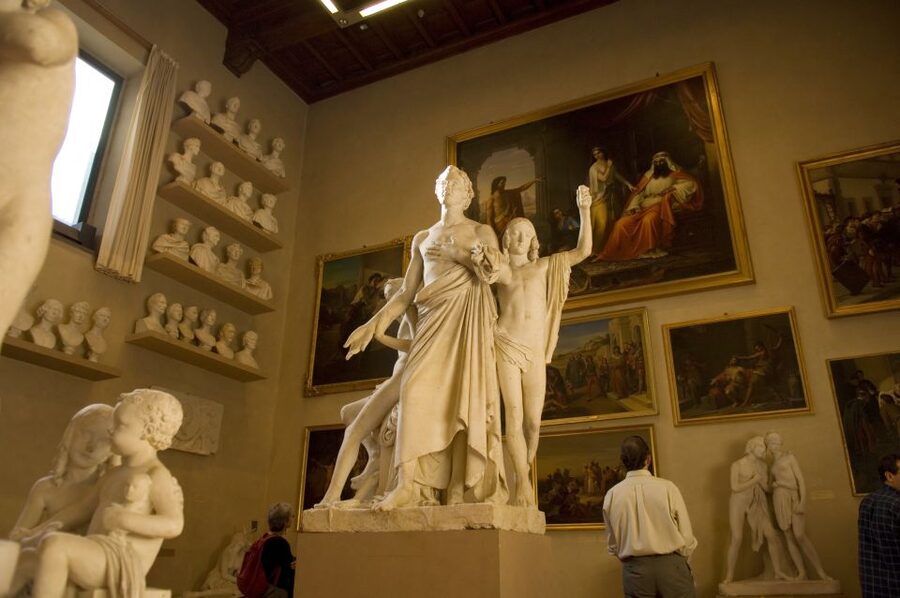
This is a tight, focused visit: about one hour in the Accademia Gallery with a live guide (Spanish or English). That short time matters in Florence, because waiting and wandering can eat up the moments when you most want to concentrate.
You’ll structure your visit around the collection’s shift from Florentine Gothic style into Renaissance humanism. The guide’s job is to point out what changes as the artists move toward more lifelike forms and more attention to human expression and proportion. In other words, you’re learning how to see, not just where to stand.
And yes, the reason most people book is Michelangelo’s David, but the tour does a smart thing: it uses David to help you read other works in the same building. When the guide connects the sculpture to paintings by artists like Botticelli and Ghirlandaio, the gallery stops feeling like a list of “must-sees” and starts feeling like one conversation.
You can also read our reviews of more guided tours in Florence
Priority entry and security rules that can change your arrival
Skip-the-line here doesn’t mean zero friction. You still need to go through security inspection before entering the museum areas, and that can take time if you arrive late or prepared with a problem bag.
Plan around these key rules:
- Security can collect prohibited items like scissors, blades, and other metal objects.
- There’s no cloakroom, so large bags, backpacks, and helmets won’t be accepted into the museum space.
- You can bring a small bottle of water up to 0.5 liters.
The practical takeaway: travel light on this day. Wear what you can, keep a small day bag, and avoid bringing anything that might get flagged as “metal you don’t need.” If you do have a bigger bag, check your options before you head over, because you likely won’t be able to stash it inside.
Meeting time can also shift a bit, with the provider contacting you in advance if needed. So set your phone notifications and don’t treat the scheduled time like a fixed appointment that can’t move.
First stop energy: walking in with momentum instead of crowd math
This tour is set up to help you get your bearings fast. Priority entry through a separate entrance lets you start before the main bottlenecks build fully. In a museum where people spill into corridors and pause to take photos, those first minutes matter.
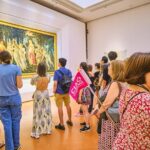
Once inside, your guide takes control of pacing. That’s a big deal because the Accademia can feel overwhelming if you arrive cold: you see a lot of art quickly, but you don’t automatically know what differences to look for. With the tour, you’re guided through a path designed to build understanding rather than just cover highlights.
The audio equipment also helps you stay focused. Instead of leaning in and straining to hear, you can keep your eyes on the artworks while the explanation comes through clearly.
Michelangelo’s David: why the guide’s framing makes the sculpture click
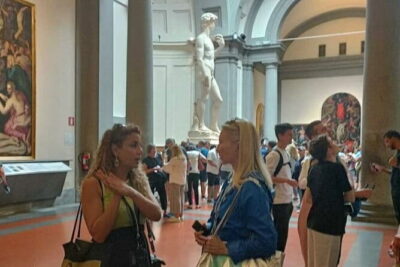
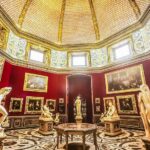
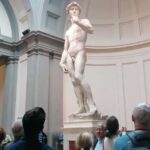
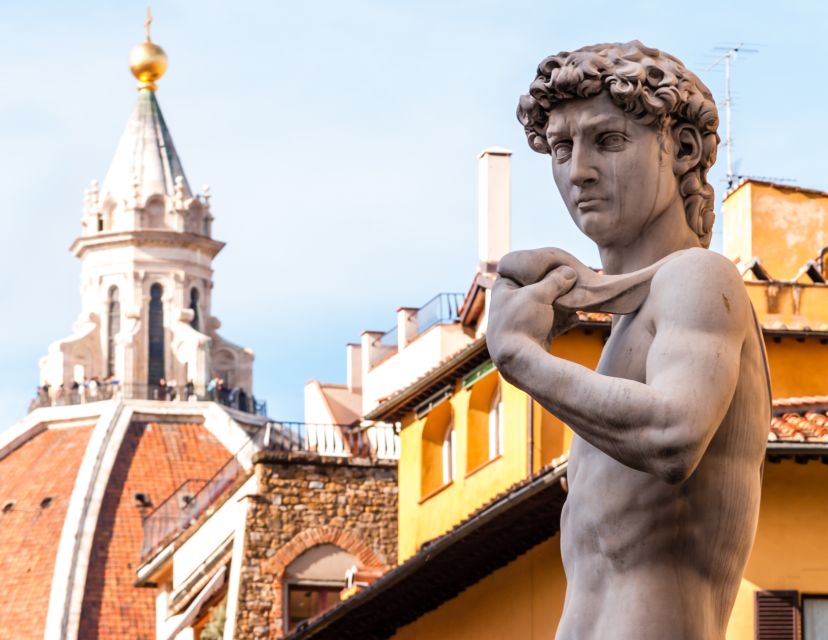
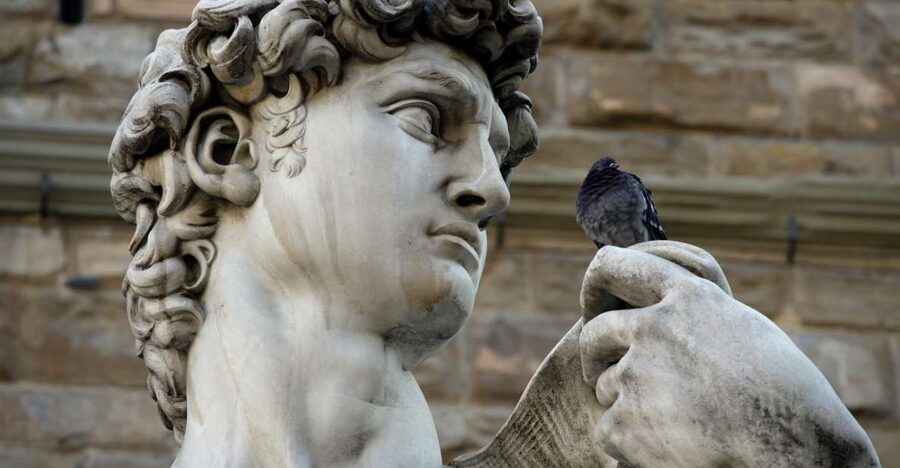
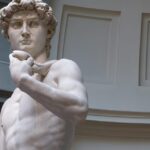
Michelangelo’s David is the obvious draw, and you’ll see it as the tour’s central moment. But what makes a guided approach valuable is how it changes your perception of the sculpture’s lifelike qualities and overall impact.
The guide will connect David to Renaissance priorities—human proportions, expression, and the shift toward a more human-centered way of thinking. That framing is what helps David land emotionally. Without context, it’s easy to reduce the experience to size, pose, or the fact that it’s famous. With the context, you start noticing how the sculpture communicates presence and intention.
David also works like a visual anchor for the rest of what you’ll see. As you move through the gallery, the guide’s commentary helps you compare what you’re seeing in sculpture with what you’re seeing in paintings—especially where artists aim for realism and where Gothic art leans more toward decorative form and stylized emphasis.
Gothic and Renaissance art: how you’ll learn to spot the shift
One of the smartest aspects of this tour is that it doesn’t treat the gallery like a checklist. It’s organized around movements: Gothic into Renaissance, with the guide explaining how those styles differ and why artists moved in that direction.
Here’s what that means in real terms as you walk:
- You’ll get help recognizing how Gothic works often emphasize ornate detail and stylization.
- Then you’ll see how Renaissance works push toward more natural human forms and a stronger sense of grounded reality.
This is where an expert guide can save you a lot of guesswork. You don’t need to be an art historian to enjoy the comparisons, but you do need someone to point out what to look for. The best part is that once you learn the pattern—how the style changes—you’ll start seeing it on your own as you move from room to room.
You can also read our reviews of more museum experiences in Florence

Botticelli and Ghirlandaio: paintings you’ll actually understand while standing there
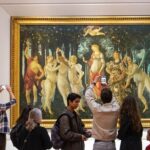
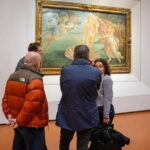
The tour doesn’t skip the painting side. You’ll spend time with Renaissance paintings by artists such as Botticelli and Ghirlandaio. Seeing these artists in the same place as David helps you build a fuller picture of Renaissance thinking across media.
A common problem with museum tours is that paintings get rushed because people focus on one blockbuster sculpture. This one uses the guide’s narration to keep the paintings meaningful. You’ll learn about the artists and techniques, and you’ll likely get a few lines of explanation that make the scene’s choices feel deliberate rather than random.
When the guide connects technique and meaning, you stop asking, “What am I supposed to look at?” and start noticing choices like composition, figure emphasis, and how the painting’s style aligns with what you just learned about the era.
Michelangelo’s Prisoners/Slaves: the bonus works that deepen the story

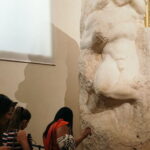
If you only come for David, you’ll still have a great time. But the tour’s value rises when it brings you to lesser-seen Michelangelo works like the Prisoners/Slaves. These pieces help you understand Michelangelo as more than a “one sculpture genius.”
The guide’s narration adds context about Michelangelo’s approach and the broader ideas behind those works. That makes the statues feel like part of an artistic mindset, not just extra stops on the way to the main attraction.
This is also where the tour format helps. The one-hour pace is short enough to keep you energized, but it’s long enough to include more than the single headline sculpture. You leave with more than a photo; you leave with a sense of how the artist worked and how the collection thinks about human form.
Guide experience matters: names you may hear, and what the best ones do
The experience hinges on your guide, and the strongest sessions share a few traits: clear storytelling, strong art context, and the ability to make a room of crowded people feel organized.
A few guide names come up again and again in the tours associated with this activity, including Rosa, Martina, Glenda, Giacomo, Mario, Christian, and Steffania. Each of them is praised for turning the collection into something you can understand quickly. In particular, guides are credited with giving new ways to see David and explaining how Michelangelo’s ideas connect to Renaissance art.
One practical hint: if you get a guide who talks in a lively, narrative style, you’ll likely absorb more in this short time. If you prefer quiet, gallery-style viewing, you might want to consider a slower self-guided visit too. But if you want a fast, guided education in one hour, the guide’s energy is a big part of the payoff.
Price and timing: is $53 for 1 hour good value?
At $53 per person for a one-hour tour, you’re paying for three things: priority entry, a live guide, and audio equipment. Those add up in Florence, where time and lineups can be your real enemy.
Here’s how I think about the value:
- If you’d otherwise stand in a long line, the skip-the-line piece alone can make the tour feel like a bargain in saved time.
- The live guide turns the museum from a visual blur into a structured lesson.
- Audio equipment helps you keep hearing the guide without turning the visit into constant hand-to-ear work.
The tour can be worth it even if you’re not an art super-fan, because the guide helps you get meaning fast. If you’re the type who enjoys reading labels slowly and wandering without structure, you might prefer independent time. But if you want the most iconic works handled in a way that makes them click, this pricing is fairly aligned with the practical benefits.
One caution from real-world experience with this kind of arrangement: tours can run late sometimes if guides arrive after you. It’s not guaranteed, but it’s smart to build a small buffer into your day so a delay doesn’t derail your other plans.
Who should book this Accademia tour (and who might not)
This tour is a strong fit for:
- First-time Florence visitors who want a high-impact museum experience with minimal fuss.
- People who feel intimidated by art and want a guide to translate style and technique into plain language.
- Anyone who wants David plus more context, not just a single “hit and run” photo stop.
It may be less ideal if:
- You hate timed group pacing and prefer to move entirely at your own speed.
- You need lots of time at one object. This tour is built for seeing and learning quickly, not for long contemplation.
- You have issues with the museum’s bag/security rules. Since there’s no cloakroom, your carrying strategy matters.
On wheelchair access, the details are mixed: the activity listing includes wheelchair accessibility, but it also states it’s not suitable for wheelchair users. If this matters for you, I’d confirm directly with the operator before booking so you don’t waste time figuring it out on arrival.
Should you book this Accademia Gallery guided tour?
I’d book it if you want the most important Renaissance highlights inside the Accademia—especially David—with context that makes the collection easier to understand. The priority entry helps you spend your limited Florence time looking at art instead of doing crowd logistics, and the audio equipment makes the one-hour format feel workable.
Skip it only if you already have a plan for a slow, self-paced museum day and you don’t need help interpreting the Gothic-to-Renaissance shift. This tour is designed to teach you how to see; if that’s what you want, it’s a solid use of an hour.
FAQ
How long is the Accademia Gallery guided tour?
The tour duration is 1 hour.
Does the tour include skip-the-line entry?
Yes. You get skip-the-line priority tickets and enter through a separate entrance.
Is there a guide and audio included?
Yes. The tour includes a live tour guide and audio equipment so you can hear the commentary.
What languages are the tours offered in?
The live tour guide is offered in Spanish and English.
What should I bring to the museum?
Bring your passport or ID card.
Are there security or bag rules before entering?
Yes. You’ll go through security inspection. Metal objects like scissors or blades may be collected, and the museum has no cloakroom, so large bags, backpacks, and helmets are not allowed. Bottled water is allowed up to 0.5 liters.