REVIEW · UFFIZI GALLERY
Florence: Uffizi Gallery Highlights Tour
Book on GetYourGuide →Operated by TUI Musement · Bookable on GetYourGuide
Florence can be a lot, fast. This Uffizi Gallery Highlights Tour turns 1.5 hours into a smart, guided sprint through the museum’s most famous Renaissance art, without feeling like you’re doing it alone. I like the small group (up to 9) pace, and I also like that the guide connects what you see to the Medici collection and the wider Renaissance story. The result is less random wandering and more meaning per minute.
The main drawback to plan for is the meeting point confusion and strict entry rules. You’ll meet at the Uffizi courtyard by door number 3 (not the main entrance), and the museum requires the exact name and surname used at booking with matching ID, or you won’t get in.
In This Review
- Key things to know before you go
- Uffizi in 90 minutes: what a highlights tour really gets you
- Meeting at the Uffizi courtyard by door 3 (and not the main entrance)
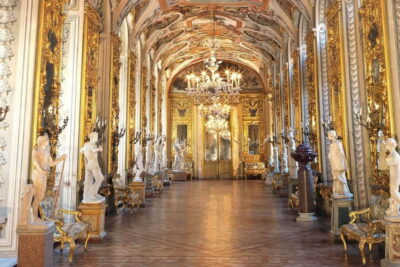
- Inside the Uffizi: how Vasari’s building shapes your first visit
- The Renaissance hits you’ll focus on: from Leonardo to Titian
- The Medici lens: what you’ll understand better than solo visitors
- Pacing, sound, and small-group focus (including headset use)
- What the route feels like during the visit
- Price and value: is $79 a good deal for 90 minutes?
- Who this suits (and who may want a different plan)
- Should you book this Uffizi highlights tour?
- FAQ
- How long is the Uffizi Gallery Highlights Tour?
- How much does it cost?
- Where do I meet the guide?
- Is the Uffizi ticket included?
- Is there a skip-the-line benefit?
- Will I have a headset?
- What language is the tour guide?
- Is food included?
- What should I know about names and entry requirements?
- Is the tour wheelchair accessible?
Key things to know before you go
- Express entry + skip-the-line keeps your short time from being eaten by queues.
- Small group up to 9 means you’re not lost in a crowd, and the route stays coherent.
- English live guide focuses on “why this matters,” not just “what this is.”
- Headsets are provided if the group is larger than 5, so you can hear instructions inside the galleries.
- The Vasari building context helps first-timers understand the museum’s flow and layout.
- Medici-driven explanations give you a clearer lens on the collection, symbolism, and Renaissance politics.
Uffizi in 90 minutes: what a highlights tour really gets you
At the Uffizi, the hard part isn’t liking art. It’s coping with scale. With millions of visitors a year and thousands of works in the museum ecosystem, walking in on your own can turn into a blur of labels and long hallways. This tour is built for the reality that you might only have a short window—1.5 hours—and you want your time to count.
Think of it as a “greatest hits” route with an interpretation layer. The guide’s job is to give you context for the most important works, including how they relate to the Medici family (the powerhouse behind so much collecting) and how Renaissance Italy connected to the broader world. Instead of asking, What am I looking at?, you’ll start answering, Why did this get made, why did the Medicis want it, and what did people think it meant?
The pacing matters. In a small group, your guide can keep the route moving while still pointing out the details that make the big names feel more than just names on a postcard. And because the tour includes express entry, you spend less time negotiating the museum’s busiest moments and more time in front of the art.
You can also read our reviews of more museum experiences in Uffizi Gallery

Meeting at the Uffizi courtyard by door 3 (and not the main entrance)
This is one of those details that can make or break a smooth start. You meet 10 minutes before departure at the Uffizi courtyard in front of door number 3, where the representative will be holding a TUI sign or flag. The big note: don’t head straight to the main Uffizi entrance.
Your starting address is listed as Via Lambertesca, 2, but the actual meeting location for the tour is specifically described as that courtyard area by door 3. If you rely on general maps apps, you can end up at the wrong side of the building. A small planning move helps: confirm the door number before you arrive, then follow the in-person sign/flag when you see it.
Also, keep in mind the museum’s entry requirements. The Uffizi requires each participant’s name and surname as booked. If your name doesn’t match your ID, entry isn’t possible. So treat that step like you would for a flight—do it carefully once, and then don’t try to wing it later.
Inside the Uffizi: how Vasari’s building shapes your first visit
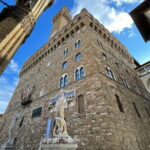
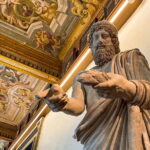
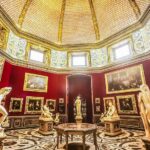
The Uffizi isn’t just a container for famous paintings and sculptures—it’s part of the experience. The museum occupies a splendid building designed by Giorgio Vasari, and that architecture affects how you see the collection.
On a highlights tour, you benefit twice from this. First, the guide can steer you through the museum in a way that makes the art feel connected rather than random. Second, the explanations land better when you’re not constantly stopping to re-orient yourself. The building helps create a rhythm: you move, you look, you get context, then you move again to the next major work on the route.
For first-timers, this is huge. A lot of museum frustration is actually navigation frustration. Here, the tour design helps you get your bearings fast—and that alone can turn 90 minutes from exhausting to enjoyable.
The Renaissance hits you’ll focus on: from Leonardo to Titian
This tour is very direct about its focus: it centers on unmissable masterpieces and major names across Renaissance art and sculpture. The guide will focus on works by Leonardo da Vinci, Giotto, Raphael, Michelangelo, Caravaggio, Botticelli, and Titian.
What you’ll likely appreciate most is how the guide uses those masterpieces to build a narrative. You’re not just seeing “a famous painting.” You’re seeing how Renaissance artists used technique, symbolism, and cultural context to say something bigger than a single subject.
Here’s how that plays out in real life:
- With artists like Leonardo da Vinci, you get a chance to look beyond the obvious fame and into the craft and choices that make the work feel alive.
- With Giotto and Raphael, the guide can help you notice how composition and storytelling work together, and how style evolved across generations.
- With Michelangelo, you’re more likely to connect sculpture and painting to broader ideas about the human figure and Renaissance ambition.
- With Caravaggio, you may be nudged to look at dramatic contrast and how realism served intense storytelling.
- With Botticelli and Titian, the guide’s comments tend to pull symbolism into focus—why a myth, an allegory, or a figure would matter to the people who commissioned or collected it.
In other words, the tour acts like a filter. It won’t show you everything, and it doesn’t try to. Instead, it gives you a set of anchor points so the Uffizi doesn’t feel like a giant warehouse of art facts.
The Medici lens: what you’ll understand better than solo visitors
If you care about more than “pretty pictures,” this is the standout value. The guide is explicitly there to connect masterpieces to the Medici family, who collected art during the Renaissance. That connection is more than trivia—it changes how you interpret what you see.
A Medici-focused explanation answers questions like:
- What kinds of art fit the Medicis’ tastes and political ambitions?
- Why would certain subjects and styles matter to a powerful patron?
- How does Renaissance art reflect the values, beliefs, and networks of its time?
This is also where the guide’s role becomes more than translation. Francesca, one of the local guides, frames her job as providing the context that helps you understand how the collection relates to both the Medicis and the broader Renaissance world. When the story clicks, the artworks stop feeling like isolated masterpieces and start feeling like parts of a larger system of ideas and influence.
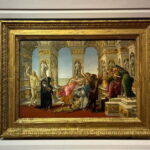
One example of the kind of detail that makes a difference: Francesca highlights the debate around Botticelli’s Birth of Venus. Many experts connect the imagery not only to Venus as a Roman goddess, but to the Greek goddess Aphrodite, the deity associated with love. That kind of perspective makes the mythology feel less like a museum label and more like something people argued over and interpreted through their own cultural lens.



Pacing, sound, and small-group focus (including headset use)
A highlights tour can go two ways. Either it’s rushed and you can’t hear anyone, or it’s planned enough to feel like a conversation with the art. Here, the small group up to 9 helps with both.
The tour also includes headsets for groups of more than 5. In a museum, that isn’t just comfort—it’s clarity. You spend less time straining to catch your guide’s explanations over footsteps, other visitors, and gallery noise. That matters when your time is short, because you don’t want your attention chopped into fragments.
I also appreciate the “live guide” approach. This isn’t pre-recorded audio where you miss the moment a question comes up. And if you’ve heard about how different guides communicate, you’ll understand why. For instance, Camilla has been described as transmitting real passion and tying the art back to the city itself. Even if the guide varies by date, the goal is consistent: make the artwork feel human and understandable, not like a test you’re failing.
What the route feels like during the visit
Even though the itinerary is simple on paper, the experience works in stages:
First, you get sorted into the right group and move toward express entry. That quick start helps your mindset. You’re not spending energy on logistics; you’re saving it for looking.
Then you step inside and follow the route your guide has planned. In 1.5 hours, your guide will focus on the “must see” works and likely keep you moving before you run out of energy or patience. The benefit: you avoid the common problem of spending your entire visit stuck reading labels for the first painting you stumble on.
Finally, you wrap with a sense of what you just witnessed. Even if you don’t memorize details, you should walk out with better mental categories: which artists mark key moments, which themes repeat, and why the Medici connection matters.
That’s the real win of a highlights tour. It gives you structure. And with structure, the Uffizi feels less like chaos.
Price and value: is $79 a good deal for 90 minutes?
At $79 per person for a 1.5-hour guided highlights tour, you’re paying for three things: the guide, the ticketed access, and the time-saving entry method.
Here’s how to think about the value:
- The Uffizi admission fee for adults 25+ is listed as €29. Since your tour price includes a ticket to the gallery, you’re not paying the full entry cost on top of the guide fee. (You still pay the overall tour price, but the ticket isn’t an extra surprise.)
- The tour includes express entry and “skip the ticket line,” which is a real benefit in Florence. If you only have a small window, cutting queue time can be the difference between seeing several masterpieces with context versus standing around.
- You also get an expert local guide whose focus is interpretation. In a big museum, interpretation is what turns art into understanding.
So the question isn’t just whether $79 is “cheap.” It’s whether you’re getting something you can’t easily replicate on your own in the same time. If you’re the type who wants context—Medici collecting, symbolism, technique, and how Renaissance art fits into larger ideas—then this price is easier to justify.
If you’re totally fine wandering independently and you already know exactly which rooms and works you want, you might feel less urgency to book a guided highlights tour. But if you’re short on time and want the highlights done well, this is a practical use of money.
Who this suits (and who may want a different plan)
This tour is a great match for you if:
- you have limited time in Florence and want the “big names” with context
- you want to understand the Medici angle rather than just view paintings
- you like small groups and clearer guidance than an audio-only option
- you appreciate technique, symbolism, and historical connections explained as you go
It’s not the best match if you:
- need wheelchair access, since it’s noted as not suitable for wheelchair users
- expect a full museum walkthrough (it’s a highlights route, not an in-depth multi-day program)
- can’t reliably meet the Uffizi booking name and ID matching requirement
If you’re a first-timer, this can be an excellent opener. If you’ve been before, it can still help because the guide’s framing can change what you notice the second time.
Should you book this Uffizi highlights tour?
I’d book it if your goal is to leave the Uffizi with more understanding than you’d get from a quick self-guided visit. The combination of express entry, a small group, and interpretation tied to the Medici collection is exactly what makes a 90-minute tour feel worth it.
Before you go, do two things: double-check the meeting spot by door number 3 (not the main entrance), and make sure your booking name exactly matches your ID name. If those boxes are checked, you’re set up for a smooth start—and a far more satisfying visit than “rushing around and hoping for the best.”
FAQ
How long is the Uffizi Gallery Highlights Tour?
The tour duration is 1.5 hours.
How much does it cost?
The price is $79 per person.
Where do I meet the guide?
Meet your representative 10 minutes before departure at the Uffizi courtyard in front of door number 3, with a TUI sign or flag. Do not go to the main entrance.
Is the Uffizi ticket included?
Yes. The ticket to the Uffizi Gallery is included.
Is there a skip-the-line benefit?
Yes. The tour includes express entry and skip-the ticket line.
Will I have a headset?
Headsets are provided for groups of more than 5 people.
What language is the tour guide?
The live tour guide is in English.
Is food included?
No. Food and drinks are not included.
What should I know about names and entry requirements?
You must provide the name and surname of each visitor for booking and entry, and the name provided during booking is final. Each participant must present an identity document matching the booking name.
Is the tour wheelchair accessible?
No. It is not suitable for wheelchair users.