REVIEW · FLORENCE
Florence: Uffizi Gallery with Optional Vasari Corridor Tour
Book on GetYourGuide →Operated by Ciaoflorence Tours & Travel · Bookable on GetYourGuide
Florence has two sides, and this shows both. One side is Renaissance art at the Uffizi Gallery; the other is the Medici family’s secret-style route via the Vasari Corridor. I love how the guide ties famous paintings to why they mattered, not just what’s on the wall, and I love the payoff of seeing Florence’s landmarks from that rare elevated corridor walk. The one drawback: the corridor option adds complexity, and inside access comes with strict limits and shorter explanation time.
This tour works because it’s tightly planned. You start at the Uffizi with Skip-the-ticket-line entry, then (if you select it) you head to the corridor for big Florence views—Arno River, Ponte Vecchio, and the Oltrarno neighborhood—before finishing near the Buontalenti Grotto area in the Boboli Gardens. You’ll move at a good pace for 2–3 hours, so it’s not the best fit if you want to wander slowly and stop for hours.
It’s also practical. You get earphones, the group stays small (up to 10 participants), and the tour is led by a live guide in Spanish, Italian, or English. Still, it’s not designed for wheelchair access or mobility disabilities, and on busy days you may see minor delays getting into museums.
In This Review
- Key highlights you’ll feel fast
- Why the Uffizi + Vasari Corridor combo works
- Entering the Uffizi Gallery: how to see more than the obvious
- The Vasari Corridor option: what you get in 30 minutes
- Arno, Ponte Vecchio, and Oltrarno: why the view matters
- Boboli Gardens finish near Buontalenti Grotto
- Group size and earphones: how the tour stays comfortable
- Price and value: is $81 “cheap” or “fair” here?
- Meeting point and timing: don’t treat it like a casual meetup
- What to know before you go (the stuff that prevents headaches)
- Who this tour is best for
- Should you book this Uffizi Gallery with Optional Vasari Corridor Tour?
Key highlights you’ll feel fast
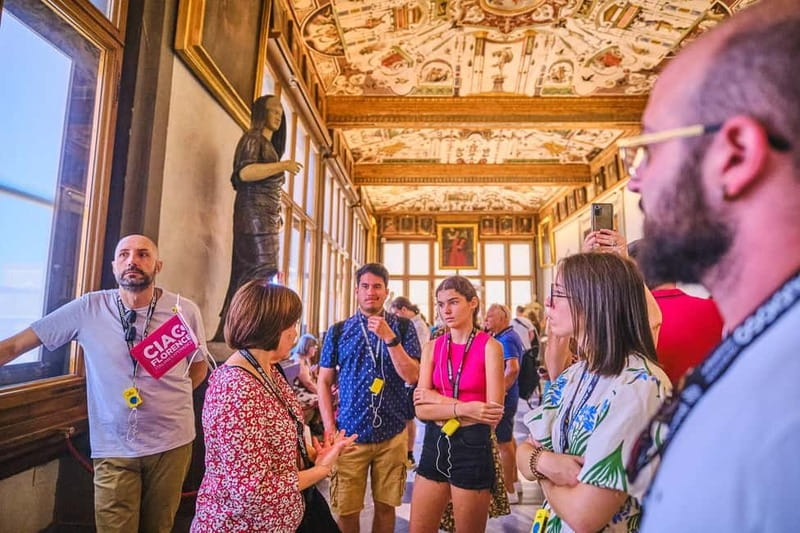
- Uffizi Gallery focus on major Renaissance names like Leonardo da Vinci, Botticelli, Michelangelo, and Giotto
- Vasari Corridor views over the Arno River and the Ponte Vecchio from a Medici-era passage
- Small group pacing with earphones and a limit of 10 participants
- Corridor time is structured: a 30-minute corridor portion with limited guide explanation
- Boboli Gardens finish near the Buontalenti Grotto area
- Renaissance engineering detail: you’ll see how the corridor bypasses the Mannelli Tower
Why the Uffizi + Vasari Corridor combo works
Florence can feel like a highlight reel: statues, churches, streets, repeat. This experience earns its place because it connects the art inside a museum with a very specific Florence story outside the museum walls—Medici power and control, shown in two ways.
At the Uffizi, you’re looking at paintings that became cultural reference points. In the Vasari Corridor, you’re walking through an architectural idea: an elevated, protected route created for the Medici family. That link matters because it changes how you interpret the art and the city at the same time.
Also, the timing is realistic. The whole tour runs about 2 to 3 hours, which is long enough to get meaning from the Uffizi, but not so long that you’ll spend your afternoon simply waiting. If you like “see + understand + get a view,” this pairing has your back.
You can also read our reviews of more museum experiences in Florence



Entering the Uffizi Gallery: how to see more than the obvious
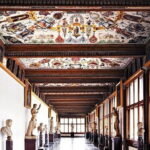
The Uffizi Gallery is where you come to do serious Renaissance “who’s who.” This guided format helps you not just spot famous works, but understand why they’re famous.
You’ll enter with Skip-the-ticket-line access, then the guide leads the core Uffizi route. Expect to spend time with major artists, including Leonardo da Vinci, Botticelli, Michelangelo, and Giotto. You’ll also hear the stories behind works—how style, subjects, and patrons fit into Florence’s cultural priorities.
Two things I think you’ll appreciate:
- The guide doesn’t treat the Uffizi like a checklist. The tour aims to explain what makes the works different and how they connect to the era.
- The pacing is built for a group tour. You don’t get stuck in one room forever, and you’re not left to guess what matters most.
One thing to keep in mind: the Uffizi is a large museum, so no 2–3 hour tour can cover it all. What this tour does well is teach you what to notice during the route you’re given—so you leave with a mental framework for the next paintings you see on your own.
The Vasari Corridor option: what you get in 30 minutes
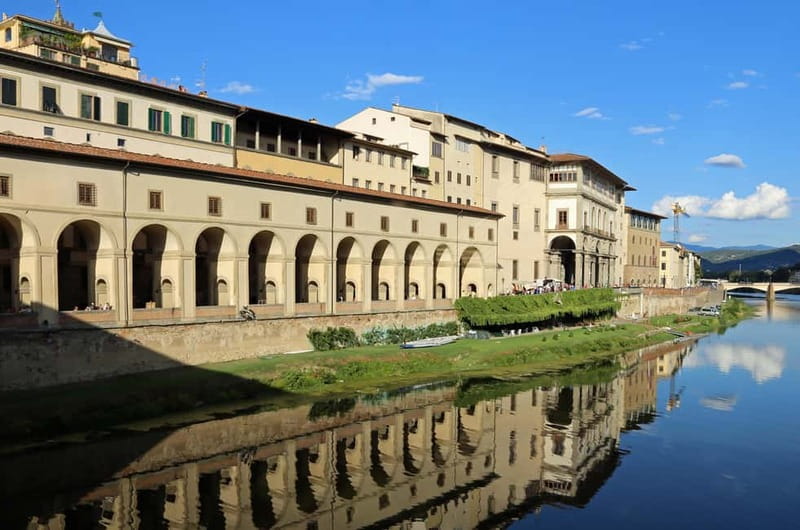
If you choose the Vasari Corridor option, you’re adding the main “wow” element of the day: the corridor itself. This passage was once exclusive to the Medici family, and access has been tightly controlled for a long time. In this experience, you get scheduled access after years of closure.
Here’s the practical twist: guiding inside the corridor isn’t permitted in the way you might expect. During the corridor portion (about 30 minutes), the guide can’t provide detailed explanations. Instead, the guide accompanies you and points out key sights and points of interest while you’re moving through.
So what do you actually experience?
- You walk the corridor route with guided outdoor-style commentary focused on what you’re seeing.
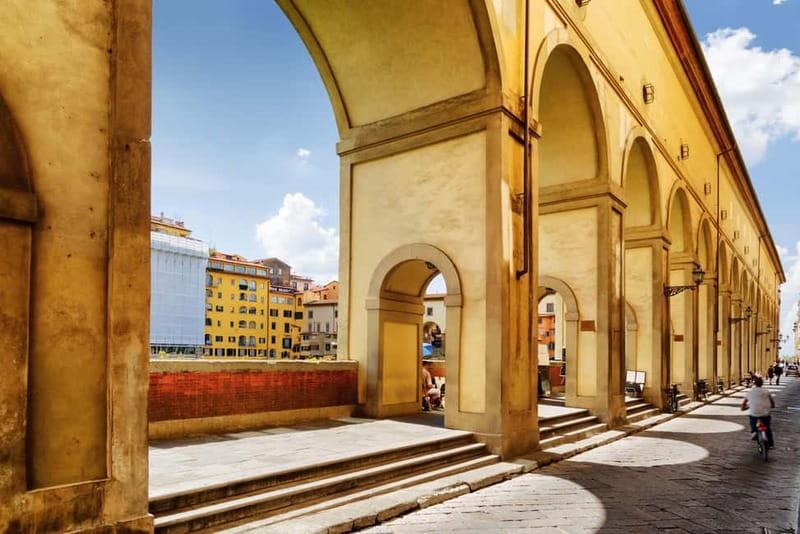
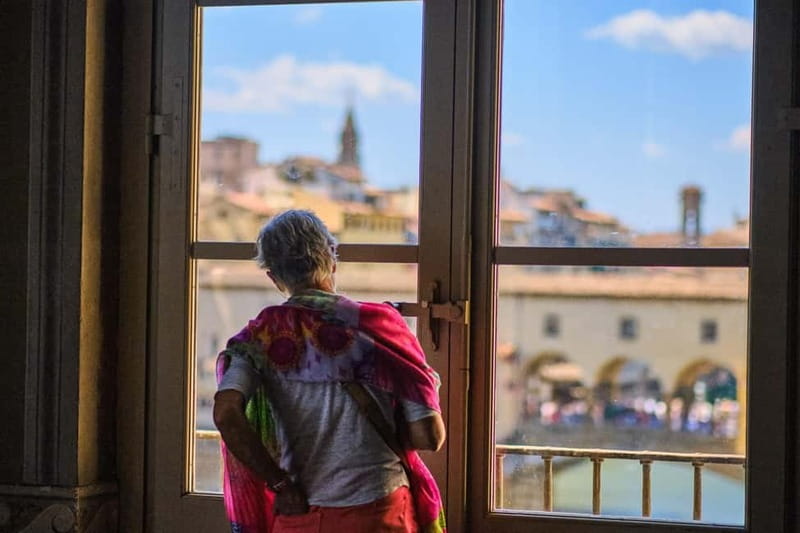
- You get elevated views of central Florence, including the Arno River, the Ponte Vecchio, and the Oltrarno side of the city.
- You see the corridor’s architecture and how it was designed to work with the city’s existing structures.
That’s why this option is worth considering even if you like museums more than architecture. You’re getting Florence from a completely different height and angle—one that ties back to the Medici idea of control and privacy.
Arno, Ponte Vecchio, and Oltrarno: why the view matters
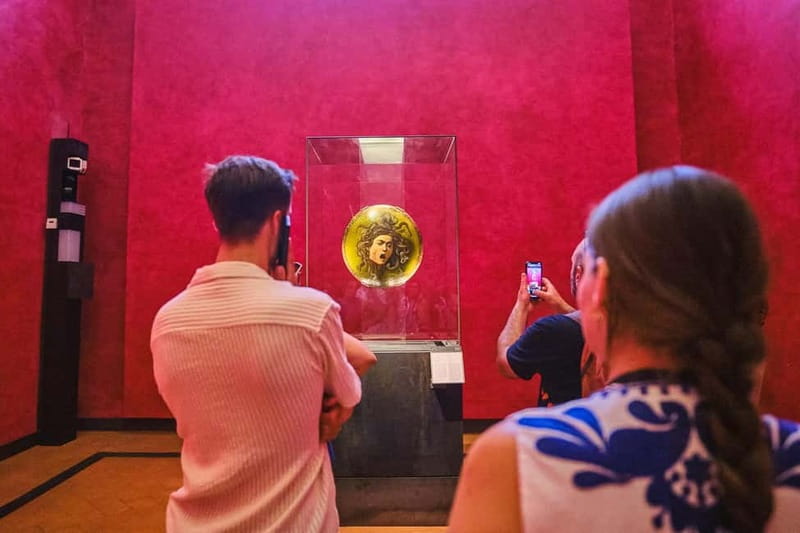
The city views are not just a photo stop here. They’re part of the story.
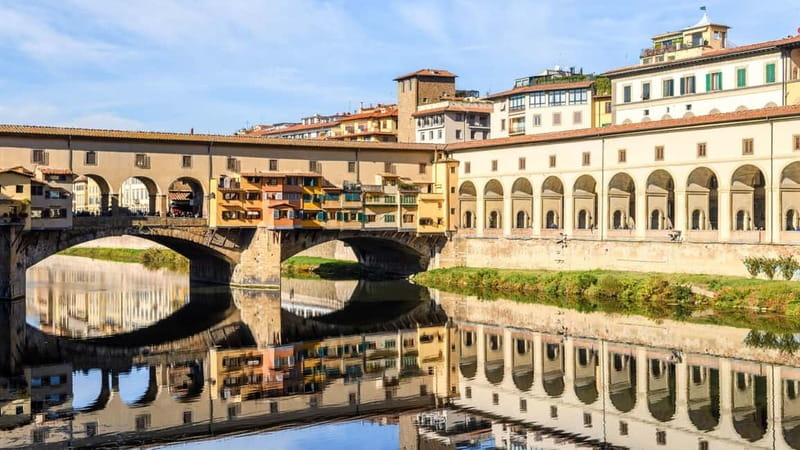
From the corridor, the Arno River becomes more than background scenery. You can understand how the river shaped movement, trade, and power. The Ponte Vecchio also turns from a crowded landmark into something more legible—your perspective makes the bridge’s role feel clear.
Then there’s the Oltrarno neighborhood view, which helps you grasp Florence as more than museum blocks. Oltrarno is often where people go for a slower, more local rhythm. From the corridor, you’re seeing that texture from above, and it can help your later street-level exploring make sense.
If you’re the type who likes to connect viewpoints to neighborhoods you’ll walk later, this part is a big win. You’re essentially getting a living map view—without needing to study one beforehand.
Boboli Gardens finish near Buontalenti Grotto
After the corridor portion, the experience concludes near the Buontalenti Grotto in the Boboli Gardens. Even if you don’t have time to do the whole gardens like a dedicated visit, this ending matters because it gives you a breathing space right when the corridor excitement starts to settle.
The gardens area also makes sense for the architecture angle. From here, you step outside to admire corridor structure details, including the clever design that lets the corridor bypass the Mannelli Tower.
This is the kind of moment that feels small while you’re in it, but it sticks with you later. You realize the corridor wasn’t just an idea; it was built to solve real problems in the real city.




Group size and earphones: how the tour stays comfortable
This is a small group experience, limited to 10 participants. For Florence’s big sights, that’s a meaningful difference. You won’t be buried in a shoulder-to-shoulder pack, and the guide can keep the group moving.
You’ll also get earphones, which helps a lot in museums and outdoor stretches where sound can scatter. It keeps you from doing that tired “what did they say?” routine that ruins a guided experience.
One more reality check: the corridor has its own max capacity rules. Access is limited to a maximum of 25 people, and other participants may join your visit. Even with your small group, you should expect the corridor portion to feel more like a controlled crowd flow than a private walk.
Price and value: is $81 “cheap” or “fair” here?
At $81 per person for a roughly 2-hour small-group tour (with scheduling that may put you closer to 2–3 hours), you’re paying for three things:
- A guided Uffizi route with Skip-the-ticket-line entry
- A structured group visit with earphones and a live guide
- Access to the Vasari Corridor only if you select that option
Value depends on which option you pick. If you select the Uffizi-only experience, the price is mainly about the guided Uffizi meaning and the line-skipping convenience. If you select the corridor option, the value becomes the rarity and the viewpoints—because you can’t easily recreate that corridor experience on your own without matching the same tight access rules.
One note to keep your expectations clean: corridor access has participant-specific ticket handling. Make sure you choose the option you truly want and plan accordingly. If you’re hoping the corridor is simply rolled into everything automatically, you may be surprised by how it’s handled in practice.
Meeting point and timing: don’t treat it like a casual meetup
You’ll meet your guide at the Ciaoflorence Sales Office, Via Cavour 18, at the Ciaoflorence location in Florence. Build in a little buffer—Florence streets can make “I’m close” mean five minutes away.
Also, museum entry can be fiddly on peak days. The experience notes occasional delays at busy times, and scheduled admission times may shift slightly. If your plan includes a tight dinner reservation right after, I’d give yourself some slack.
Finally, this is a tour with limited time inside the corridor. That means the schedule matters. You’ll enjoy the experience more if you’re ready to move when the group moves.
What to know before you go (the stuff that prevents headaches)
This tour is not set up for wheelchair use or mobility disabilities, so plan an alternative if accessibility is part of your needs.
If you select the Vasari Corridor option, tickets are issued in the name of each participant. You’ll need to provide the full name, surname, and date of birth for everyone in your group when booking. That’s not the type of thing you want to realize at the last second.
Also, remember that during the corridor portion, the guide isn’t permitted to give detailed explanations. You’ll still get highlight guidance, but it’s more of a “walk + point out” experience than a classroom talk. If you want maximum narration time, the Uffizi is where you’ll spend most of your guided storytelling.
And because the corridor has a strict maximum group size, keep your expectations flexible. Sometimes that means timing adjustments, and that’s normal for experiences with limited access.
Who this tour is best for
This experience is a strong match if you:
- Want guided context for major Renaissance art (not just photos)
- Care about connecting art and power—Medici influence in an architectural form
- Like city views that change how you understand Florence
- Prefer small-group comfort with earphones
It’s less ideal if you:
- Want a slow, open-ended museum roam
- Need wheelchair-friendly access
- Expect long, detailed commentary during the corridor walk itself
Should you book this Uffizi Gallery with Optional Vasari Corridor Tour?
I’d book it if you’re visiting Florence for the first time and want a practical “best of” that still feels meaningful. The Uffizi portion gives you the stories behind the masterpieces, while the corridor option gives you a rare Florence perspective tied directly to how the Medici once moved through the city.
Don’t book it if you’re hoping for a fully narrated corridor like a museum lecture, or if accessibility is a concern. And when choosing your option, make sure you understand how corridor access is handled, because that affects expectations more than the art does.
If you want a tight, value-focused Florence experience with both art and unforgettable views, this is a very solid way to spend part of your day.