REVIEW · FREMANTLE
Fremantle – Convicts, Culture & Street Art
Book on Viator →Operated by Two Feet and a Heartbeat Perth · Bookable on Viator
Convicts and street art meet by the sea. This short walk through Fremantle connects penal-era landmarks, Indigenous storytelling, and the fun visuals of local murals in a way that’s easy to follow on foot. I like that it’s built around central, walkable stops instead of long transfers.
What I liked most was the way the guide focused on the details you’d miss on your own. The talk about escapes and the era’s key figures ties together places like the Round House and the larger port story without getting heavy.
The only drawback is that you’re outside for about two hours, and the operator notes it runs best in good weather. If rain or strong wind shows up, you’ll want to plan for a reschedule or a refund.
In This Review
- Key Takeaways
- Town Hall Start: Getting Your Bearings in Central Fremantle
- FOMO Freo, Walyalup Koort, and the Street-Art Pedestrian Mall
- Ports and C.Y. O’Connor: How Fremantle Built Its Maritime Power
- Whalers Tunnel: Limestone, Trade, and a Different Kind of Story
- The Fremantle Round House: First Prison Energy in an Old Building
- Bather’s Beach and the First Shorefall in Western Australia
- Esplanade Park: Reclaimed Land and Aboriginal History
- South Terrace and the Cappuccino Strip Finish: Wrap-Up With a Real-Life End Point
- Price and Value: Is $46.62 Worth It for a 2-Hour Walk?
- Who This Tour Suits (and Who Might Want a Different Style)
- Should You Book Convicts, Culture & Street Art?
- FAQ
- How long is the Fremantle Convicts, Culture & Street Art tour?
- What is the price per person?
- Where do I meet for the tour?
- Where does the tour end?
- What are the main stops on the walk?
- What is included in the tour price?
- Does the tour include food or drinks?
- Is there a maximum group size?
- Is the tour suitable for people with moderate physical fitness?
- Are service animals allowed?
- What happens if the weather is bad?
Key Takeaways
- Small group size (max 12) keeps it conversational, not a lecture line.
- Covering both convict-era and Indigenous history gives the walking story more than one angle.
- Whalers Tunnel and Bather’s Beach add a strong coastal, limestone-and-shore vibe to the day.
- Street art around Walyalup Koort and the pedestrian mall makes the cultural stops feel current.
- Coffee and/or tea included means you’re not scrambling for a caffeine break at the halfway mark.
Town Hall Start: Getting Your Bearings in Central Fremantle
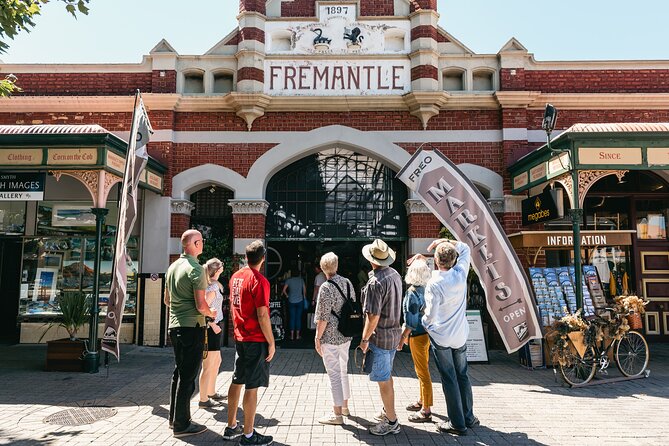
I like tours that start where locals actually move—right in the civic core—so you get context fast. You begin at the Fremantle Visitor Centre on High Street, then step into the Fremantle Town Hall area where the host sets the tone and explains how the places you’ll see connect.
This opening matters more than it seems. You’re about to walk from port history to convict-linked sites to shore landmarks, and a quick orientation helps it click instead of feeling like random sightseeing. It also means you can ask follow-up questions early, while you still have the big picture in your head.
A few more Fremantle tours and experiences worth a look

FOMO Freo, Walyalup Koort, and the Street-Art Pedestrian Mall

Right away, the tour turns to the present-day Fremantle look and feel. There’s a quick stop at FOMO Freo, set in Walyalup Koort, where you’ll get a feel for the area’s arts, architecture, retail, and dining scene—especially the mix of independent shops and a hawker-style food court.
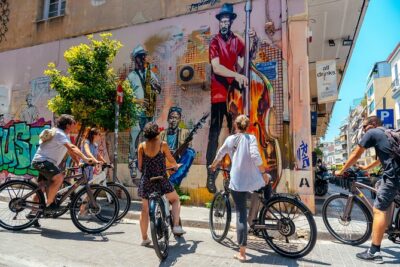
Then you move into the pedestrianized mall zone between the Cappuccino Strip area and the renewed civic heart. This is where you’ll see how Fremantle’s modern identity shows up in public art. Fresh street art is part of the point here: it’s not just decoration; it’s a visual layer of local culture you can spot while you walk.
What to watch for: look at how the murals and new design elements sit next to older streets and civic spaces. The contrast helps you understand why convict-era and Indigenous history remain visible in Fremantle’s everyday layout, not just behind museum glass.
Potential drawback: because these stops are short, you won’t have time to linger like you would on a self-guided mural hunt. If street art is your main goal, plan to add personal time after the tour ends on South Terrace.
Ports and C.Y. O’Connor: How Fremantle Built Its Maritime Power
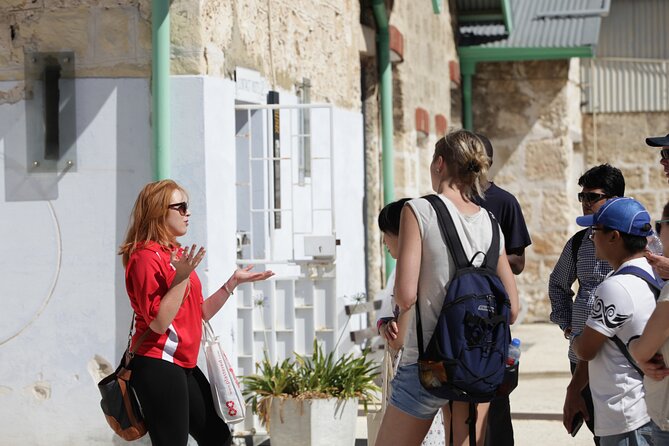
Next you shift to Fremantle Ports and the big story behind the port’s late 1800s to early 1900s development. The highlight is learning about the construction and the man who made it possible: C.Y. O’Connor.
That name is worth paying attention to. Port building isn’t just about ships—it’s about engineering choices, land access, and how a coastal city turns trade into a long-term economy. Even with a quick stop, the tour gives you the thread that ties Fremantle’s industrial growth to what you still see in the area today.
Why this works for a 2-hour tour: you don’t get an in-depth engineering lecture, but you do get enough context to understand what you’re looking at. That’s the sweet spot for most first-time visitors—better than a photo-only approach, but not so detailed that you lose the walking momentum.
Whalers Tunnel: Limestone, Trade, and a Different Kind of Story
Then comes Whalers Tunnel, a cut directly into the limestone cliff. This small, focused stop is all about a practical function that turned into a historical footprint: the tunnel was created to transport whale products from the waters edge to High Street.
This is one of those stops where the physical space adds drama without needing theatrics. Even if you’re not a history-nerd, the idea is easy to grasp: people built a route so commerce could move faster, and the geography shaped the outcome. It’s a reminder that Fremantle’s past wasn’t only about prisons and escape attempts—it also involved trade systems that were once central to the region.
Quick advice: keep your expectations realistic. The stop is short, so focus on absorbing the “what” and “why” rather than trying to read every surface like a textbook.
The Fremantle Round House: First Prison Energy in an Old Building

The tour heads to The Fremantle Round House, described as the oldest building in the city and its first prison. This is a key stop for anyone curious about convict-era Fremantle, and the format is perfect for getting the tone quickly.
You’ll be in the right place to picture how the penal system operated early on. The story doesn’t have to be grim for it to be compelling; it’s the real-world setting that makes it hit. Round buildings have a way of feeling intentionally designed, and in this case you’re not just looking at architecture—you’re looking at the physical evidence of the city’s first prison chapter.
What I liked here: the tour connects convict tales to later ideas you’ll hear during the walk, so the Round House isn’t an isolated fact. It becomes part of a larger map of Fremantle’s identity.
Bather’s Beach and the First Shorefall in Western Australia
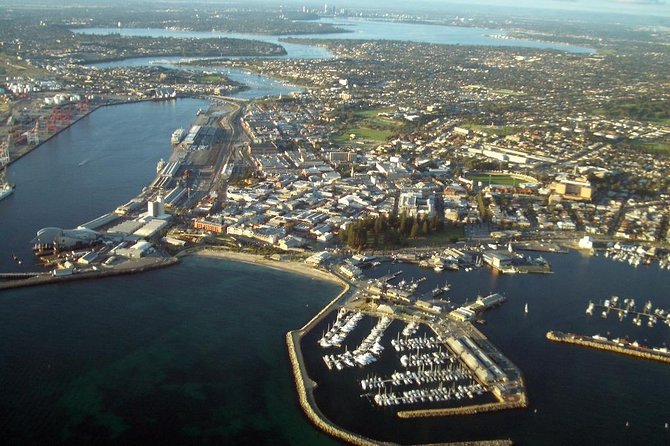
Next is Bather’s Beach, the place where the first settlers to Western Australia came ashore. You may even be able to climb on top of what’s left of the original timber-piled jetty.
This stop gives you a breather from convict-era storytelling and brings you back to the coastline. That shift in subject is useful; by now, your brain has been moving through structures, systems, and people. Shore landmarks reset your perspective and make the next part—land changes and Aboriginal history—feel connected.
One practical consideration: this is a beach-and-structure area. Even if the tour time is short, wear shoes that can handle uneven ground and be cautious if you climb on remnants of the old jetty.
Esplanade Park: Reclaimed Land and Aboriginal History
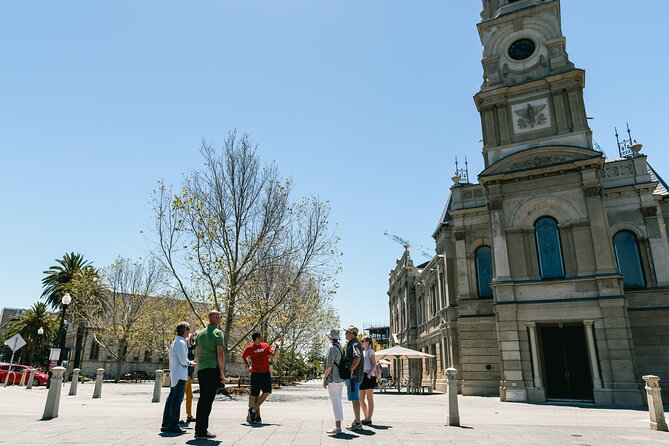
The tour finishes with a stop at Esplanade Park, where you learn about the reclamation of the land as well as Aboriginal history connected to the area. This is where the tour’s story broadens beyond one era and one theme.
Reclamation is a big idea because it explains why today’s coastlines and public spaces don’t always match what you’d expect from maps that assume a static shore. The guide helps you understand that the city’s shape is part of the history, not just a background detail.
And the Aboriginal history piece matters because it keeps the narrative anchored to place. You’re not only hearing about European development; you’re hearing about the deeper time layers connected to the land.
South Terrace and the Cappuccino Strip Finish: Wrap-Up With a Real-Life End Point
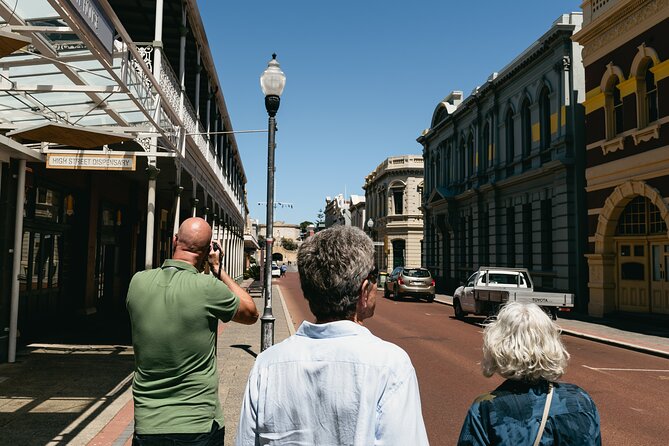
The final stop is South Terrace, ending on the famous Cappuccino Strip. It’s a smart finish because it’s practical: you’re dropped into an area where you can easily grab a coffee, find lunch, or just keep wandering without needing a transit plan.
Also, finishing here lets you compare what you just learned with what you see around you now. Street art, old buildings, port traces, and shore landmarks all feed into the way Fremantle looks and feels today.
If you still have energy, this is where I’d add your own extra time—especially if you want to slow down for photos of murals or do a second pass around the streets that felt most interesting during the tour.
Price and Value: Is $46.62 Worth It for a 2-Hour Walk?
At $46.62 per person for about two hours, this tour is priced for real value. You’re paying for a professional local host, an orientation of central Fremantle, and local history/fun stories, plus coffee and/or tea. The stops are also ticket-free on the listed segments, which helps keep your total cost predictable.
Here’s how I think about it as a buyer: this isn’t a long day of multiple paid attractions. It’s a concentrated walking format that tries to give you a working mental map—convict-era sites, coastal landmarks, and street art all in one loop. If you’re visiting Fremantle for the first time and want to stop guessing what matters, this style can be a great time-saver.
Group size is capped at 12 travelers, which also supports value. With a smaller group, you tend to get better pacing and more chances to ask questions. The tour is listed as having a mobile ticket, near public transportation, and requiring moderate physical fitness—so it’s designed for typical walking visitors rather than needing special equipment.
My note on extras: bottled water and food aren’t included unless specified. I’d bring a small bottle or plan to buy water after the tour starts, especially on warmer days.
Who This Tour Suits (and Who Might Want a Different Style)
This is a strong fit if you want:
- a short walking plan that covers convicts, ports, Indigenous history, and street art
- a guided narrative that helps you understand what you’re seeing
- a low-cost way to sample multiple parts of Fremantle in one go
It may not be your best match if you prefer long stays at each site. Many stops are only a few minutes, so you won’t get deep museum-style exploration. It’s also outdoors-focused, so if you’re sensitive to weather or you hate walking for two hours, you might prefer a slower self-guided route plus one paid museum visit.
If you’re traveling with kids, the moderate time commitment could work, but you’ll want to judge their attention span. For most adults, it’s a very doable pace.
Also, a personal tip: when the host is giving the short “why this place matters” context, listen closely. That’s where the tour earns its value, because it turns normal streets and stone structures into a connected story.
Should You Book Convicts, Culture & Street Art?
Yes—if you want an efficient Fremantle overview with real place-based stories. I’d book it when you’re the type who enjoys learning as you walk, and when you like seeing how history shows up in ordinary streets.
Two extra reasons to lean in:
- You’ll get a mix of themes in one route: penal-era landmarks, Indigenous history at Esplanade Park, and street art around Walyalup Koort and the pedestrian mall.
- The guides, including Sanya and Ann, are highlighted for being friendly and sharp with the information—exactly what you want on a short tour where time is the main constraint.
If you’re already planning to spend lots of time in museums, you may still love this as the connective tissue. It helps you understand what you’ll later see in more detail.
FAQ
How long is the Fremantle Convicts, Culture & Street Art tour?
It’s about 2 hours.
What is the price per person?
The price is $46.62 per person.
Where do I meet for the tour?
You meet at the Fremantle Visitor Centre, 155 High St, Fremantle WA 6160.
Where does the tour end?
The tour ends in Fremantle, finishing on South Terrace on the Cappuccino Strip.
What are the main stops on the walk?
You’ll pass or stop at Fremantle Town Hall, FOMO Freo/Walyalup Koort area, Fremantle Ports, Whalers Tunnel, The Fremantle Round House, Bather’s Beach, Esplanade Park, and South Terrace.
What is included in the tour price?
Included are a professional local host, orientation of central Fremantle, local history/fun stories, and coffee and/or tea.
Does the tour include food or drinks?
Coffee and/or tea are included. Bottled water and additional food/drinks are not included unless specified.
Is there a maximum group size?
Yes. The maximum is 12 travelers.
Is the tour suitable for people with moderate physical fitness?
Yes. The tour is listed as requiring moderate physical fitness.
Are service animals allowed?
Yes, service animals are allowed.
What happens if the weather is bad?
The experience requires good weather. If it’s canceled due to poor weather, you’ll be offered a different date or a full refund.