REVIEW · ROME
Rome: Appian Way & Catacombs Golf Cart Tour – Shared|Small groups
Book on Viator →Operated by EcoBike S.r.l. - Centro Servizi Appia Antica · Bookable on Viator
Rome’s Appian Way feels endless, and this tour makes it manageable. I love the small-group setup (max 7) because it keeps the pace human, and I like that you mix big-name stops with quieter, off-the-main-path history. One thing to keep in mind: it’s a golf cart, so if you’re sensitive to sound, your seat position can affect how clearly you hear the guide.
You also get a real “route” through the ancient world, not just a quick photo stop parade. The catacombs visit is a standout, with an included guided entry plus the Circus of Maxentius and major Appian Way tomb areas along the way.
A possible drawback is that not every moment will feel evenly paced for every person. If you end up in the back rows, you may find it harder to follow explanations during the drive.
In This Review
- Key Things to Know Before You Go
- Riding the Appian Way Without Tiring Your Feet
- Stop One: Domine Quo Vadis Church and the Footprints Story
- Stop Two: Catacombs of St Callixtus or St Sebastiano
- Stop Three: Circus of Maxentius on the Appian Way
- Stop Four: The Cecilia Metella Hilltop View and Caetani Castle Area
- Stop Five: Capo di Bove and a Philosopher’s Roman Villa
- Stop Six: Villa dei Quintili and the Commodus Connection
- Final Stretch: Via Appia Antica and the Appia Antica Archaeological Park Drive-Back
- How Much It Costs, and What You Get for $91.32
- Small-Group Comfort: Why the Max-7 Format Matters
- Who This Tour Is For (and Who Might Skip It)
- Should You Book This Appian Way Golf Cart + Catacombs Tour?
- FAQ
- How long is the Rome Appian Way & Catacombs golf cart tour?
- Is the tour shared or private?
- Does the tour include catacombs tickets?
- Which catacombs will I visit?
- Are the Circus of Maxentius and other stops included?
- Are Cecilia Metella’s Tomb and Quintili’s Villa entrances included?
- What’s included besides the tour?
- What language is the tour offered in?
- Where does the tour start and end?
- Can I cancel for a full refund?
Key Things to Know Before You Go
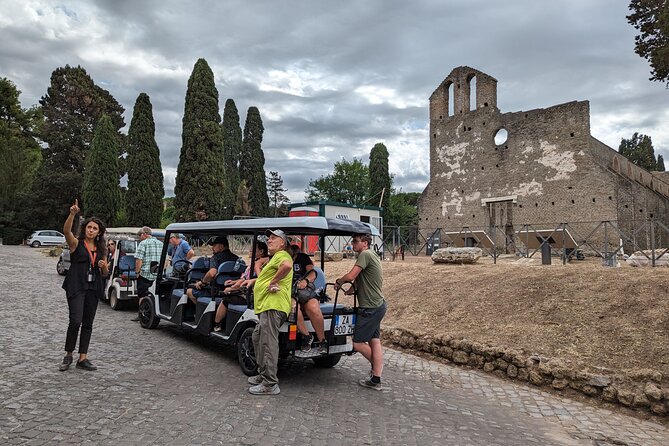
- Max 7 people means you’re not fighting for attention or stopping late for the group behind you
- Catacombs choice depends on availability between St Callixtus and St Sebastiano, with a guided visit included
- Domine Quo Vadis adds a Gospel-era tradition stop before you head deeper into Roman burial culture
- Circus of Maxentius is entered on the Appian Way route and is among the best-preserved nearby Roman circuses
- No need to buy extra tickets for the Cecilia Metella hilltop area explanations or the stop-by views, but entrances for some mausoleums/villas are not included
- Half-liter bottled water is provided, which matters on a 3-hour outing outside the center
Riding the Appian Way Without Tiring Your Feet
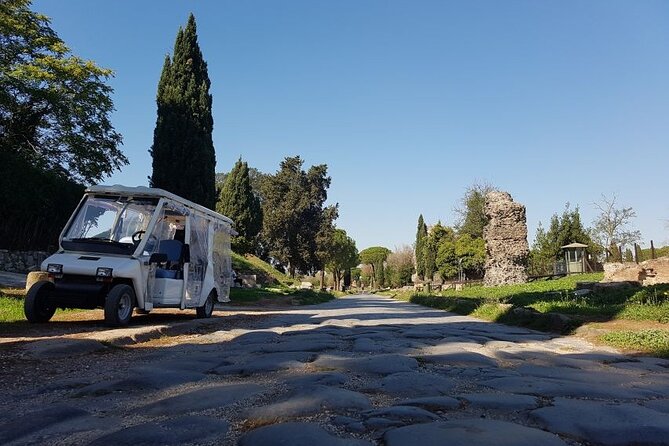
The Appian Way is the kind of place where you quickly lose track of distance on foot. Roman roads were built to move people and goods, and this tour helps you feel that scale. You get the best of two worlds: you still make frequent stops for sights, but you’re not stuck doing long stretches of walking between them.
I also like that the tone stays practical and historical. Your guide isn’t just pointing at stones; they’re connecting why these sites exist along the road. That’s the real magic of the Appian Way: burial grounds, churches, mausoleums, and ruins line the “Regina Viarum,” the royal road-like route, and the stops help you understand the logic instead of treating it like a string of random attractions.
And yes, the golf cart helps. Even if you’re the kind of traveler who usually walks everywhere, the cart gives you energy for the catacombs and the hilltop viewpoints, which is where the tour really earns its keep.
You can also read our reviews of more tours and experiences in Rome.



Stop One: Domine Quo Vadis Church and the Footprints Story
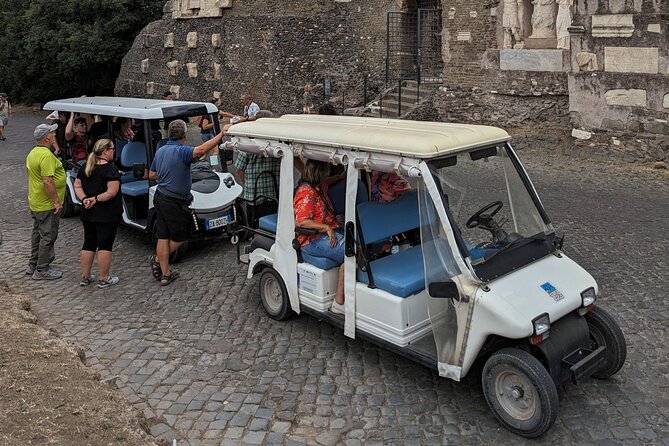
You start at the Chiesa del Domine Quo Vadis, a small but meaningful first stop. This is tied to the tradition from the apocryphal Acts of Peter, where Saint Peter meets the risen Christ while fleeing persecution in Rome.
What makes this stop special is that it’s not Roman engineering or archaeology first—it’s a story. You’ll hear the famous back-and-forth phrasing behind the name Domine, quo vadis?, meaning Lord, where are you going?. According to tradition, the miraculous footprints are still preserved, and that belief turns a quiet church into something you can actually feel.
Practical note: this is a short visit (about 10 minutes), so I treat it as your warm-up. You’re about to switch from early Christian tradition to the Roman world of tombs and public spaces, and this stop signals the shift fast.
Stop Two: Catacombs of St Callixtus or St Sebastiano
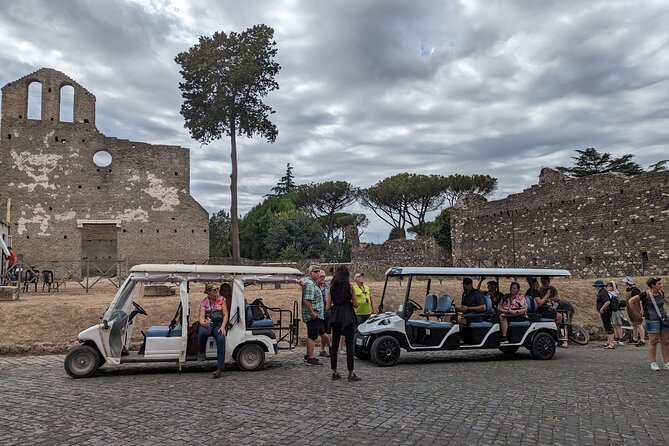
Then comes the heavy hitter: the catacombs. Your entry and guided tour are included, and which site you get depends on availability: Catacombe di San Callisto or Catacombe di San Sebastiano.
If you go to St Callixtus, you’re stepping into one of the most important catacomb complexes in Rome. It began around the middle of the 2nd century and sits within a larger cemeterial area—about 90 acres—with a network of galleries roughly 12 miles long. It’s organized across four levels and more than 20 meters deep.
The numbers alone show why this matters. This system was used for generations, and it contains burials connected to early Christianity, including tens of martyrs, 16 popes, and many Christians. That’s not “spooky cave vibes.” It’s a record of how people built community around faith, grief, and identity when burial mattered.
Best way to enjoy this part: go in with patience. The catacombs aren’t about speed. You’ll want to listen to the guide’s explanation of how the space was used, where people were buried, and what you’re actually looking at.
Stop Three: Circus of Maxentius on the Appian Way
After the catacombs, you drive back onto the Appian Way and step into the Circus of Maxentius. This is one of those Roman structures that feels better in person than in pictures.
It’s also less crowded than the famous stadium comparisons most people make, and that’s part of the value. The circus is among the best preserved in the area, and it’s second in size only to the Circus Maximus in Rome.
You’ll learn something interesting here: it was probably never used. The only games recorded at the circus were its inaugural ones, often thought to be funerary in character—held in honor of Maxentius’s son, Valerius Romulus, who died in AD 309. There’s also a connection to the adjacent cylindrical tomb (the tomb of Romulus), which helps the stop feel like part of the same ancient “burial landscape” story rather than a random detour.
This stop is short (around 20 minutes), but it works well as a change of pace. From underground spaces to a big outdoor structure—your brain gets a reset.
Stop Four: The Cecilia Metella Hilltop View and Caetani Castle Area
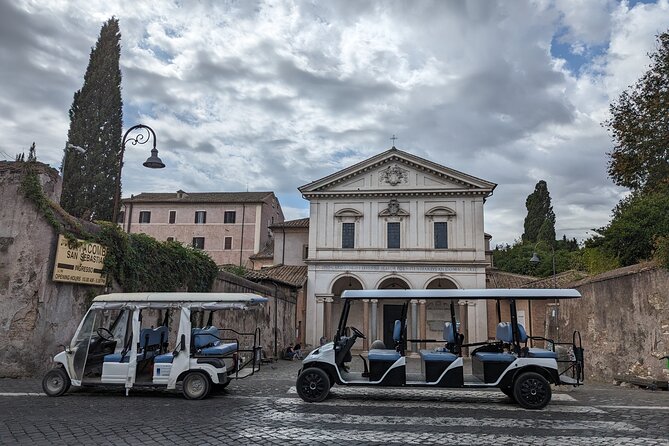
Next is a hilltop pause tied to one of the most recognizable Appian Way tomb areas: Mausoleo di Cecilia Metella and Castrum Caetani in the Appia Antica Archaeological Park.
You’ll get explanations of the tomb of Cecilia Metalla, described as the biggest tomb on the Via Appia, plus the Caetani castle. Importantly, you don’t need to buy an extra ticket for this hilltop stop. That makes it a good value moment: you get context and viewpoints without extra cost.
On the opposite side of the road, you’ll also be guided toward a church with a unique style: S. Nicola in a Cistercian Gothic style. This kind of “look across the street” moment is common on the Appian Way, and it’s actually smart. It lets you see how medieval and early modern layers grew around the older Roman setting.
It’s a brief stop (around 15 minutes), so I recommend using it for the view plus the guide’s explanation. If you come here expecting a long, ticketed interior visit, you may feel underwhelmed. This is more about perspective and story.

Stop Five: Capo di Bove and a Philosopher’s Roman Villa
You’ll then move to Complesso di Capo di Bove. This is tied to a private villa connected to a multi-millionaire philosopher and Marcus Aurelius’s tutor. The guide’s role matters here, because the site makes more sense when someone explains what it likely represented and how it fits into life on the outskirts of ancient Rome.
The stop is about 15 minutes, so it’s not a deep excavation stop—it’s a “you are here, and here’s why it mattered” moment. For me, these short stops are part of what makes the tour feel efficient without feeling rushed.
Stop Six: Villa dei Quintili and the Commodus Connection
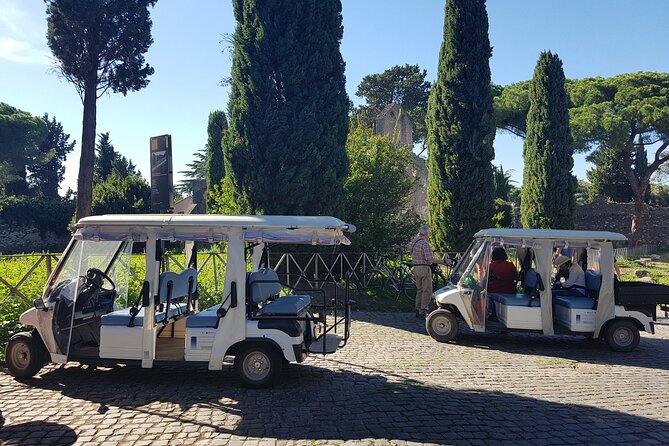
After Capo di Bove, you’ll stop at Villa dei Quintili with a connection to Santa Maria Nova. This area is described as one of the biggest residential zones of Rome’s suburb.
The context you get matters: the villa was originally owned by the brothers later killed at the hands of Emperor Commodus. Commodus is described as one of history’s worst emperors in the tour info, which sets the emotional tone for why the brothers’ story ended the way it did.
Entrance isn’t included for the villa itself, and you don’t need to purchase tickets just to get the guided explanation and time on-site. The value here comes from learning how the Appian Way wasn’t only for burials—it also carried the wealth, power, and danger of Rome’s elite.
Final Stretch: Via Appia Antica and the Appia Antica Archaeological Park Drive-Back
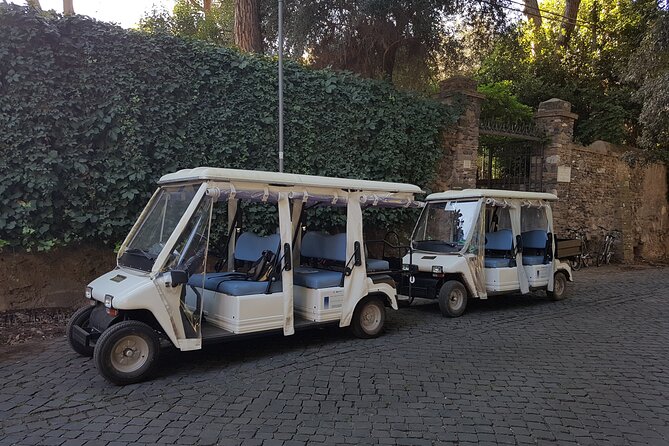
The tour’s rhythm matters: it doesn’t treat the Appian Way like a straight line between two attractions. One of the stops is simply time along Via Appia Antica itself, looking at how catacombs, churches, sepulchers, and mausoleums line the road.
Then you head back toward the starting point via the Appia Antica Archaeological Park. The drive-back portion is where you get the “scale” feeling again. It’s also where the cart proves its worth: you can keep your eyes on the route without getting worn out.
How Much It Costs, and What You Get for $91.32
At about $91.32 per person for roughly 3 hours, this tour isn’t trying to be the cheapest way to see the Appian Way. But it does include a few key things that protect your value:
- Catacombs entry + guided tour included (a big chunk of the effort and cost on most Rome tours)
- Golf cart transportation for the long road segments that would otherwise eat hours of your day
- Bottled water (half-liter mineral water per person)
- A guided route that hits multiple major landmarks, not just one focal point
If you’re comparing options, the main value question is simple: do you want catacombs with a guide and a ride that keeps your schedule compact? If yes, the price starts making sense quickly. If you’d rather do things independently, you’ll have to weigh your time and energy.
Small-Group Comfort: Why the Max-7 Format Matters
This is shared and capped at 7 travelers, and that shows in how the stops are timed and how much room you have for questions. On a day like this, where you’re hopping from church tradition to underground burials to outdoor Roman monuments, you don’t want a giant group that can’t pause.
There’s also practical upside: some guides on this route (like Flavia, Federico/Fredrico, Alexander, and Sara/Sarah) are praised for being passionate and answering questions well. That’s exactly what you want when the sites have layered meanings and you’re trying to connect names, time periods, and physical features.
One careful tip: if sound matters to you, ask where to sit so you’re not stuck in a position where explanations can be hard to hear. The cart format is great, but spacing on board can make a difference.
Who This Tour Is For (and Who Might Skip It)
This tour fits best if you:
- want the Appian Way experience without turning the day into a full-on walking expedition
- care about early Christianity and Roman burial culture, especially the catacombs
- prefer smaller groups and guided context over doing everything solo
- already saw the headline sites in central Rome and want something calmer and more unusual
You might skip it if you:
- only want the very top-ticket interiors (because some major tomb/villa entrances are not included)
- hate guided tours and prefer to wander with no structure at all
- need very quiet, controlled audio no matter where you sit (cart sound can vary)
Should You Book This Appian Way Golf Cart + Catacombs Tour?
If you want an Appian Way day that stays organized, feels efficient, and includes a guided catacombs visit, I think this is an easy yes. You’re paying for transportation plus guided time in the places that are hardest to experience properly on your own.
Just go in with the right expectations: some stops are short and viewpoint-focused, and a couple of big named interiors (like Cecilia Metella’s Tomb and Quintili’s Villa) are not part of the included admissions. For the money, though, you still get a meaningful, coherent route through early Christian tradition, Roman burial sites, and major monuments along the road.
FAQ
How long is the Rome Appian Way & Catacombs golf cart tour?
It lasts about 3 hours.
Is the tour shared or private?
It’s a shared tour, with a maximum of 7 travelers.
Does the tour include catacombs tickets?
Yes. Entrance and a guided tour for the catacombs of St Callixtus or St Sebastiano are included, based on availability.
Which catacombs will I visit?
You’ll visit either the Catacombs of St Callixtus or the Catacombs of St Sebastiano, depending on availability.
Are the Circus of Maxentius and other stops included?
The Circus of Maxentius entry is free, and several other stops along the Appian Way are free as well. Ticketed entrances specifically noted as not included are not part of the package.
Are Cecilia Metella’s Tomb and Quintili’s Villa entrances included?
No. Cecilia Metella’s Tomb and Quintili’s Villa entrances are not included, and you don’t need to purchase tickets just to visit the stops.
What’s included besides the tour?
Bottled water (half-liter mineral water per person) is included.
What language is the tour offered in?
The tour is offered in English.
Where does the tour start and end?
It starts at Via Appia Antica, 60, 00179 Roma RM, Italy and ends back at the same meeting point.
Can I cancel for a full refund?
Yes. You can cancel up to 24 hours in advance for a full refund. If you cancel less than 24 hours before the start time, the amount paid is not refunded.