REVIEW · ROME
Rome’s Golden Hour Golf Cart Tour
Book on GetYourGuide →Operated by RoamRome · Bookable on GetYourGuide
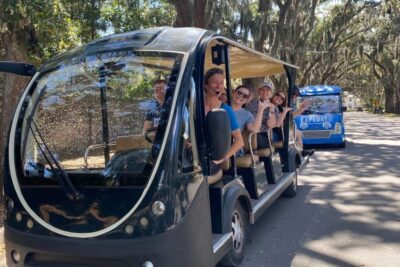
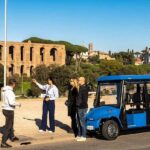
Sunset views, delivered on wheels. This Rome golf cart tour is built for golden hour timing, pairing a live English guide with quick photo stops at Rome’s biggest sights without turning the day into a blister-fest. I especially love the Villa Borghese and Pincio viewpoint sequence, because it gives you an instant sense of how Rome is laid out.
The second thing I like: you cover a lot of must-sees—Colosseum area sights, Pantheon, Trevi Fountain, and the Spanish Steps—in just 2.5 hours. One thing to watch is sound and visibility: if your cart doesn’t stay tightly synced to the main group, the commentary can get patchy, and the streets can be tight enough that you may need to lean a bit to see.
In This Review
- Key Points to Know Before You Go
- Why a Golden-Hour Golf Cart Works in Rome
- Piazzale Flaminio Meet-Up: Starting Point and Expectations
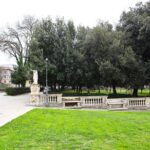
- Villa Borghese and the Pincio Terrace: The View That Sets the Tone
- Moving Through Central Rome Without the Worst Walking
- Colosseum Area Stops: Seeing the Gladiator-Era Scale
- Circus Maximus and the Mouth of Truth: Fast, Famous, and Worth It
- Aventine Hill and the Orange Gardens View
- Piazza Venezia, Capitoline Hill, and the Michelangelo Connection
- Ponte Sant’Angelo and Castel Sant’Angelo: River Views, Big-Scale Drama
- Largo di Torre Argentina and the Pantheon Dome Moment
- Piazza Navona to Trevi Fountain: Baroque Art at Photo-Stop Speed
- Spanish Steps Finish at Piazza di Spagna
- Price and Value: What $104 Buys in 2.5 Hours
- The Real-World Upside (and the One Main Trade-Off)
- Who This Tour Is Best For
- Should You Book This Golden Hour Golf Cart Tour?
- FAQ
- How long is Rome’s Golden Hour Golf Cart Tour?
- Where do I meet for the tour?
- What language is the tour guide?
- What sites are included in this tour?
- Is the tour wheelchair accessible?
- What is the price?
- Can I cancel and get a refund?
Key Points to Know Before You Go
- Golden hour scheduling helps you catch sunset light and still have energy for dinner after the tour ends.
- Villa Borghese and Pincio give you one of Rome’s best “oh wow” panoramas early on.
- Stitching together major sights means less time threading through crowds on foot.
- Short photo stops keep the pace moving, which is great for time-crunched visits.
- Open-cart viewing can be tricky on busy streets and near tall facades.
- Sound may vary if carts spread out, so sitting closer to the main cart helps.
Why a Golden-Hour Golf Cart Works in Rome
Rome punishes bad timing. If you wait too long in the afternoon, the light fades and the crowds thicken. This tour is designed around that window when the city looks softer and more photogenic, while still fitting a realistic evening plan.
You’re not doing Rome at a snail’s pace, but you are also not rushing past everything. You get a guided route that hits the headline monuments, plus viewpoint time that makes the whole day feel connected instead of random.
And because you’re in a cart, you can spend your effort on looking and learning. That’s the trade: you trade some deep wandering for a smart overview that helps you plan what you want to revisit later.
You can also read our reviews of more tours and experiences in Rome.

Piazzale Flaminio Meet-Up: Starting Point and Expectations
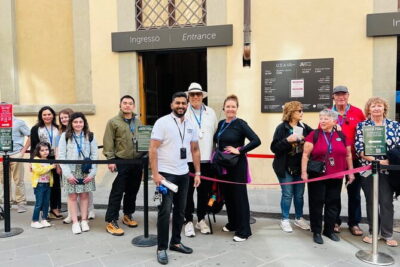
The meeting point is Piazzale Flaminio, 15, right by McDonald’s. That matters because Rome can be confusing at first—having a recognizable landmark reduces stress right out of the gate.
From there, the tour moves toward the most rewarding early stop: Villa Borghese and the Pincio area. Think of this as your “orientation chapter.” Before you jump into monuments, you build a sense of where things sit in relation to each other.
If you’re sensitive to audio, a practical tip is to get a spot in the cart that stays closest to the main group. In tight traffic and with moving crowds, the gap between carts can affect how well you hear the guide.
Villa Borghese and the Pincio Terrace: The View That Sets the Tone
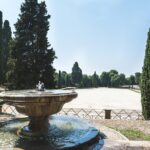
This is the part you’ll remember. The tour begins with a scenic run into Villa Borghese and up to the Pincio terrace, where the city opens up in a way that feels instantly cinematic.
Why it’s so valuable: Pincio isn’t just a viewpoint. It’s a Rome landmark that helps you “read” the city. Once you see the spread, the later stops make more sense—how hills, major monuments, and bridges relate to each other.
This stop also fits golden hour perfectly. One recent rider timing it from a 4pm departure described exactly how the light can shift around sunset (especially in winter), with enough time afterward to head somewhere warm for dinner. Translation: pay attention to the start time you book, because golden hour is real here.
Moving Through Central Rome Without the Worst Walking
After the viewpoint, the route threads through key central areas, including passing stops tied to major streets and landmarks you’ll likely recognize even if you’re new to Rome.
This cart format changes the experience. Instead of spending your energy weaving through pedestrians and bottlenecks, you get to rotate your attention between the guide’s context and the sights outside your window.
One small consideration: Rome streets can be narrow, and some architectural elements tower above the road. On busy stretches, you might feel a bit constrained inside the cart. If you’re hoping for effortless phone photography at every stop, bring patience—and be ready to move your body slightly to get the angle.
Colosseum Area Stops: Seeing the Gladiator-Era Scale
You’ll get to the Colosseum area with a photo stop long enough to take in the scale and frame a couple of good shots. The goal here isn’t to tour the arena floor. It’s to help you understand what you’re looking at from the outside.
When the guide sets context—Roman engineering, imperial power, and the idea of gladiatorial entertainment—you start seeing more than a big ruin. You notice structure, rhythm, and why this site became an enduring symbol.
There’s also a smart pairing here: the tour continues toward the Colosseum corridor sights rather than sending you off in random directions. That saves time and reduces the mental load of figuring out connections.
If you’re traveling with kids or teens, this kind of “hit the highlight, then move on” pacing can be a relief. You still get meaningful history, but you’re not forcing an all-day walk.
Circus Maximus and the Mouth of Truth: Fast, Famous, and Worth It
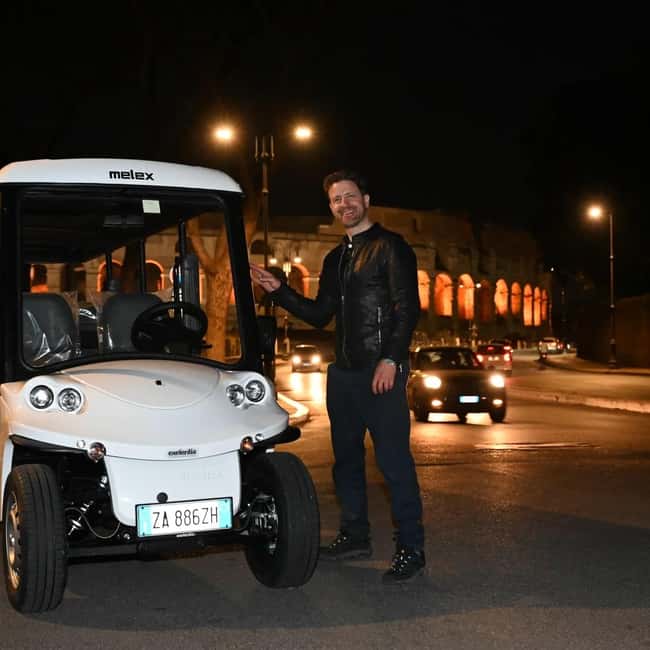
Next up is Circus Maximus, the ancient chariot-racing stadium. Even though you’re not seeing a fully intact arena, the spot is special because it lets you imagine the action. With the guide’s explanation, the ground becomes a story: crowds, speed, spectacle.
Then comes Bocca della Verità (Mouth of Truth), one of Rome’s most recognizable legends. It’s famous for the story about lying and the hand in the mouth, which is exactly why it works in a golf cart itinerary: people want a memorable moment, and you get it without a major detour.
Nearby, you may also see other well-preserved Roman temple structures mentioned as part of the experience. This is a good example of what the tour does well: it compresses several “wow” stops into a manageable time window.
One caution: these moments are brief. If you want extended time at each specific site, you’ll still have to plan a return trip. But for a first evening overview, these stops land well.
Aventine Hill and the Orange Gardens View
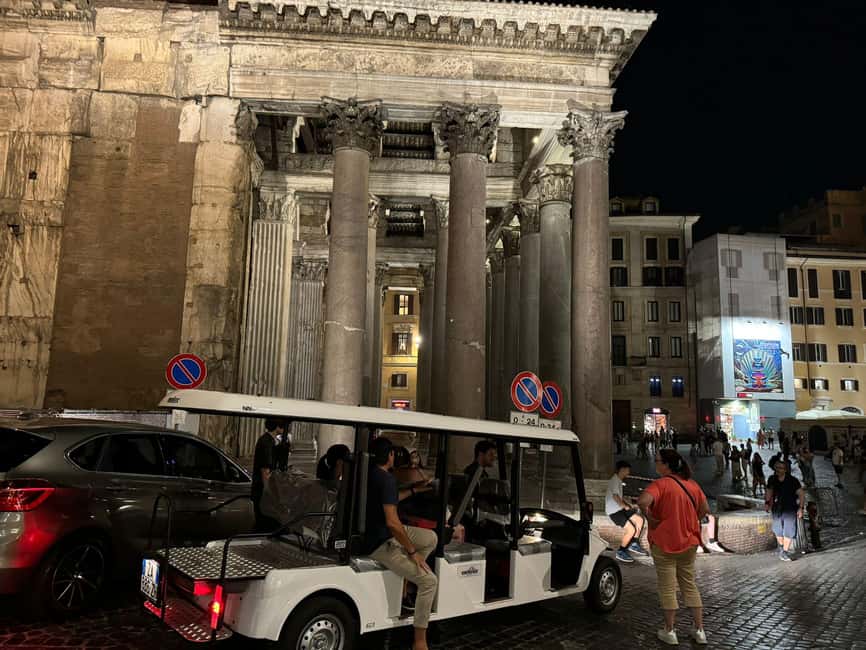
The tour brings you to the Orange Gardens on the Aventine Hill, a viewpoint area with both beauty and context. The orange-garden feel is real—space to look out, not just to snap and move.
Why it matters: Aventine Hill offers a different angle on the city than the earlier Pincio look. You’ll see Rome shifting from “monuments ahead” to “city spread below.” That visual variety makes the golden hour feel like a full chapter, not just one great photo.
The tour also frames this spot with historical significance, linked to a crucial moment connected to Italian unification. Even if you’re not a deep-history reader, it helps to know that viewpoints here aren’t only scenic—they’re also tied to events and power.
Piazza Venezia, Capitoline Hill, and the Michelangelo Connection
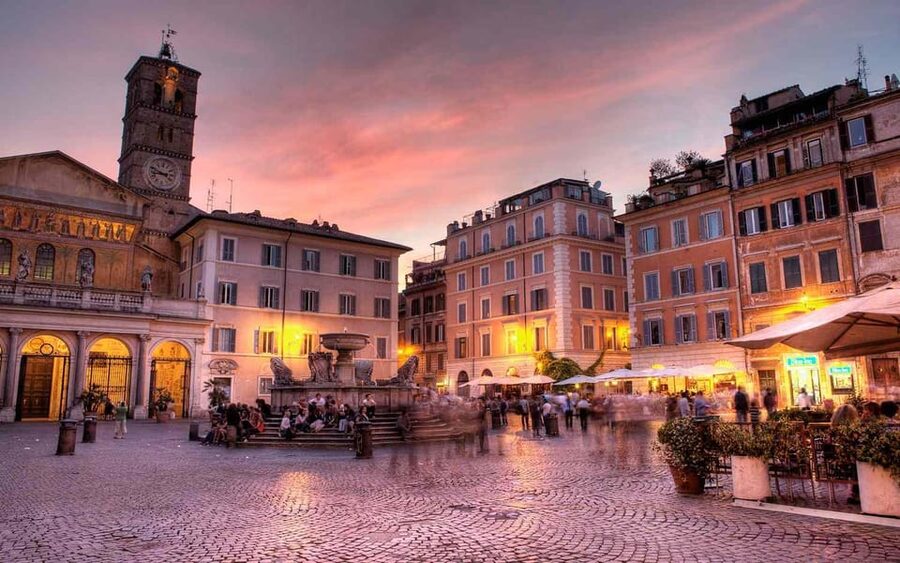
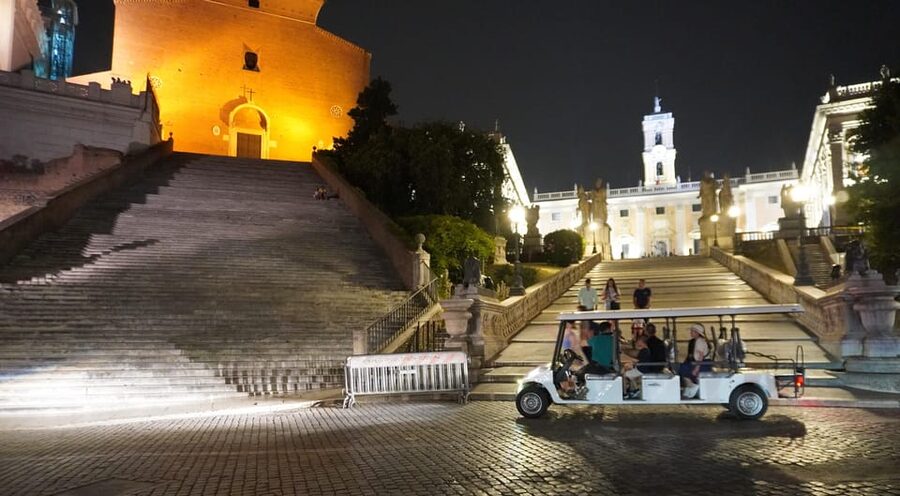
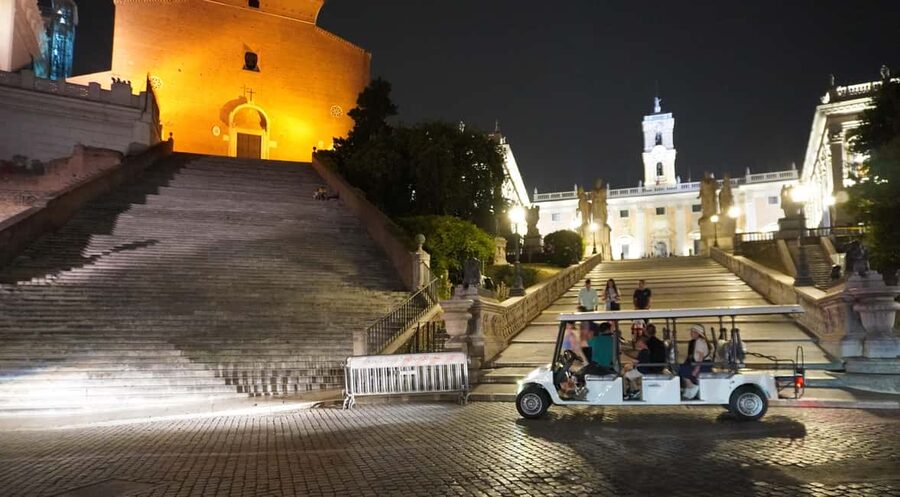
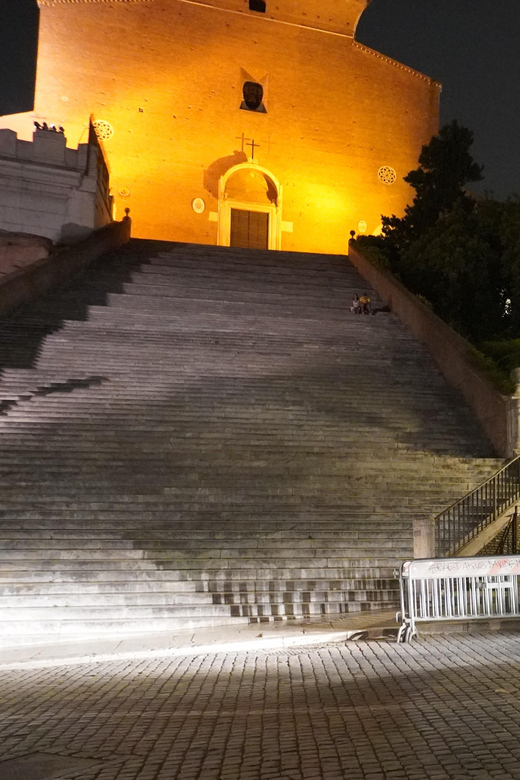
From the Aventine area, you head through sights including Piazza Venezia and Capitoline Hill. You’ll also hear about the design relationship connected with Michelangelo, which is useful because Capitoline Hill is one of those places that feels layered—ancient foundation, Renaissance reshaping, and modern-day Rome layered on top.
This segment gives you a chance to see how Rome evolves rather than treating it as a museum frozen in time. The cart format helps here because you can stay oriented while the guide connects the dots between eras.
You may pass by additional landmarks along the way, including areas like the Theatre of Marcellus. If you like architecture, these passing moments help build a “map in your head” even when you’re not stopping for long.
Ponte Sant’Angelo and Castel Sant’Angelo: River Views, Big-Scale Drama
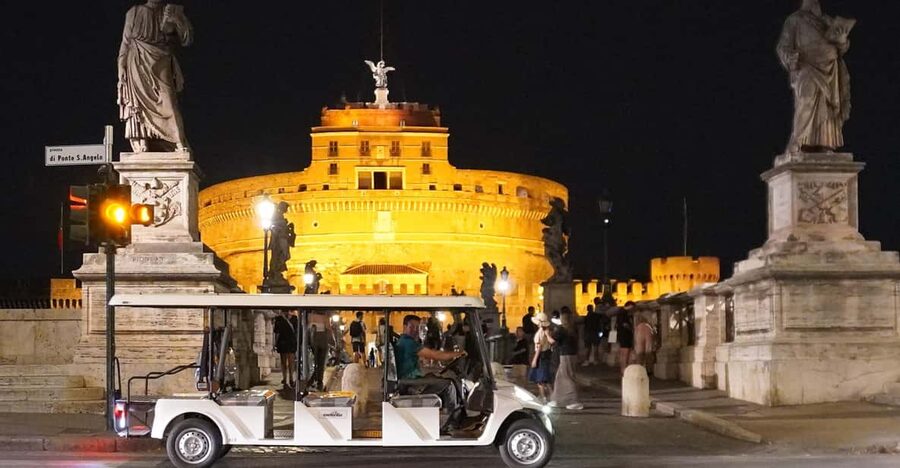
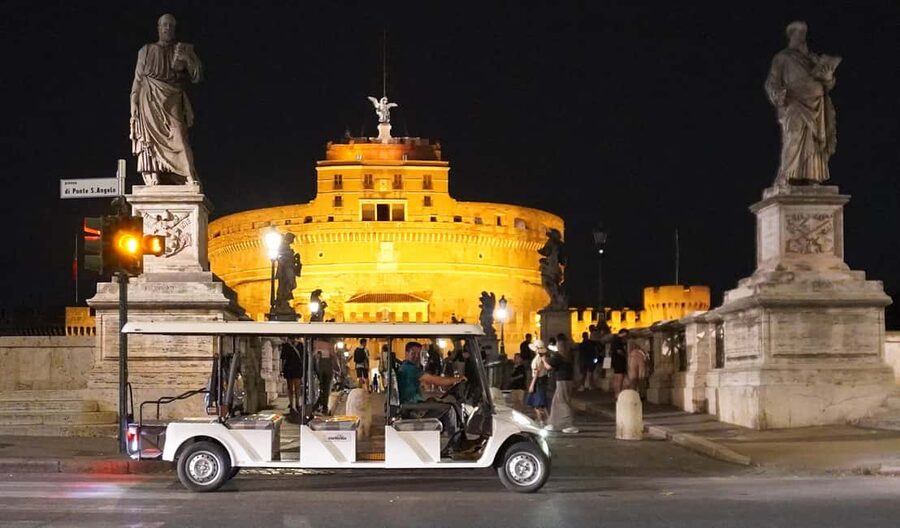
The route crosses Ponte Sant’Angelo, often described as one of Europe’s beautiful bridges. This matters because the bridge isn’t only a route—it’s a viewing corridor.
On the other side, you’re led toward Castel Sant’Angelo, a castle connected to a 2,000-year-old mausoleum foundation. That blend of “ancient base, later power” is a Roman theme you’ll keep seeing all through the city.
This stop also works because it changes how you feel about the city. After focusing on arena-scale ruins and temple legends, the bridge-and-castle moment adds a strong visual anchor across the river.
Largo di Torre Argentina and the Pantheon Dome Moment
Then you reach a dramatic historical site: Largo di Torre Argentina, linked with ruins of Republican-era temples and the assassination of Julius Caesar. Even if you’re not a Roman political history specialist, a stop like this pulls you toward the heavier stories that sit underneath the postcard Rome.
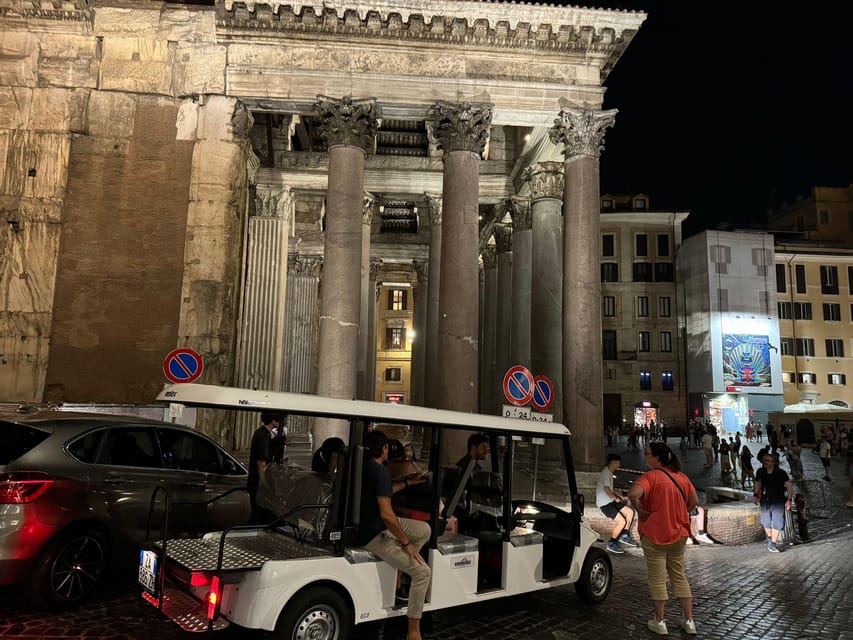
From there, the tour heads to the Pantheon. This is a must for a reason you feel immediately when you see the dome and oculus in person. The guide’s narration helps you notice details that you might otherwise miss—construction logic, why the building has lasted, and how it functions today.
The tour time at the Pantheon is designed as a photo stop, so don’t expect a museum-style visit with deep indoor exploration. Still, the Pantheon’s interior impression is strong even in a short window.
Piazza Navona to Trevi Fountain: Baroque Art at Photo-Stop Speed
In Piazza Navona, you’ll experience a famous square with fountains and street energy. This is one of the best places for the tour format because the entire square is a visual stage. You don’t need to walk far to get the main scene.
The guide calls out Bernini’s Fountain of the Four Rivers, which is helpful because it gives you a way to look beyond the obvious. You start noticing the details that make the artwork feel like a set of animated characters rather than just stone decoration.
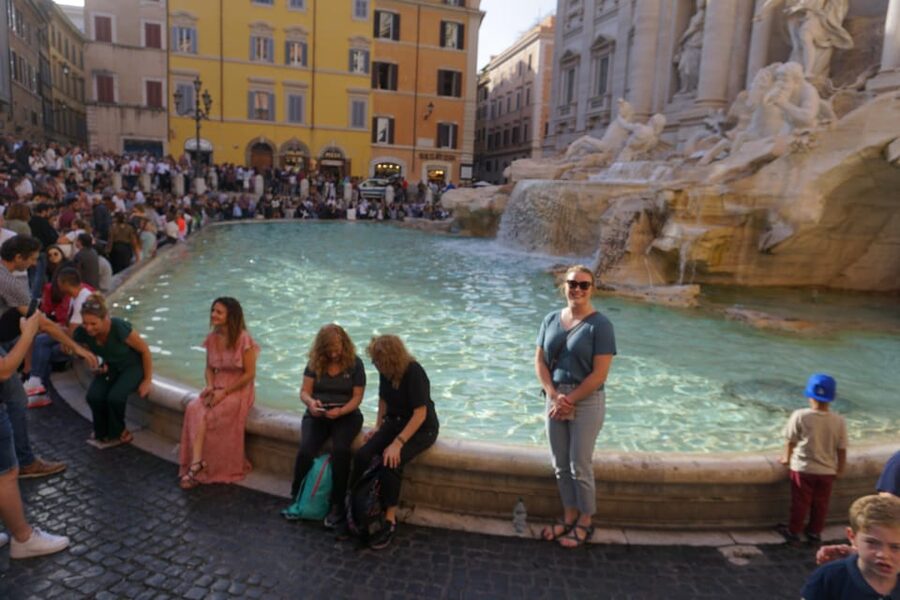
Then comes the Trevi Fountain, with a classic moment: you toss a coin and aim for your return to Rome. The tour’s stop time is enough to appreciate the baroque sculpture work if you pace yourself and don’t rush your angle.
A practical tip if crowds are intense: pick one “safe” spot first, take a couple of photos quickly, then slow down for a final look. Trevi rewards that kind of attention.
Spanish Steps Finish at Piazza di Spagna
The tour ends around the Spanish Steps area at Piazza di Spagna. This finish is actually smart because it lands you right where the evening atmosphere makes sense—shopping streets, cafés, and the feeling that you can keep exploring without needing a transit plan.
The Spanish Steps are also a natural segue to a Rome night. If you want dessert, people-watching, or a relaxed walk up toward Trinità dei Monti, you’re positioned well to do it on your own schedule.
If you want one last photo, do it right away after the tour stops, while the “fresh light” memory is still in your mind.
Price and Value: What $104 Buys in 2.5 Hours
At about $104 per person for a 2.5-hour tour, the value comes from compression. You’re paying for transportation plus a live English guide plus a carefully planned circuit through Rome’s biggest hits.
If you have limited time, this is where the math can work in your favor. With only a day or two in Rome, a cart tour can help you see what you’d otherwise miss while you’re still learning the city’s layout.
If you have more time and you like long walks, you could build a similar itinerary on foot. But you’d likely spend more energy negotiating crowds and figuring out routes between hilltop viewpoints, bridges, and clustered landmarks.
A balanced view: this isn’t a replacement for deeper visits. It’s a high-impact overview designed to set you up to return on foot for the places that hook you most.
The Real-World Upside (and the One Main Trade-Off)
Let’s talk about how this tour feels in practice.
The upside is pace with purpose: you get a sequence of iconic stops and viewpoint moments without exhausting travel between them. Multiple guides have been praised for clear English and for giving enough time to take photos at each site, which is exactly what you want from an overview tour.
The main trade-off comes from cart-to-cart coordination and street conditions. If you end up in a second cart and the group stretches out, you can lose the guide’s commentary and feel stuck looking at sights without context. Tight streets also mean visibility can be awkward, and you may need to lean a bit to see above the crowd or around tall facades.
So my advice is simple: choose an earlier golden hour departure if possible, and try to stay close to the group’s center cart once you’re underway.
Who This Tour Is Best For
This fits best if you want:
- A fast orientation to Rome with the biggest monuments in one evening
- Golden hour photos without trying to solve Rome logistics yourself
- A lighter day when you’re traveling with kids or teens, where constant walking can drain patience
It’s also a solid pick if you’re jet-lagged. The route gives structure, and the guide helps you turn “I saw it” into “I get why it matters.”
Should You Book This Golden Hour Golf Cart Tour?
I’d book it if you want an efficient, guided overview that uses golden hour timing well and helps you hit the sites that define first-time Rome. It’s especially good when your schedule is tight and you still want to end the day with energy for dinner.
Skip it if you’re the type who needs long stays at each monument, or if you’re very dependent on uninterrupted audio while sightseeing. The tour can be wonderful visually, but sound and viewing depend on how closely the carts stay together in busy conditions.
If you’re choosing between start times, pick the one that best protects your sunset light. That’s where the whole experience starts to feel like Rome, not just a checklist.
FAQ
How long is Rome’s Golden Hour Golf Cart Tour?
It lasts 2.5 hours.
Where do I meet for the tour?
You meet at Piazzale Flaminio, 15, right by McDonald’s.
What language is the tour guide?
The tour includes a live tour guide in English.
What sites are included in this tour?
The experience covers stops or photo moments around: Villa Borghese and Pincio, the Colosseum area, Circus Maximus, Bocca della Verità, Orange Gardens, Piazza Venezia and Capitoline Hill, Ponte Sant’Angelo/Castel Sant’Angelo area, Largo di Torre Argentina, the Pantheon, Piazza Navona, Trevi Fountain, and the Spanish Steps.
Is the tour wheelchair accessible?
Yes, it is listed as wheelchair accessible.
What is the price?
The price is $104 per person.
Can I cancel and get a refund?
You can cancel up to 24 hours in advance for a full refund.