REVIEW · ROME
Rome’s Highlights on a Golf Cart Tour
Book on Viator →Operated by TOURISTATION · Bookable on Viator
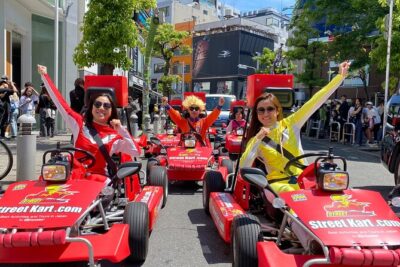
Rome in three hours, no aching feet. This half-day golf cart tour is a smart way to get your bearings fast while still seeing the big-name sights, from Villa Borghese to the Colosseum zone. I like the small-group setup (up to 7 people) because you can actually ask questions, and I like the quick stop timing that helps you cover a lot without turning your day into a sore-foot contest. The only real drawback: it moves at a “see it, don’t overstay it” pace, and admission isn’t included for several major monuments, so you’ll want to plan if you’re hoping for long, ticketed time inside.
The route starts near Piazzale delle Canestre and ends at the Spanish Steps, with an English/Italian-speaking driver and a mix of short walks, photo moments, and city views. It runs about 3 hours 10 minutes, and while some stops are listed as free admission, others are not included—so the value depends on how you like to travel.
In This Review
- Key highlights you’ll feel right away
- A 3-hour golf cart sprint through Rome’s essentials
- Meeting point near Piazzale delle Canestre, end at Piazza di Spagna
- Villa Borghese Gardens and Piazza del Popolo: Rome’s big mood shift
- Column of Marcus Aurelius to the Colosseum area: what you’re really seeing
- Giardino degli Aranci to Bocca della Verità: calm breaks inside the chaos
- Piazza Navona, the Pantheon break, and Trevi: the center of the Rome postcard
- Spanish Steps finish: how to use the location after the tour
- The real star: the guide behind the wheel
- What you should watch out for on this pacing
- Who this Rome golf cart tour is best for
- Should you book this tour?
- FAQ
- How long is the Rome highlights golf cart tour?
- How many people are in the group?
- Is the tour offered in English?
- Does the tour include hotel pickup and drop-off?
- Where does the tour start and end?
- Are entrance tickets included for the landmarks?
- Is food or drink included?
- FAQ
- What’s the cancellation policy?
Key highlights you’ll feel right away
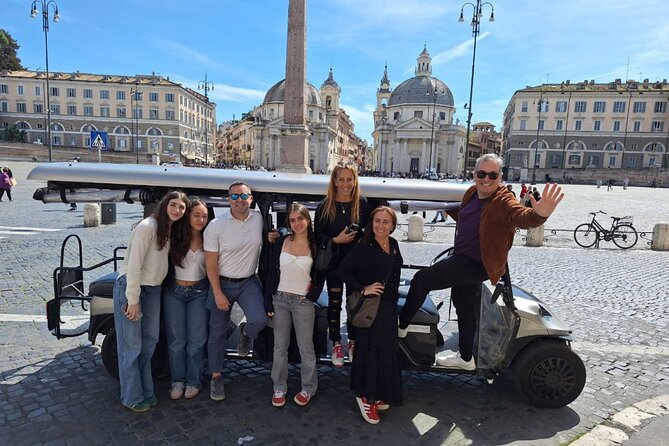
- Up to 7 travelers means less waiting and more Q&A with the driver
- Timed stops keep the pace efficient, especially if you’re short on time in Rome
- A classic Rome route: gardens, major piazzas, Forum area, and the center sights
- Free-and-not-free admissions mixed along the way, so you’ll know what may require tickets
- End at Piazza di Spagna so you can keep walking (or hop to dinner) right after
A 3-hour golf cart sprint through Rome’s essentials
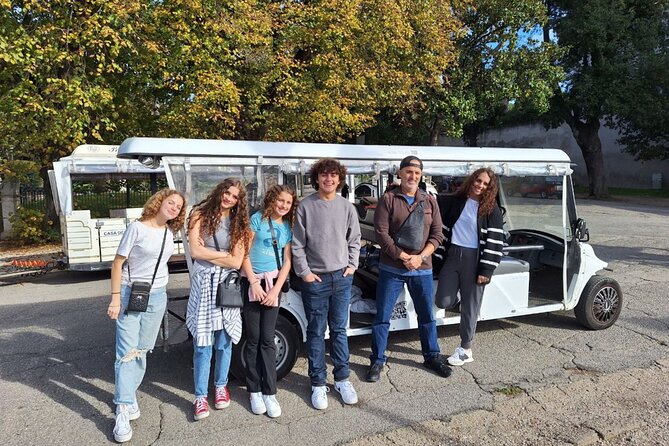
If you’re the type who wants to see Rome’s “greatest hits” without spending the whole day climbing hills and weaving through crowds, this tour makes a lot of sense. You’re not trying to do everything—you’re doing the key orientation stops and letting the rest of your trip fill in the details later.
The price is $177.44 per person, which isn’t cheap, but you’re paying for three things that matter in Rome: transportation, an experienced guide/driver, and the ability to pack many stops into a half day. When you add up the time saved versus trying to schedule multiple areas on your own, the cost can feel fair—especially if your group is small and your questions help steer what you do next.
It helps that the tour is offered in English (you can also select an Italian-speaking driver option). That makes the difference between just getting dropped at landmarks and actually understanding why they matter—and what to prioritize when you return on your own.
You can also read our reviews of more tours and experiences in Rome.


Meeting point near Piazzale delle Canestre, end at Piazza di Spagna
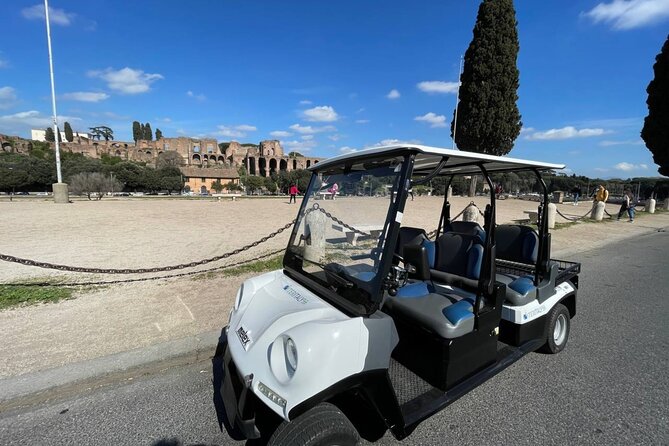
The start point is Piazzale delle Canestre (00197 Roma RM), and you finish at Spanish Steps (Piazza di Spagna, 00187 Roma RM). There’s no hotel pickup, but the meeting point is near public transportation, which usually makes it easier than tours that require a taxi detour.
Why the start/end matters: you end in one of the most convenient central zones to keep sightseeing. If you plan your day right, you can do this tour earlier, then spend the rest of your time focusing on the few places you loved most—without paying for yet another long transfer.
Also, bring the basic travel reality check: it’s a golf cart tour, but you still step out for each stop. So think “comfortable short-walk shoes” even if you’re not doing a marathon.
Villa Borghese Gardens and Piazza del Popolo: Rome’s big mood shift
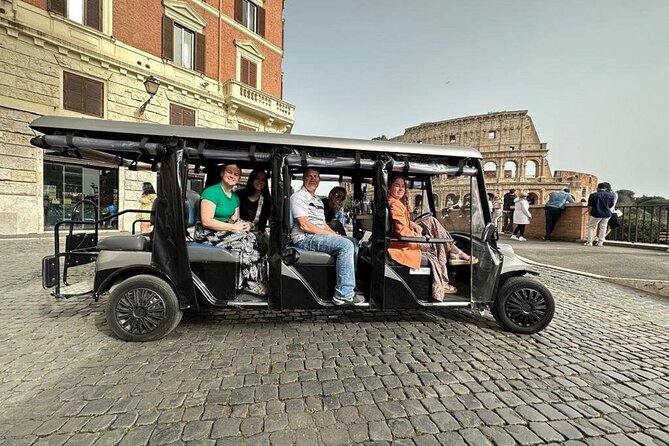
Your first major reset is Villa Borghese Gardens. You get about 10 minutes there—long enough to absorb the green break and get photos, but short enough that you won’t lose the day to one neighborhood. This is a smart opener because it contrasts with the rest of the tour’s stone-and-ruins rhythm.
Next is Piazza del Popolo (about 15 minutes). This is where Rome’s energy shows up immediately: a big, memorable square that helps you orient to the layout of the center. It’s also the kind of spot where having a guide matters. If you know what you’re looking at, the piazza turns from scenery into a map you can reuse later.
Then you head toward the Mausoleo di Augusto for a very quick stop (about 5 minutes). Since admission for this stop is listed as not included, treat it as more of a “place the landmark in your mind” moment than a full ticketed experience.
Between these stops, you also drive by Via del Corso without stopping. That’s useful. You get the view of a major street that defines the city feel—without losing time trying to park, ticket, or herd everyone through crossings.
Column of Marcus Aurelius to the Colosseum area: what you’re really seeing
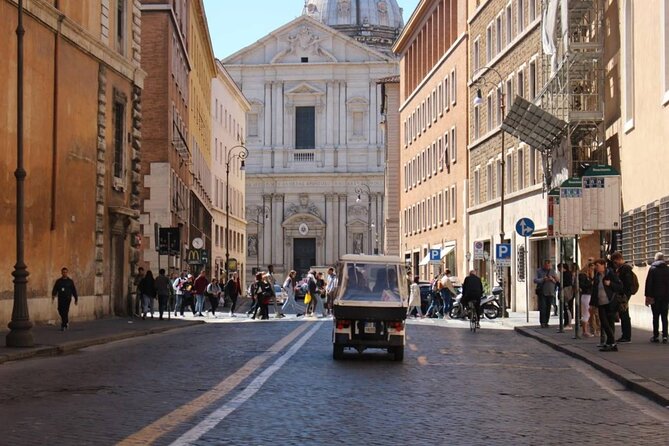
After the early city views, the tour transitions into the “ancient Rome” belt. Stop 4 is the Column of Marcus Aurelius at Piazza Colonna for about 5 minutes. It’s a fast photo-and-context moment, and it works well because you’re not expected to do a long visit here—you’re expected to connect the dots between monuments you’ll see later.
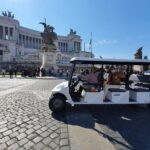
Then you get to Piazza Venezia / Vittoriano area for about 5 minutes. Even if you’re not planning to go inside anything, the timing works because the square gives you a powerful sense of where you are in relation to the historic core.
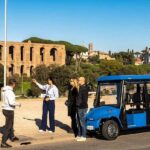
Now comes the portion many people come for: the Forum zone and the Colosseum surroundings. You spend about 10 minutes at Foro Romano (admission not included). The key value of this stop is perspective. Even a short visit helps you understand how massive this area is and why people keep coming back.
Right after, you visit the Forum of Augustus for about 5 minutes (admission not included). This is the “taste” part of the meal—enough to point you toward what to return for if you want deeper time.
Then you reach the Colosseum for about 10 minutes (admission not included). The tour doesn’t try to sell you a long inside-the-stadium experience. Instead, you get a controlled amount of time to view it and take in the scale. If you’ve only got one shot at the Colosseum, this tour can still help—then you can decide later whether to buy a separate ticket for the inside.
The last ancient-heavy stop is Circus Maximus for about 10 minutes (admission not included). It’s a great counterbalance to the Colosseum because it feels broader and more open, so your brain gets a different kind of “Roman” picture.
Giardino degli Aranci to Bocca della Verità: calm breaks inside the chaos
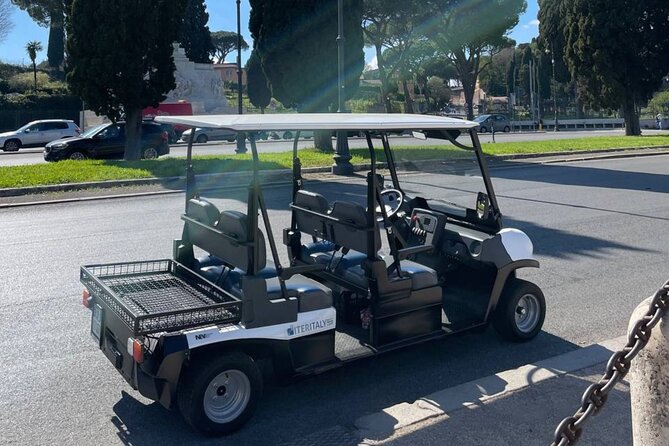
After the ruins, the tour shifts gears with a quieter pause at Giardino degli Aranci for about 15 minutes (free admission listed). This is the kind of stop that makes the whole half day feel more human. You can breathe, settle your photos, and reset before heading into the denser “everyone goes there” squares.
Next is Bocca della Verità for about 10 minutes (free admission listed). It’s a short stop, so I wouldn’t plan your whole day around it—but it’s memorable enough that it earns its spot on the route.
Then you head to Piazza del Campidoglio for about 20 minutes, including Casa Romana and panoramic views of the Forum area (admission not included). This stop is valuable because the view helps your earlier ruins stops make sense. If you’ve been seeing stone fragments up close, a panoramic perspective can turn scattered sights into a coherent picture.

Piazza Navona, the Pantheon break, and Trevi: the center of the Rome postcard
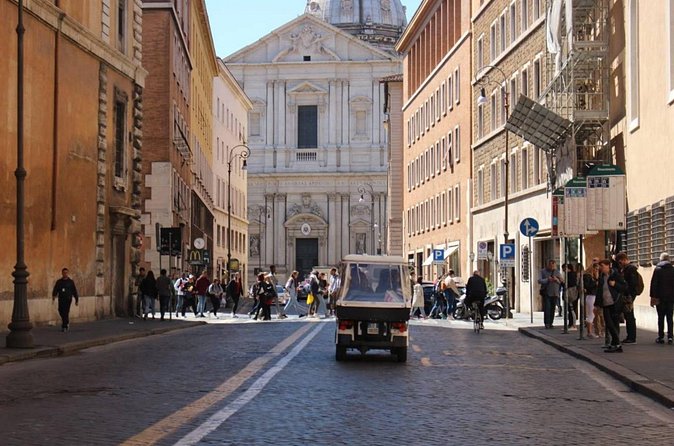
The tour continues with the most famous walking-stop style squares. First up is Piazza Navona for about 15 minutes (free admission listed). It’s one of those places where the setting does half the work. Even with limited time, you’ll feel why people love it.
Then you get a Pantheon stop with about 15 minutes, and this is one of your rare “time to breathe” moments because you can stop for gelato or coffee during the break. Admission for the Pantheon is listed as not included, so again, the goal is a quick look and a strategic pause rather than an extended ticketed visit. Still, that snack window matters when you’ve been moving all morning.
Right after, you visit Chiesa di Sant’Ignazio di Loyola for about 15 minutes (free admission listed). This is a great contrast stop: you go from monumental square mode into something quieter and more focused.
Finally, you hit Trevi Fountain for about 10 minutes (free admission listed). Quick tip: don’t go in expecting unlimited time. Use this as a payoff stop—take your photos, make your wish, then keep the day moving so you don’t lose the rest of the tour’s momentum.
Spanish Steps finish: how to use the location after the tour
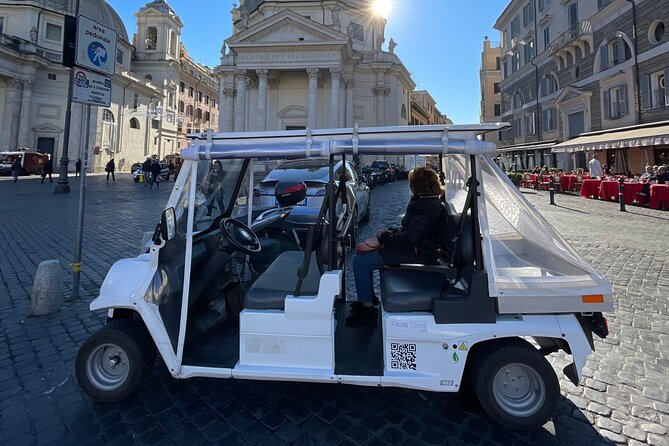
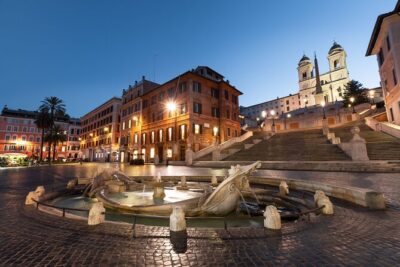
The final stop is Spanish Steps for about 10 minutes (free admission listed). It’s a classic ending because you’re dropped near a major central hub. If you want to turn the tour into a full-day experience, this is where you can “choose your own follow-up.”
Think about it like this: the tour gives you the structure and the big landmarks. After that, you can spend extra time in the few places you want to revisit—especially if you liked the garden portion, the Forum scale, or the piazza energy.
The real star: the guide behind the wheel
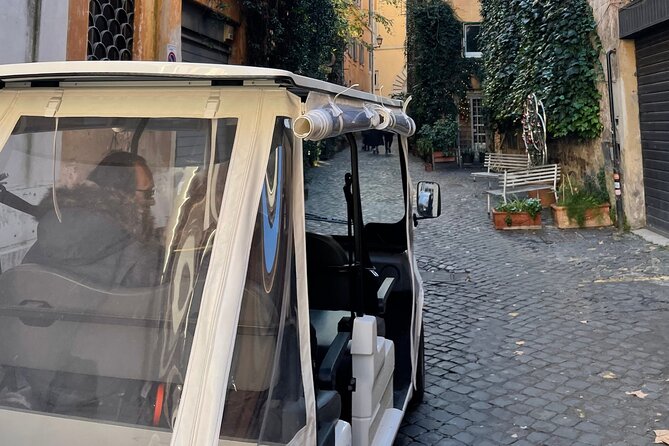
This kind of tour rises or falls on the guide/driver. The best experiences I’ve heard from this format highlight guides who ask questions, adjust on the fly, and give practical context—not just reciting facts.
I’ve seen standout praise for guides with names like Hadi, Pietro, Sahar, and Sabrina. One theme shows up again and again: the guide helps you connect what you see today with what you might do tomorrow. Sahar, for example, was noted for flexibility, including stopping at a gelato and coffee place on request, plus sharing small, useful tips like how to drink from Rome’s water fountains.
That matters because Rome has a learning curve. A good guide makes the city feel less random. Even if the stops are short, the explanations can make you remember what you saw—and help you pick your next neighborhood with more confidence.
What you should watch out for on this pacing
This isn’t a “slow travel” tour. The value comes from getting lots of locations in a controlled time box, not from long stays at ticketed monuments.
So if you want to do deep interior visits—especially at big-ticket sites—plan to buy tickets separately and add extra time on another day. The tour also doesn’t include food or drinks, so factor in a snack strategy. The Pantheon break helps, but you’ll still want to carry water and have a plan for the rest of your day.
Finally, since admission is not included for several key monuments along the route, check what you personally care about most. If you’re a hardcore Colosseum/Forum person, you may love this tour as a setup day and then return for a longer ticketed visit.
Who this Rome golf cart tour is best for
I recommend this tour most strongly if you:
- Have limited time in Rome and want the main sights in one go
- Prefer short walks and quick stops over long treks
- Want a small-group setting where you can ask questions
- Like getting orientation first, then exploring more deeply later
It can also work well for mixed-experience groups—say you’ve been to Rome before, but your companions haven’t. The short, structured route gives everyone something solid without turning the trip into a negotiation over pace.
Should you book this tour?
Book it if you want a fast, guided introduction that covers Villa Borghese, the Forum/Colosseum zone, and the center highlights like Piazza Navona, Pantheon, Trevi, and the Spanish Steps. This is the kind of tour that helps you leave Rome with a mental map and a shortlist of places to return.
Skip or consider alternatives if you strongly prefer long, ticketed time at monuments and don’t want to think about admissions separately. Since several major sites aren’t included and the stop times are brief, this is better as a smart first pass than a full “spend the day inside” plan.
FAQ
How long is the Rome highlights golf cart tour?
It runs about 3 hours 10 minutes.
How many people are in the group?
The tour has a maximum of 7 travelers.
Is the tour offered in English?
Yes. It’s offered in English, with an English/Italian-speaking driver option you can select.
Does the tour include hotel pickup and drop-off?
No. Pick-up and return to your hotel are not included.
Where does the tour start and end?
It starts at Piazzale delle Canestre (00197 Roma RM) and ends at Spanish Steps, Piazza di Spagna (00187 Roma RM).
Are entrance tickets included for the landmarks?
Not for all stops. Admission isn’t included for several major monuments along the route (including Mausoleo di Augusto, Foro Romano, Forum of Augustus, Colosseum, Circus Maximus, Piazza del Campidoglio/Casa Romana, and Pantheon). Some stops are listed as free admission.
Is food or drink included?
No. Drink and food are not included.
FAQ
What’s the cancellation policy?
You can cancel for a full refund up to 24 hours in advance of the experience start time.