REVIEW · FLORENCE
Florence: Uffizi Gallery Entry Tickets
Book on GetYourGuide →Operated by Ticket With Us · Bookable on GetYourGuide
The Uffizi rewards smart planning. With a skip-the-line ticket, you get direct access to Florence’s Renaissance superstar collection, including Botticelli and Leonardo, plus Michelangelo’s work in its original display setting. I especially love getting to see The Birth of Venus up close, and I really value spotting Michelangelo’s Doni Tondo where it’s meant to be seen. The main drawback: this ticket is for entry only, so without a guide you’ll need a little prep to fully connect the dots as you move room to room.
In the 2–3 hours you’ll likely want, you can follow how Western art evolves across centuries—paintings, sculpture, and the big names in one museum. You’ll spend your time inside galleries packed with famous works like Botticelli’s Primavera, Leonardo da Vinci’s Annunciation, and pieces by Raphael, Caravaggio, and Rembrandt, plus sculptures and fresco-like details in the broader displays. It’s a great use of time, but it can feel like information overload if you try to see everything at once.
One more practical note: your meeting point may vary by the option you book, and there’s no hotel pickup included. Do a quick check before you go so you don’t waste your visit hunting for the right entrance area.
In This Review
- Key things I’d plan around
- Florence’s Uffizi: Why this ticket feels like good value
- Your 2–3 hour self-guided route (so you don’t miss the point)
- Botticelli rooms: The Birth of Venus and Primavera up close
- Leonardo’s Annunciation: What to notice when you only have a little time
- Michelangelo’s Doni Tondo: Why original context matters
- Caravaggio, Bernini, Raphael, and Rembrandt: More range than you expect
- Sculptures and fresco-like displays: How to keep seeing instead of scanning
- The one thing to watch: entry ticket only (no guide)
- Who this works best for
- Should you book this Uffizi ticket?
- FAQ
- How long is the Uffizi Gallery entry ticket?
- How much does the Uffizi entry ticket cost?
- Is a tour guide included with this Uffizi ticket?
- Is hotel pickup or drop-off included?
- Which major artworks can I expect to see with this ticket?
- Is free cancellation or pay later available?
Key things I’d plan around
- Skip-the-line entry: less waiting means more time actually looking at art, not calendars and queues
- The big three you came for: Botticelli, Leonardo da Vinci, and Michelangelo anchor your route
- Doni Tondo in context: seeing it in its original setting helps you notice details you’d miss at a glance
- Caravaggio and Bernini are in the mix: you’ll get a wider snapshot of dramatic Italian art than only “soft Renaissance”
- 2–3 hours is the sweet spot: enough time for highlights, not enough to wander without a focus
- Entry ticket only: no guide, so plan how you’ll interpret what you see
Florence’s Uffizi: Why this ticket feels like good value
At $57 per person for a 2–3 hour museum visit, you’re paying for two things: timed access and the privilege of skipping the long wait that can eat your entire morning. In a city where “just one more line” can turn into “why are we still here,” that matters.
Also, this isn’t just about one famous painting. The Uffizi collection spans multiple styles and eras within the broader Renaissance story, with stops that let you compare different approaches—mythological elegance, religious drama, and later movements showing up in the museum’s holdings. If you’re visiting Florence for a short window, entry access at a set duration helps you build a realistic day plan.
The ticket includes entrance and all taxes, fees, and handling charges, so you’re not playing add-on bingo at checkout. What you don’t get is a guided commentary. If you like to understand paintings rather than just photograph them, I’d treat this as a “walk-and-learn with your own tools” experience.
A few more Florence tours and experiences worth a look
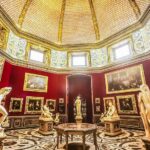

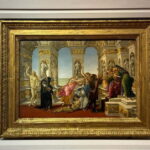
Your 2–3 hour self-guided route (so you don’t miss the point)
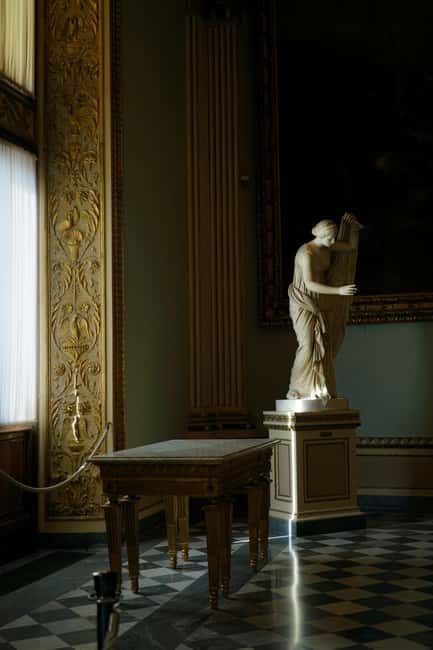
Because there’s no tour guide included, your success here comes down to having a simple route. Aim for a “highlights plus” plan: see the named masterpieces, then let the adjacent rooms support your understanding.
Here’s a practical way to structure your time without guessing hidden specifics:
1) Start with Botticelli’s iconic works
Make space to slow down near The Birth of Venus and Primavera. These are the paintings most people recognize from postcards, but in-person scale and brushwork are where your interest usually clicks.
2) Move into Leonardo da Vinci’s Annunciation
Then shift gears to Leonardo’s religious scene—this is where you can notice how Renaissance technique can make emotion feel quiet but intense.
3) Look for Michelangelo’s Doni Tondo in its original display setting
Even if you only have a short time, this one benefits from a calm look. Treat it like a stop you revisit with fresh eyes.
4) Fill with supporting masters
After the anchors, use the rest of your time to catch other artists named in the collection details—Raphael, Caravaggio, Rembrandt—and any dramatic sculptural or historical display areas you encounter along the way.
This approach keeps you from doing the common mistake: spending your whole visit chasing every room instead of connecting the major themes.
Botticelli rooms: The Birth of Venus and Primavera up close
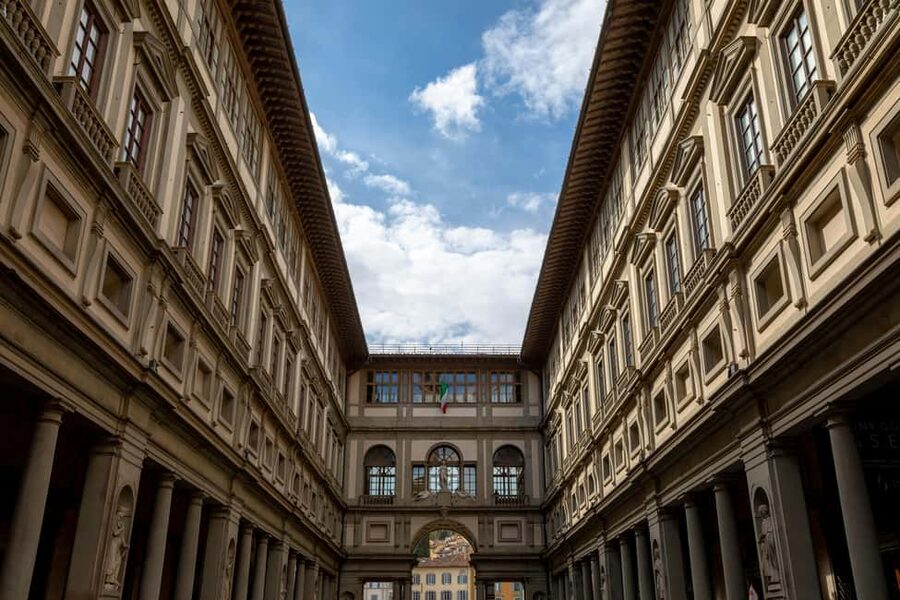
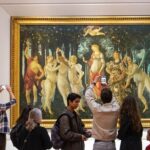
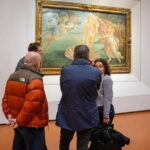
Botticelli is where the Uffizi turns into a real visual experience. You’ll likely feel the difference immediately when you see The Birth of Venus in person. It’s not just that it’s famous—it’s that the painting works at close range, and you can catch how the figures are arranged and how the scene holds together.
Then there’s Primavera, another standout linked to the museum’s identity. If Venus hits you through iconic myth, Primavera can feel like a more complex puzzle. Even without deep art history knowledge, you can appreciate the way symbols and figures cluster into one cohesive image.
Practical tip for your visit: don’t try to do “one quick look and move on.” Give yourself a moment to stand still. With Renaissance works, the first minute is often just orientation; it’s the second minute where details start to show.
Leonardo’s Annunciation: What to notice when you only have a little time
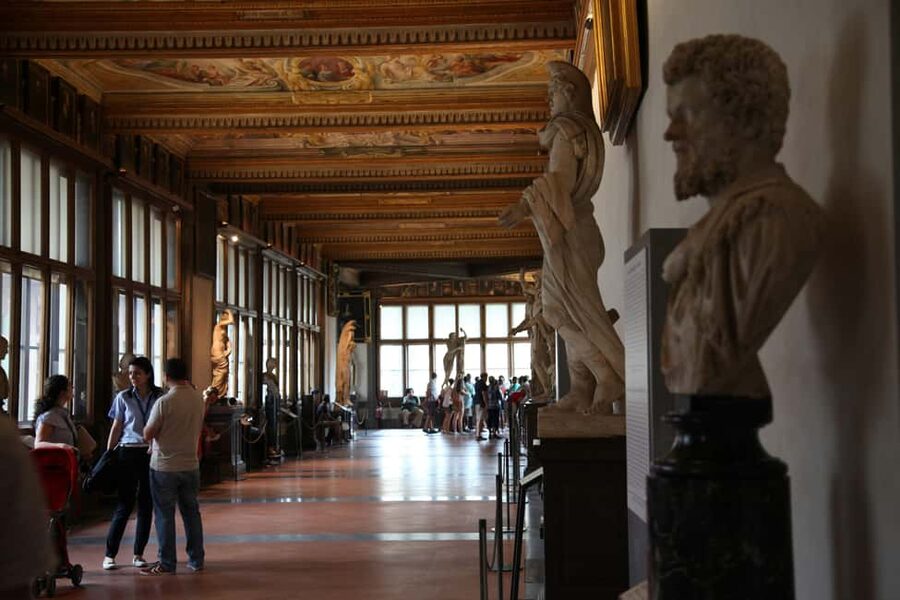
Leonardo da Vinci’s Annunciation is a different mood from Botticelli. The description of this masterpiece in the ticket highlights tells you what matters most: it’s a key work you don’t want to skip, especially if this is your first Uffizi visit.
When you’re in front of it, I’d focus on how Leonardo handles human expression and the sense of space around the figures. Even if you don’t know every technical term, you can still read the painting like a story: who reacts, how the scene is staged, and why the composition feels balanced.
Also, it helps to mentally reset between artists. If Botticelli is your “recognition stop,” Leonardo becomes your “interpretation stop.” That simple mental switch keeps your brain from treating the museum like a checklist.
Michelangelo’s Doni Tondo: Why original context matters
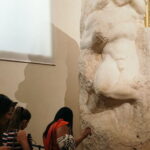
Michelangelo’s Doni Tondo is singled out for a reason: it’s in its original setting here. That phrase is more than marketing. When art stays in the display environment it was designed for—or at least presented in context—your viewing angle and spacing can change what you notice.
So what does that mean for you in practice? Don’t rush through it on your way to the next room. Treat it like a destination moment. Look long enough that the image becomes stable, then try to notice how the work holds together as a whole rather than focusing only on one striking feature.
If you’re used to seeing museum pieces behind glass in a “blink and go” way, this can be the stop that makes you slow down and actually see.
You can also read our reviews of more museum experiences in Florence


Caravaggio, Bernini, Raphael, and Rembrandt: More range than you expect
The Uffizi is often associated with bright Renaissance style, but the ticket highlights also point to artists like Caravaggio, Bernini, Raphael, and Rembrandt. That’s a useful expectation to set before you arrive.
Why? Because if your mind is set only on Renaissance classics, you might miss the museum’s broader story of dramatic light, human intensity, and shifting artistic priorities. Caravaggio is known (and here, you can feel) for attention-grabbing realism and strong contrasts. Bernini brings in a different energy through sculpture and presence. Raphael and Rembrandt help show how varied “great art” can be, even when it comes from the same general era of European art.
You don’t need to become an art expert in 2–3 hours. But you do benefit from letting your eyes travel across styles. Treat it like a series of comparisons rather than one long gallery walk.
Sculptures and fresco-like displays: How to keep seeing instead of scanning
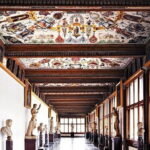
The experience details mention sculptures and frescoes, which matters for a practical reason: mixing mediums breaks the monotony. Paintings can blend together if you don’t pace yourself, but when sculpture or wall-based art appears, you get new angles, new textures, and a different kind of visual rhythm.
In your time window, I recommend you use these moments strategically:
- When you feel your attention slipping, shift to sculpture or wall works for a reset
- When you’re standing too close to one canvas, step back and reorient with a medium that has depth and form
This is one of the best ways to avoid the “scan, snap photos, and forget” problem that happens in major museums.
The one thing to watch: entry ticket only (no guide)
Because the ticket includes entry but not a tour guide, you’re choosing a self-guided experience. That’s not automatically bad—it can even be better if you travel at your own pace. But it does mean you’ll benefit from having at least a small plan for what you’re looking at.
Here’s a simple way to do that:
- Pick 3 anchor works you care about most (for many people: Birth of Venus, Annunciation, Doni Tondo)
- Decide you’ll “skim” everything else while still giving each room a real look
- Carry a note on the themes you want to understand: myth, religion, Renaissance craft, dramatic contrast
Also, there’s a coordination risk to mention. Your meeting point can vary by option, and if you arrive at the wrong spot, you can end up wasting your limited museum time. Before you leave, confirm the exact meeting location tied to your booking.
Who this works best for
This Uffizi entry ticket is best if you:
- Want to see major masterpieces without waiting in a long line
- Have a tight schedule in Florence and can spare about 2–3 hours
- Prefer a self-guided pace (with your own phone notes or guidebook)
- Are traveling with family or friends who don’t want to stop for constant narration
It may be less ideal if you want a guided storytelling experience that ties every artwork together step-by-step. In that case, you might feel the gap between what you see and why it matters.
Should you book this Uffizi ticket?
Yes, I think you should—if you’re visiting Florence for a short time and you want the most famous Renaissance highlights with less friction. The value comes from skip-the-line access, the fact that you’ll see named masterpieces, and the fact that entry is bundled with taxes and fees at a clear $57 price point.
I’d say reconsider if you hate self-guided museums or you need structured explanations to stay engaged. And if your itinerary is tight, double-check the meeting point tied to your booking option, because getting that wrong can turn a simple museum visit into a stressful start.
If you go in with a focused route—Botticelli, Leonardo, Michelangelo, then fill with the rest—you’ll get the Uffizi experience people talk about, without losing hours to waiting or decision fatigue.
FAQ
How long is the Uffizi Gallery entry ticket?
The duration is listed as 2–3 hours, depending on starting times and availability.
How much does the Uffizi entry ticket cost?
The price is $57 per person.
Is a tour guide included with this Uffizi ticket?
No. A tour guide is not included.
Is hotel pickup or drop-off included?
No. Hotel pickup/drop-off is not included.
Which major artworks can I expect to see with this ticket?
The highlights listed include Botticelli’s The Birth of Venus and Primavera, Leonardo da Vinci’s Annunciation, Michelangelo’s Doni Tondo, and works by Caravaggio, Bernini, Raphael, and Rembrandt.
Is free cancellation or pay later available?
Yes. You can cancel up to 24 hours in advance for a full refund, and you can reserve and pay later.