REVIEW · SARAJEVO
SARAJEVO CONCEPTUAL ART TOUR (galleries, art and arhitecture)
Book on Viator →Operated by Art and Tours Sarajevo · Bookable on Viator
Sarajevo’s streets can feel like a museum. This small-group walk strings together conceptual and modern urban art with city stories you’ll actually remember.
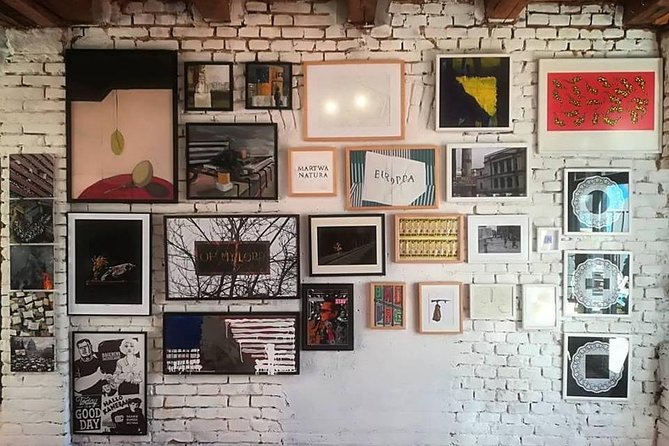
I love how you get guided context instead of just staring at art on a wall. I also really like the mix of styles here, from a contemporary gallery inside a former prison building to open-air war-marking artwork like the Sarajevo Roses.
One thing to consider: two of the stops are tied to the Siege of Sarajevo and the genocide in Srebrenica, so this tour carries emotional weight, not just aesthetics.
In This Review
- Key highlights at a glance
- Sarajevo’s Conceptual Art Route: Easy to Follow, Hard to Forget
- Price and What’s Included in Your $33.64
- Brodac Gallery: Prison Walls, Contemporary Art, and Gelender Beer
- Ferhadija Pedestrian Street and the Sarajevo Roses Concrete Pattern
- Galerija Java: How Sarajevo’s Contemporary Scene Builds Its Stage
- Veliki Park and Mensud Kečo’s Nermine, dođi Memorial
- Skenderija Bridge Area: Gallery BORIS SMOJO and Festina Lente
- The Guide Makes the Difference (Mak and the War-Time Perspective)
- What the Timing Feels Like in Real Life
- Who This Tour Is For (and Who Might Want to Skip It)
- Should You Book Sarajevo’s Conceptual Art Tour?
- FAQ
- How long is the Sarajevo Conceptual Art Tour?
- What is the price per person?
- Is the tour in English?
- Is this tour a mobile ticket?
- How big is the group?
- Where does the tour start and end?
- What time does the tour begin?
- Which stops are included with admission tickets?
- Are any stops free to enter?
- Is there a café break during the tour?
- Is free cancellation available?
Key highlights at a glance
- Brodac Gallery in a former Austro-Hungarian prison building
- Ferhadija’s Sarajevo Roses, a mortar-scar filled with red resin
- Galerija Java (Titova 21), a major center for contemporary Sarajevo art
- Veliki Park sculpture Nermine, dođi by Mensud Kečo, tied to Srebrenica
- Skenderija area break at Gallery BORIS SMOJO, then a stop at FESTINA LENTE
Sarajevo’s Conceptual Art Route: Easy to Follow, Hard to Forget
This tour is built for you to show up and let the day run. Starting at Đulagina 2 at 1:00 pm, you finish in the Skenderija area, so you’re not stuck backtracking across town. It runs about 2 to 3 hours, which is a sweet spot if you want substance without burning your whole afternoon.
The group stays small, with a maximum of 15 travelers. That matters because conceptual art is easier when you can ask questions and get direct answers, not just listen to a quick overview.
Also, the ticket is mobile, and the tour is offered in English. That’s helpful in Sarajevo, where it can be hit-or-miss translating details on your own.
You can also read our reviews of more tours and experiences in Sarajevo.
Price and What’s Included in Your $33.64
At $33.64 per person, this tour isn’t trying to be a bargain-only option. It’s more like paying for organization plus access plus an art-world brain in the room.
Several stops include admission tickets, including Brodac Gallery and Galerija Java, and the Skenderija Bridge stop includes admission as well. Two other stops are free of admission costs: the Sarajevo Roses on Ferhadija Pedestrian Street and the sculpture at Veliki Park.
So you’re not paying to have someone walk you around outside. You’re paying for entry where it counts, then meaningful guided time for the open-air works and memorials.
Brodac Gallery: Prison Walls, Contemporary Art, and Gelender Beer
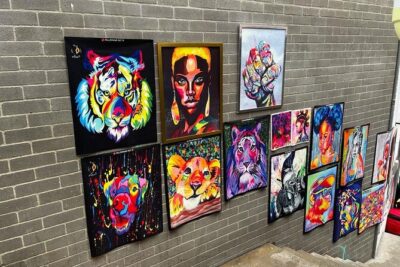
Brodac Gallery is the kind of place where the building story changes how you see the art. It’s inside an old structure that used to be a prison during the Austro-Hungarian occupation, and now it’s turned into a cozy venue for contemporary Bosnian exhibitions that pop up when there’s something worth seeing.
You get about 45 minutes here, and because it’s not a giant museum, you should feel like you can actually look closely. This is a good stop for your inner translator: the guide can connect what you’re seeing to the city’s modern identity, not just label the works.
One practical bonus: the gallery also serves local craft beer called Gelender. Even if you don’t order it, it helps this place feel like a living hangout rather than a sterile viewing room.
Ferhadija Pedestrian Street and the Sarajevo Roses Concrete Pattern
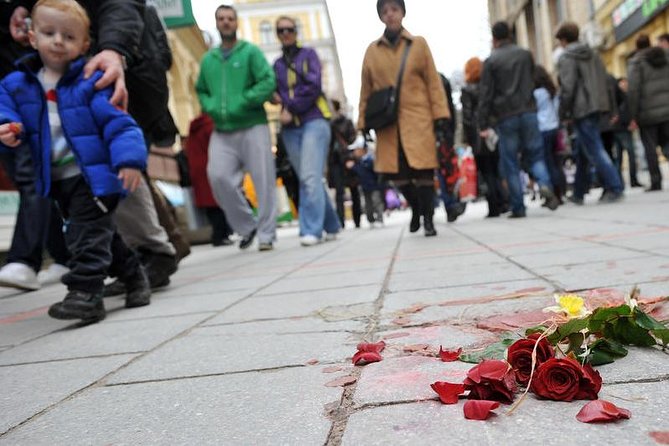
On Ferhadija Pedestrian Street, the art is literally in the street. You’ll spend about 30 minutes here walking a corridor where the city’s war scars became a visual language.
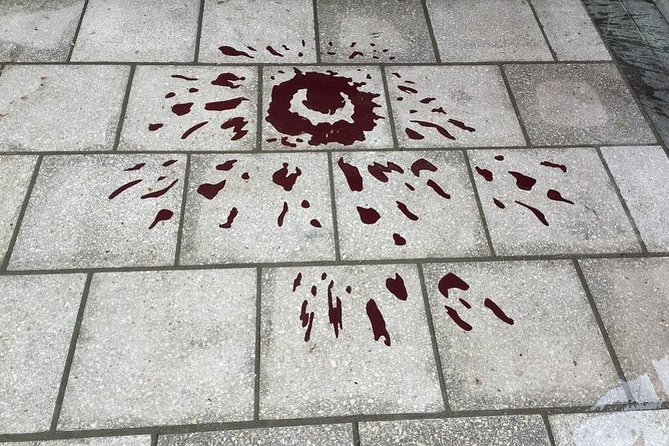
The highlight is the Sarajevo Roses: a concrete scar left by a mortar shell explosion, later filled with red resin. Because mortar rounds create fragmentation patterns in concrete, the surface can look almost floral in arrangement. It’s a strange transformation—something violent turning into something visually striking—but that’s exactly why it works as conceptual public art.
Here’s what I think you’ll appreciate most: this isn’t an abstract concept explained from a distance. It’s an urban artifact tied to the Siege of Sarajevo, where thousands of shell explosions marked the city. The result is a reminder you can walk up to, with scale you can feel under your own feet.
Galerija Java: How Sarajevo’s Contemporary Scene Builds Its Stage
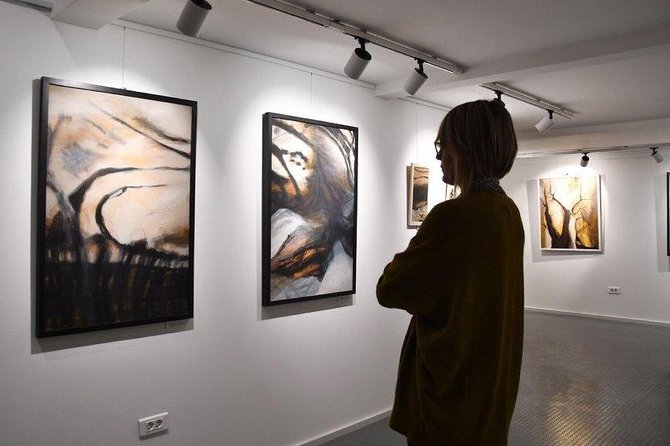
Next comes Galerija Java at Titova 21 in the city center. You’ll have about 1 hour here, and admission is included.
What makes Galerija Java especially useful on a guided tour is its role. It has helped affirm Sarajevo’s contemporary art scene by giving artists a chance to present their work in an attractive exhibit space. That means your visit isn’t random. You’re seeing a place designed for contemporary presentation and discussion, not just storage of artworks.
The gallery also works with both Bosnian and international artists, and it supports multiple mediums. So if your taste runs from visual pieces to more experimental forms, this stop is a strong chance to broaden your definition of what counts as contemporary art.
Veliki Park and Mensud Kečo’s Nermine, dođi Memorial
Veliki Park is where the tour becomes explicitly memorial. You’ll spend about 30 minutes, and there’s no admission ticket required for this stop.
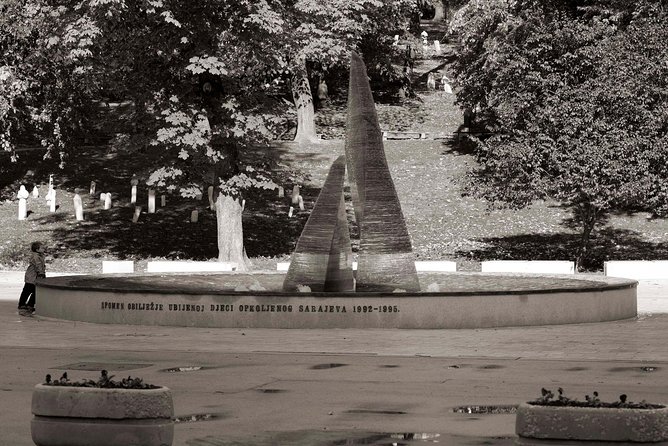
The sculpture is by Bosnian and sculptor Mensud Kečo and is dedicated to the genocide in Srebrenica. The work is titled Nermine, dođi and it’s made of concrete, reinforcement bars, plastic, and silicon. The materials matter: they reflect tension and realism, not a tidy, decorative monument.
The sculpture represents the most distressing documented photograph from Srebrenica to the artist. That detail changes the way you look. You’re not just seeing an abstract form. You’re seeing a conversion of a documented image into a public, physical statement.
If you’re planning your day, give yourself a moment before you rush on. This is one of those art stops where your body gets the message as much as your mind does.
Skenderija Bridge Area: Gallery BORIS SMOJO and Festina Lente
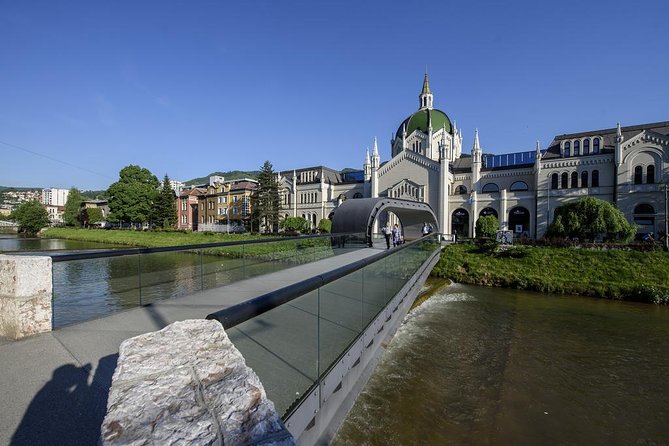
After the emotionally heavy stop(s), it helps that the tour includes a reset. You’ll make a caffe break at Gallery BORIS SMOJO, then move on to see the bridge FESTINA LENTE.
This part lasts about 30 minutes, and admission is included for this segment. Even though it’s shorter, it feels purposeful: you’re not just grabbing coffee, you’re using the break time inside an art context, then stepping out for a named city landmark.
FESTINA LENTE is the kind of place where the guide can connect the name, the setting, and what you’re seeing around the bridge. If you like your art tied to where people actually move through the city, this fits.
The Guide Makes the Difference (Mak and the War-Time Perspective)
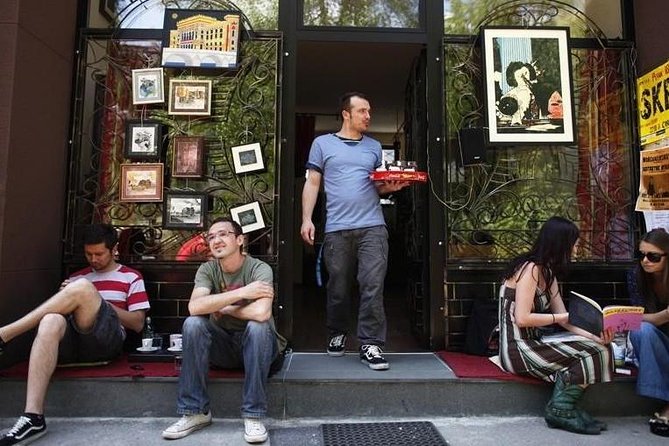
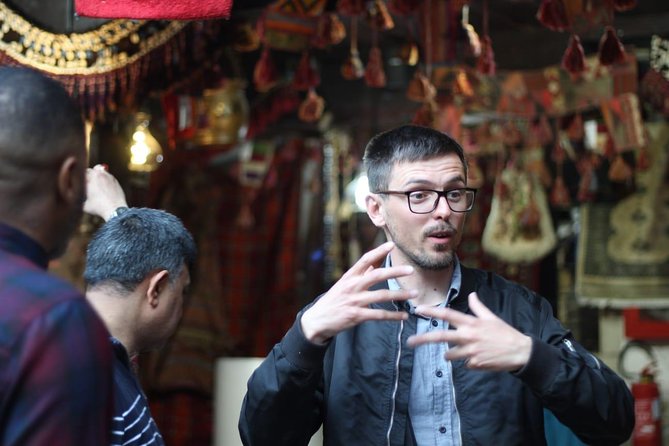
This type of tour lives or dies on the guide’s ability to connect art to lived experience. In this case, the guide Mak stands out. He shares not only the history, but also his own experiences during the war, and he’s attentive if you have questions.
One detail I especially respect: he doesn’t just talk at you. He helps you sort through what’s meaningful in each stop and what’s just background noise. He even gave one traveler a book he wrote as a gift, which hints at a deeper commitment than a checklist approach.
If you want conceptual art explained without taking the wonder out of it, this guide style is a big part of the value.
What the Timing Feels Like in Real Life
The tour is paced to fit multiple distinct “modes” of seeing: galleries, street art, and public memorial sculpture. That’s why it works as a 2 to 3 hour experience instead of a long day. You get time to look, then time to understand, then time to recover.
Because several stops have admission included and others don’t, you also avoid the stress of figuring out what’s pay-to-enter in the middle of a walk. You can focus on the art and the stories, not on ticket logistics.
The start point is near public transportation, which is useful if your lodging is in a different neighborhood. And with an end point in the Skenderija area, you can easily plan dinner afterward without scrambling.
Who This Tour Is For (and Who Might Want to Skip It)
You’ll probably love this if you want Sarajevo beyond old-town postcards. It’s made for people who enjoy conceptual art, street-level visual history, and art with real consequences behind it.
It’s also a good pick if you like asking questions. With a small group size, the guide can actually respond instead of rushing everyone through.
If you’re only in Sarajevo for a short time and you want a single structured art experience, this tour can give you a lot of texture fast. And if memorial art is something you can handle thoughtfully, the stops at Veliki Park and the Sarajevo Roses site will hit with meaning.
On the other hand, if you want purely playful, light-hearted sightseeing, the war and genocide connections here may feel heavy.
Should You Book Sarajevo’s Conceptual Art Tour?
I’d book it if you want a guided way to read Sarajevo through modern art and public memory. The value is strong because admission tickets are included for key gallery stops, the group stays small, and the guide brings lived context that makes the art feel less like trivia and more like a conversation.
I’d think twice if you’re sensitive to memorial topics or you prefer art to stay strictly aesthetic. This tour puts historical reality in the same frame as contemporary expression.
If that sounds like your kind of afternoon, go for it. You’ll walk away with specific places in your head, not just a vague sense that Sarajevo is artistic.
FAQ
How long is the Sarajevo Conceptual Art Tour?
It lasts about 2 to 3 hours.
What is the price per person?
The price is $33.64 per person.
Is the tour in English?
Yes, it is offered in English.
Is this tour a mobile ticket?
Yes, you get a mobile ticket.
How big is the group?
The tour has a maximum of 15 travelers.
Where does the tour start and end?
It starts at Đulagina 2, Sarajevo 71000, and ends in the Skenderija area, at Skenderija 71000 Sarajevo.
What time does the tour begin?
The start time is 1:00 pm.
Which stops are included with admission tickets?
Admission ticket is included for stops at Brodac Gallery, Galerija Java, and the Skenderija Bridge segment (including the gallery break part).
Are any stops free to enter?
Yes, the Sarajevo Roses stop on Ferhadija Pedestrian Street and the sculpture at Veliki Park are free of admission costs.
Is there a café break during the tour?
Yes. There is a caffe break at Gallery BORIS SMOJO.
Is free cancellation available?
Yes, you can cancel up to 24 hours in advance for a full refund.