
REVIEW · TEL AVIV
Tel Aviv: Street Art and Graffiti Tour
Book on GetYourGuide →Operated by Be Tours · Bookable on GetYourGuide
Street art in Tel Aviv has a voice of its own.
This tour turns that street noise into a clear story, with a local guide walking you through the city’s graffiti scene and explaining the ideas behind the walls. I especially love how the guide connects the art to real questions about identity and public space.
Two things I like a lot: you’ll see how many kinds of artists and styles are active right now, not just famous names or one-off murals. And the best guides make it personal—one guide (Shir) shares first-hand knowledge, and on at least one stop he may even reveal his own graffiti identity on an original piece. That mix of teaching and storytelling feels like you’re getting the neighborhood read, not a lecture.
One possible drawback: you’re outdoors on busy-looking streets and alleyways for around 90 minutes to 2 hours, and there’s no food stop included—so comfortable shoes and a plan for later matter.
In This Review
- Key highlights to look for on the walk
- Street Art as a Street-Level Lesson
- Two Routes: Florentine Neighborhood vs Ha’Mesila Park
- What Your Guide Teaches You About Graffiti Meaning
- Walking the Walls: What You’ll See Along the Route
- Your 90 Minutes to 2 Hours: How the Walk Feels
- Price and Value: Is $58 Worth It?
- Group Size and the Minimum-People Reality
- Who This Tour Is Best For
- Practical Tips Before You Go
- Should You Book This Tel Aviv Street Art and Graffiti Tour?
- FAQ
- How long is the Tel Aviv Street Art and Graffiti Tour?
- Where does the tour take place?
- What languages are offered?
- Is food or drinks included?
- Is there a minimum number of participants?
- Is the tour wheelchair accessible?
- Where is the meeting point?
- What are the cancellation and payment options?
Key highlights to look for on the walk
- Two curated routes depending on what day/time you book: Florentine or Ha’Mesila Park
- Street-art thinking, not just sightseeing: history plus philosophical, psychological, and economic angles
- Style spotting as you walk, so you start recognizing tags, murals, and different visual languages
- Local guide storytelling, including moments where the guide’s own work may appear
- Multiple artist types, helping you understand how the scene actually works
Street Art as a Street-Level Lesson
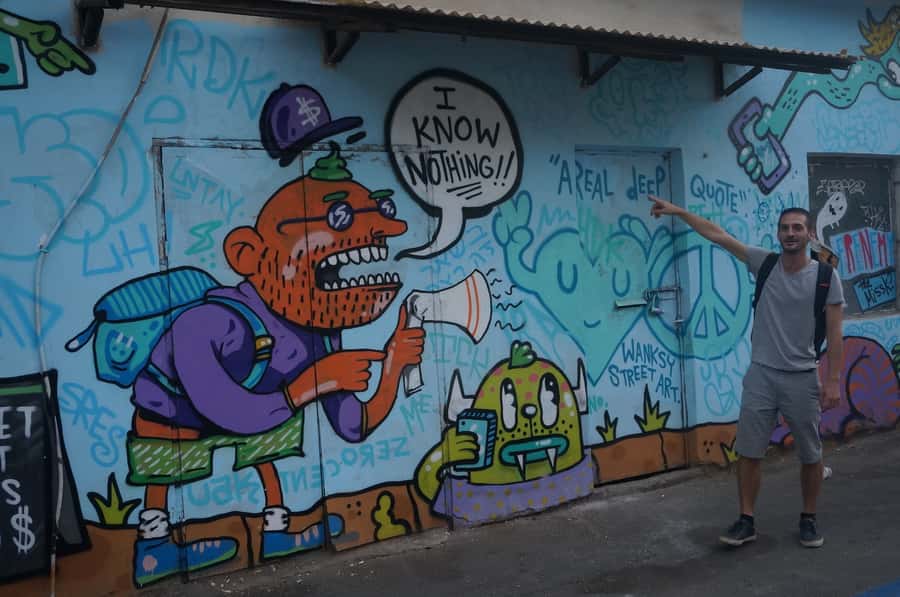
Tel Aviv has been climbing fast on the international street art map, and this tour is a good way to understand why. Instead of treating graffiti like random decoration, your guide helps you read it like a message system—who’s speaking, why they’re speaking, and what the wall is doing for them in the city.
I like that the tour builds a way of seeing. You don’t just point at a mural and move on. You learn how to connect visuals to context: the idea that graffiti and street art are shaped by public space, city economics, and even how people psychologically respond to visible messages. In a short time, you’ll walk away with a mental vocabulary for what you’re seeing next.
And the tone matters. From the guides’ style described in past groups, you can expect humor and an easy rhythm. One English-speaking guest who didn’t speak Hebrew was handled thoughtfully, with the guide making sure they stayed in the conversation while others talked through meanings in Hebrew. That kind of care makes the tour feel welcoming and not like you’re watching from the outside.
A few more Tel Aviv tours and experiences worth a look



Two Routes: Florentine Neighborhood vs Ha’Mesila Park
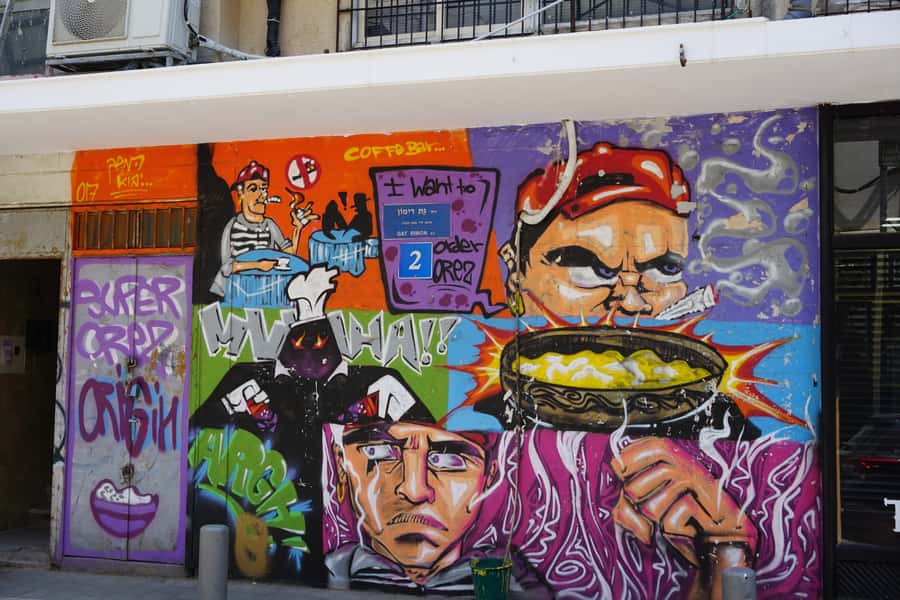
You’ll pick between two walking areas, and your experience will feel different depending on the route.
Florentine is the classic choice if you want to feel like you’re inside Tel Aviv’s art-and-street-culture engine. This route tends to give you that wall-to-wall feeling—more tags, murals, and layered visuals packed into streets and alleyways. If you like discovering artwork in corners and side streets, this is the route that rewards slow looking.
Ha’Mesila Park is often a better fit if you want a slightly more linear, park-adjacent experience while still staying in the street art conversation. You can get a similar “see it, then decode it” approach, but with a different pace and backdrop. If you’d rather have a walk that feels less like you’re threading a maze, this route might suit you.
Either way, the tour language stays friendly for English speakers, with English and Hebrew offered by the guide.
What Your Guide Teaches You About Graffiti Meaning
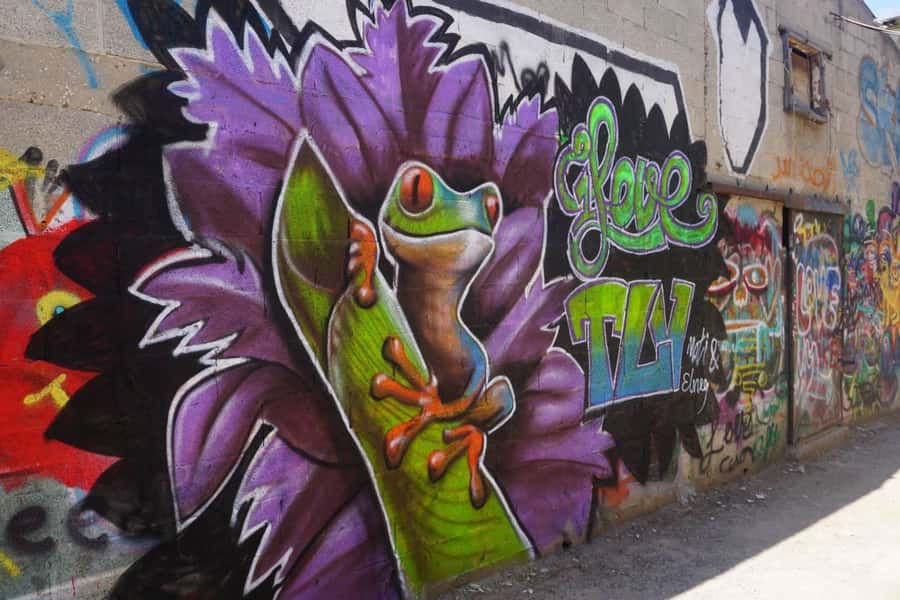
The tour’s big strength is that it teaches you how to think about graffiti. You’re not only learning what the images look like—you’re learning the logic behind them.
Here’s what you can expect your guide to cover:
- History of graffiti as an evolving form, so you understand it’s not a single style but a moving target.
- Philosophical and psychological angles, like why people feel driven to leave marks in public and what that does to how others perceive the neighborhood.
- Economic aspects of urban art, including how visibility, attention, and real-world city pressures affect what gets made and what lasts.
- Different styles, explained in practical terms so you can spot the differences when you see them on your own later.
This matters because street art is usually seen at speed. On your own, you might treat it like scenery. With the guide’s explanations, you’ll start asking better questions: What kind of artist is this likely to be? Is it trying to communicate something, claim space, or simply be seen? Is the piece part of a larger visual language?
And because the tour is guided by someone who lives close to the scene, the talk tends to feel grounded. In one story shared from a past group, Shir’s street art is described as appearing across Tel Aviv, and his passion and first-hand experience turned the walk into a real case study. That’s the difference between hearing about street art and learning to read it.
Walking the Walls: What You’ll See Along the Route
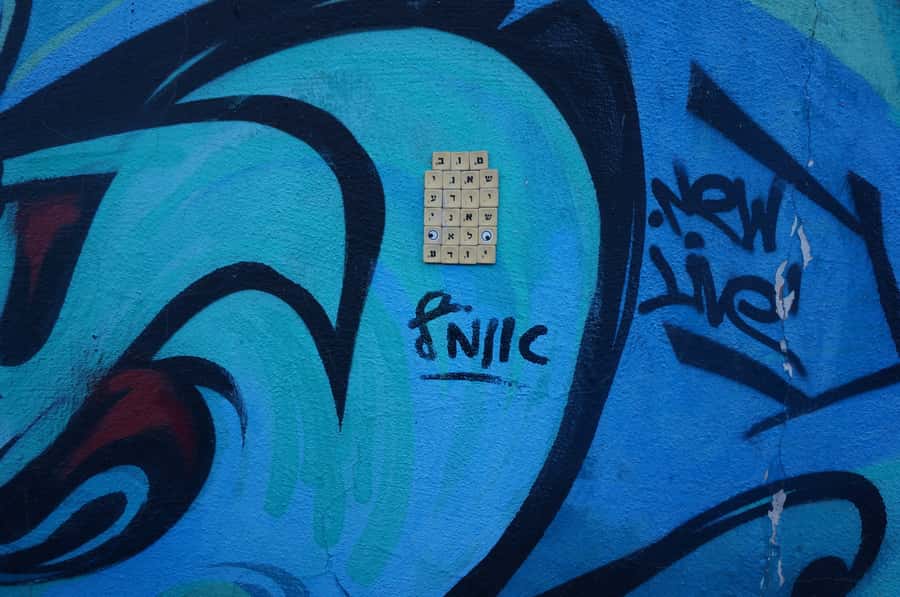
You’ll spend your time moving through streets and alleyways where graffiti covers public walls. The exact pieces will depend on what’s there on the day, but the tour is designed so you won’t just see one type of art. You’ll likely encounter a mix of:
- Large-scale murals that are meant to be read from a distance
- Smaller works and tags that function more like signatures
- Layered walls, where multiple artists have left marks over time
- Different visual styles, which your guide will help you distinguish
A key part of the experience is learning to notice details you’d otherwise miss. For example, you’ll get help understanding the “language” of the streets—the idea that the visual choices are not random. Your guide points out how style can communicate mood, credibility, or message, and how artists build a recognizable approach.
One of the most memorable elements from previous groups was how a guide revealed his own graffiti identity during a stop at one of his originals. Even if you don’t get that exact moment, it’s a good sign of the tour’s overall feel: it’s not just facts. It’s also lived proximity to the scene.
Your 90 Minutes to 2 Hours: How the Walk Feels
This is a short-to-medium tour, typically 90 minutes to 2 hours. That timing is ideal if you want a focused street lesson without eating an entire morning or afternoon.
In practice, expect the flow to go like this:
- A start where your guide frames what you’re looking for. You’ll get context on what makes Tel Aviv street art distinct and what themes to listen for.
- A steady walking phase through the neighborhood. You’ll move block by block, seeing art up close rather than spotting it from far away.
- Stop-and-talk moments. Your guide pauses at selected pieces to explain styles and meanings and connect them back to the broader topics: history, psychology, philosophy, and economics.
- A closing that leaves you with street-art tools. You should finish with better instincts for interpreting what you see after the tour ends.
The walking pace matters because it’s easy to miss things if you’re speed-walking. I’d plan to go at a pace that lets you stop for a few seconds when your guide points something out. You’ll get more from the experience if you treat it like a slow scan of the city’s visual communication system.

Price and Value: Is $58 Worth It?
At $58 per person, this isn’t a bargain-hour sightseeing add-on. It’s priced like a guided education experience with a local specialist.
For the money, you’re getting:
- A local English-speaking guide (with English and Hebrew support)
- A guided focus on street art, graffiti styles, and the ideas behind them
- Time in two different Tel Aviv art zones, depending on your route selection
- A structure that helps you learn to read the scene, not just look at it
So the value depends on your motivation. If you love urban art and want real context, this will feel like a smart use of time. If you mostly want a quick photo walk and don’t care about meaning, the price might feel steep for a short street stroll.
My advice: book it if you want to come away with a new skill. This tour is designed to give you that—by the time you leave, you’ll likely notice graffiti “grammar” you would’ve missed before.
Group Size and the Minimum-People Reality
This tour runs with a minimum of 6 participants. That’s not something you can ignore, especially if you’re visiting off-season or on a less busy date.
If you’re the type who hates waiting around for last-minute group decisions, it’s worth checking the date availability before you lock in other plans. The good news is that the tour is designed to be wheelchair accessible, so the setup is aware of a wider range of mobility needs than you might guess for an alley-and-wall experience.
Who This Tour Is Best For
This is a strong match if you’re any of the following:
- You like street art but want to understand it, not just photograph it
- You enjoy tours led by locals who know how the scene works day to day
- You’re traveling with teens or friends who get curious when the guide explains the logic behind what they see
- You prefer guided walking experiences over museum-style content
- You want a cultural lens on Tel Aviv that goes beyond old-city landmarks
It’s also a decent choice if you care about how public art intersects with psychology and society. The guide’s approach includes those bigger questions, which makes the walk feel more thoughtful than a typical graffiti tour.
Practical Tips Before You Go
A few small things will make the experience smoother:
- Wear comfortable walking shoes. You’ll be moving through streets and alleyways.
- Bring your phone for photos, but also be ready to look without always filming. The best moments come when you actually take in the details your guide points out.
- If you’re multilingual in your group, great. If you’re not, don’t worry—English is supported, and guides are used to making sure the discussion includes non-Hebrew speakers.
- Plan for no included food or drinks. Do a quick snack beforehand, or map a nearby bite for after the tour.
Should You Book This Tel Aviv Street Art and Graffiti Tour?
If you want more than a photo stop, I’d book it. This tour gives you a way to read the city’s walls: styles, artist roles, and the why behind graffiti’s persistence in public space. With the guides described in past groups, you can also expect humor and real engagement—one guide even reportedly connected the story to his own graffiti work during a stop, which adds a satisfying layer of authenticity.
Skip it only if you’re looking for a casual, minimal-effort stroll. For that, you can always wander on your own. But if you want the scene translated into something you can understand, this is one of the better bets for Tel Aviv.
FAQ
How long is the Tel Aviv Street Art and Graffiti Tour?
It typically runs for 90 minutes to 2 hours.
Where does the tour take place?
It takes place in central Tel Aviv, with two route options: Florentine neighborhood or Ha’Mesila Park.
What languages are offered?
The tour is guided in English and Hebrew.
Is food or drinks included?
No. Food and drinks are not included.
Is there a minimum number of participants?
Yes. The tour is subject to a minimum of 6 participants.
Is the tour wheelchair accessible?
Yes, it is wheelchair accessible.
Where is the meeting point?
The meeting point may vary depending on the option booked.
What are the cancellation and payment options?
You can cancel up to 24 hours in advance for a full refund, and there is a reserve now & pay later option.