REVIEW · OSAKA
Urban Canvas: Osaka Street Art Bike Tour
Book on GetYourGuide →Operated by InKansai Ltd · Bookable on GetYourGuide
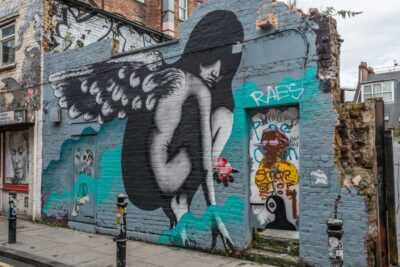
Osaka’s street art shows up where you’d least expect. This Urban Canvas bike tour takes you through Tenma, Juso, and Nakazaki-cho to see local and international murals and tags on real neighborhood walls, not staged spots. I also like that you get a guided ride plus hands-on time to photograph the art while the city around you shifts from neon-heavy corridors to quieter side streets.
What makes it click is the mix of street art and street-level context. Your English-speaking guide (and local voices along the way) points out how the city’s underground life and late-night atmosphere connect to the walls you’re riding past. I especially enjoy how the route crosses the Yodo River into Juso, where you get a strong feel for Osakan architecture, layered infrastructure, and a neighborhood that feels active but not overrun by tourists.
One thing to consider: this is a bike tour with a few logistics that matter. It’s not set up for wheelchair users or people with mobility impairments, and if rain odds hit 60%+ the tour cancels and you’ll need to be reachable for rescheduling or a refund.
In This Review
- Key things you’ll notice on the Urban Canvas bike ride
- Why Osaka’s street art looks different on two wheels
- Meet at Tenmabashi and plan for 270 minutes of cycling
- Tenma streets: graffiti, train lines, and a fast way to get your bearings
- Crossing the Yodo River into Juso’s street-art core
- Coffee and standing bar stops: the softer side of the underground talk
- Nakazaki-cho: boutiques, galleries, and the 100-year-old pizza break
- How the biking pace and photo stops really work
- Price and value: is $87 actually fair for this format?
- Who should book, and who should think twice
- Should you book this Urban Canvas Osaka Street Art Bike Tour?
- FAQ
- How long is the Urban Canvas Osaka Street Art Bike Tour?
- Where do I meet for the tour?
- Is the tour guided in English?
- What’s included in the price?
- Is it suitable for children?
- What happens if it rains?
Key things you’ll notice on the Urban Canvas bike ride
- Small group size (max 6) means you can actually ask questions about what you’re seeing.
- Street art by local and international artists, with lots of time to stop and shoot photos.
- A Yodo River crossing into Juso, where urban architecture and neighborhood energy change fast.
- Local resident commentary on Osaka’s underground life and how street art fits in.
- Coffee and an old-school standing bar vibe in the Juso area.
- Pizza slice stop in a 100-year-old building to keep the ride feeling fun, not rigid.
Why Osaka’s street art looks different on two wheels
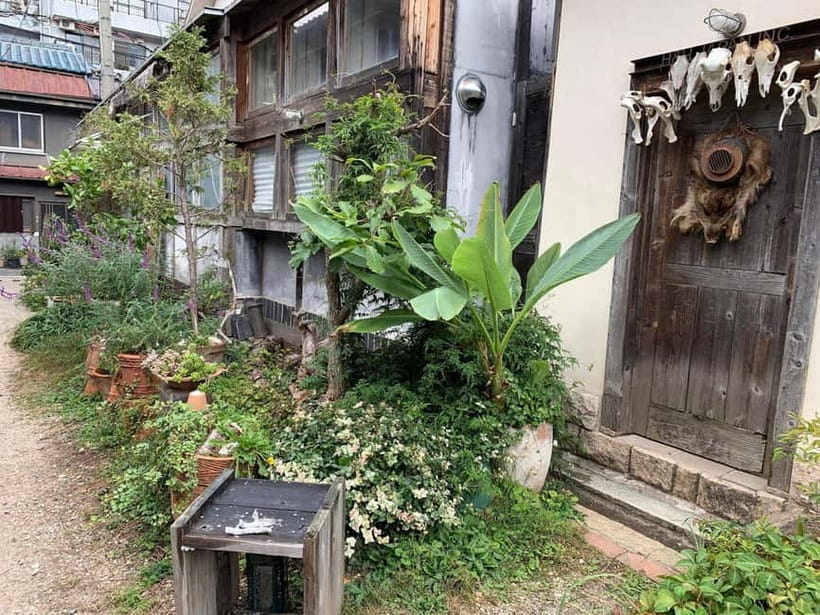
If you only see Osaka from the main thoroughfares, street art can feel like a side note. This tour forces the opposite. You ride into Tenma, Juso, and Nakazaki-cho, where graffiti, murals, and smaller pieces live right alongside train lines, bridges, rivers, and the practical stuff of daily life.
That matters. Street art here isn’t floating in a gallery mood. It’s tied to real foot traffic and real walls—industrial edges, underpasses, building fronts, and corridor-like streets where sound and movement bounce around. On a bike, you move at a pace that lets you register details without feeling like you’re sprinting between stops.
Also, you’re not stuck with one style of art. Expect the city’s street canvas to include work by both local and international artists, so the visual “language” feels broader than what you’d usually find in one tight neighborhood loop.
You can also read our reviews of more cycling tours in Osaka
Meet at Tenmabashi and plan for 270 minutes of cycling
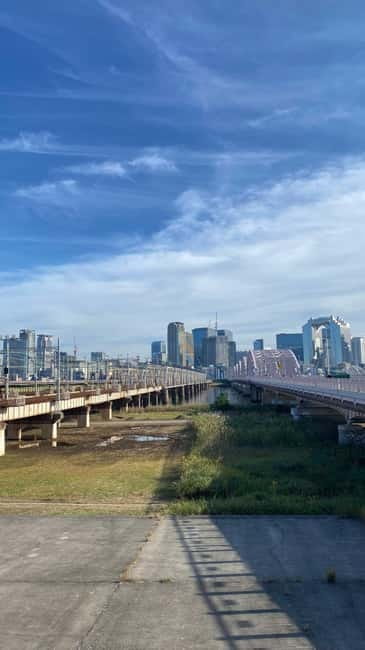
The meeting point is easy to miss if you’re rushing: you’ll meet about 10 minutes’ walk from Tenmabashi station on the Osaka Metro or Keihan Line. There’s no hotel pickup, so build in buffer time so you don’t arrive out of breath.
This is a 270-minute tour—about four and a half hours total. That time includes riding time plus stops for photos and snacks. The group stays small, limited to 6 participants, and you get an English live guide. Bikes, helmets, the guided tour itself, water, and a pizza slice are included, which is a big part of why the price feels reasonable (more on that later).
Bring:
- Comfortable shoes
- Camera
- Comfortable clothes
The tour doesn’t allow smoking, and it’s best to show up ready to ride. If you’re the type who likes lingering, the good news is the pace is set to allow pauses for looking and photographing.
Tenma streets: graffiti, train lines, and a fast way to get your bearings
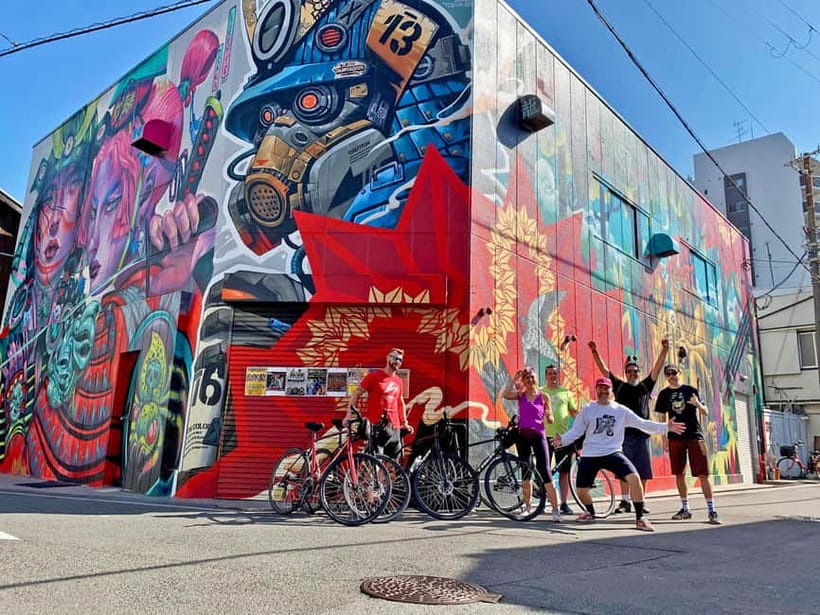
Tenma is a strong start because it’s not trying to impress you. It’s working-class Osaka energy—streets that feel lived-in, edges that show wear, and walls that look like they’ve been collecting art for years.
On the bike, you’ll start noticing the city’s pattern: the way train lines and bridges shape street routes, how narrow lanes connect to wider arteries, and how rivers cut through the urban grid. Even when you’re focused on the artwork, you start understanding how Osaka’s transport and architecture create the spaces where street art can thrive.
One practical detail I’d keep in mind: Osaka streets can be visually busy. Your guide’s job isn’t just pointing at art—it’s helping you read it. When there are multiple layers of tags, stickers, and murals in one frame, you want someone who can tell you what you’re actually looking at and why it’s there.
Crossing the Yodo River into Juso’s street-art core
The standout shift comes when you head over the Yodo River into Juso. The river crossing isn’t just scenic. It’s a line in the city’s map—on one side you’re in a different mood, and on the other side you’re in one of Osaka’s centers for street art.
Juso also feels like a neighborhood you can’t fake. It has that gritty-but-stylish Osakan rhythm: movement, shops, side streets, and walls that keep showing new work as you turn corners. And it’s close to the main city, which is part of the surprise—this area has serious urban energy but still feels under-visited compared to the usual tourist routes.
A key piece of the tour is that you’ll get commentary from a local resident about underground life and the local street art scene. That context changes how you interpret the art. Instead of seeing it as decoration, you start seeing it as part of the neighborhood’s social texture—where creativity, anonymity, and nightlife culture can overlap.
You’ll also see examples of urban architecture along the way. Think bridges, river-adjacent structures, and modern skylines all meeting older street layouts. The bike format helps because you’re not looking at it from one static viewpoint—you’re moving through it.
Coffee and standing bar stops: the softer side of the underground talk
Street art tours can be purely visual. This one balances the art with little moments that feel like you’re being shown how locals actually unwind.
In the Juso portion, you’ll have time for specialty coffee and an old school standing bar vibe. The standing bar detail matters because it’s a kind of Osaka social rhythm—quick conversations, casual energy, and a place where you can observe everyday life without it turning into a formal show.
This is also where the tour’s talk about underground life starts to make sense. When you learn how people spend time in areas that aren’t always on the main tourist radar, you’re better equipped to understand why certain kinds of street art show up where they do—and why they can be both personal and public at the same time.
If you’re someone who likes photos, these pauses are also helpful. You can reframe what you’ve shot. Instead of chasing the next mural, you get a short reset so you notice patterns—colors repeating, themes showing up, and different artists layering their work into the same neighborhood canvas.
Nakazaki-cho: boutiques, galleries, and the 100-year-old pizza break
After Juso’s street-art focus, you’ll head into Nakazaki-cho, which shifts the mood toward a hipper enclave. This is where you start seeing more boutique shops and galleries mixed in with the urban grit.
It’s a good balance: you keep the art theme, but the neighborhood vibe becomes more playful and design-forward. You’ll likely notice how the wall art changes with the surroundings—pieces that feel more connected to galleries and smaller creative spaces, alongside the broader street-level graffiti culture.
Then comes the food stop, and it’s not an afterthought. You’ll visit a local institution that serves pizza slices inside a 100-year-old building. That’s a great choice for a couple reasons:
- It’s easy fuel for a long ride.
- It keeps the tour grounded in Osaka’s everyday culture—aging buildings still working, still serving, still pulling people in.
I like food stops like this because they feel specific to the place, not a generic tourist lunch. Pizza is familiar enough to satisfy, and the setting makes it feel part of the street scene.
How the biking pace and photo stops really work
This tour is built for a comfortable rhythm. You’re biking through a web of train lines, rivers, bridges, graffiti, street art, and modern skylines—so the route isn’t just flat sightseeing. It’s a moving panorama that constantly changes your angle.
One detail worth planning around: riding on city streets always takes focus. Even if the pace is friendly, you’ll want to stay aware at turns and at crossings. Your guide helps with safety and timing, and the small group size means it’s easier to keep everyone together without turning the tour into a sprint.
In past group experiences, riders have covered around 23 km across the full outing, at a steady tempo with photography time and short breaks. That’s the kind of distance where decent shoes and a calm mindset matter. If you expect a leisurely stroll, you’ll feel the ride. If you’re comfortable cycling through neighborhoods, you’ll probably enjoy the momentum.
Price and value: is $87 actually fair for this format?
At $87 per person for about 4.5 hours, the value comes from what’s included and what’s not.
Included:
- Bike + helmet
- Local guide (English)
- Water
- Pizza slice
- The guided street art tour itself
Not included:
- Hotel pickup/drop-off (you handle getting to the start)
Here’s how I see the math. If you subtract bike/helmet and guided time, you’re basically paying for an English-speaking guide to route you through three neighborhoods, coordinate safety, and provide context so you don’t just see art—you understand what you’re photographing. Add in the food stop (pizza in a 100-year-old building) and a water bottle, and the cost starts to feel like paying for structure, access, and time rather than just transport.
The small group limit is also part of the value. You’re not one of dozens. You can ask questions and get answers instead of watching from the back.
Who should book, and who should think twice
This tour fits best if you:
- Like street art but want it connected to place and people
- Prefer biking over walking long distances
- Enjoy cities where neighborhoods feel different only a few bridges apart
- Want an English guide to explain what you’re seeing
It’s not a fit if you:
- Need wheelchair access or have mobility impairments (not suitable)
- Are traveling with young kids—children under 10 aren’t recommended, and the activity notes say children under 13 aren’t recommended to participate
Weather is another factor. If rain odds are higher than 60% during the tour, the operator cancels and offers a different date or a full refund. Make sure you can be reached when that decision is made.
Should you book this Urban Canvas Osaka Street Art Bike Tour?
I’d book it if you want Osaka that feels real: working neighborhoods, street art with context, and a bike route that makes the city’s geometry—rivers, bridges, rails—part of the story. The combination of Juso street art focus, a local resident’s commentary about underground life, coffee/standing bar stops, and that 100-year-old pizza stop makes this more than just photos on a wall.
I’d skip it if you’re uncomfortable biking in city traffic, you need accessibility support, or you’re traveling with younger kids. And if weather makes you nervous, keep an eye on the forecast and plan to be reachable.
If you’re a photography person, a street art fan, or you simply want to see a side of Osaka most people miss, this is a strong use of your time.
FAQ
How long is the Urban Canvas Osaka Street Art Bike Tour?
The tour lasts 270 minutes.
Where do I meet for the tour?
You’ll meet about 10 minutes’ walk from Tenmabashi station (Osaka Metro/Keihan Line).
Is the tour guided in English?
Yes. The live tour guide speaks English.
What’s included in the price?
Included are the bike, helmet, the bike tour with a local guide, pizza slice, and water.
Is it suitable for children?
Children under 10 years are not recommended, and children under 13 years are not recommended to participate.
What happens if it rains?
If the chance of rain is higher than 60% during the tour time, the tour is canceled and you’ll be offered a different date or a full refund. You’ll need to be reachable.