REVIEW · FLORENCE
Accademia Gallery Ticket and audio-guide
Book on Viator →Operated by CAF Tour and Travel · Bookable on Viator
Skip the ticket lines and get to Michelangelo fast. This Accademia Gallery ticket + audio setup is built around guaranteed entry time and letting you explore at your own pace while you learn the stories behind the works.
I especially like that the ticket is handled for you. An assistant meets you at the entrance area, helps with multilingual support, and delivers your admission at the museum rather than making you hunt through paperwork.
The main thing to consider: there’s no in-person guide, and the entry time is fixed. If you’re late for the meeting/check-in time, you can lose access to that time slot, and the ticket entry can’t be rebooked on the spot.
In This Review
- Quick Take: What You’ll Really Notice
- Accademia Gallery Tickets and Audio Guide: What You’re Buying in Plain Terms
- Where this ticket setup pays off
- Entering Galleria dell’Accademia: David Time With Less Stress
- What to expect once you’re inside
- One practical tip for your first minutes
- Michelangelo’s Other Works: The Sculptures That Explain the Mastery
- I Prigioni (The Prisoners)
- San Matteo
- The Palestrina Pietà
- Renaissance Paintings in the Mix: Botticelli, Uccello, and Ghirlandaio
- What the audio helps you catch in paintings
- A word on attention: the museum can skew more intense than expected
- Audio Guide Reality Check: Making the Most of It
- When audio navigation feels frustrating
- Headphones help in a crowd
- Meeting Point, Timed Entry, and Why Being On Time Matters
- The strict part you must respect
- Crowds get worse later
- Price and Value: Is $56.60 Worth It?
- When the price might feel high
- Who This Is Best For (and Who Might Want to Skip It)
- Families with kids
- Should You Book This Accademia Audio-Guide Ticket?
- FAQ
- What is included in the Accademia Gallery ticket and audio-guide experience?
- Is there an in-person guide during the visit?
- What languages is the audio available in?
- How long should I plan to spend inside the museum?
- What happens if I’m late to the meeting point?
- Can I change my entry time after booking?
- How many people are in the group?
- Are there age rules for the audio guide?
- What is the cancellation window for a refund?
Quick Take: What You’ll Really Notice
- Timed entry that reduces waiting at a very popular museum
- Audio guide in multiple languages so you control the pace
- Ticket delivery by an assistant near the entrance
- No traditional guided tour after check-in
- About 3 hours is a realistic visit window if you want to actually look
Accademia Gallery Tickets and Audio Guide: What You’re Buying in Plain Terms
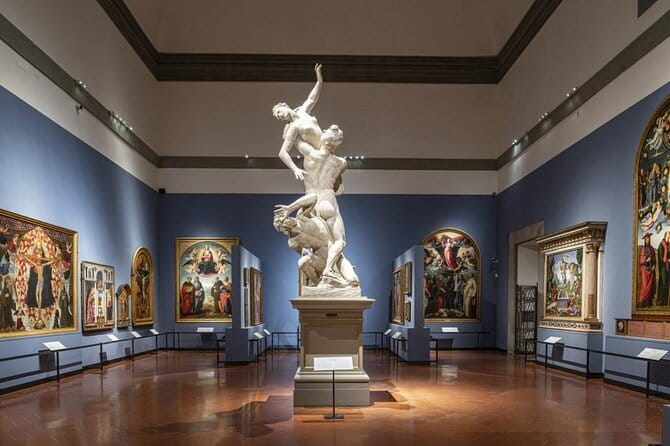
Florence has a talent for making famous sights feel like a crowd sport. The Accademia Gallery, home to Michelangelo’s David, is one of the places where “we’ll just go when we get there” can turn into a long, stressful wait.
This experience is basically the practical antidote. You get a pre-booked time slot so you can avoid the ticket office crush, and you get an audio guide so you’re not staring at masterpieces with zero context. The format is simple: you meet, receive your ticket, then you head in and use the audio at your own speed.
The visit is designed to be manageable. Duration is listed at about 3 hours, and the group size is kept small (maximum 6 travelers). Even though it’s self-guided after check-in, that small number helps with the meeting point flow, so you’re less likely to get tangled up in a big boarding-line moment.
A few more Florence tours and experiences worth a look

Where this ticket setup pays off
The value is strongest if you want two things at once:
- Fast entry so you don’t lose your best energy to queueing
- Context while you walk, so the David and surrounding sculptures and paintings make more sense
It also tends to suit people who prefer not to rush. With audio, you can pause, go back, and linger when a detail grabs you.
Entering Galleria dell’Accademia: David Time With Less Stress
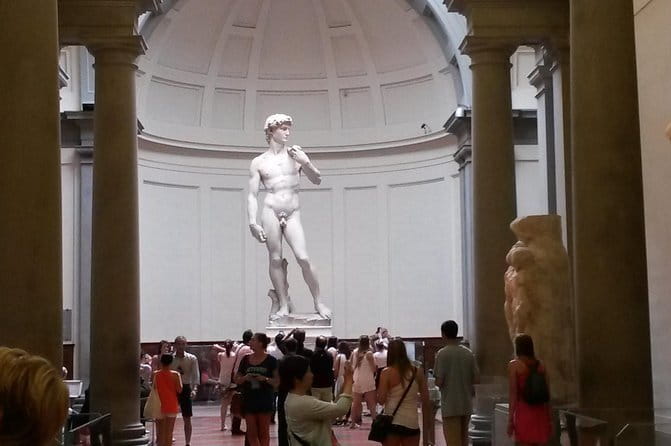
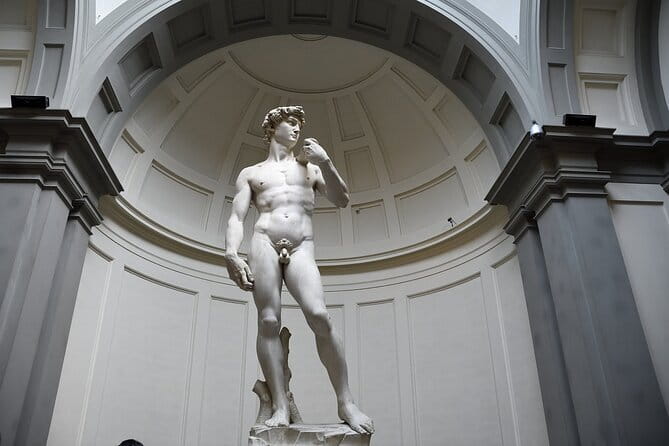
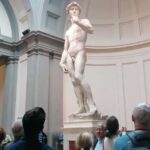
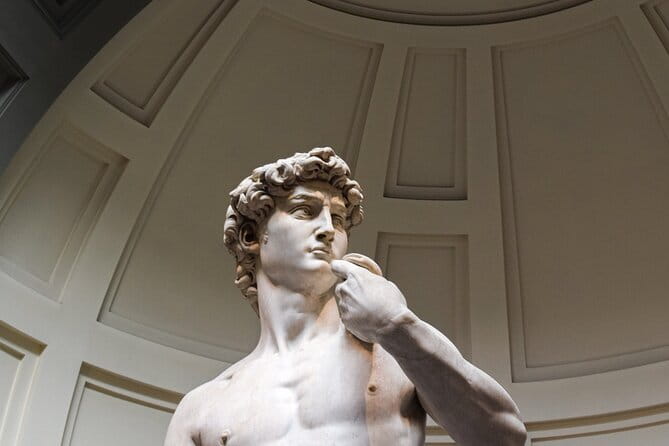
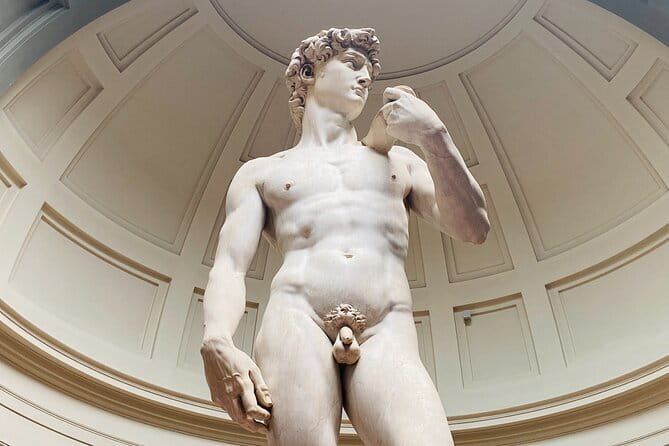
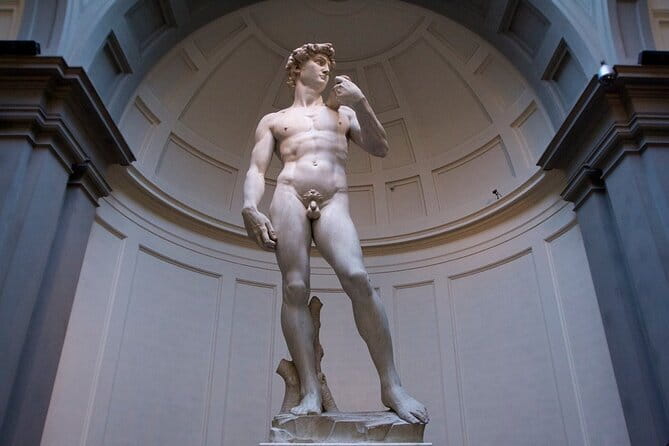
Your main stop is the Galleria dell’Accademia, where the museum’s most famous piece is also its biggest magnet: Michelangelo’s David. This is the sculpture everyone recognizes before they even walk in.
What I love about the way this experience is structured is that it focuses your visit around that moment, but doesn’t reduce the museum to one statue. You’re not just buying a ticket to see David from a distance. The audio and the visit flow are meant to help you connect David to the surrounding works, so you understand what makes this piece such a turning point.
What to expect once you’re inside
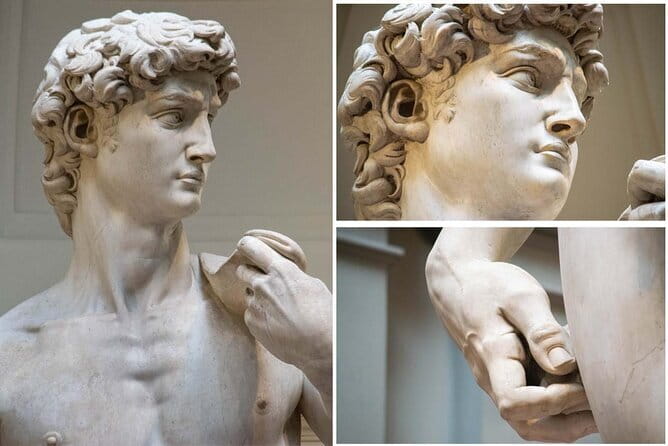
David dominates attention, but don’t treat it like a photo stop only. When you’re viewing it in person, it helps to know the work’s origin story and the fact that Michelangelo carved it from a large block of rough marble over several years. That timeline matters because it frames the sculpture as labor, not luck.
Also, David sits inside a broader museum story. The visit is set up to include other key sculptures and paintings, not just the headline.
One practical tip for your first minutes
Arrive mentally ready to shift gears. David is overwhelming, so the trick is to give yourself permission to look twice:
- First pass: take in proportions and posture
- Second pass: slow down and notice how the work was built in layers of detail
If you go straight into a long read of labels, you might miss the impact of standing in front of the sculpture. If you skip looking entirely, you lose the payoff. Audio helps you land in the middle.
You can also read our reviews of more guided tours in Florence



Michelangelo’s Other Works: The Sculptures That Explain the Mastery
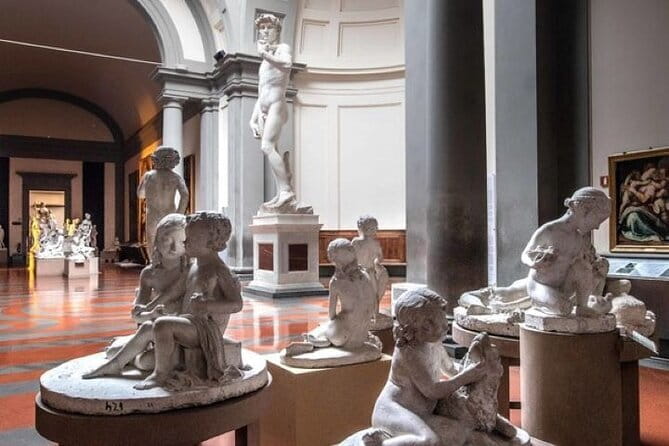
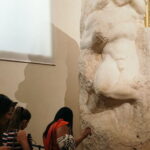
David is the anchor, but the museum experience here includes several other important works mentioned in the visit content: I Prigioni, San Matteo, and the Palestrina Pietà.
Here’s why that matters. Once you know a bit about these pieces, you start seeing Michelangelo as a system of ideas rather than a single miracle sculpture. The audio guidance gives you a way to connect technique, subject, and mood across different works.
I Prigioni (The Prisoners)
These sculptures are often a strong follow-up to David because they show Michelangelo’s approach to form and tension. Even if you don’t know the official names right away, you’ll likely feel the emotional pull: bodies caught in a moment between freedom and restraint. That contrast makes the transition from David smoother and more meaningful.
San Matteo
San Matteo adds a different texture to the visit. It’s another chance to notice how Renaissance sculpture blends physical presence with spiritual or narrative weight. Pairing it with David helps you see that Michelangelo wasn’t only chasing hero figures. He was also shaping religious and human meaning.
The Palestrina Pietà
The Pietà theme brings a quieter tone, and it can be an ideal reset after the intensity of David and the muscular drama of the prisoners. If you’re the type who gets museum-fatigue, building your attention around these tonal shifts keeps the experience from feeling one-note.
Renaissance Paintings in the Mix: Botticelli, Uccello, and Ghirlandaio
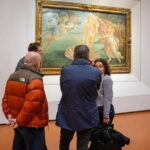
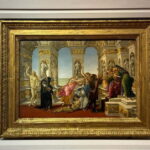
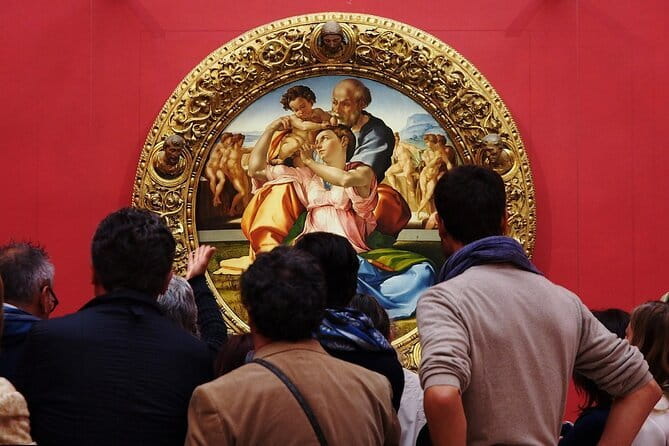
The Accademia Gallery isn’t only sculpture. The content focus here also includes paintings from the 15th–16th centuries and High Renaissance works. On your audio-guided visit, you’ll be pointed toward major names such as Sandro Botticelli, Paolo Uccello, and Domenico Ghirlandaio.
This matters because it changes how the museum feels. You’re not just walking through a sculpture cathedral; you’re tracking how different Renaissance artists approached stories, space, and human expression.
What the audio helps you catch in paintings
Paintings can be tricky when you don’t know what you’re looking for. Audio guidance helps you understand what’s special about each work without needing to read every label. That’s useful in a crowded setting, where you often have to look, learn, and move at the same time.
A word on attention: the museum can skew more intense than expected
One review note flagged that there was a lot of musical history in the audio content. That doesn’t mean the experience is wrong—it just means you should know the audio may spend time on context that isn’t strictly about painting and sculpture interpretation. If you’re someone who prefers pure art analysis, keep that in mind and be ready to skim the audio when you want more direct visual focus.
Audio Guide Reality Check: Making the Most of It
The audio guide is a big part of this experience, but it’s also where expectations can get tricky.
First, the audio guide content is described as the official museum audio recordings. That means the structure and navigation are controlled by the museum system, not by a private escort building a custom route for you.
Second, you should plan to use it actively. Don’t just press play and wander. A few practical habits make it work better:
- Stop at a work, start listening, then look back at what you just heard
- If you’re unsure where you are in the museum layout, slow down and re-orient before you walk on
- Bring your focus back when crowds compress your movement
When audio navigation feels frustrating
One concern raised was that the audio doesn’t automatically help you follow a clean route by room order. You might find yourself thinking, Where am I in the sequence? If you want the museum to feel like a checklist, you may need to work a bit more on your bearings.
My advice: before you get deep into listening, do a quick orientation. Pick a reference point, then let the audio guide your stopping pattern instead of treating it like a GPS.
Headphones help in a crowd
Even when the audio device is working well, the environment is busy. If the museum is crowded, headphones make everything smoother because you won’t have to adjust volume or repeat audio over other noise.
Meeting Point, Timed Entry, and Why Being On Time Matters
This ticket includes admission plus the reservation fee, and you’re promised guaranteed museum entry time. The practical twist is that you don’t just show up whenever. You have a fixed entry time attached to your booking.
An assistant meets you at the meeting point near the entrance area and provides your admission ticket there. That’s designed to help you avoid the ticket line where things usually bog down.
The strict part you must respect
If you arrive late to the meeting/check-in time, it says you may not be able to get the timed entry ticket, and you won’t have refund or reschedule options provided under those circumstances. So set an extra buffer.
This is one of those Florence days where you should treat timing like a museum rule, not a suggestion.
Crowds get worse later
A consistent theme is that the museum can become more crowded as the day goes on. If your schedule allows it, go early. You’ll likely spend less time squeezed in place and more time actually seeing art.
Price and Value: Is $56.60 Worth It?
At $56.60 per person, this is not a bargain ticket. So the question is: what are you paying for, exactly?
Here’s the value math in real terms:
- You’re paying for skip-the-line style access through pre-booking
- You’re paying for the audio guide experience included in the package
- You’re paying for ticket delivery by an assistant, so you’re not stuck figuring out where to go while the crowd presses
What you’re not paying for is an in-person guide. That means if you’re the kind of traveler who wants a live educator leading every step, you won’t get that here.
Still, for many people, the price is fair because the Accademia is one of the museums where time and stress matter. If you’ve ever stood in an Italian ticket line with your vacation minutes evaporating, you know why pre-booked entry feels worth it.
When the price might feel high
If you already have a strong plan to buy tickets quickly on your own and you’re comfortable using audio without help, you might compare costs and decide to DIY. But if you want your entry smoother and your audio ready to go from the start, this package aims to deliver that.
Who This Is Best For (and Who Might Want to Skip It)
This setup is best for people who:
- Want timed entry to avoid waiting
- Like to explore at their own pace with an audio guide
- Are comfortable navigating a museum without a live guide
It may not be ideal if you:
- Expect a traditional guided tour with a person leading you
- Need the audio to have room-by-room tracking to feel comfortable
- Plan to arrive late or hate time-locked tickets
Families with kids
Children must be accompanied by an adult. Also, the audio guide is not available for children under age 6. If you’re traveling with very young kids, plan accordingly.
Should You Book This Accademia Audio-Guide Ticket?
Book it if your goal is simple: get into the Accademia smoothly, spend about 3 hours looking seriously, and have multilingual audio explain the works as you move. The value is strongest when you care about avoiding lines and you don’t need a live guide.
Skip it if you want a live host steering your pace, or if you’re very sensitive to the idea that audio navigation might not map perfectly to the museum room order. Also, if you know you might be late, don’t gamble on a strict time window.
If you do book, my last piece of advice is practical: plan to arrive early enough for the meeting/check-in time. Then use the audio in short bursts—listen, look, then move. That rhythm helps you get the emotional punch of David and still understand the rest of the museum without feeling lost.
FAQ
What is included in the Accademia Gallery ticket and audio-guide experience?
You get an entrance ticket and a museum reservation fee, with a guaranteed entry time. You also get multilingual assistance at the meeting point and an audio-guide commentary in your own language.
Is there an in-person guide during the visit?
No. This experience includes ticket entry and an audio guide, plus assistance at the meeting point, but it does not include an in-person tour guide inside the museum.
What languages is the audio available in?
The audio guide commentary is available in multiple languages, and the experience is offered in English.
How long should I plan to spend inside the museum?
The duration is listed as approximately 3 hours.
What happens if I’m late to the meeting point?
It’s mandatory to arrive at the meeting point at the check-in time. If you’re delayed, you may not be able to get the timed entry ticket and museum access, and you won’t be eligible for a refund or reschedule.
Can I change my entry time after booking?
No. The museum ticket has a fixed entry time that cannot be changed after booking.
How many people are in the group?
The experience has a maximum of 6 travelers.
Are there age rules for the audio guide?
Children must be accompanied by an adult. The audio guide is not available for children under the age of 6.
What is the cancellation window for a refund?
The info provided says you can cancel up to 48 hours ahead for a refund, but the cancellation policy text also states free cancellation with a full refund if you cancel at least 24 hours in advance. Check your booking confirmation for the exact cutoff that applies locally.