REVIEW · ROME
Rome Key Sights Golf Cart Tour | Private & Groups
Book on Viator →Operated by Golf Cart Italy · Bookable on Viator
If Rome feels huge, this tour helps.
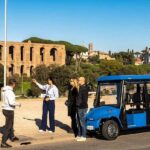
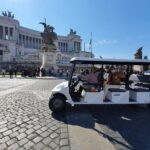
An electric golf cart tour turns the “must-see” list into an easy route, so you spend less time crossing Rome and more time actually looking. I like that you get guided context while you’re rolling between Spanish Steps, Trevi Fountain, and the Pantheon, plus quick stops that work well when time is tight.
I also like the pacing. Stops are short but generous enough for photos and a quick look, and you can still add a pasta tasting upgrade at the end if you want a more relaxed finale at the Colosseum area. You’re either in a small group (often described as seven travelers) or you can book privately.
One thing to consider is that this is a highlights-and-photos format, not a slow museum day. Many stops are quick (often around 5 to 15 minutes), and the Pantheon requires an admission ticket that isn’t included, so you’ll want to plan for that before you get there.
In This Review
- What Makes This Golf Cart Tour Work in Rome
- Meeting Point at the Colosseum Area: Easy Start, Easy End
- Piazza di Spagna and the Spanish Steps: The Classic Photo Moment First
- Fashion Streets Between Stops: A Break From the Monuments
- Trevi Fountain: Quick, Iconic, and Designed for Photos
- Pantheon: Architecture Time (and the One Ticket You Must Plan For)
- Piazza Navona: Baroque Square Energy Without the Full-Day Commitment
- Via Giulia: A Street That Explains Rome’s Urban Planning
- Tempio Maggiore di Roma and the Jewish District Area
- Tiber Island and Trastevere: Rome Beyond the Main Drag
- Mouth of Truth Area: A Myth With Real-World Connections
- Piazza dei Cavalieri di Malta: The “Wait, What Is This Place?” Stop
- Giardino degli Aranci (Orange Trees Garden): One of Rome’s Best Views for Free
- Circo Massimo: Ancient Rome You Can Feel Without Going Inside
- Ending at Piazza del Colosseo and the Optional Pasta Tasting
- Price and Value: What You’re Paying For
- Who This Tour Suits Best (and Who Might Want Something Else)
- Should You Book This Rome Golf Cart Tour?
- FAQ
- How long is the Rome Key Sights Golf Cart Tour?
- Is the tour available in English?
- How many people are on the tour?
- Are admission tickets included?
- What’s included in the pasta tasting upgrade?
- What if weather is bad or plans change?
What Makes This Golf Cart Tour Work in Rome
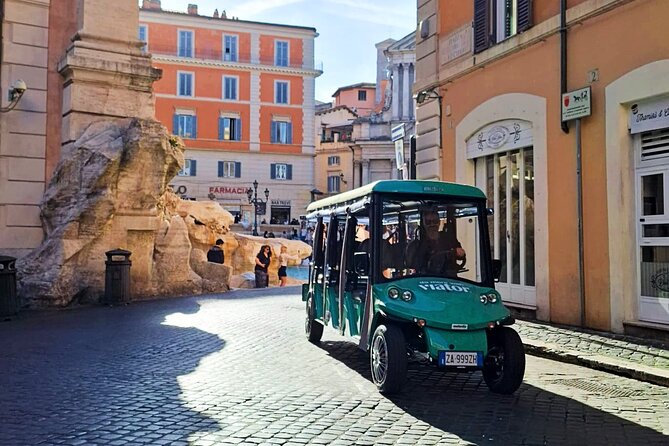
- Electric cart, real time-saver: You connect multiple central sights without the constant walking, stair-climbing, and street-crossing that can drain a short visit.
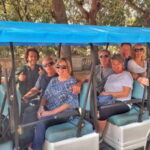
- Small group feel: The tour can run as a small group (not a giant bus), and private options are available if you want a custom pace.
- Built for photos: Several stops are designed for quick “park, look, shoot, move on” moments—especially Trevi Fountain and the Spanish Steps area.
- Guides handle city chaos: One driver example was able to get the group to sights even during a protest/strike disruption, which matters in Rome.
- Optional pasta tasting: If you upgrade, you end with three traditional Roman dishes, turning the last part of the tour into food time instead of just sight time.
- A route through classic neighborhoods: You’re not only hitting big monuments; you also pass through areas like Trastevere and the Jewish district area around the Tempio Maggiore di Roma.
Meeting Point at the Colosseum Area: Easy Start, Easy End
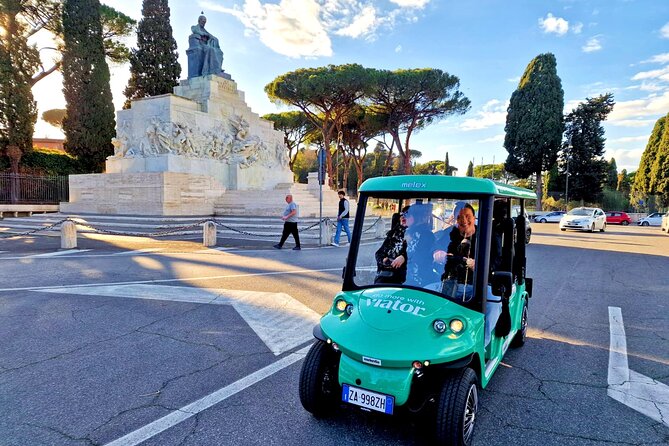
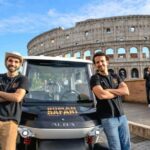
You start and end at Piazza del Colosseo, 3 (00184 Roma RM). That’s a smart choice because you’re already in the Rome you came for, and it makes the whole day less stressful.
At the end, you’re back at the same meeting point. That matters because you can head to your hotel right away—by metro, taxi, or walking—without rebuilding your day plan from scratch.
One more practical plus: the tour is offered in English, and you get a mobile ticket, which keeps the whole process straightforward.
You can also read our reviews of more private tours in Rome

Piazza di Spagna and the Spanish Steps: The Classic Photo Moment First
The tour opens at Piazza di Spagna, with the Spanish Steps as the anchor. This is one of those Rome sights that people talk about for a reason: it’s both architectural and very “postcard Rome.”
The Spanish Steps were arranged about three centuries ago to connect visually and conceptually the Fountain of the Barcaccia at street level (by Pietro Bernini) with the Renaissance church at the top. The design is known for its unusual plan and shape, tied to Alessandro Specchi and Francesco De Sanctis.
Timing is short—around 5 minutes—but that’s exactly why it works for the cart format. You don’t get stuck in a long viewing cycle. You get your picture, you learn a few key story points, and you’re moving.
Fashion Streets Between Stops: A Break From the Monuments
After the Spanish Steps area, you’ll pass through the fashion street section of Rome. Even if you’re not shopping, this stretch is worth seeing because it links the Spanish Steps area to the main high-end shopping streets.
This is one of the quieter “in-between” benefits of the cart tour. Instead of your day being only monuments, you get a sense of how Rome looks when locals are moving—storefronts, street energy, and that classic central-city rhythm.
Trevi Fountain: Quick, Iconic, and Designed for Photos
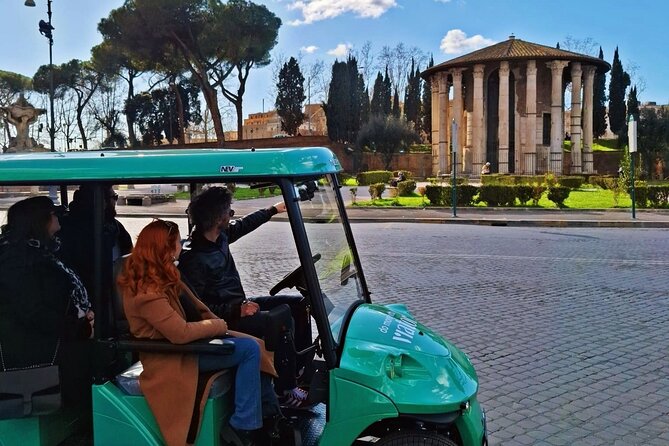
Next is Trevi Fountain. This stop is built for the moment you want most: you park, you learn, you snap your photos, and you go.
You get historical context too. Work on the fountain began in 1732 after a contest during the Baroque era. The plan was to create something as beautiful as the Spanish Steps, and Nicola Salvi is credited as the designer. He didn’t win the contest, but Rome’s outcry about a Florentine winning helped get the project moving anyway.
The time here is about 15 minutes. That’s enough to:
- see the fountain up close,
- get multiple angles for pictures,
- and avoid feeling trapped in one crowded spot too long.
If you’re the type who wants a slow, sit-with-the-view experience, this isn’t that stop. It’s a “hit the highlight fast” stop—and the cart format keeps the rest of your day strong.
Pantheon: Architecture Time (and the One Ticket You Must Plan For)
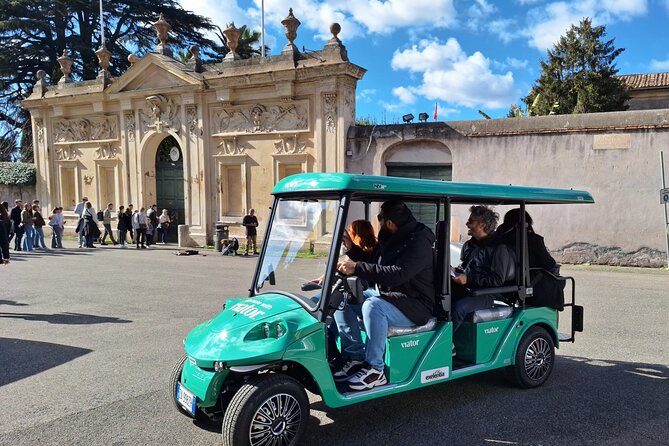
Then comes one of the biggest “wow” moments: the Pantheon.
You’ll park the cart and step out to admire the architecture. The Pantheon was originally a Roman temple, and now it functions as a church. It also has important associations, including being the burial place for many Renaissance figures like Raphael, plus two kings of Italy.
The signature feature is the circular roof with an oculus—a hole at the top that lets in sunlight and even rain. It’s the kind of design detail that makes you stop talking for a second and just look up.
Here’s the key practical point: the Pantheon admission ticket is not included. Plan for that. The stop is about 15 minutes, which means you’ll want your ticket situation solved before you arrive so you don’t lose time.



Piazza Navona: Baroque Square Energy Without the Full-Day Commitment
After the Pantheon, you head toward Piazza Navona, one of Rome’s best-known open squares. You’ll ride up by cart, then take a short look.
The square is famous for Baroque masterpieces, including works associated with Bernini. But what makes Navona extra interesting is its layered history. The area originally served as an athletics stadium in the year 80 AD under Emperor Titus. Later, it became a market in the 1500s.
The square has kept its original shape, which is a big reason it still feels so “designed.” Even with only about 5 minutes here, you can still see the overall geometry and spot the major visual anchors.
Via Giulia: A Street That Explains Rome’s Urban Planning
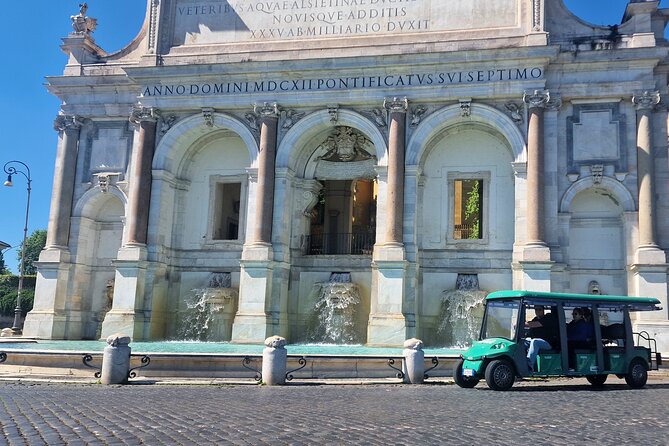
The tour then passes by Via Giulia, a street designed around 1508. It’s dedicated to Pope Julius II and often praised as an early example of urban renewal.
The street runs from the Ponte Sisto to the church of San Giovanni dei Fiorentini, curving with the tight bend of the Tiber. It’s tied to Donato Bramante, linked to works on the new Basilica of Saint Peter across the river.
Why you might care: this is the kind of detail that makes Rome feel more than just “big landmarks.” You start seeing the city as a place planned, adjusted, and rebuilt—over and over.
Tempio Maggiore di Roma and the Jewish District Area
A quick stop brings you near Tempio Maggiore di Roma, in the Jewish district in the city center.
This is brief—about 5 minutes—but it’s a useful mental shift. You’re not only bouncing through the Roman Empire narrative; you’re also seeing Rome as a layered living city, where different communities have shaped the center.
If you like learning how neighborhoods change meaning over time, this quick pause is a nice counterweight to all the mega-famous sites.
Tiber Island and Trastevere: Rome Beyond the Main Drag
One of the most memorable parts of this route is the stretch around the Tiber River, including the area of Tiber Island and then crossing to the Trastevere side.
Tiber Island is described as a real island you face while walking the shores. It’s connected by Roman bridges that are still in use, and it’s home to a church around a thousand years old.
Then you cross toward Trastevere, described as where residents socialize in the evening. It’s also tied to older stories, including associations with an early Jewish synagogue and an older church in the area. The tour also points out that Julius Caesar chose the area for a luxury villa, adding another layer to the “why this place matters” story.
Time here is short between zones, but the ride-by moments help you get oriented fast. If you plan to explore later on foot, you’ll have a better sense of where you’re standing.
Mouth of Truth Area: A Myth With Real-World Connections
The tour route includes a stop for a mysterious artifact from Ancient Rome—the one tied to the famous myth about a hand placed in its open mouth.
The origin story here is a bit uncertain: some say it functioned as a drain cover, while others suggest it may have been used for animal sacrifice rituals. Today, the big myth is the hand-lost-forever idea.
Here’s what the tour does that’s actually helpful: it notes that replicas show up around Italy and even abroad, but the origin is connected to the covered entrance of the Santa Maria in Cosmedin church in Rome.
This is a great example of why a guided route works. The myth makes you smile, but the explanation keeps it grounded.
Piazza dei Cavalieri di Malta: The “Wait, What Is This Place?” Stop
The next stop is Piazza dei Cavalieri di Malta, a small square that feels tucked away and scenic.
The description includes cypress trees on two sides, and the square backs onto obelisks and stele constructed in 1765 based on designs by Giovanni Battista Piranesi. There’s also a Neo-Romanesque campanile of the Church of San Anselmo (linked to the international Benedictine seminary).
This stop is short—about 5 minutes—but it can be one of those “I would never find this on my own” moments. If you love details, this is the kind of place where the guide’s narration makes the scenery feel specific instead of generic.
Giardino degli Aranci (Orange Trees Garden): One of Rome’s Best Views for Free
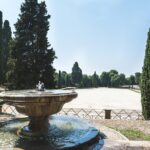
Then you go to Giardino degli Aranci, also known as the Orange Trees Garden, in the Parco Savello on Aventine Hill.
It’s about 7,800 square meters, designed in 1932 by Raffaele De Vico to make the hill’s viewpoint accessible as a public “belvedere.”
This stop is about 15 minutes. It’s free, it’s scenic, and it’s a nice change of pace from temples and fountains. Even if you’re not a garden person, you’ll likely appreciate having a view that doesn’t feel like a crowded landmark line.
Circo Massimo: Ancient Rome You Can Feel Without Going Inside
The tour heads to Circo Massimo, the elliptical complex where more than 100,000 Romans once gathered for public games.
It’s a “stand here and picture it” kind of stop. You also get the time anchor tied to Rome’s earlier legendary stories, including Romulus and the triumph over the Sabines.
The stop is short—about 5 minutes—but it’s useful for connecting modern Rome to the ancient footprint. You get a quick hit of scale without committing to a long indoor visit.
Ending at Piazza del Colosseo and the Optional Pasta Tasting
The tour ends at the Colosseum area, where you’ll finish your loop.
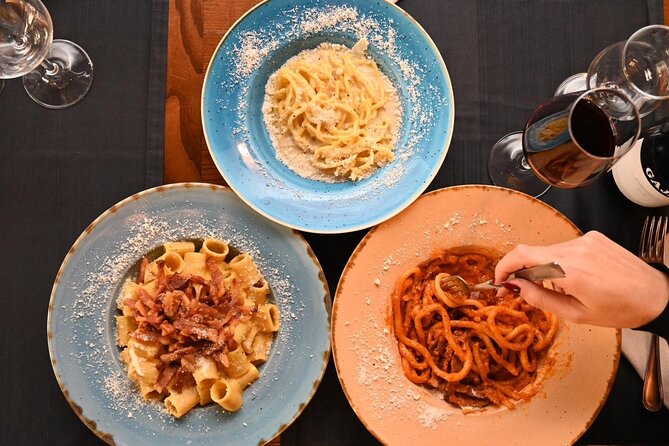
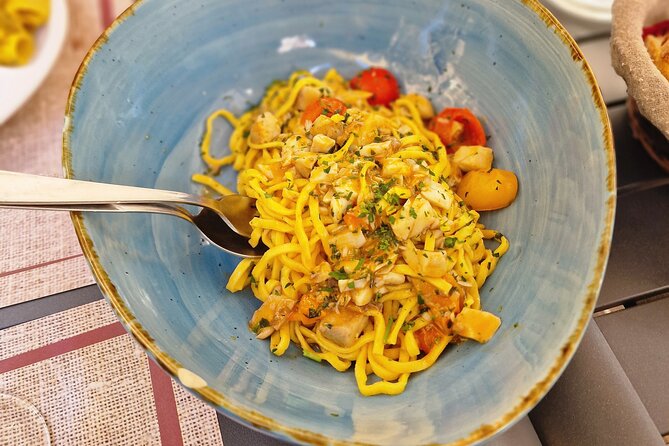
If you choose the upgrade, you get a pasta tasting of three traditional Roman dishes as part of the experience. This is the “let Rome feed you a little” moment, and it makes sense timing-wise because you’re already back near one of the city’s biggest night lights.
Even without the upgrade, the end point is practical. You can keep exploring on your own, take metro or taxi, or walk back toward your hotel.
Price and Value: What You’re Paying For
At $449.49 per person, this isn’t a budget tour. So the question isn’t just whether it’s expensive; it’s whether it saves you enough time and stress to feel worth it.
Here’s the value case that makes sense:
- You compress multiple top sights into one efficient loop in about 2.5 to 3 hours.
- You’re not spending that time fighting tight streets on foot, especially in heat or when crowds make walking slow.
- Your guide is giving you practical story context and helping you think about what you’re looking at.
- You can do a small-group version or go private, which can feel more comfortable if you’re traveling as a family, older relatives are involved, or you just don’t want big-group logistics.
The main “cost risk” is that short stop times can feel rushed if you’re the type who wants long hangs at each site. Also, the Pantheon admission isn’t included, so your total day cost might rise slightly once you handle that.
Who This Tour Suits Best (and Who Might Want Something Else)
This golf cart tour is a strong fit if you:
- have limited time in Rome and want the highlights plus context,
- prefer less walking and easier navigation through central streets,
- like a structured route with quick photo windows,
- want a comfortable option for older travelers or mixed-age groups.
It might not be ideal if you:
- want extended time inside major sites every stop,
- expect tickets to be fully included everywhere,
- hate the idea of quick “park and move” timing.
Still, for most first-time visitors, it’s a smart way to get oriented fast—then return on your own for the places you liked most.
Should You Book This Rome Golf Cart Tour?
I’d book it if you want a high-efficiency Rome day that still feels guided and personal, not like a checklist on a bus. The route hits the biggest names—Spanish Steps, Trevi Fountain, Pantheon, Piazza Navona, Circo Massimo—and it adds neighborhood texture through spots like Trastevere and the Jewish district area.
Before you lock it in, do two quick checks:
1) Plan for the Pantheon ticket since it’s not included.
2) Make sure your schedule can handle about 2.5 to 3 hours of fast-moving highlights, not slow wandering.
If that matches your travel style, this is an excellent way to spend a short day in Rome without turning your trip into a walking contest.
FAQ
How long is the Rome Key Sights Golf Cart Tour?
The tour runs about 2 hours 30 minutes to 3 hours.
Is the tour available in English?
Yes. The tour is offered in English.
How many people are on the tour?
It’s described as either a small group of seven travelers or a private experience, and the overall maximum is 12 travelers.
Are admission tickets included?
Most stops list admission as free, but the Pantheon’s admission ticket is not included.
What’s included in the pasta tasting upgrade?
If you choose the upgrade, you get a pasta tasting with three traditional Roman dishes at the end of the tour near the Colosseum area.
What if weather is bad or plans change?
The experience requires good weather, and if it’s canceled due to poor weather you’ll be offered a different date or a full refund. You can cancel up to 24 hours in advance for a full refund.