REVIEW · SAN FRANCISCO
Downtown San Francisco Architecture & Public Art Tour
Book on Viator →Operated by igniTours · Bookable on Viator
San Francisco buildings tell stories fast. This tour turns the downtown grid into a walkable lesson in architecture and public art, with stops that range from classic streetscapes to modern civic design. You also get a choice of morning or afternoon timing, so it fits real sightseeing days instead of forcing you into a single slot.
I love how the guide, Jamie, explains buildings with specific details—who designed them, when they were built, who owns them now, and how the architecture ties into the city’s growth. I also like the relaxed small-group feel (up to 15 people), so questions don’t get shoved to the end, and the pace stays comfortable.
One thing to consider: the final SFMOMA time is optional, and admission isn’t included, so you may want to budget for a museum ticket if you want to go inside.
In This Review
- Key highlights at a glance
- Why this downtown architecture and art walk is such a good use of time
- Starting at Mechanics Monument: getting oriented without stress
- Stop 1: Downtown San Francisco architecture, from historic shells to modern forms
- Stop 2: Salesforce Transit Center rooftop garden and public art in the real world
- Stop 3: SFMOMA’s brick facade and modern expansion—plus an optional museum finish
- The guide makes or breaks this kind of tour—here, Jamie is the anchor
- Walking time, comfort, and weather: what to plan for
- Who this tour is for (and who should skip it)
- Price and value: is $44 fair for what you get?
- Should you book Downtown San Francisco Architecture & Public Art?
- FAQ
- FAQ
- How long is the Downtown San Francisco Architecture & Public Art Tour?
- Where does the tour start and end?
- What are the main stops on the itinerary?
- Is admission included for all stops?
- How big is the group?
- Is the tour offered in English?
- Do I need good weather for the tour?
- Are service animals allowed?
Key highlights at a glance
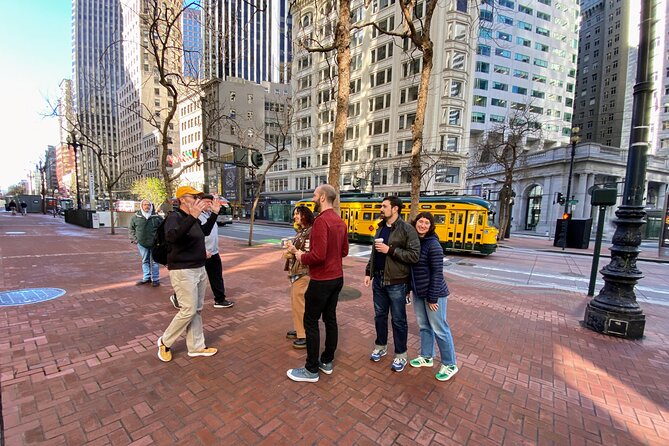
- Small group (max 15): easier questions and a calmer pace for a 2.5-hour walk.
- Jamie’s building-level storytelling: architects, eras, and how each structure fits today’s downtown.
- Free entry at Stop 1 and Stop 2: you can focus on seeing instead of paying for each site.
- Salesforce Transit Center rooftop garden: trees, flowers, and wide views from the terrace.
- SFMOMA architecture focus: brick facade plus modern expansion, with the option to keep going with a self-guided visit.
Why this downtown architecture and art walk is such a good use of time
San Francisco can feel like two cities at once: history stacked under glass, and old streets framed by new towers. This tour helps you read that mix instead of just taking photos. You walk, you look closely, and you learn what you’re actually seeing—down to the design choices and the timeline behind them.
What makes this one work for both first-timers and locals is that it doesn’t treat architecture like trivia. It connects buildings to purpose and place: who uses them now, how the city redeveloped, and how public art shows up in practical everyday spaces. That’s why the experience feels less like a lecture and more like a guided “see-it-now” route.
Also, the schedule is built for flexibility. You pick either the morning or afternoon tour, and the itinerary stays the same. That matters because downtown planning is rarely “one-size-fits-all,” and you probably have other stops on your day.
You can also read our reviews of more tours and experiences in San Francisco.


Starting at Mechanics Monument: getting oriented without stress
The meeting point is Mechanics Monument, 488 Market St. It’s an easy anchor on a busy downtown street, and it’s near public transportation, which helps if you don’t want to fight parking.
From the start, the tour’s logic is clear: you begin in the downtown area where historic and modern buildings overlap, then you move toward a major transit hub, and finally you end at SFMOMA. Ending at the museum entry at 151 3rd St is smart because it turns the walk into a clean handoff—either you keep exploring the museum, or you branch out for lunch nearby.
If you like a sightseeing plan that doesn’t require a car, this route fits that style. It’s also a good choice when you want a structured overview without committing to a full-day museum marathon.
Stop 1: Downtown San Francisco architecture, from historic shells to modern forms
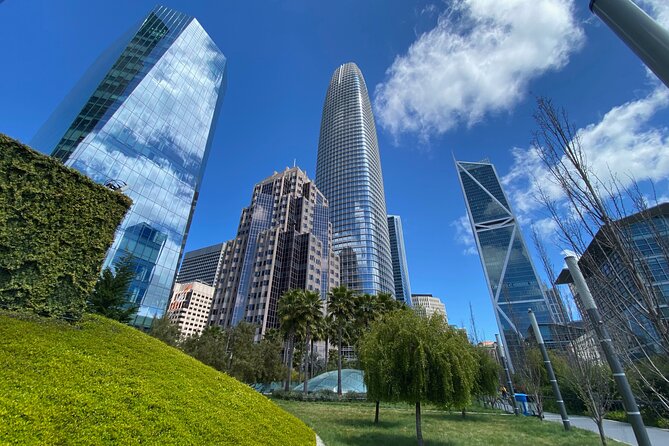
The first stop is downtown San Francisco itself, with about 1 hour 40 minutes set aside for exploring the architectural mix. Admission is free here, so your “cost” is only your attention span and comfortable shoes.
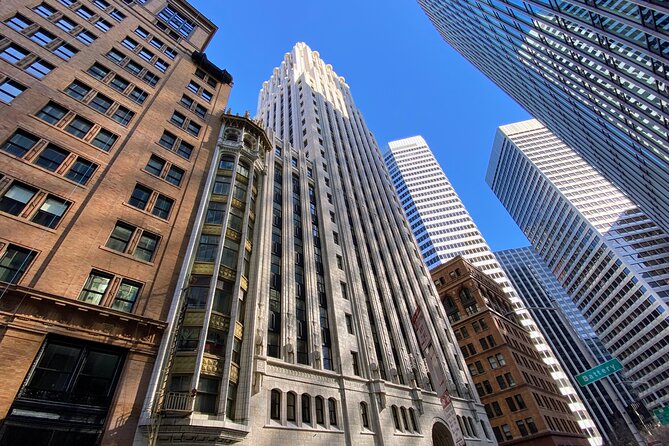
This is where you get the biggest payoff: the guide helps you sort out eras and styles by what you can see on the street. The focus isn’t just “this building looks cool.” It’s the kind of explanation that makes you notice details you would otherwise miss—materials, shapes, and design language that hint at the time period.
You’ll also get context about how downtown evolved—past development patterns and how the city kept reshaping this core area. The goal is to help you recognize buildings as chapters in a story, not as random backdrops for selfies.
The practical upside: with this much time at the start, you’re not rushed through the “wow, pretty street” phase. You learn enough to make your later self-guided sightseeing better. Once you know what to look for, the whole neighborhood stops being a blur.
Possible snag: downtown can be busy and noisy, and the building-focused route means you’ll spend more time looking than resting. If you’re the type who needs lots of breaks, you might want to pace yourself and take micro-pauses when the group stops.
Stop 2: Salesforce Transit Center rooftop garden and public art in the real world
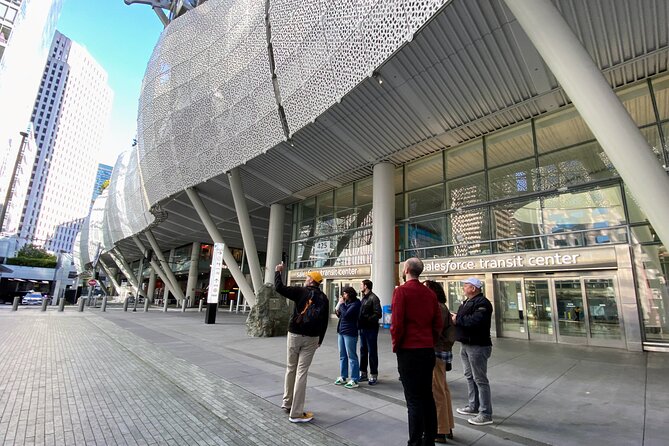
Next comes Salesforce Transit Center, with about 30 minutes for learning about the new transit center and its public art installations. This stop is also free, which is always a win when you’re budgeting.
The standout feature here is the rooftop garden—trees and flowers in an elevated setting—plus panoramic views from the terrace. Even if you’re not usually a “transit architecture” person, this is the kind of space that makes you stop and look at the city from above. It’s not just a scenic bonus; it’s part of the tour’s bigger theme: how public spaces shape daily life.
And because it’s a transit hub, it shows public art in a high-traffic context. That’s different from museums where art is the main event. Here, it becomes part of how people move through the city, which makes it feel more grounded and useful.
Why I think this stop adds real value: it connects modern civic design to something you can actually experience—views, greenery, and the feeling of a thoughtfully built public space. You get a contrast to the dense street canyon energy of downtown.
If you visit SFMOMA later, this stop also helps you set up the contrast: modern transit architecture and public space design on one end, and formal museum architecture on the other.
Stop 3: SFMOMA’s brick facade and modern expansion—plus an optional museum finish
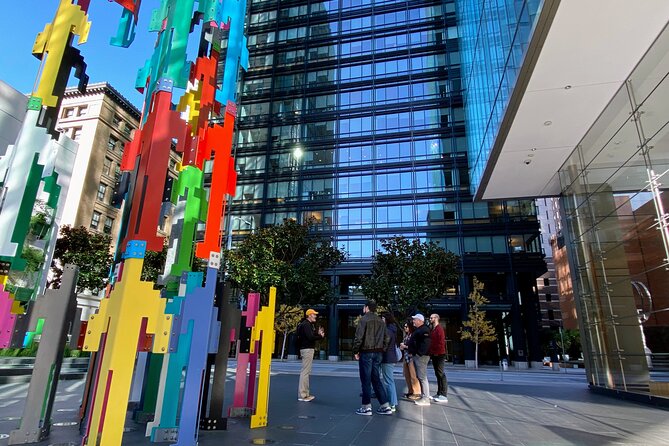
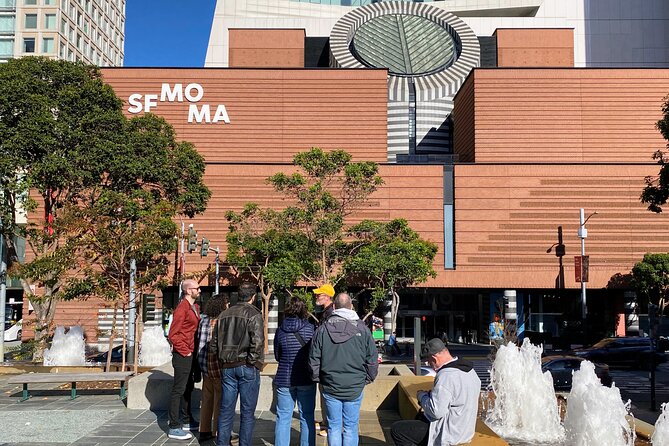
The final scheduled piece is San Francisco Museum of Modern Art (SFMOMA). You’ll spend about 20 minutes as part of the guided portion, with the architecture focus on the brick facade and the modern, geometric expansion.
This is a great stop if you like buildings that are meant to be read from multiple angles. The guide helps you understand the blend of older and newer design elements—why the original character matters, and how the expansion changes what the building communicates.
Then comes the flexible part: you can end your tour with an optional self-guided visit of the galleries. Your guide can help arrange a ticket and drop you off there, so you’re not left trying to figure out the museum flow on your own right away.
One more practical note: museum time varies based on your energy and what’s on your must-see list. But even a short visit can work if you’re using SFMOMA as a capstone to the architecture lesson instead of trying to do everything in one go.
The main consideration (worth repeating): SFMOMA admission is not included. If you don’t plan to enter the galleries, you might still enjoy the architecture stop, but you’ll want to decide ahead of time whether SFMOMA is worth the extra ticket cost for your day.
The guide makes or breaks this kind of tour—here, Jamie is the anchor
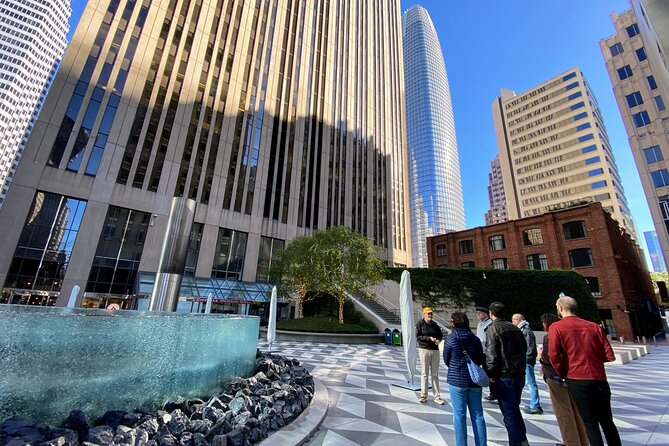
For walking architecture tours, the guide’s role is huge. The city is full of buildings, and if the explanation stays vague, you end up with a nice walk but not much learning.
Jamie’s approach stands out because it’s specific and wide-ranging. You’ll hear about architectural style and how it connects to dates, ownership, current purpose, and the architect’s other work. That kind of detail changes how you experience the walk—suddenly you’re not just noticing facades; you’re tracking design choices and city decisions.
One of the best parts is how the pace supports questions. Because the group is small, the guide can adjust to the audience and keep the conversation moving instead of racing on a fixed script. If you’re curious by nature—about why a building looks the way it does or what a space is used for now—this tour is built for that curiosity.
Walking time, comfort, and weather: what to plan for
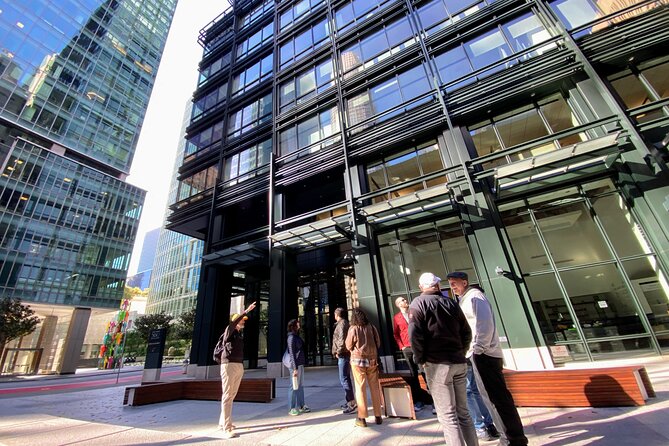
This experience runs about 2 hours 30 minutes. The tour is described as having a mild pace, and the overall design suggests you won’t feel like you’re sprinting between stops. Still, you are in downtown walking territory, so comfortable shoes are not optional.
The tour also requires good weather. If weather is poor, you’ll be offered a different date or a full refund. That’s the right kind of policy for a mostly outdoor walking format. If you’re traveling on a tight schedule and the forecast looks sketchy, keep an eye on conditions and be ready to pivot.
One more logistics detail that affects comfort: there’s no parking included. If you’re driving, you’ll need to plan your own parking strategy.
Who this tour is for (and who should skip it)
This is a strong match for you if:
- you want an architecture-and-art overview you can finish in half a day
- you like public spaces and want examples of how art shows up outside museums
- you enjoy questions and want explanations that go beyond basic descriptions
- you’re a first-timer who wants a smarter sightseeing route, or a local who wants a fresh lens on downtown
It may be less ideal if:
- you’re not interested in architecture explanations and would rather do pure “attraction hopping”
- you dislike short museum visits or budget-sensitive add-ons, since SFMOMA admission is extra
- you need frequent long sit-down breaks, since the flow is designed as a walk-and-look experience
Price and value: is $44 fair for what you get?
At $44 per person for roughly 2.5 hours, this tour is priced like a focused experience rather than a full-day sightseeing program. The value comes from a few clear wins:
- Small group size (max 15): you’re not competing for attention.
- English-speaking guide: you get guided interpretation, not just a route.
- Free admission at Stop 1 and Stop 2: you’re spending money on the guided experience, not entrances.
- High-impact finale at SFMOMA: even if you skip the optional galleries, you get an architecture-focused introduction.
The one cost that can change your total is SFMOMA admission if you choose to go in. But that’s also your choice. If you want the museum, you can plan for it. If you don’t, you’re not forced into paying for time you won’t use.
In plain terms: you’re paying for guided thinking. That’s where the “value” lives.
Should you book Downtown San Francisco Architecture & Public Art?
If your goal is to learn how downtown got built, not just where to stand for photos, you should book it. This is the kind of tour that improves your future wandering because you leave with a checklist for what to notice: style cues, era signals, and how public art fits into everyday movement.
I’d especially recommend it if you care about public spaces. The Salesforce Transit Center rooftop garden is the kind of stop that feels like a reward, but it also fits the theme: design isn’t abstract—it shapes how people experience the city.
One final nudge: decide early whether you want the optional SFMOMA galleries. If you do, plan your ticket budget. If you don’t, you can still enjoy the architecture focus and move on to lunch with a clearer sense of the city’s design choices.
FAQ
FAQ
How long is the Downtown San Francisco Architecture & Public Art Tour?
It runs for about 2 hours 30 minutes.
Where does the tour start and end?
It starts at Mechanics Monument, 488 Market St, San Francisco, CA 94111 and ends at 151 3rd St, San Francisco, CA 94103, at the SFMOMA entry.
What are the main stops on the itinerary?
The tour includes downtown San Francisco, Salesforce Transit Center (with public art and the rooftop garden), and SFMOMA.
Is admission included for all stops?
Admission is free for the first two stops. The SFMOMA self-guided visit is not included, so you would need a ticket if you choose to enter the galleries.
How big is the group?
The tour has a maximum of 15 travelers.
Is the tour offered in English?
Yes, it’s an English tour.
Do I need good weather for the tour?
Yes. It requires good weather, and if it’s canceled due to poor weather, you’ll be offered another date or a full refund.
Are service animals allowed?
Yes, service animals are allowed.