REVIEW · SAN FRANCISCO
San Francisco: Downtown Architecture & Public Art Tour
Book on GetYourGuide →Operated by igniTours · Bookable on GetYourGuide
Downtown SF hides serious art. This 3-hour architecture and public art tour turns the Central Business District into a readable story, with “starchitect” buildings and public art that feels like an open-air museum. I especially loved the way Jamie (the guide) connects specific designers—Cesar Pelli and Rem Koolhaas show up early—to the city’s changing growth. I also liked the stop for public art and the 1% art-in-building approach that has been going on for 40 years. One heads-up: you do have a moderate amount of walking, and you’ll be outside for much of it.
You start at 488 Market Street and end at the entrance of SFMOMA, so the day has a clean rhythm: see the modern city, then step into modern art. The tour is led by an English-speaking guide from igniTours, with about 2.5 hours of guided walking plus a SFMOMA visit. If you’re very heat- or rain-avoidant, check the forecast and dress for wind off the bay.
In This Review
- Key points that matter before you book
- Downtown SF on foot: why this 3-hour loop works
- Meeting at 488 Market Street: start in the right spot
- Financial District architecture in “waves”: Pelli, Koolhaas and more
- Public art as an open-air gallery: Rickey, Holzer, Stella, Borofsky
- The Salesforce Transit Center roof park: 70 feet up, 5.5 acres of breathing room
- Finishing at SFMOMA: modern art after modern city form
- Price and value: is $44 fair for 3 hours of SF downtown?
- Who this tour suits best (and who might skip)
- Should you book this tour?
- FAQ
- How long is the San Francisco Downtown Architecture & Public Art Tour?
- Where do I meet the guide, and where does the tour end?
- What’s included in the $44 price?
- Is the tour wheelchair accessible, and how much walking is involved?
- Is parking included?
- Can I cancel, and is pay later available?
Key points that matter before you book
- A guide-led “outdoor museum” feel: downtown streets and plazas function like a gallery walk.
- Design names you can actually spot: Cesar Pelli and Rem Koolhaas are part of the downtown skyline conversation.
- Public art is the theme, not a side quest: kinetic, digital, and large-scale installations show up across the route.
- 1% for public art (40 years of it): that policy explains why there’s so much art in office-district spaces.
- Salesforce Transit Center roof park: 4½ city blocks, elevated about 70 feet, with zones of trees and plants.
- Finish at SFMOMA: you end at one of the biggest modern art stops, with a great exterior right at the entrance.
Downtown SF on foot: why this 3-hour loop works
San Francisco’s downtown can feel like a place you rush through—until someone slows you down. This tour is built around that idea. Instead of bouncing around random landmarks, you walk a focused route through the Central Business District, where architecture and public art are woven into everyday space.
The payoff is how quickly you start seeing patterns. You’ll recognize “waves” of downtown growth by style and era, then connect those styles to what was happening in the city’s economy and culture. That makes the Financial District read like a living textbook, without the lecture vibe.
Also, I like that you’re not trapped indoors. Even when you’re viewing major buildings, you’re moving through plazas and public spaces that feel designed for people—not just commuters.
You can also read our reviews of more tours and experiences in San Francisco.
Meeting at 488 Market Street: start in the right spot
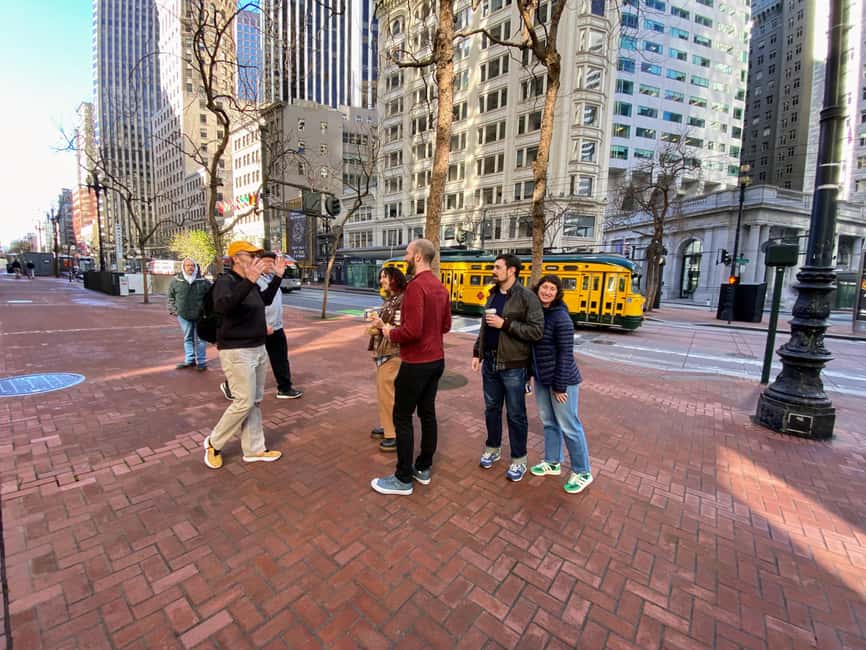
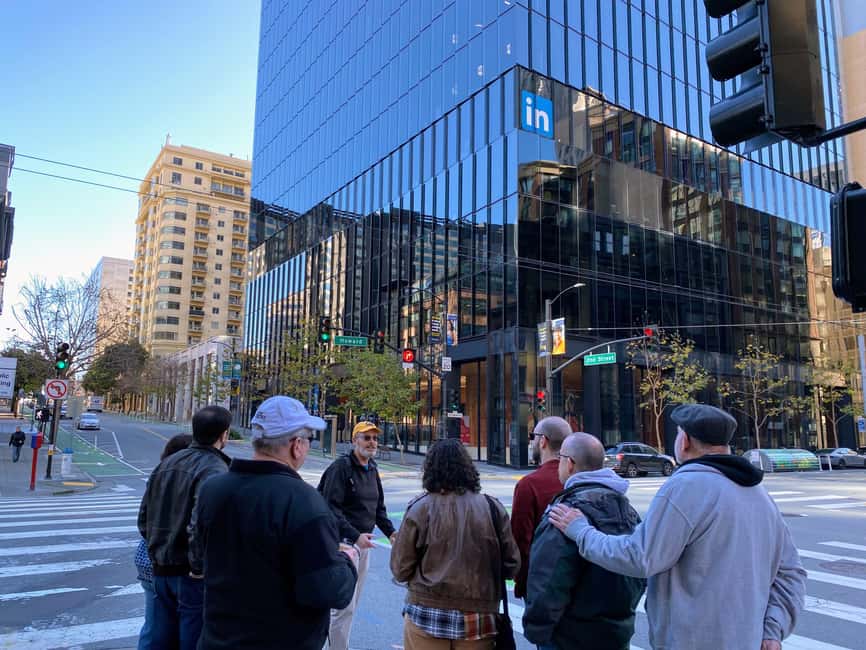
You meet your guide at Mechanics Monument Plaza, 488 Market Street. That’s a practical starting point because it’s right in the hub of downtown pedestrian flow. You’ll get your bearings fast, and the route you follow stays in the area where the architecture is densest.
From the jump, Jamie sets expectations clearly: you’re going to look at buildings like clues. Expect to notice details such as materials, massing, and how structures relate to the street. The best part is that you’re learning names along the way—so when you glance up later on your own, you’re not just admiring; you’re placing.
If you’re planning photos, start thinking vertical. Downtown in this stretch rewards upward looking. You’ll be doing some outdoor walking, so wear shoes you can trust.
Financial District architecture in “waves”: Pelli, Koolhaas and more
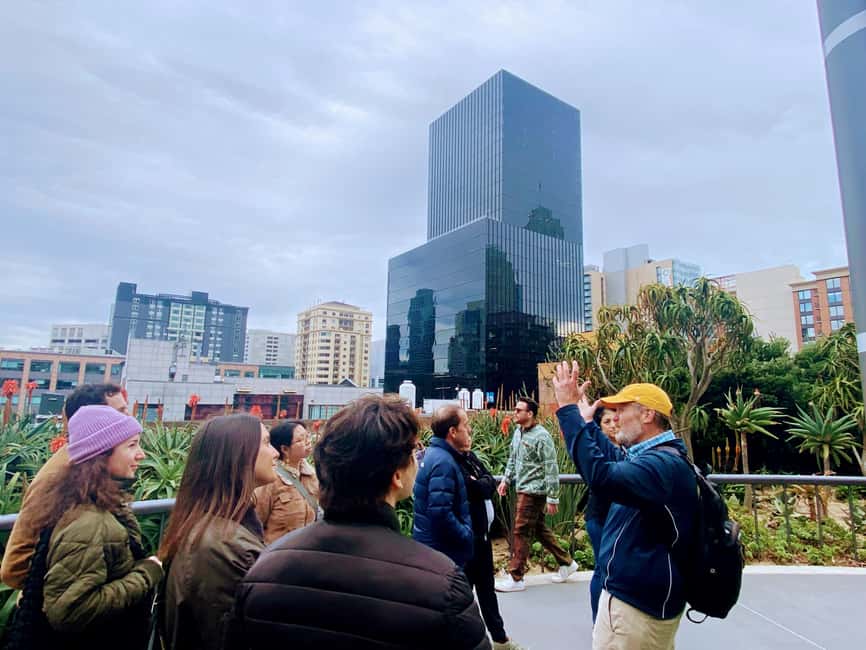
The heart of the experience is the guided walk through the Financial District, around 2.5 hours. This portion is where the “architecture story” lands.
You’ll begin with grand early 20th-century examples, including the London Paris National Bank, a building that rose from the rubble of the 1906 earthquake and fire. It’s a reminder that architecture here isn’t just style—it’s recovery, rebuilding, and ambition.
Then the tour moves into the exuberance of the 1920s, where you’ll see Pacific Telephone Building-type flair on the skyline. After that, the focus shifts to mid-century modern office design and then into more contemporary corporate towers.
A few design “signals” you’ll learn to look for:
- International Style glass-and-steel sleekness, including the Crown Zellerbach Building
- Southward downtown growth around major late-20th/early-21st-century development, including the JP Morgan Chase Building
- Current-era “star-chitect” design language associated with the tech boom, capped by what you’ll see when you approach the Salesforce area
You don’t need to be an architecture nerd to enjoy this. The guide translates the design choices into plain English: what each era was trying to communicate, and how the city’s physical form shifted as money and companies shifted.
The only drawback here is also the nature of the district: you’ll mainly view buildings from streets and plazas. If you want inside access to offices, this isn’t that kind of tour. It’s about reading downtown in public space.
Public art as an open-air gallery: Rickey, Holzer, Stella, Borofsky
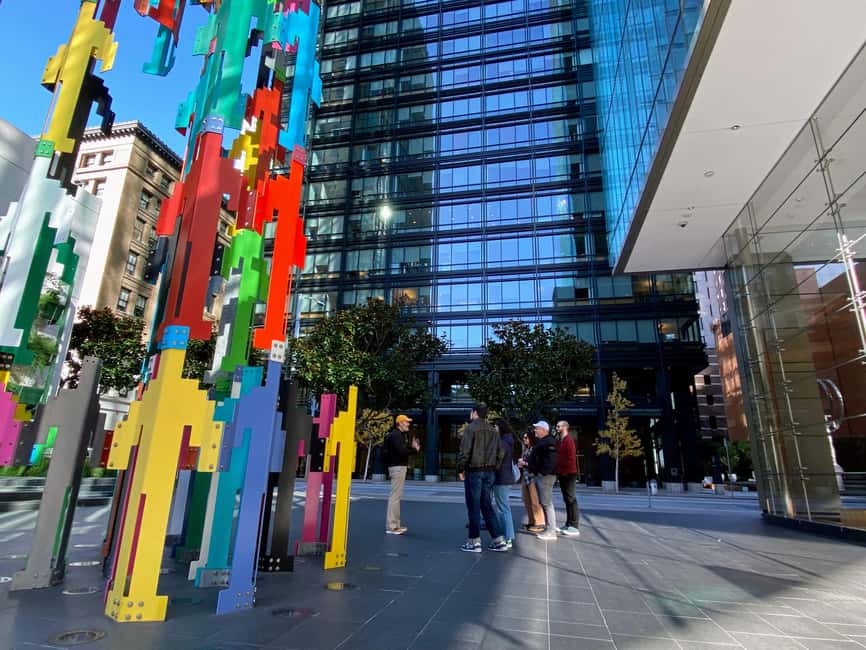
About halfway into the downtown stretch, the tour pivots from buildings to art. The Central Business District has a big advantage: for roughly 40 years, new downtown office buildings have set aside 1% of construction budgets for public art. That policy matters because it explains why you’re not hunting for a single statue. You’re seeing a system.
As you walk, you’ll encounter public art in multiple “languages,” including:
- Kinetic sculpture by George Rickey
- Digital art by Jenny Holzer
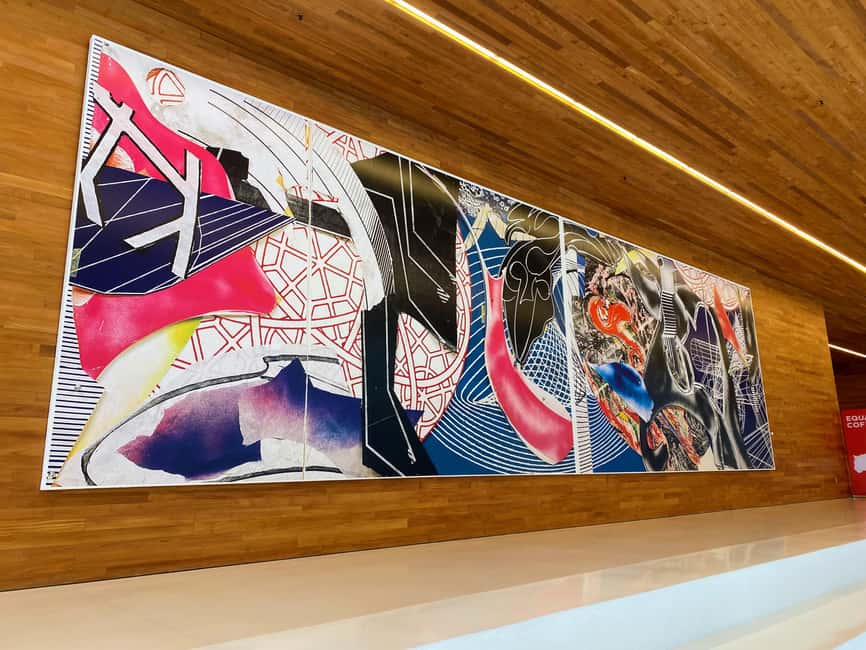
- Paintings by Frank Stella
- Quirky installations by Jonathan Borofsky and Ugo Rondinone
What I like about this approach is that it changes how you move. You stop walking like a checklist and start walking like you’re in an outdoor museum. You look for how art sits in the flow of the street, how it frames views, and how office-district spaces become civic spaces.
You’ll also hear how public art fits into downtown’s identity—less decoration, more part of the daily environment. Even if you’re picky about modern art, the variety here is a big plus. You get sculpture, text/digital work, painting in public settings, and playful installations.
The Salesforce Transit Center roof park: 70 feet up, 5.5 acres of breathing room
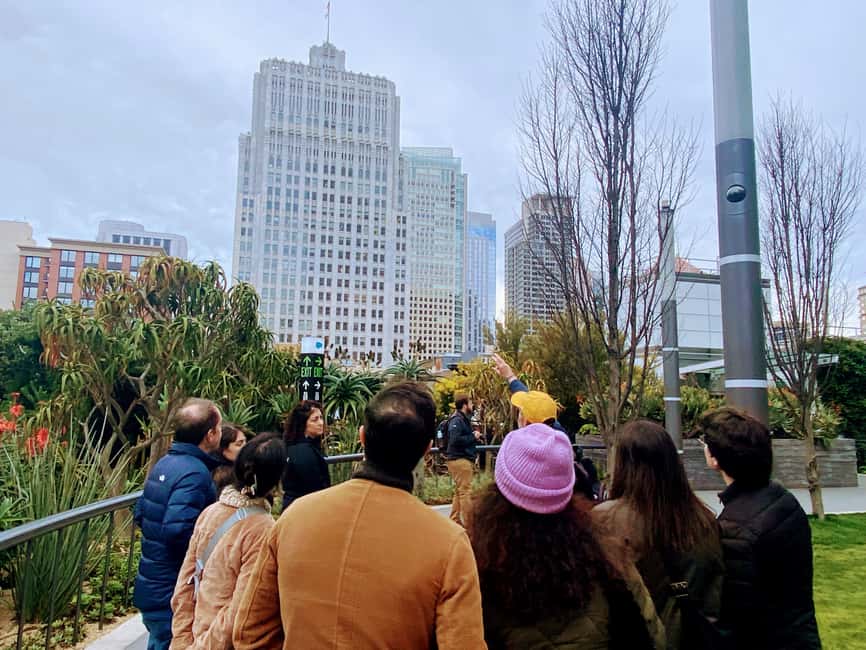
One of the strongest reasons to book this tour is the time spent at the Salesforce Transit Center roof park. You’ll see the Salesforce building too, but the real star is the park built atop the transit terminal.
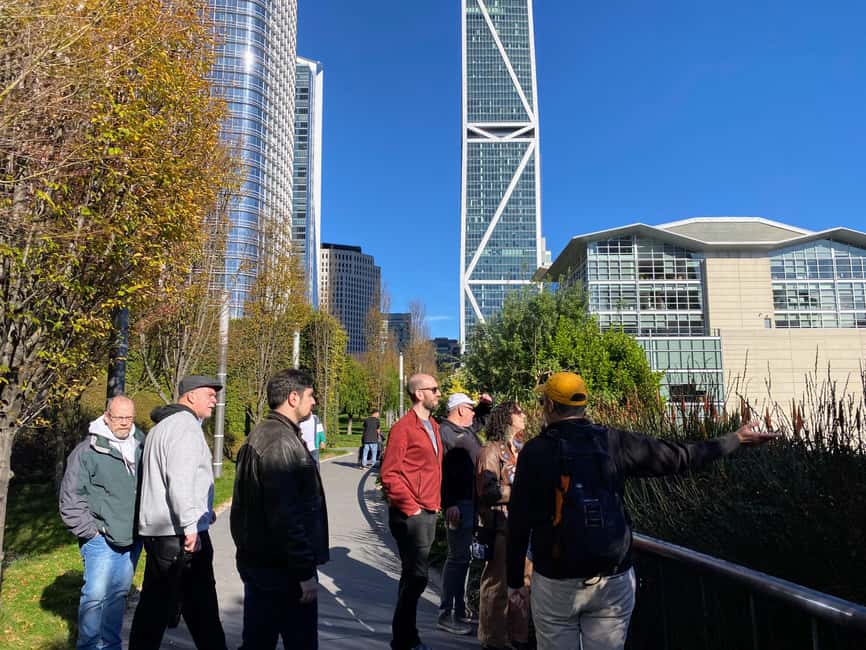
This park exists because there was nowhere else for greenery. So the city did what cities sometimes do best: it used space creatively. The park covers about 5.5 acres, stretches across 4½ city blocks, and sits around 70 feet above street level.
Here’s what makes the stop feel special, beyond the view:
- It’s built for real activities, not just aesthetics. You can find quiet spots for reading and the park hosts things like yoga classes, movie nights, concerts, and a beer garden.
- The water feature has built-in theater. There’s a fountain with jets of water that activate when buses move through the terminal below. So even the sound and motion of transit becomes part of the experience.
- The planting plan is designed in “zones.” You’ll hear that there are 600 trees and 16,000 plants arranged in zones that replicate 13 of the world’s ecosystems.
Even if you’re not a plant person, the idea lands: downtown can be human-scale. The elevated position also gives you a chance to look outward at the office and residential buildings around the park. It turns the skyline into something you can study from above, without needing a ticket for a tower view.
If you get motion-sick or don’t like stairs/ramps, plan for that. The park is elevated, and you’ll likely move around more than you expect once you’re up there.
Finishing at SFMOMA: modern art after modern city form
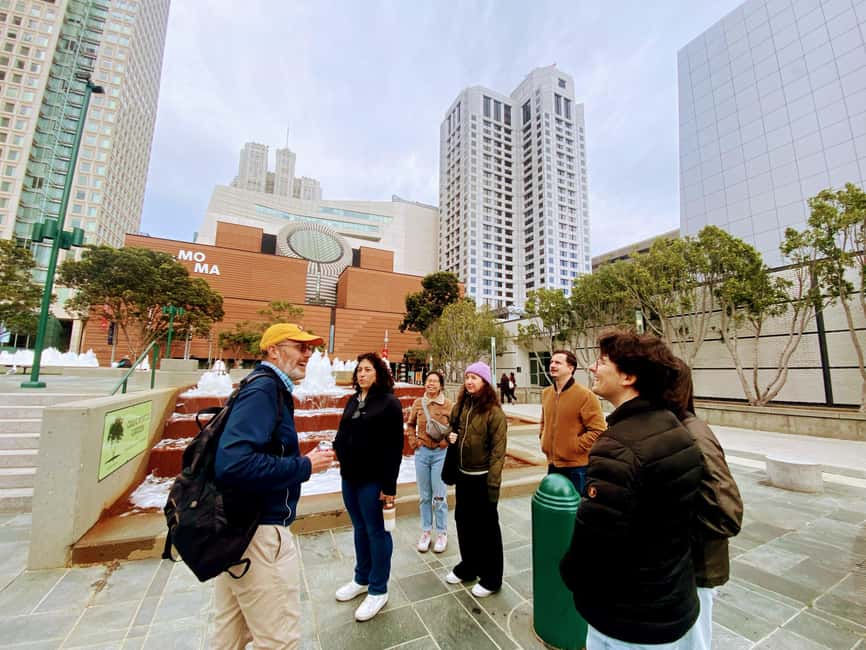
You end at the entrance of the San Francisco Museum of Modern Art (SFMOMA). This is a smart finish because the tour has already primed your eye for modern design—so the shift to modern and contemporary art feels like a continuation, not a hard reset.
SFMOMA is also known for having an exterior that’s part of the visual experience. Walking up to the museum after seeing office buildings and public artworks helps you compare how modern institutions choose to look and how they shape public space.
The experience includes a SFMOMA visit and also skips the ticket line, which is a genuine time-saver. If you’ve ever dealt with museum entrances at peak times, you know why that matters.
One practical note: since this is an ending stop, you’ll want to keep your energy for the museum visit. This isn’t a “grab coffee and leave” moment. It’s your final payoff.
Price and value: is $44 fair for 3 hours of SF downtown?
At $44 per person for about 3 hours total, this tour lands in the “worth it” category for anyone who wants more than a quick sightseeing loop.
Here’s why the value feels solid:
- You’re paying for a guided walk focused on named architecture and named art, not vague commentary.
- The route is concentrated. You don’t waste time commuting across town.
- The public art and the 1% program context give you a bigger framework than just seeing objects.
- Ending at SFMOMA adds a major modern art anchor to the experience.
If you’re a traveler who enjoys museums but also likes to understand what you’re looking at in cities, you’ll likely get your money’s worth. If you mostly want iconic views with minimal walking, you might find this too “hands-on” and too focused on explanation.
Also: parking isn’t included, so if you’re driving, you’ll need to handle that separately.
Who this tour suits best (and who might skip)
This tour fits you best if you like:
- Architecture details you can recognize again later
- Public art that’s integrated into daily city life
- A guide who turns the city into a conversation, where you can ask questions and get straight answers
It’s also a great option if you’re visiting for just a few days and want downtown to feel meaningful, not just crowded.
You might skip it if:
- You dislike walking outdoors for extended periods
- You want mostly inside-building visits (this is primarily street-and-plaza viewing)
- You’re looking for a purely photo-focused tour with minimal storytelling
Should you book this tour?
Yes, I’d book it—especially if you want downtown San Francisco to make sense. The mix of architecture “waves,” public art across multiple media types, and that roof-park stop at Salesforce Transit Center gives you variety without losing focus. And the finish at SFMOMA makes it feel like you’re moving through ideas, not just ticking stops.
If you’re coming on a day when you can handle a moderate amount of walking and you’re willing to look upward and around, this is one of the cleaner ways to experience the city’s modern side.
FAQ
How long is the San Francisco Downtown Architecture & Public Art Tour?
The experience lasts about 3 hours total, with a 2.5-hour guided walking tour of downtown followed by a visit at SFMOMA.
Where do I meet the guide, and where does the tour end?
Meet your guide at Mechanics Monument Plaza, 488 Market Street. The tour finishes at the entrance of San Francisco Museum of Modern Art (SFMOMA).
What’s included in the $44 price?
You get a 2.5-hour downtown walking tour with an expert English-speaking guide and a SFMOMA visit. The experience also includes skipping the ticket line.
Is the tour wheelchair accessible, and how much walking is involved?
Yes, it’s wheelchair accessible. Expect a moderate amount of walking during the downtown portion.
Is parking included?
No. Parking is not included.
Can I cancel, and is pay later available?
Yes. You can cancel up to 24 hours in advance for a full refund. You can also reserve now and pay later to keep your plans flexible.