REVIEW · ROME
Rome: Private Golf Cart Tour by Night
Book on GetYourGuide →Operated by RomeByCart · Bookable on GetYourGuide
Rome at night feels like a different city. This private evening golf cart tour is a smooth way to see the big monuments lit up, with a dedicated guide keeping the pace comfortable. I especially like the flexible route that can bend toward what you care about, and I like that you get a guided story for major sights instead of just quick photo stops. One thing to consider: the schedule is packed, and there’s a long lunch block noted around Vatican City, so I’d confirm timing for your exact departure.
You start near Piazza di Spagna and glide through Rome’s center after dark, when the air cools and traffic is easier to manage. Expect time for photos, quick viewpoints, and short stops that don’t leave you wiped out by steps. The night lighting helps too: the Colosseum and Roman Forum look like movie scenes instead of daytime ruins.
I’d call this a great first-night move or a smart “one evening, lots of Rome” plan. It’s private, it’s guided, and it’s designed for a relaxed pace—just bring your walking shoes for the short gets-on-and-off moments.
In This Review
- Key highlights that make this night tour work
- Rome after dark, by private golf cart
- Starting at Piazza di Spagna and gliding up to the Spanish Steps
- Piazza del Popolo, the Pantheon, and the value of seeing them without fatigue
- Piazza Navona, the evening squares, and the ride toward Vatican Rome
- Janiculum Hill and the quieter viewpoint stops
- Roman Forum and the Colosseum: where night lighting changes everything
- Circus Maximus, San Pietro in Vincoli, and Castel Sant’Angelo
- The Sant’Ignazio di Loyola stop and the return to Piazza di Spagna
- Price and value: does $48 per person make sense?
- Should you book this Rome night golf cart tour?
- FAQ
- Where does the tour start?
- How long is the tour?
- What is the price per person?
- Is this a private tour?
- What sights will we see?
- Does the guide speak English?
- What should I bring?
- Is it wheelchair accessible?
- Can I customize the itinerary?
- How is cancellation handled?
Key highlights that make this night tour work
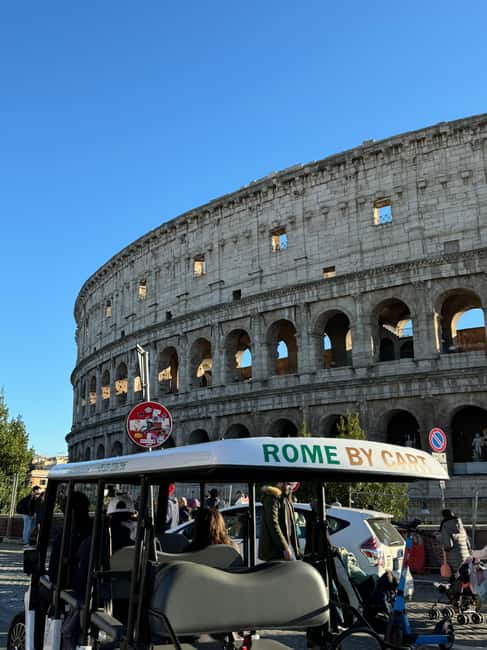
- Private electric golf cart: low-effort sightseeing through historic streets
- Dedicated guide who adjusts the route based on your interests
- Icon + contrast combo: landmarks plus calmer streets for better atmosphere
- Photo-friendly stops at major squares and viewpoints
- Comfort breaks noted in the plan, including time set aside near Vatican City
- Small helpful extras sometimes show up with the guide team, like phone charging for photos
Rome after dark, by private golf cart
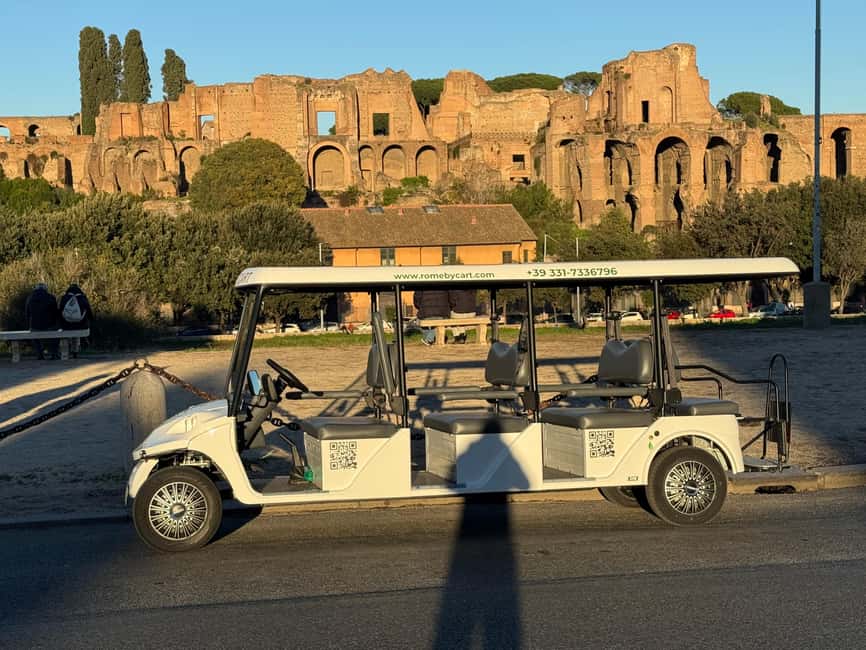
Rome looks different at night, mostly because you feel the city instead of fighting it. Daytime brings tour herds and heat. After sunset, you get cooler air, calmer streets, and monuments that glow against the dark sky.
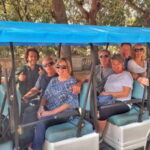
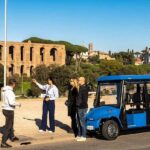
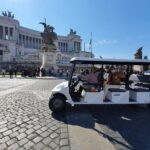
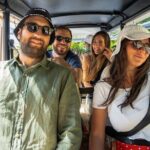
The golf cart is the big practical win. You still get out for key moments, but you’re not doing a long all-day walk. You also avoid a lot of the stop-and-go stress that makes Rome tiring fast. The pace is built for photos and short explorations, not marathon walking.
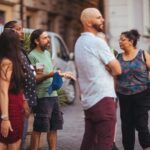
And because this is private, the guide can steer the evening. I like that the tour is described as flexible, so you can lean toward art, architecture, viewpoints, or the classic Rome highlights without feeling boxed into a fixed group script. It’s also a good chance to ask real questions—how areas connect historically, what you’re looking at, and why these places became the power centers they did.
You can also read our reviews of more private tours in Rome
Starting at Piazza di Spagna and gliding up to the Spanish Steps
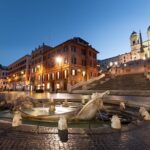
You begin at Piazza di Spagna, one of the best launch pads for a first taste of central Rome. From there, you head to the Spanish Steps area. In the evening, the steps feel more like a public living room than a tourist conveyor belt.
This stop is short, but it’s a strong opener. You’ll be able to get context for why the area matters and what to look for as the evening lighting shifts. It’s also where you can reset your bearings fast—use the photos to plan what you might want to return to later on foot.
A practical note: even on a golf cart tour, you’ll still do some steps and short walks when you arrive and depart. Wear shoes you trust. If you’re sensitive to uneven pavement, go slow on the first couple of minutes until you settle.
Piazza del Popolo, the Pantheon, and the value of seeing them without fatigue
Next comes Piazza del Popolo—a big open space that gives you breathing room and a clear sense of scale. Evening light softens the hard edges, and the square reads well for both quick photos and a moment of stillness.
Then you move to the Pantheon, one of Rome’s most recognizable interiors and exteriors. You’ll have guided time to understand what you’re seeing rather than just ticking a box. If you’ve ever wondered why people get emotional about the Pantheon, part of it is the way the space holds you. Even a short stop feels worthwhile when your guide points out the key visual cues.
Why this section matters for value: these are major stops, and they’re placed early enough that you’re still fresh. If you tried to hit all of these on your own in a single evening, you’d spend more time locating streets and less time actually looking up.
Piazza Navona, the evening squares, and the ride toward Vatican Rome
After that, you arrive at Piazza Navona, another of Rome’s signature squares. At night it’s lively but not as chaotic as daytime, and it’s a great place to watch the city’s rhythm. You’ll get guided time here, so you’re not just standing under lights. You’ll be oriented to what makes the square special and what pieces to pay attention to.
From there, the tour heads toward the Vatican side. You stop at St. Peter’s Basilica, which is a heavy-hitter even when you’re not going deep into every corner. The guide time is long enough to get meaning out of the visit rather than just rushing by.
Important timing reality check: the plan includes Vatican City with a lunch block listed as 1 hour. That can be great if you want a longer pause in the middle of your sightseeing, but it also makes the overall schedule feel tight if the total tour time is truly 2 hours. I’d ask the operator to confirm how the lunch time fits your departure window so you aren’t surprised.
Janiculum Hill and the quieter viewpoint stops
Next up is Janiculum Hill—the kind of place that earns its reputation when the city goes dark. You’re likely to get that classic Rome feeling: the sprawl, the domes, the sense that you’re looking at a layered capital rather than a single street grid.
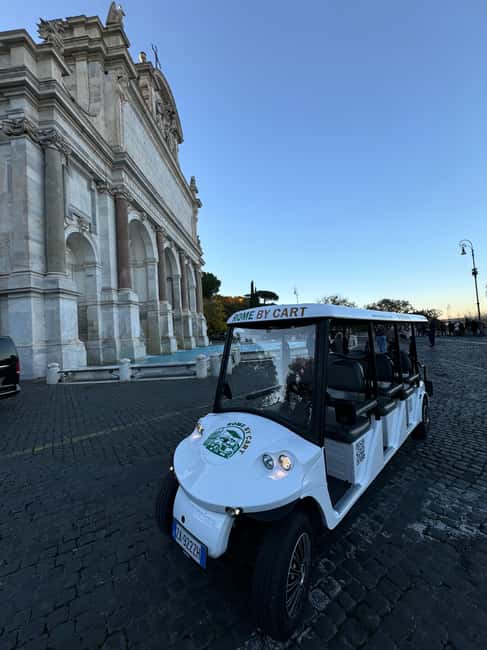
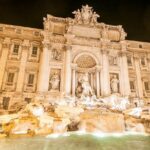
Then the tour visits Fontana dell’Acqua Paola, also called the Fountain of the Janiculum. Evening makes fountains feel more atmospheric. You also get a clearer sense of how Rome’s public water features fit into the city’s story.
After that, you’ll stop at the Church of Santa Cecilia. Church stops can be hit-or-miss on tours because some feel rushed. Here, the guided time is set aside enough to make the stop meaningful for people who enjoy art and sacred architecture.
If you’re the type who likes variety—major monuments plus quieter cultural stops—this stretch is where the tour starts feeling balanced rather than purely checklist-driven.
You can also read our reviews of more evening experiences in Rome
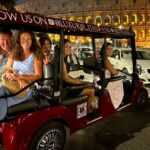
Roman Forum and the Colosseum: where night lighting changes everything
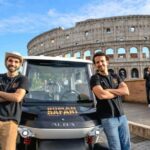
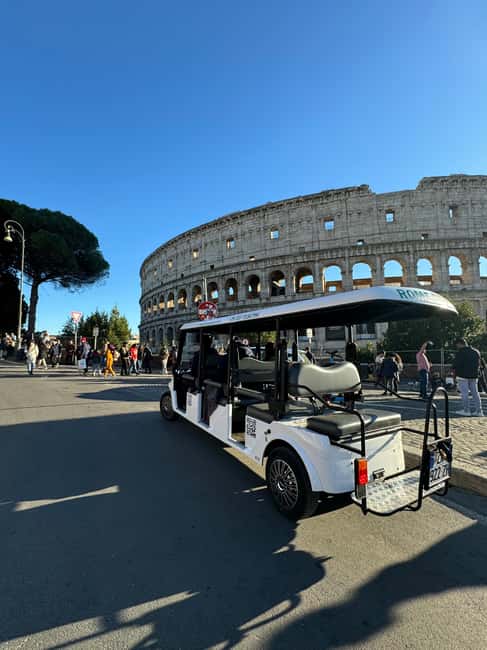
This is the part most people remember. The tour brings you to the Roman Forum and then on to the Colosseum with guided time at both.
At night, the Forum doesn’t look like a flat ruin you walked through in daylight. It looks like a framework of power—spaces defined by what Roman leaders needed their empire to communicate. With a guide, you’re not guessing. You’re learning how the areas fit together and why certain parts drew attention.
The Colosseum is similar. During the day, you can feel it’s big, but at night you feel its scale more. The lighting gives it that dramatic silhouette, and short guided time helps you understand what you’re looking at beyond the obvious outer walls.
Photo tip: treat your camera setup like a simple two-step. First take one or two wide shots to capture the monument in context. Then take a few close shots for details. Night lighting can be tricky, and this approach keeps you from burning time on one perfect frame.
Circus Maximus, San Pietro in Vincoli, and Castel Sant’Angelo
Next is Circus Maximus, a long, important trace of ancient Rome that people often expect to feel smaller than it does. Evening helps because you can sense it as a line through the city rather than a single point of interest.
Then comes San Pietro in Vincoli, with guided time set aside. This is the kind of stop that can surprise people: it’s not always the first name on a Rome list, but it adds depth and variety to the night’s ancient theme.
After that, you’ll head to Castel Sant’Angelo. At night, it reads like a fortress on the move—more story than sightseeing. With a guide, the stop becomes about how the building’s role evolved and why it sits where it does in the city’s flow.
This section is also where the golf cart matters again. You connect big points with less fatigue, so you’re not ending the night drained.
The Sant’Ignazio di Loyola stop and the return to Piazza di Spagna
The tour finishes with a stop at Church of Sant’Ignazio di Loyola, then returns to Piazza di Spagna. Ending back in a familiar central location is practical. You can grab gelato, find dinner, or decide whether you want to wander more on foot without a long trek back.
If you’re traveling with kids, this ending matters. One common pattern I’ve seen with family-style tours is that kids like the short “out and look” moments, then they’re ready to move again. Ending near a main hub makes it easier to keep everyone happy.
For couples or solo travelers, it’s also a good way to avoid the awkward part of the night where you’re too tired to make good decisions. You leave with energy, not just photos.
Price and value: does $48 per person make sense?
At $48 per person for a private 2-hour electric golf cart experience, the real value is not that it’s cheap—it’s that it’s time-efficient and low-stress.
You’re paying for:
- Private guide time (not just audio)
- A dedicated route that strings together major sites efficiently
- Less walking through central Rome’s uneven streets
- Flexibility to adjust based on your interests
So the question is: do you want to optimize your evening? If you have limited time in Rome, or you don’t want your day to be all museum lines and long staircases, the math often works. If you’re the kind of traveler who loves walking everywhere and building your own pace, you might prefer public transit or taxis and DIY routes—but that takes more energy and more planning.
Also, based on guide feedback you can reasonably expect guides to be friendly, responsive, and story-focused. Names like Pavlo, Max, Valerio, Fabio, and others come up for a relaxed, smooth experience and for tailoring the ride toward what families want to see.
Should you book this Rome night golf cart tour?
Yes, if you want an easy win on your first or second day in Rome. This tour is built for a comfortable pace, guided explanations at big monuments, and a night atmosphere that makes Rome feel cinematic without the crowds.
I’d book it if:
- you want to cover a lot of iconic sights in limited time
- you don’t want a long all-walking evening
- you like learning context, not just taking photos
- you’re traveling with mixed ages and want everyone to keep up
I’d think twice if:
- you need a very fixed schedule and don’t want uncertainty around the long lunch block
- you’re extremely sensitive to short walking segments and steps
- you have mobility needs where you’ll want a clear, confirmed fit
FAQ
Where does the tour start?
The pickup location is Piazza di Spagna.
How long is the tour?
The tour duration is 2 hours.
What is the price per person?
The price is $48 per person.
Is this a private tour?
Yes. It’s a private golf cart tour with a dedicated guide.
What sights will we see?
The route includes Piazza di Spagna (Spanish Steps area), Piazza del Popolo, the Pantheon, Piazza Navona, St. Peter’s Basilica, Vatican City (with lunch time), Janiculum Hill, Fontana dell’Acqua Paola, Church of Santa Cecilia, Roman Forum, Colosseum, Circus Maximus, San Pietro in Vincoli, Castel Sant’Angelo, and Church of Sant’Ignazio di Loyola.
Does the guide speak English?
Yes. Live tour guide languages include English, Italian, and Spanish.
What should I bring?
Bring comfortable shoes, a hat, a camera, sunscreen, and water.
Is it wheelchair accessible?
The activity information lists wheelchair accessible, but it is also marked not suitable for wheelchair users. You’ll want to check with the provider before booking.
Can I customize the itinerary?
Yes. The tour offers flexibility to customize your itinerary based on what you want to see.
How is cancellation handled?
It offers free cancellation up to 24 hours in advance for a full refund.