REVIEW · FLORENCE
Florence: Accademia Gallery Small-Group Guided Tour
Book on GetYourGuide →Operated by Crown Tours · Bookable on GetYourGuide
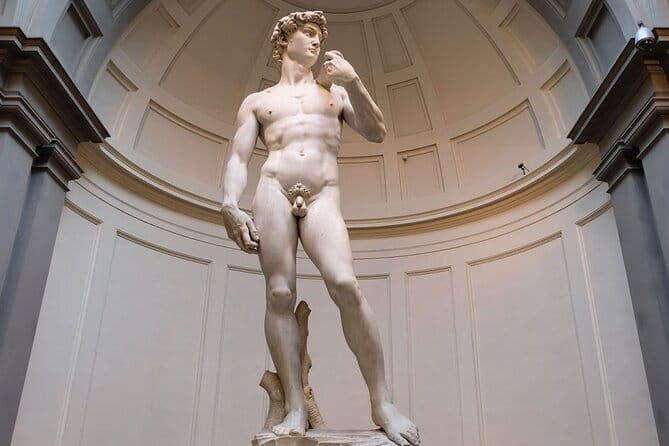
David in person changes your tempo. In just 1 hour, you get a guided hit of Florence’s Renaissance genius at the Accademia Gallery, with Michelangelo’s David as the centerpiece. It’s the kind of tour that helps you understand what you’re seeing, fast, without feeling like you’re reading a textbook.
I especially love the reserved skip-the-line entry with priority access through express security. And I love how the guide ties David to the Hall of Prisoners, so you’re not just looking at famous works—you’re seeing the artist’s process and choices.
One thing to plan for: in busier seasons, you may still have to queue in the security check line, even with the express route.
In This Review
- Key highlights worth knowing before you go
- Why the Accademia Gallery is the right target for a short tour
- Meeting Crown Tours at Via Ricasoli, 39 (and what to look for)
- Skip-the-line entry: the real time-saver is security
- Inside the Accademia: how the guide keeps your visit focused
- Michelangelo’s David: more than a famous statue
- The Hall of Prisoners: seeing Michelangelo’s work-in-progress mindset
- Renaissance paintings, sculptures, and artifacts: what fills the rest of the hour
- The Museum of Musical Instruments: art you can almost hear
- Headsets and group pacing: how the tour stays comfortable in a crowd
- Price and value: is $60.27 worth it for a 1-hour tour?
- Who should book this Accademia Gallery small-group tour
- The practical checklist from the tour details
- Should you book this tour of the Accademia Gallery?
- FAQ
- How long is the Accademia Gallery small-group guided tour?
- What’s included in the price?
- Does the tour help you skip the line?
- Where do I meet the tour staff?
- Is the tour wheelchair accessible?
- What is the cancellation policy?
- Is the tour guide speaking English?
Key highlights worth knowing before you go
- Priority entrance helps you avoid the longest lines
- David as the anchor gives the whole visit a clear focus
- Hall of Prisoners shows Michelangelo’s unfinished ideas in stone
- Headsets keep you hearing the guide while you move
- English live guide makes the art easier to connect with
- Small-group pacing works well for a quick, meaningful visit
Why the Accademia Gallery is the right target for a short tour
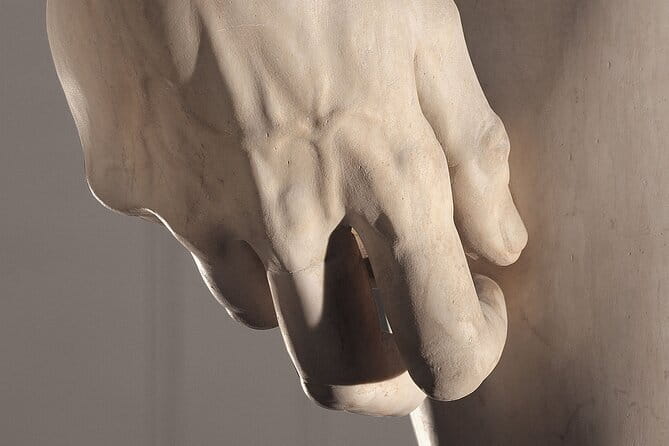
If you only have a limited amount of time in Florence, the Accademia Gallery is a smart choice. It’s built around some of the most famous Renaissance art in the world, so the time you spend there feels efficient. A guided format matters because the artwork is dense with symbolism, technique, and historical purpose.
This small-group tour is designed for a fast but structured visit. You’re guided through the main highlights rather than wandering. That’s great if you want to see the key works and walk out with a clearer sense of why they’re famous.
And yes, David is the reason most people show up. But the value is that the tour doesn’t stop at the headline sculpture. You also get key context around Michelangelo’s creative process, especially in the unfinished sculptures in the Hall of Prisoners.
You can also read our reviews of more guided tours in Florence
Meeting Crown Tours at Via Ricasoli, 39 (and what to look for)
Your tour starts at Via Ricasoli, 39, 50122, Firenze FI, Italy. The instruction is simple: meet Crown Tours staff in purple uniforms or carrying Crown Tours flags. Getting this right matters because you’re starting a time-sensitive museum visit, and you don’t want to spend your first minutes hunting for the group.
The tour ends back at the same meeting point. That back-to-back setup is useful if you’re planning a tight day and want to avoid the uncertainty of a different drop-off location.
There’s no hotel pickup and drop-off, so you’ll need to make your own way to the meeting spot. If you’re using public transit or walking from a central area, give yourself a little buffer so you arrive before the group departs.
Skip-the-line entry: the real time-saver is security
The tour includes reserved skip-the-line entry tickets and access through an express security check. In practice, this means you’re not starting from scratch with general admission lines. Instead, you’re using the prearranged entry flow that prioritizes your group’s arrival.
That can make a huge difference with Florence’s peak days, when entry queues can turn a short visit into a long wait. The tour also notes that in busier seasons you may still have to queue in the security line. So plan your day with flexibility, even if the tickets help.
You also get headsets, which is a quiet but important detail. In museums like this, sound carries poorly and crowds can interrupt normal conversation. Headsets help you stay with the guide even when you’re moving through tight spaces.
Inside the Accademia: how the guide keeps your visit focused
With only 1 hour, the tour has to move with purpose. The guide’s job is to keep you oriented: where to stand, what to notice, and how each stop connects to the bigger story of Renaissance Florence.
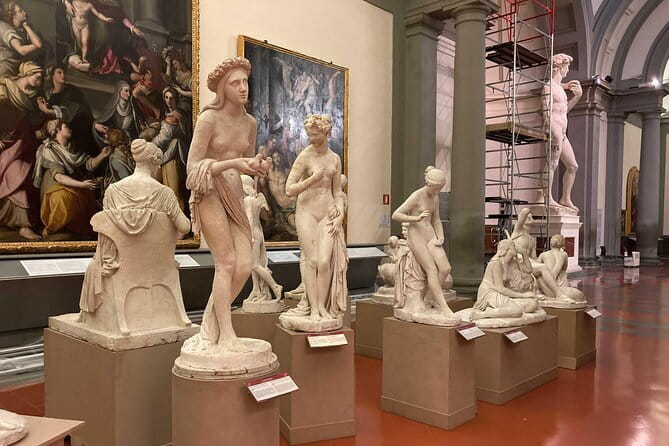
You can expect a guided route that moves from the main sculpture focus to related Renaissance works and key room highlights. The tour is described as taking you through Renaissance paintings, sculptures, and artifacts, plus an art-and-music side stop at the Museum of Musical Instruments.
That structure is what makes it worth paying for a guide. Self-guided is possible, but with a short window you’d likely spend more time figuring out what matters most. Here, the guide essentially does that sorting for you in real time.
Michelangelo’s David: more than a famous statue

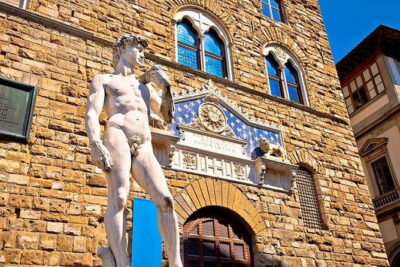
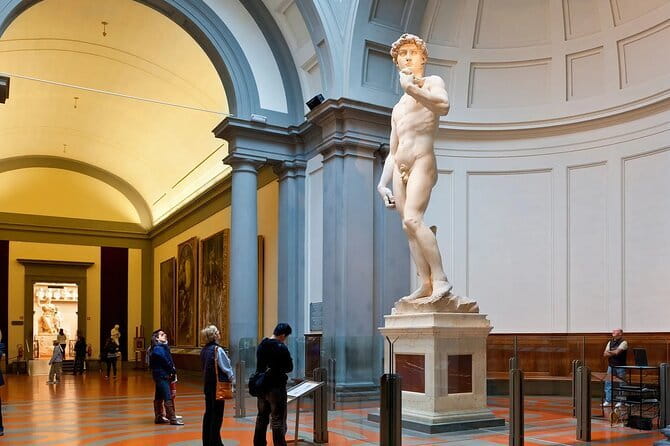
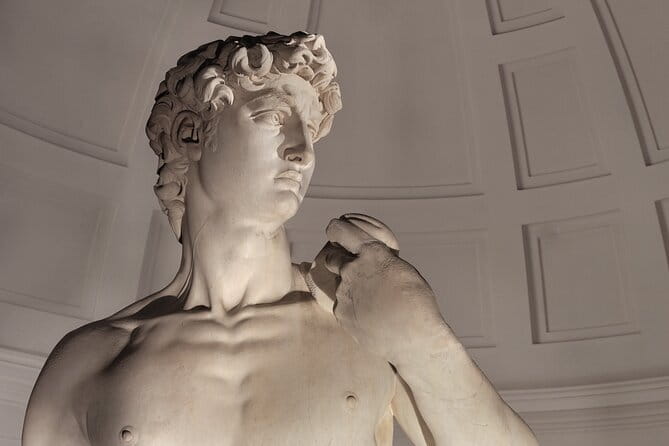
The big stop is Michelangelo’s David, and it’s treated as the emotional anchor of the tour. The guide focuses on what makes this sculpture so gripping: its monumental scale and the way the stone is shaped into something that feels startlingly lifelike.
What I like about this kind of explanation is that it pushes you beyond the usual checklist of facts. You’re encouraged to look at the details that create realism—how the work transforms stone into a convincing human form. When someone talks you through what to notice, David stops being just an image you’ve seen online. It becomes a crafted, intentional object.
The guide also covers the historical and artistic significance of David. That matters because the sculpture isn’t just “great art,” it’s part of a broader Renaissance mindset: human expression, ambition, and the power of sculpture to communicate ideals.
If you’re the type of traveler who wants to understand why something is famous, this stop is a strong payoff. And if you just want to see the masterpiece up close, you’ll still get that moment, with less time lost in the crowd.
You can also read our reviews of more museum experiences in Florence


The Hall of Prisoners: seeing Michelangelo’s work-in-progress mindset
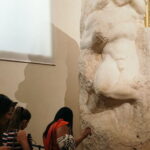
After David, the tour shifts to a different kind of power: the Hall of Prisoners. Here, you’ll encounter Michelangelo’s unfinished sculptures, where forms appear to emerge from stone.
This is a fascinating change of pace because unfinished art can feel harder to appreciate at first. The guide helps you read what you’re seeing: not only the shapes, but the sense of struggle and release. The sculptures are described as seeming to try to break free, which invites you to think about the relationship between artist and medium.
From a practical standpoint, this stop adds variety to your visit. David is one overwhelming icon. The Hall of Prisoners gives you a window into the creative process and what Michelangelo was experimenting with in sculptural form.
In a 1-hour tour, this is also a smart way to keep your brain engaged. One masterpiece can start to blur into a blur of photos. A contrasting room with a different artistic purpose refreshes your attention.
Renaissance paintings, sculptures, and artifacts: what fills the rest of the hour

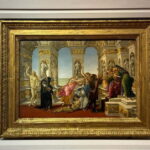
Between the biggest headline rooms, the tour continues through other Renaissance artworks—paintings, sculptures, and artifacts—to give the context that the world-famous pieces alone can’t provide. You’re not just doing a “greatest hits” photo safari. You’re getting a sense of the artistic ecosystem around Michelangelo’s work.
Accademia’s selection helps you understand that Renaissance creativity wasn’t one isolated miracle. It was a system of patronage, training, experimentation, and visual storytelling. A guide is useful here because museum objects can look similar from far away, unless someone helps you notice the right cues.
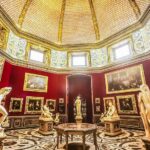
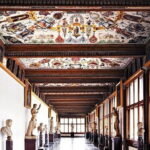
You’ll also see aspects of the museum’s architecture. The narration connects the halls to the idea of artistic heritage and patron dedication. Even if you don’t go deep into architecture, this helps your visit feel like a complete experience instead of a quick stop at two rooms.
The Museum of Musical Instruments: art you can almost hear

One stop that people often overlook in major museum itineraries is the Museum of Musical Instruments. In this tour, it’s included as a tonal shift: a place where you see the intersection between visual craft and sound-based artistry.
The tour description emphasizes the connection between visual and auditory artistry. That’s the point: you’re not just looking at instruments as objects, you’re seeing them as designed artifacts—built with aesthetic thinking as much as functional purpose.
With a short tour, this kind of stop is a nice change from sculpture-only focus. It also helps the visit feel more varied and less one-note, which is important when you only have 60 minutes.
Headsets and group pacing: how the tour stays comfortable in a crowd

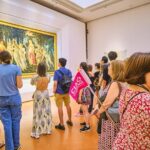
You get headsets included, and that’s more valuable than it sounds. You’re in a museum with other people moving in multiple directions. With a guide speaking, headsets help you keep pace without constant repositioning or asking others to repeat themselves.
The tour is also described as small-group, which usually means less pressure than a large bus-coach-style crowd. In practical terms, it can make it easier to hear explanations and get your bearings fast, especially around high-demand spots like David.
The downside of any museum guide is that you’re following a route. If you’re the type who loves lingering in front of one artwork for a long time, a 1-hour highlight tour can feel a little tight. Still, for many people, that’s the sweet spot: you get the essentials with meaning, without burning an entire day.
Price and value: is $60.27 worth it for a 1-hour tour?
The price is $60.27 per person for a 1-hour guided visit with reserved skip-the-line entry tickets and headsets.
Here’s how I think about value for this kind of experience:
- Time saved matters in Florence. Priority entry and express security reduce the chance you spend your limited hours staring at queues.
- Guide interpretation matters. Accademia’s top works can be harder to read without context, especially in the Hall of Prisoners where unfinished forms can be confusing if you don’t know what you’re looking for.
- Inclusions are not “just a guide”. Headsets are specifically useful, and reserved tickets remove uncertainty about entry.
What could make it less worth it? If you’re traveling with a very flexible schedule and you’re happy moving at your own pace, you might decide to visit independently. But if you want a tight, meaningful route and you’d rather pay to reduce friction, this price looks reasonable for what you get.
Also note: there’s no hotel pickup. You’re paying for the museum experience itself, not transportation. So factor in your own trip to Via Ricasoli.
Who should book this Accademia Gallery small-group tour
This is a strong fit if you:
- Want Michelangelo’s David and related context without guessing your way through rooms
- Prefer guided meaning over hours of self-interpretation
- Have limited time and want a structured 1-hour visit
- Appreciate hearing about artistic process, not just facts
It’s also useful if you like museums but don’t want them to turn into a solo puzzle. A guide helps you translate what’s in front of you into something you can remember.
If you’re the kind of visitor who always wants to linger, reread, and revisit the same corner for 30 minutes, you might find the pace too fast. In that case, you might pair this tour with additional independent time in the gallery afterward, assuming your schedule allows.
The practical checklist from the tour details
Before you go, keep the basics straight:
- Language: English (live tour guide)
- Tickets: reserved skip-the-line entry, express security check access
- Headsets: included
- Meeting point: Via Ricasoli, 39; look for Crown Tours staff in purple uniforms or Crown Tours flags
- Ends: back at the meeting point
- Wheelchair accessible: yes
- What to bring: passport or ID card for children
- Not allowed: pets, weapons or sharp objects, alcohol and drugs
- Not allowed: unaccompanied minors
- Security note: you may have to queue in security during busier seasons
- Duration: 1 hour; starting times depend on availability
Should you book this tour of the Accademia Gallery?
I’d book it if you want the fastest route to the most important Accademia experiences, with a guide who helps you see more than the headline. The priority entrance and headsets are practical perks, and the pairing of David with the Hall of Prisoners is exactly the kind of contrast that turns sightseeing into understanding.
I would hesitate only if you’re deeply focused on slow, independent museum time, because this is built for a 60-minute highlights format. Otherwise, for most first-time Florence visitors—and for anyone who wants Michelangelo without the guesswork—it’s a good use of limited time.
Also, the track record is solid: the tour has a 4.3/5 rating across 24 reviews, with praise that lines up with the core promise—learning, seeing David, and keeping the visit short but worthwhile.
FAQ
How long is the Accademia Gallery small-group guided tour?
The tour lasts 1 hour.
What’s included in the price?
You get a tour guide, reserved skip-the-line entry tickets to the Accademia Gallery, and headsets.
Does the tour help you skip the line?
Yes. It includes skip-the-line access with priority entrance and an express security check.
Where do I meet the tour staff?
Meet at Via Ricasoli, 39, 50122, Firenze FI, Italy. Look for Crown Tours staff in purple uniforms or carrying Crown Tours flags.
Is the tour wheelchair accessible?
Yes, the activity is wheelchair accessible.
What is the cancellation policy?
You can cancel up to 24 hours in advance for a full refund.
Is the tour guide speaking English?
Yes. The live tour guide provides the tour in English.
If you want, tell me your travel dates and whether you’re going on a weekday or weekend, and I’ll help you pick a sensible arrival time strategy for getting to the meeting point smoothly.