REVIEW · SAN FRANCISCO
San Francisco: Food + History + Art Tour
Book on Viator →Operated by Real San Francisco Tours · Bookable on Viator
San Francisco street art and food in the same walk. This Mission District tour turns a simple midday stroll into a guided mix of tastings and neighborhood stories, with enough samples to feel like a full meal. I like that the pacing leaves time to actually look around, not just shuffle from one photo spot to another.
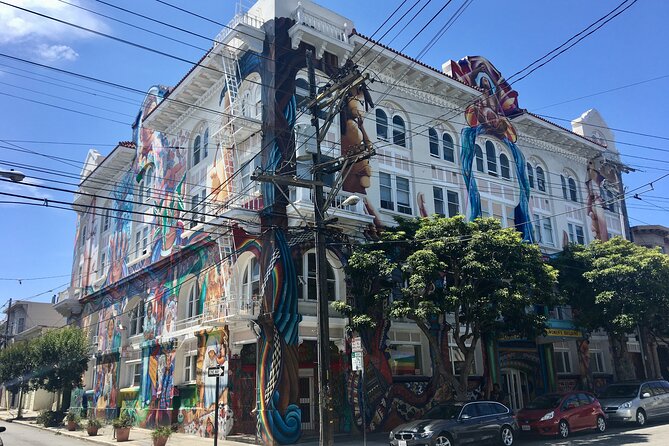
I also like the way the tour uses the streets as the lesson plan. You’ll see major mural walls like Balmy Alley and the Women’s Building mural, and your guide ties the art to what’s going on in the neighborhood today.
One thing to consider: it’s a walking tour, and it assumes you’ll want to eat. Drinks aren’t included, so plan for what you’ll sip and wear shoes you don’t mind getting a little foot-worn.
In This Review
- Key points before you go
- Entering the Mission: why Elsy’s is a smart start
- Mission Street tastings: the kind of food stop that actually fills you up
- Balmy Alley murals: the art stop that forces you to slow down
- Valencia Street: independent shops and snack planning in motion
- The Women’s Building mural: a historic building with an unmistakable message
- Mission Dolores Park to Castro: ending with a breather, not a sprint
- Price and value: what $100 gets you in real terms
- How to get the most from the walk (without overplanning)
- Who this Mission District Food + History + Art tour is for
- Should you book this tour?
- FAQ
- How long is the Mission District Food + History + Art Tour?
- What does the price include?
- Where does the tour start and end?
- Is this a walking tour?
- Are drinks included?
- How many people are in the group?
Key points before you go
- Small group size (max 15): easier conversation with your guide and less crowd pressure
- 3–4 tastings that add up to a meal: built for people who want food, not just sightseeing
- Balmy Alley Murals stop: a real street-art landmark, with time to look closely
- Women’s Building mural visit: a powerful art stop tied to the building’s historic presence
- Ends at Mission Dolores Park: a calmer final moment, plus quick access to the Castro
Entering the Mission: why Elsy’s is a smart start
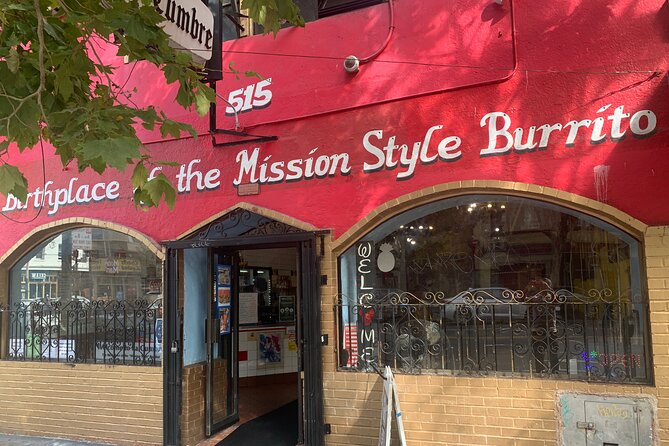
The tour begins at Elsy’s Restaurant (2893 Mission St), right in the Mission. Meeting here is practical: you’re already in the right neighborhood, and you don’t waste time commuting or hunting down a “start point” that feels miles away from the fun.
Aim to get there 10–15 minutes early. The tour is scheduled for a 12:00 pm start, and it’s easy to miss the group if you drift in late. This is also where you’ll get your first taste of the Mission’s rhythm before you head out on foot.
Stop 1 is the Mission District (about 1 hour). Expect a guided walk that sets the stage—how the area has changed, what different art forms mean here, and how the food culture fits into that story. The best part is that this isn’t just facts on a page. You’re learning while you’re surrounded by the real texture of the neighborhood: storefronts, street life, murals, and monuments you’d normally scroll past.
If you’re the type who likes to understand where you are (not just see it), this opening hour does that job. It helps you notice details later when you’re hunting for your own snacks and photos.
You can also read our reviews of more tours and experiences in San Francisco.

Mission Street tastings: the kind of food stop that actually fills you up
After the broad orientation, you move to Mission Street for about 20 minutes. This is where the tour shifts from “here’s the neighborhood” to “here’s why you’re here”—the food.
The tour includes 3–4 tastings, each for roughly 20 minutes, and those samples are meant to add up to the equivalent of a normal 3-course meal. That matters because it changes how you plan your day. You don’t have to eat a full breakfast, and you shouldn’t expect the tour to feel like tiny bites between museum exhibits. It’s built as a meal.
Drawback? If you have very specific dietary restrictions, the tour data doesn’t list ingredients or options. You can still go, but I’d suggest confirming what tastings are like before you book, so you don’t show up surprised.
Still, Mission Street is a smart place to start tasting. The Mission’s food scene is the kind that rewards curiosity, and walking means you can keep your appetite aligned with what you’re seeing.
Balmy Alley murals: the art stop that forces you to slow down
Next is Balmy Alley Murals for about 20 minutes. This is one of the tour’s standout segments for a simple reason: the subject is the alley itself. Street art needs close attention, and you get it here.
Balmy Alley is described as a local landmark, and that’s the right expectation. You’re not just passing by a wall you’ll forget in five seconds. You’re given time to look at the murals themselves and to understand what they represent in the neighborhood’s public voice.
The guide also frames the art with context—what the community has used murals to say over time, and how you can read the visual language as you move. In practice, it means you’ll recognize more than just shapes and colors. You’ll notice messages, styles, and the way different pieces relate to each other along the alley.
Practical tip: bring your phone camera mindset, but also bring your eyes. The “zoom in” habit can make you miss the full wall story.
Valencia Street: independent shops and snack planning in motion
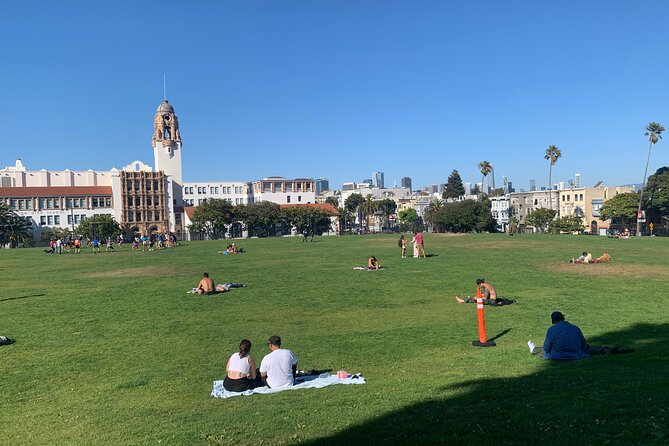
Then you head to Valencia Street for about 30 minutes. This is where the Mission feels like a street market that isn’t trying too hard. The tour description focuses on independent shops, restaurants, and cafes—and that’s exactly the kind of environment where a guided shortcut to good stops is worth paying for.
You’ll take in the street, and you’ll also be directed to “the best spots,” with tastings tied into this portion of the walk. Because the tour is designed so the tastings combine into a full meal, Valencia is a key part of the value. You get the feeling of browsing and choosing, without having to figure everything out alone.
A small caution: if you’re hoping for a quiet, museum-like atmosphere, Valencia might not be that. This is active street territory. If you’re sensitive to noise or crowded sidewalks, you’ll still enjoy it—you just won’t treat it like a calm stroll.
The Women’s Building mural: a historic building with an unmistakable message
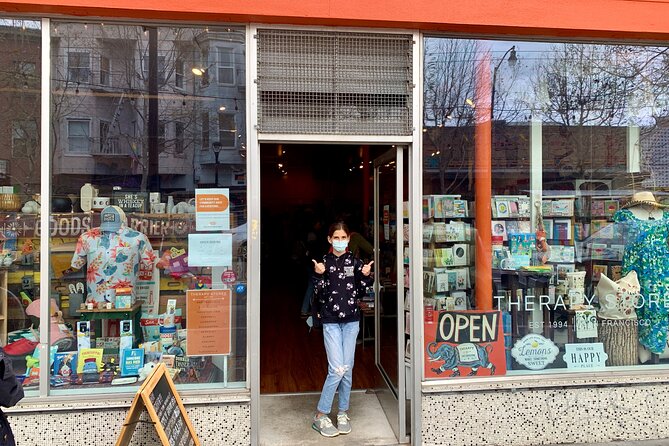
Stop 5 is the Women’s Building Mural (about 10 minutes). The key detail here is that the mural surrounds a historic, five-story building. That combination—big public wall art plus a building with history—makes this stop feel more anchored than a lot of random mural photos.
The tour notes the admission ticket is not included, but it doesn’t say you must pay to see what’s outside. So your realistic expectation is: you’ll see the mural as part of the walk. If you later want to go inside for more, you’d handle that separately.
Even at just 10 minutes, this stop has weight. It’s the kind of mural you look at longer than you planned, because the scale and setting do the work.
Mission Dolores Park to Castro: ending with a breather, not a sprint
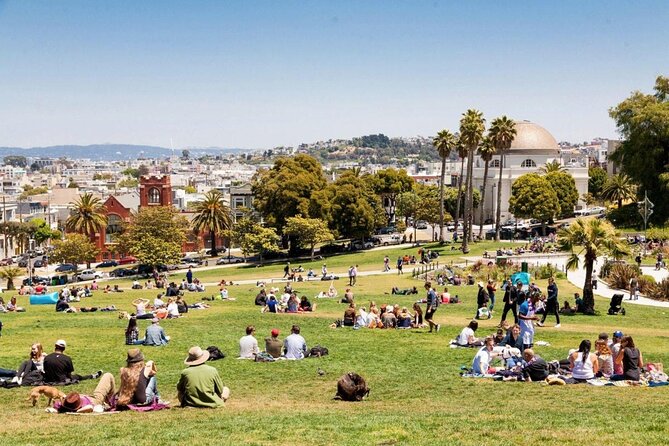
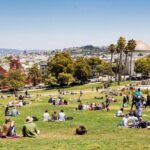
The tour wraps with Mission Dolores Park (about 20 minutes). This ending makes sense. After eating, walking, and looking closely at art, you get a place to sit and regroup.
The tour also notes that it ends at Mission Dolores Park, near a MUNI stop, and that it’s about a 10-minute walk from Castro Street. In other words, you’re not dropped in the middle of nowhere. You finish somewhere you can continue enjoying without needing a ride.
The itinerary includes The Castro (about 10 minutes) as an exploration stop, and it’s also described as being close. So the flow feels like: you end at Dolores Park, then you’re set up to carry on into the Castro area on your own.
If you like ending tours with a payoff—views, people-watching, and an easy next step—this is a good match.
Price and value: what $100 gets you in real terms
At $100 per person for about 3 hours, the biggest value driver is the meal setup. The tour includes 3–4 food tastings, each around 20 minutes, and the tastings are described as the equivalent of a normal 3-course meal.
So you’re not paying just for a guide and a map. You’re paying for:
- a guided neighborhood walk (food + art + history framing)
- multiple tasting stops timed like actual courses
- time to see murals properly
- a small-group format that keeps the experience from feeling like cattle logistics
Another factor: the tour includes a donation of $1 per guest to a non-profit, Climate Cents. It’s not a deciding factor for most people, but it adds a nice feel-good line to your budget math.
What isn’t included is just as important:
- Drinks aren’t included. Plan on covering your own beverage.
- Gratuities aren’t included (and since tips are voluntary, you decide). If you like the guide’s work, a tip in the 15–20% range is a reasonable expectation.
To judge if this is good value for you, ask one question: do you want a guided food-and-art route that behaves like a meal? If yes, the price makes sense quickly.
If you only want scenery, you might get less out of it. But if you want food with context and street art with meaning, this tour is priced like a real experience, not a skimmed highlight walk.
How to get the most from the walk (without overplanning)
This tour is designed around foot travel, a reasonable pace, and a small group of up to 15. That combination is great for asking questions and keeping the conversation flowing, especially during tastings.
Here’s what will help you enjoy it more:
- Come hungry. The tastings are meant to be a full meal.
- Wear comfortable shoes. You’ll be on sidewalks for the whole session.
- Bring a little patience for crowds near major mural areas and popular streets.
- If you have mobility concerns, the tour explicitly suggests using a private tour via their website instead.
One small but practical note: the tour uses a mobile ticket, and you’ll receive confirmation at the time of booking. If you’re the kind of person who hates last-minute tech surprises, double-check your phone battery before you start.
Who this Mission District Food + History + Art tour is for
I think this tour fits best if you like your travel to have a plan, but not a rigid script.
You’ll likely enjoy it if:
- you want street art plus neighborhood context
- you like tasting different spots instead of picking alone
- you prefer a small-group walking tour over big bus tours
- you want a midday activity that ends with a place to relax
You might skip it if:
- you don’t want to eat on a tour day
- you need detailed, ingredient-specific dietary accommodations (the data doesn’t cover that)
- you’d rather spend more time in one area than cover several in a single session
Should you book this tour?
Yes—if your ideal San Francisco day includes Mission District murals and a guided route that treats food like the main event. The $100 price works best because the tastings are built to feel like a full meal, not token samples, and because the art stops are scheduled with enough time to actually see what you came for.
If you’re picky about drinks or meal contents, plan around what’s not included. And if walking is a challenge, consider the private option mentioned by the tour provider.
If you want a fast way to understand how the Mission mixes art, identity, and eating—this is a solid bet.
FAQ
How long is the Mission District Food + History + Art Tour?
It lasts about 3 hours.
What does the price include?
You get a tour guide, 3–4 food tastings (each about 20 minutes), and a $1 donation per guest to Climate Cents.
Where does the tour start and end?
It starts at Elsy’s Restaurant on Mission St and ends at Mission Dolores Park, near a MUNI stop. The provided end point is at 18th Street & Church Street.
Is this a walking tour?
Yes. It’s a walking tour, moving at a reasonable pace.
Are drinks included?
No. Drinks are not included.
How many people are in the group?
The tour has a maximum of 15 travelers.