REVIEW · DUSSELDORF
Dusseldorf: Urban Art Walk / Street Art Tour
Book on GetYourGuide →Operated by Pretty Portal · Bookable on GetYourGuide
Street art in Düsseldorf has receipts. This 2-hour urban art walk led by gallery owner Klaus Rosskothen turns public walls into a living lesson on modern art and city change. I especially like how the route covers real, off-the-beaten-track places (not the usual photo stops), and you get context so the art feels intentional, not random.
Two things I love: the background on artists and techniques, and the mix of international names with local Düsseldorf scenes. One possible drawback to plan for: the tour is in German and the pacing is brisk, so if you’re moving slowly or you’re hoping for lots of extra time at each wall, you might want to mentally budget for that.
In This Review
- Key Things I’d Note Before You Go
- What This Urban Art Walk Really Delivers
- Meeting Klaus Rosskothen at Ellerstraße and Willi Becker Allee
- How the Walk Covers Friedrichstadt and Bilk (Without Feeling Like a “Route”)
- Murals, Installations, and Interventions: The Big-Image Stops
- PDOT’s Signature Spirits: When Local Imagery Gets Explained
- Sticker Art and Paste-Ups: The Quick, Fleeting Layer of Street Creativity
- District History, in Short Bursts That Actually Help You Look
- Pace, Walking Distance, and the Language Reality
- Artists, Techniques, and Why This Tour Is More Than Photo Spots
- Price and Value: Is $23 a Good Deal?
- Who This Tour Is Best For
- Where the Tour Can Lead Next
- Should You Book the Düsseldorf Urban Art Walk?
- FAQ
- How long is the Düsseldorf Urban Art Walk?
- What distance will I walk?
- Who leads the tour?
- Where does the tour start?
- Which parts of the city does the tour cover?
- What kinds of street art will I see?
- Which artists are included?
- How many people are in the group?
- What language is the tour in?
- What’s the cancellation policy?
Key Things I’d Note Before You Go
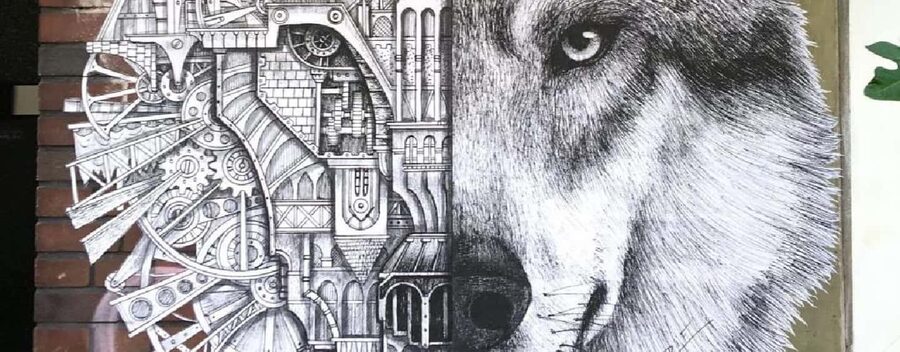
- A gallery owner guide: Klaus Rosskothen brings 18 years of urban art experience to the street level.
- Public space art, not indoor exhibits: you’ll see how murals, installations, and interventions work on real city streets.
- Friedrichstadt + Bilk focus: two districts where contemporary art and everyday life overlap.
- Stickers and paste-ups count too: not only big murals, but also the smaller, quicker-to-appear street formats.
- International + local references: you’ll meet artists like Alexis Bust Stephens, Marc Woehr, MadC, Innerfields, Harald Naegeli, and L.E.T., plus PDOT’s signature spirits.
What This Urban Art Walk Really Delivers
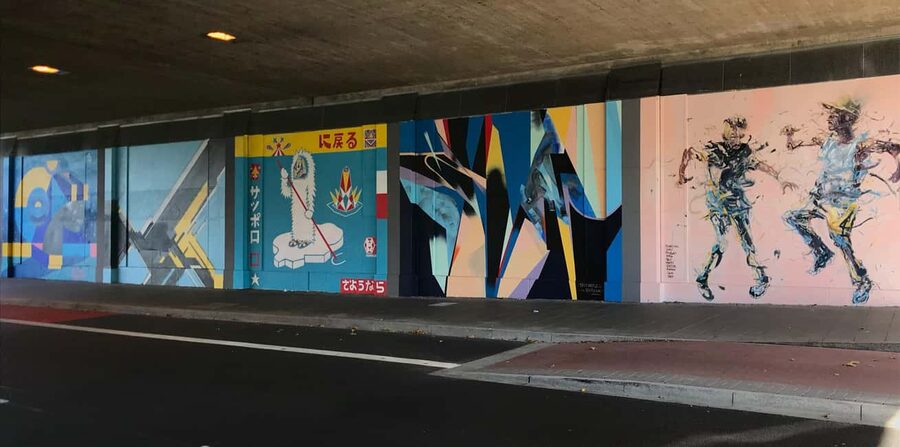
Düsseldorf is famous for museums and galleries, but contemporary art has moved outside. This walk is built for that reality: urban art lives where you can’t control lighting, weather, or timing. The result is art that feels a little temporary and a little public performance—and that’s exactly the point.
I like that you’re not left with just visuals. The guide doesn’t treat the walls like a scavenger hunt. You get the origin of works, how artists approach public space, and how this kind of art became accepted as contemporary art in its own right.
And the small-group size matters. With up to 20 participants, the walk feels more like a conversation than a parade. You’re more likely to ask questions and get direct answers instead of watching from the back.
Meeting Klaus Rosskothen at Ellerstraße and Willi Becker Allee
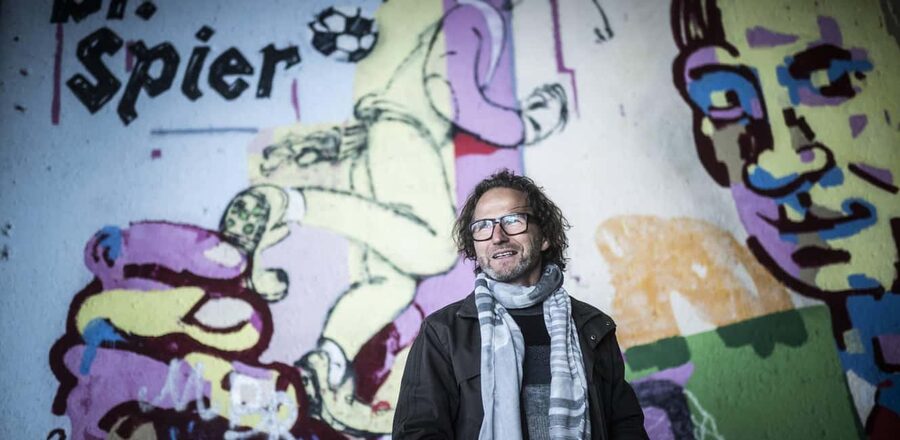
The tour starts at the corner of Ellerstraße and Willi Becker Allee. From there, Klaus Rosskothen (Pretty Portal gallery owner and urban art professional with 18 years in the field) sets the tone. Expect an introduction that links Düsseldorf’s street art to broader ideas: how artists claim space, how audiences read images in motion, and why these works can change how you see a district.
This opening matters more than you might think. If you start with the right lens, murals and paste-ups stop being mere decoration. They become messages, references, and experiments—some polished, some raw, all created for public viewing.
How the Walk Covers Friedrichstadt and Bilk (Without Feeling Like a “Route”)
The tour runs through Friedrichstadt and Bilk in roughly two hours. The total walking distance is about 3 km, which is manageable for most visitors, but the pace is city-energetic because you’re stopping often to look and listen.
Think of the itinerary less as a fixed list of numbered attractions and more as a sequence of “art conversations” in different parts of the city. Each segment is designed to match a type of work, and the guide connects each piece to bigger themes—local identity, international trends, and how urban art evolves over time.
Murals, Installations, and Interventions: The Big-Image Stops
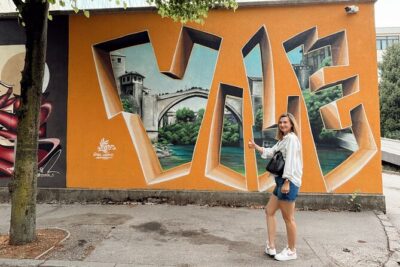
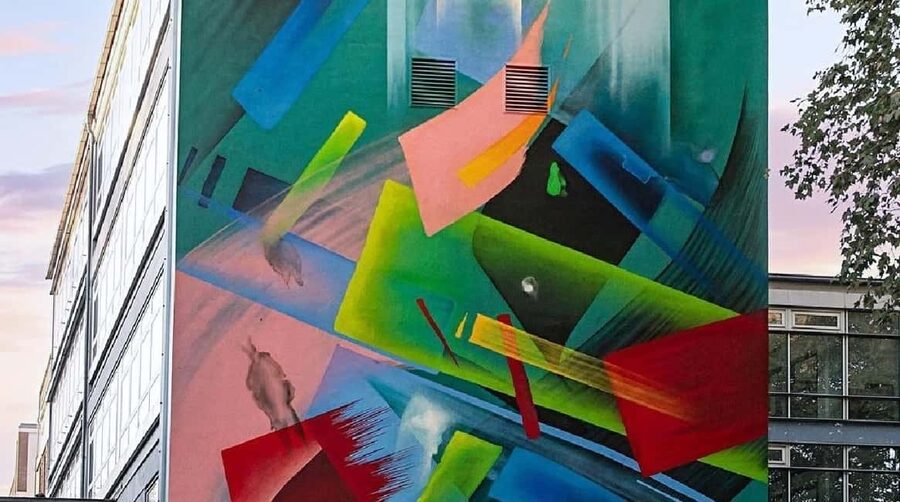
One of the strongest parts of this experience is the emphasis on urban art in public spaces—murals, installations, and interventions. These are the works that change the feel of a street. You get to see how scale works outdoors, how images interact with building textures, and why some pieces look designed specifically for their surroundings.
As the walk moves through the districts, you’ll encounter works by internationally known urban artists, including:
- Alexis Bust Stephens
- Marc Woehr
- MadC
- Innerfields
- Harald Naegeli
- L.E.T.
What I find useful is that you’re not just told the artist names. You also get the story behind the work: where the ideas come from, what strategies artists use, and how the pieces fit into the development of street art as a recognized contemporary art form.
Possible drawback for this segment: if you’re hoping for slow, lingering inspection at each mural, this part may feel fast. The walk packs in multiple stops, and the guide’s explanation is designed to keep momentum moving.
PDOT’s Signature Spirits: When Local Imagery Gets Explained
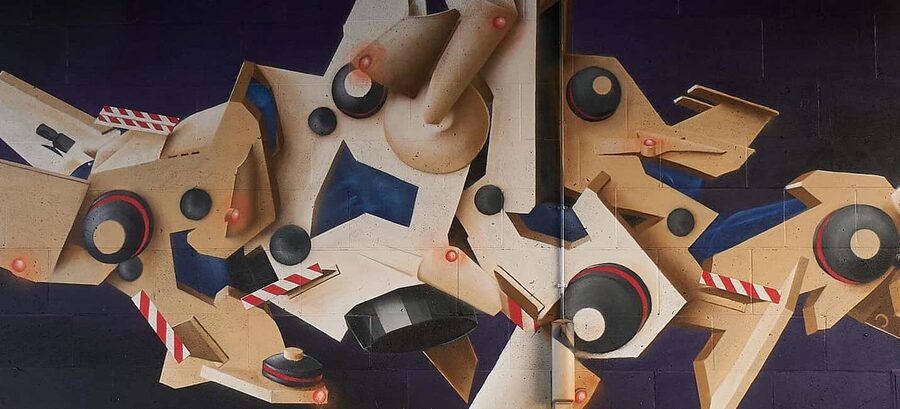
A highlight is learning about PDOT’s characteristic spirits. That kind of repeat visual theme is one of the clues that street art isn’t always one-off chaos. It can be a recognizable world, with motifs that show up across the cityscape.
When the guide explains PDOT’s approach, the art tends to land differently. Instead of looking at a mural as a standalone image, you start reading it like a character-driven system—something closer to illustration culture and iconography than traditional fine-art framing.
This also helps you connect international street art with local Düsseldorf identity. Even if you don’t already know PDOT’s work, you’ll understand what makes it recognizable and why that matters for the city.
Sticker Art and Paste-Ups: The Quick, Fleeting Layer of Street Creativity
Street art isn’t only the large, permanent-looking wall pieces. The tour also includes sticker art and paste-ups, which often feel like a different language: smaller, more immediate, and sometimes more fragile.
This is where you’ll start noticing the texture of the city—layers, overlaps, and evidence of recent change. Urban art in public space is lively because it’s temporary and constantly evolving. You’re seeing a snapshot of a living scene, not a static museum collection.
Practical tip: wear shoes that handle frequent short stops and look-ups. With stickers and paste-ups, you’ll often need to step closer and angle your head. If you’re with a group of 20, that’s easier than with larger tours.
District History, in Short Bursts That Actually Help You Look
The walk includes brief insights into the history of Friedrichstadt and Bilk and how their cultural development ties into their street art. These pieces of context are the difference between seeing art and understanding why it’s there.
You don’t need a long lecture. In two hours, the guide keeps history tightly connected to what you’re viewing. That means you’ll understand not just who made a piece, but what kind of environment it was responding to—and how Düsseldorf’s city life supports (and changes) this kind of art.
Pace, Walking Distance, and the Language Reality
Here’s the practical side so you can plan your expectations.
- Duration: about 2 hours
- Distance: around 3 km
- Group size: max 20
- Language: German
- Tour guide is live (Klaus Rosskothen), and some content may be shown in original language
Because it’s German, the tour experience will work best if you’re comfortable listening in German or you like picking up art context even when you miss a few phrases. If you’re relying on translation, don’t assume it will slow down for non-German speakers.
Also, the tour moves with a “walk and talk” rhythm. One of the only real concerns I’d flag is that if you need extra time to process visuals—or you’re not a fast walker—you may have to focus on the parts that interest you most and accept that you can’t spend equal time on every wall.
Artists, Techniques, and Why This Tour Is More Than Photo Spots
This is a tour for people who like street art as a form, not just a subject.
You’ll hear background on:
- origins of specific works
- artistic strategies (how public space is used)
- how urban art developed into recognized contemporary art
- different techniques, including murals, installations, sticker art, and paste-ups
That set of topics is exactly what makes the walk valuable. If you only see street art as decoration, it can feel like background noise. With context, you start noticing patterns: repetition, iconography, symbolism, and the way artists choose placement to reach real audiences.
Price and Value: Is $23 a Good Deal?
At $23 per person for about two hours, this isn’t a “museum substitute” and it isn’t trying to be. It’s a specialized, guided urban art session with a working gallery owner.
What you’re paying for isn’t just walking. You’re paying for:
- direct access to Klaus Rosskothen’s 18 years of urban art experience
- a small-group format that supports conversation
- explanations that connect art, technique, and Düsseldorf’s district context
- recommendations for other Düsseldorf art venues and galleries
In other words, the value is in the interpretation. If you enjoy guided context and you want to see Düsseldorf in a way that’s more local and less tourist-coded, the price-to-time ratio looks strong.
Who This Tour Is Best For
This walk is a great fit if you:
- love contemporary art but want it in real street settings
- enjoy learning about artists and how they work
- prefer a smaller group experience with a knowledgeable guide
- want to see Düsseldorf beyond the classic museum-and-Old-Town lane
It may be less ideal if you:
- need slower pacing and extra time at each stop
- rely on non-German explanations
- want a very high number of very small, hard-to-spot works (the tour highlights multiple formats, but it still runs on a fixed two-hour timeline)
Where the Tour Can Lead Next
One of the practical bonuses is that you’ll get recommendations for other art venues and galleries in Düsseldorf. That makes this walk useful even if you only plan a short stay. You’ll leave with a clearer idea of where to go next—especially if you want to keep seeing Düsseldorf as an urban art city, not just a museum city.
Should You Book the Düsseldorf Urban Art Walk?
I’d book it if you want a guided, art-focused walk with real background and a local guide who understands urban art as a craft and a cultural movement. The small-group size, the mix of international and Düsseldorf-specific references (including PDOT’s spirits), and the combination of murals plus sticker/paste-up culture make it feel focused rather than generic.
Skip it or think twice if German is a barrier for you or if you need slower pacing to enjoy the details. In that case, you might still like the concept, but the experience may feel rushed.
FAQ
How long is the Düsseldorf Urban Art Walk?
The tour lasts about 2 hours.
What distance will I walk?
You’ll cover about 3 km during the 2-hour tour.
Who leads the tour?
It’s led by Klaus Rosskothen, curator and operator of the Pretty Portal gallery.
Where does the tour start?
Meet at the corner of Ellerstraße and Willi Becker Allee.
Which parts of the city does the tour cover?
The walk goes through Friedrichstadt and Bilk.
What kinds of street art will I see?
You can expect murals, installations, interventions, sticker art, and paste-ups in public spaces.
Which artists are included?
The tour includes works by artists such as Alexis Bust Stephens, Marc Woehr, MadC, Innerfields, Harald Naegeli, and L.E.T., plus PDOT’s characteristic spirits.
How many people are in the group?
The group size is max 20 participants.
What language is the tour in?
The live tour guide speaks German.
What’s the cancellation policy?
There is free cancellation up to 24 hours in advance for a full refund.