REVIEW · FLORENCE
Florence: Uffizi Gallery Guided Tour, Skip-the-Line Tickets
Book on GetYourGuide →Operated by Explorer Emotion Florence di Seiti Fael · Bookable on GetYourGuide
Politics hides in plain sight at Uffizi. This tour treats Renaissance art like evidence, tying the Medici, Vatican connections, and family rivalries to corruption and political propaganda. I also like the way the stories zoom in on the artists as people with ambitions and grudges, not just names on a wall.
I love the practical side too: you get skip-the-line entry plus headsets, so you actually hear the guide while you move through the rooms. One drawback to plan for is that Uffizi runs strict security and has tight rules on what you can bring, so arriving late or with the wrong items can throw off your timing.
In This Review
- Key things you’ll notice on this Uffizi tour
- Art as power: what makes this Uffizi tour different
- Meeting point, security, and how not to lose time
- The 1.5-hour flow: how the tour moves through the museum
- Medici power, Vatican ties, and why the paintings weren’t neutral
- Headsets, small groups, and the guide moments that make it worth it
- Price and logistics: what you’re paying for at $100.82
- Who should book this Uffizi tour
- Before you go: small rules that save big headaches
- Should you book this Uffizi tour with Explorer Emotion Florence?
- FAQ
- How long is the Uffizi Gallery guided tour?
- Is there skip-the-line entry included?
- What language are the guides?
- Are headsets provided during the tour?
- Is the tour wheelchair accessible?
- What items are not allowed inside?
- Is free cancellation available?
Key things you’ll notice on this Uffizi tour
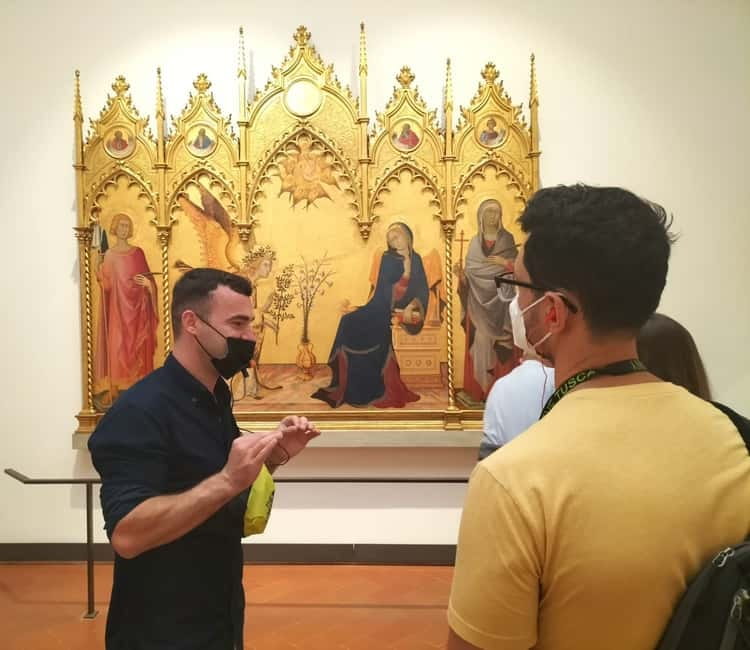
- A power-and-propaganda lens: Medici vs. Strozzi, Vatican ties, and scandals behind the paintings
- Headsets for clarity: you can follow the guide even when you’re not standing beside them
- Skip-the-line access: separate entrance helps you start faster than walk-up crowds
- Elevator help: less stair stress so you keep your energy for the galleries
- Art with hidden symbols: expect discussions beyond painting technique
- Guides who keep it conversational: small-group pacing makes Q&A feel natural
Art as power: what makes this Uffizi tour different
Most Uffizi tours explain what you’re looking at: schools, techniques, and big-name biographies. This one goes another direction. The core idea is simple: art was used to shape opinions, protect reputations, and advertise power. So instead of treating the gallery like a timeline of styles, you treat it like a record of human conflict.
You’ll hear stories that connect the Medici family, bankers in Florence, and their relationships to the Vatican. You’ll also spend time on rivalry—especially the kind where money, politics, and status collide. The tour highlights the competition between powerful families such as the Medici and the Strozzi, framing those clashes as drivers of what got commissioned, shown, and celebrated.
One of the tour’s stated themes is Love & Hatred, presented as a way to understand history through what artists chose to say—sometimes quietly—through symbolism and meaning. You’re not being asked to become an art detective, but you will start noticing how images can carry messages that go beyond beauty.
A few more Florence tours and experiences worth a look

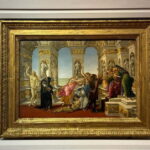
Meeting point, security, and how not to lose time
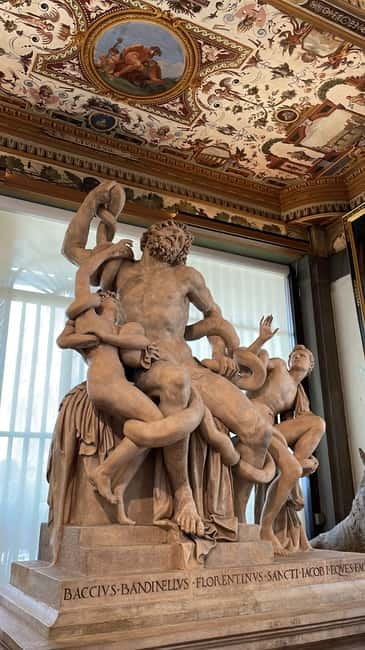
Timing matters at the Uffizi because security is airport-style. Plan to arrive a bit early so you’re not sprinting through lines while everyone else is already moving.
Your meeting is tied to the gallery’s main entrance area. The official meet point is at Door Number 3 at the Main Office of the Gallery, in front of the Guido Aretino sculpture. The start location is listed as Via Lambertesca, 2, which is consistent with where groups typically gather around the museum approach. If you’re unsure, treat Door 3 by the Guido Aretino sculpture as your anchor.
Bring a passport or ID card if you have children in your group, and wear comfortable shoes. Inside, follow the rules strictly: no food, no glass objects, and no glass bottles. Carbonated drinks aren’t allowed either. Water bottles larger than 0.50ml are also listed as not allowed, so if you’re carrying water, keep it small and check your bottle size before you leave.
If you need help, the operator provides a contact number: 39 324 6191217 (listed as Ra Fael). I’d save that before you go, especially if you’re navigating Florence streets on your own.
The 1.5-hour flow: how the tour moves through the museum
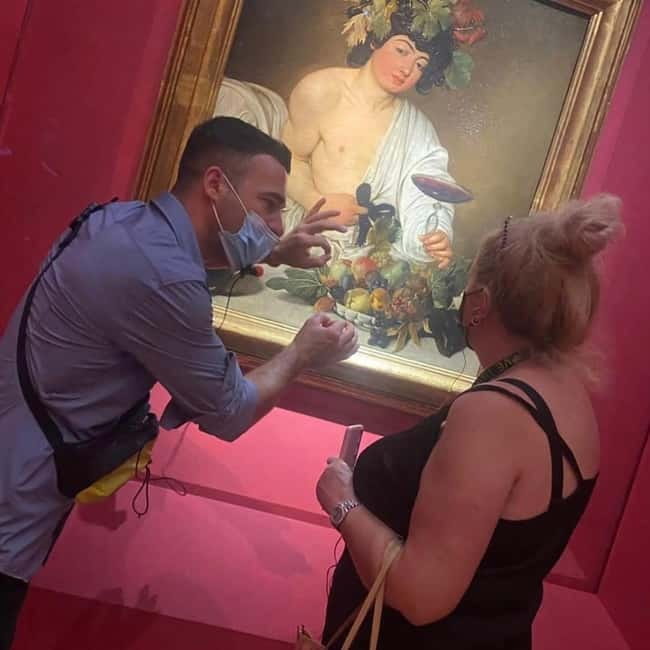
The total duration is about 1.5 hours. The tour starts with a meet-and-gather, then you walk to the Uffizi Gallery area. Once inside, the guided portion is listed as 100 minutes, which is enough time to cover a lot of ground without feeling like a speed-run.
There’s also a mention of an aerial view element. You may get a quick orientation moment to help you understand how the museum space connects, so the route makes sense once you’re inside.
You end back at the meeting point at Door 3 / Via Lambertesca, 2. That matters because you’re not dumped into the museum with no plan. You finish with context, and you know where you’ll exit and meet up.
Medici power, Vatican ties, and why the paintings weren’t neutral
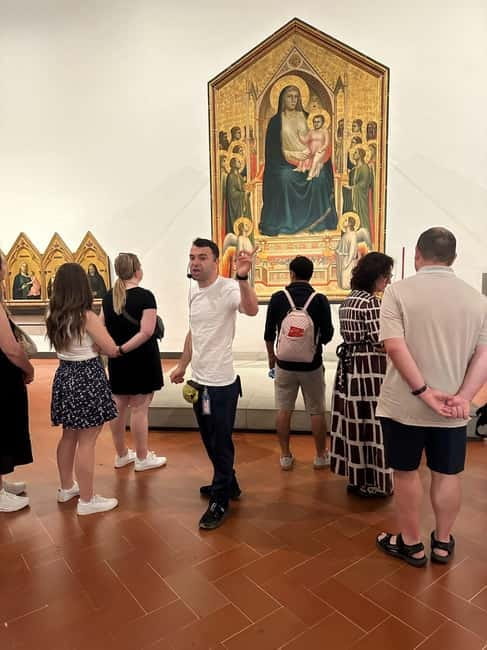
This is where the tour earns its ticket. The guide frames the Renaissance as a world of influence: bankers financing prestige, church connections shaping outcomes, and prominent families using art to project legitimacy.
You’ll hear about the Medici family as political players, not just patrons. The tour connects their role in Florence to how art functioned as propaganda. That means you’ll be nudged to look for meaning tied to status and persuasion, not only aesthetic impact.
The Strozzi family rivalry is part of the story. The idea isn’t to turn the tour into a history lecture, but to show how financial competition and political positioning affected the cultural life of the city. When families are fighting over power, they’re also fighting over visibility. Paintings become public statements—sometimes carefully coded.
This is also where hidden symbols come in. The tour doesn’t promise you’ll decode everything on your own. Instead, you’ll get a guide’s interpretations so you can see how people in that era may have read images as messages about loyalty, rivalry, morality, and authority.
Headsets, small groups, and the guide moments that make it worth it
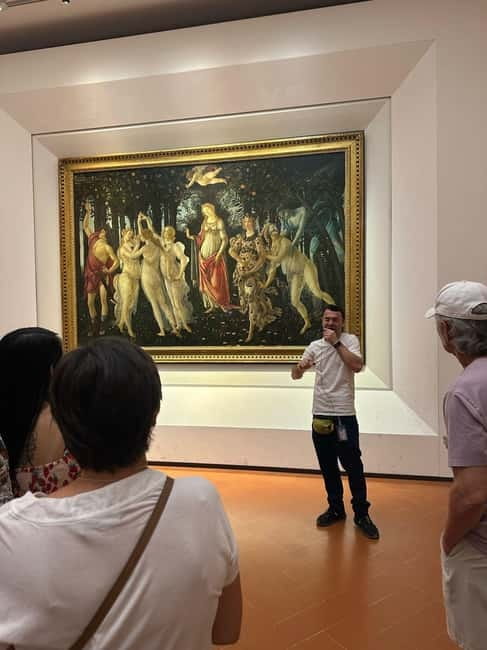
You get provided headsets. That’s not a luxury touch; it changes the experience. The Uffizi gets crowded, and it’s easy to end up behind people if you’re trying to photograph. With headsets, you can stand where you can see, not where you can hear.
The small-group size also shows up in the way the tour feels. One guide described by name in the feedback is Rafael, with a style that’s enthusiastic and prepared with the kit. Another named guide is Giovanni, with a focus on painting history and the relationships behind what you’re seeing.
Two things consistently seem to matter for the quality here:
- The guide uses microphones and keeps the explanation clear through headsets.
- The pace allows conversation, so you’re not just listening at a wall.
There’s also a practical moment worth noting from experience shared: if something goes wrong with your arrival time, the guide system seems designed to keep you from falling through the cracks. I’m not promising miracles, but professionalism shows up in how they handle late arrivals and try to get people back into the experience.
You can also read our reviews of more guided tours in Florence




Price and logistics: what you’re paying for at $100.82
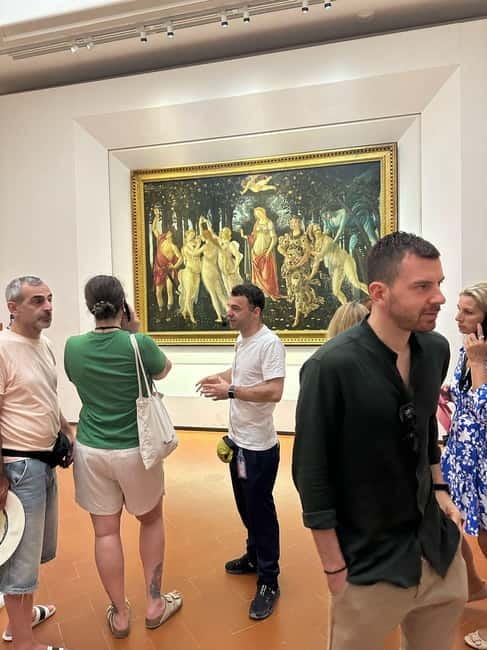
At $100.82 per person, this is not a budget add-on. The value comes from three layers working together.
First, you’re buying skip-the-line entry. Uffizi lines can be brutal, and timed entry isn’t just convenience—it’s time you can spend actually looking at art.
Second, you’re paying for interpretation. This tour isn’t mainly teaching museum technique. It’s teaching how power and propaganda moved through images, commissions, and symbolism. If that angle interests you, the guide becomes the product.
Third, the included headsets and elevator access reduce friction. Elevator access matters because you can lose time and energy to stairs, especially in a museum that asks you to keep moving. And wheelchair access is listed, which signals the tour is planned to accommodate movement needs better than many standard group walks.
One caution: the skip-the-line setup can be confusing in practice if you expect everything to work like a single ticket scan. In one experience shared, the guide handled skip-the-line entry by managing an extra cash step for entry in a way that later became clear. I can’t say that’s always how it goes, but it’s smart to stay flexible and follow the instructions from your host the day of. When in doubt, ask early.
Who should book this Uffizi tour
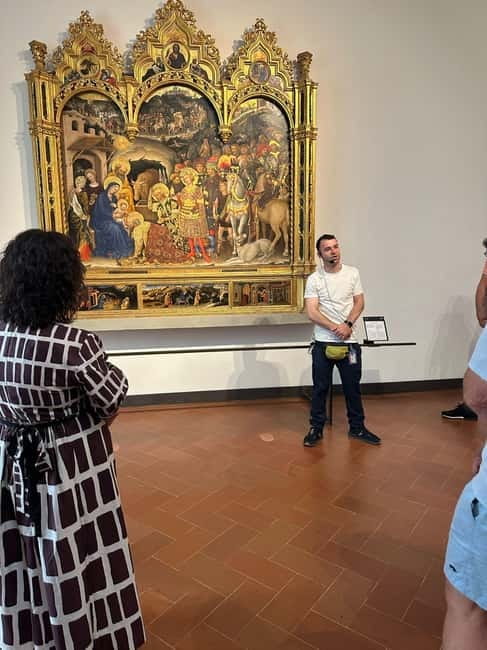
This tour is a great fit if you:
- Like art stories that connect to real human behavior: ambition, rivalry, persuasion
- Want political context behind commissions and symbolism
- Appreciate a guide who talks clearly through headsets and keeps a conversational pace
- Prefer walking with a plan rather than trying to build a route on your own
You might consider a different Uffizi option if you’re strictly focused on technique and art history methods, because this tour is built around meaning, politics, and scandal. It’s not the kind of tour that promises you a technical breakdown of brushwork.
It also suits you if you’ll benefit from elevator access and want to avoid unnecessary stair climbs. And if you’re traveling in a group that likes hearing the same story in sync, headsets make that easy.
Before you go: small rules that save big headaches

Uffizi has airport-style security, and the rules are specific. Bring ID (especially for children). Wear comfy shoes. Avoid food and any glass items. Skip carbonated drinks. Don’t bring large water bottles, since bottle size restrictions are listed.
Also, double-check your meeting point. Door 3 by the Guido Aretino sculpture is your best landmark. If you’re late, keep the guide contact number handy: 39 324 6191217.
Should you book this Uffizi tour with Explorer Emotion Florence?
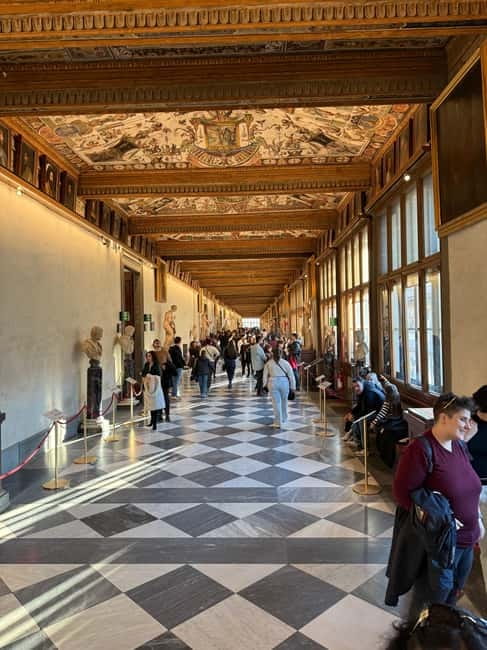
If you want the Uffizi to feel like more than a gallery of masterpieces, this booking makes sense. The combination of skip-the-line entry, headsets, elevator access, and a power-focused guide approach is a strong value match for curious visitors who like history with teeth.
I’d especially recommend it if your curiosity leans toward how art served propaganda and how wealthy families shaped culture through politics and money. The named guides mentioned in the feedback—Rafael and Giovanni—both sound like they bring strong explanations and a human tone.
If you’re looking for the quietest, most self-paced museum experience, then a guided tour may feel too structured. But if you want clarity, momentum, and stories that connect paintings to the messy world that made them, book it.
FAQ
How long is the Uffizi Gallery guided tour?
The tour lasts about 1.5 hours.
Is there skip-the-line entry included?
Yes. The tour includes skip-the-line entry ticket access to the Uffizi Gallery.
What language are the guides?
The live tour guide is in English.
Are headsets provided during the tour?
Yes. Provided headsets help you hear the guide clearly.
Is the tour wheelchair accessible?
Yes. The tour is listed as wheelchair accessible, and elevator access is included to avoid stairs.
What items are not allowed inside?
Food and glass objects are not allowed. The rules also list no carbonated drinks and no glass bottles, and water bottles larger than 0.50ml are not allowed.
Is free cancellation available?
Yes. You can cancel up to 24 hours in advance for a full refund.