REVIEW · ROME
Florence: Uffizi Gallery Small Group Guided Tour
Book on GetYourGuide →Operated by Italy Wonders · Bookable on GetYourGuide
Florence’s Uffizi can swallow a whole day. This small-group, skip-the-line tour keeps it focused, getting you into the gallery fast so you can spend your time on the big Renaissance names. I like the expert licensed guide approach here, because the museum stops feeling like a long hallway of frames and starts feeling like a story with reasons behind each masterpiece.
The best part is the tight, 1.5-hour flow: Botticelli, Michelangelo, Caravaggio, Titian, and Raphael all come through in a way that’s actually manageable. The only real consideration is timing—during busy season, security lines can still slow things down, so you’ll want to arrive early at the meeting point.
In This Review
- Key things that make this Uffizi tour worth your time
- Why 90 minutes at the Uffizi feels like the smart move
- Finding your group: Piazzale degli Uffizi and the Andrea Obgagna statue
- Entering the Uffizi without losing the morning
- Botticelli’s Venus world: Birth of Venus plus Primavera
- Michelangelo’s Tondo Doni and the shock of Caravaggio
- Titian’s Venus of Urbino and Raphael’s Madonna with the Goldfinch
- What the tour does well in practice (and what it means for you)
- Price and value: is $100.40 worth it?
- Who should book this Uffizi tour
- Practical tips so you actually enjoy it
- Should you book the Florence Uffizi Gallery small-group tour?
- FAQ
- How long is the Florence Uffizi Gallery small-group guided tour?
- Where do I meet the host for this Uffizi tour?
- Does this tour include skip-the-line entry?
- What languages are the live guides?
- Is the tour wheelchair accessible?
- Are unaccompanied minors allowed on this tour?
Key things that make this Uffizi tour worth your time
- Skip-the-line entry through a separate entrance to reduce your time stuck before the art
- 1.5-hour guided route designed for art lovers who want the highlights without getting lost
- A live multilingual guide (Spanish, Italian, English) keeping the explanations clear and current
- Botticelli focus on The Birth of Venus and Primavera, with context that makes the paintings click
- Major “emotion makers”: Michelangelo’s Tondo Doni paired with Caravaggio’s dramatic realism
- Ends back at the start area, so you’re not left figuring out your way out
Why 90 minutes at the Uffizi feels like the smart move
The Uffizi is huge, and that’s the problem. Even if you know the names, you can still spend precious time wandering, backtracking, and standing around while your feet vote against your plan. This tour narrows the museum into a short, curated experience where the guide’s job is to connect the dots for you.
I appreciate the pacing that comes with a set duration. Ninety minutes (plus the practical time of meeting up) is long enough to see a meaningful slice of the collection, but short enough that you’re still fresh when you reach the heavy hitters like Botticelli and Michelangelo. If you’re visiting Florence for more than a day, this is a great way to get your bearings fast; if you only have a limited window, it’s also a strong “greatest hits” approach.
Because it’s a small group, you’re less likely to get swallowed by the crowd. That matters at the Uffizi, where key works draw people like gravity. You want your guide talking while you can still actually see what they’re pointing at.
You can also read our reviews of more guided tours in Rome


Finding your group: Piazzale degli Uffizi and the Andrea Obgagna statue
Start here: Piazzale degli Uffizi. Your host meets you in front of the Andrea Obgagna statue, specifically the first statue on the left. It’s placed in the corner between Piazzale degli Uffizi street and Via della Nina street, so it helps to look for that corner before you lock into your final plan.
Arrive 10 minutes early. In places like this, it’s not about being punctual for politeness; it’s about getting everyone organized before the doors and security start pulling people into different lanes. If you’re there right on time, you’re more likely to be the person walking around while everyone else is already lining up.
Also, keep your contact details handy. The tour info says you must provide the correct email and phone number for updates, so double-check those before you go.
Entering the Uffizi without losing the morning
The headline benefit is skip-the-line entrance. Instead of joining the main crush of people waiting to get in, you use a separate entrance. That’s a big deal because the Uffizi’s best works aren’t the ones you see when you’re still waiting with your ticket in your hand.
Now, a reality check: the tour notes that in high season, security waiting can be longer. That doesn’t cancel the advantage, but it means the “fast entry” can still feel imperfect if you show up late or at a peak moment. This is why the 10-minute early arrival instruction matters.
Once you’re inside, you’ll move into a guided experience rather than a self-guided shuffle. That’s where your money goes: guide time, route focus, and interpretation that helps you understand why these artworks matter and how they connect to each other in the Renaissance story.
Botticelli’s Venus world: Birth of Venus plus Primavera
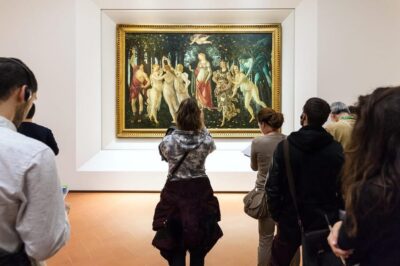
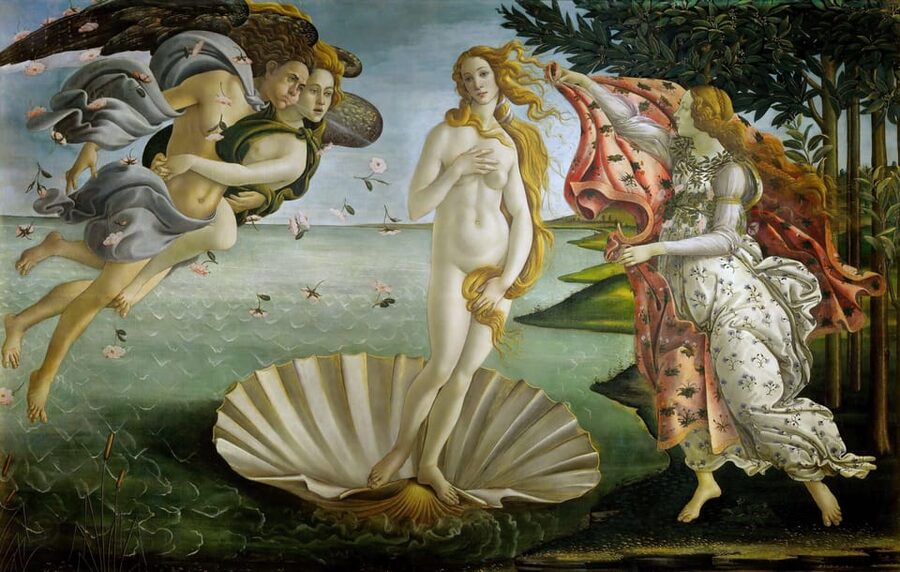
If you want to understand the Renaissance in one concentrated hit, Botticelli is where many people start—and this tour does exactly that. The highlight is The Birth of Venus, one of those paintings everyone recognizes even if they haven’t seen it in person yet. Seeing it close-up is different from seeing it online: you notice the fine details and the mood shifts that make it more than just a mythological scene.
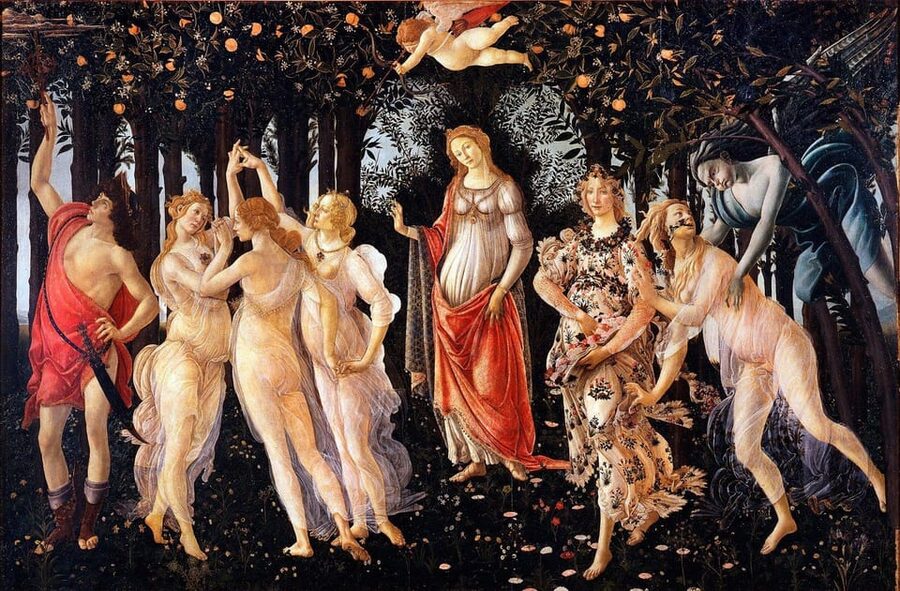
You’ll also spend time with Primavera. That’s a smart pairing because it shows you how Botticelli works through symbols and ideas, not just beautiful figures. With a good guide, Primavera stops feeling like a confusing mix of characters and starts feeling like a carefully constructed world of meaning.
Here’s what I’d take away if you’re standing in front of these works: don’t rush your eyes. The Uffizi does not reward you for speed; it rewards you for attention. A guided tour helps because the guide cues you on what to look for, so you’re not guessing which parts matter.
Michelangelo’s Tondo Doni and the shock of Caravaggio
After Botticelli’s poetic myths, the tour shifts into more intense territory. You’ll stand in awe of Michelangelo’s Tondo Doni. A tondo is a different format than the more familiar large altarpieces, and that circular shape changes how people read the scene. Under a guide’s explanation, you start seeing composition choices as deliberate rather than accidental.
Then comes Caravaggio’s dramatic realism—raw emotion, strong contrast, and a style that feels almost confrontational. This is the point where the Uffizi can feel modern in a strange way. Caravaggio is the kind of artist who makes you pay attention to faces and gesture because his paintings sell feeling, not just paint.
What makes this pairing work in a short tour is contrast. You get Michelangelo’s sculptural sense of form, then Caravaggio’s psychological intensity. Even if you’re not an art expert, that emotional shift helps you remember what you saw—and it helps the guide’s explanations actually land.
You can also read our reviews of more museum experiences in Rome


Titian’s Venus of Urbino and Raphael’s Madonna with the Goldfinch
Next, the tour adds more variety with works tied to ideal beauty and intimate religious themes. You’ll admire Titian’s Venus of Urbino, another Venus that carries a different tone than Botticelli’s mythic mood. Titian’s approach tends to feel grounded and sensuous, so it’s a useful change after the more allegorical style of Botticelli.
Then you’ll see Raphael’s Madonna of the Goldfinch. This one usually resonates because it feels human and close, not distant or theatrical. With a guide talking you through what’s going on, small details can suddenly matter: how figures relate, why certain gestures feel natural, and how symbolism is used without taking over the whole experience.
If you’re the kind of visitor who likes to understand what you’re looking at rather than just scanning for famous names, this is a strong finale. It balances mythological works with religious storytelling, so the Uffizi doesn’t feel like one long genre parade.
What the tour does well in practice (and what it means for you)
A tour like this isn’t about checking boxes. It’s about reducing decision fatigue. When you enter the Uffizi on your own, the museum gives you endless choices and zero guidance on what to prioritize first. With a live guide and a focused 1.5-hour window, you spend your energy where it matters: actually looking.
The pace is also a real selling point. One of the strengths highlighted in the experience feedback is that the tour is well organized with good pace. That matters because the Uffizi can get exhausting fast if you’re stuck standing too long at the wrong spot or waiting for your own timing to click.
Still, here’s the trade-off. A curated highlight route means you won’t have the freedom to linger wherever your eyes want to go. If you’re the type who loves taking 20 minutes in front of one painting, you may want to pair this with extra time on your own after the tour—or choose a longer format next time.
Price and value: is $100.40 worth it?
At $100.40 per person for a 1.5-hour guided tour, the value isn’t just the ticket to the Uffizi. You’re paying for three things that self-guided visits usually don’t include in the same way:
- Skip-the-line entrance, which protects your time
- A licensed live guide, who turns famous works into understandable works
- A tight route, which helps you see multiple major artists in a short window
If your priority is seeing the big names (Botticelli, Michelangelo, Caravaggio, Titian, Raphael) and not wasting time figuring out where to go first, the cost makes sense. If your priority is exploring quietly and you don’t care much about interpretation, a self-guided ticket could be cheaper. But most visitors hit the same wall: the museum is too big to self-navigate well on a first visit.
One more small but practical point: the tour info includes free cancellation up to 24 hours in advance, and it also offers reserve now and pay later. That flexibility can lower your risk if your schedule in Florence is still moving around.
Who should book this Uffizi tour
This tour is a great match if you:
- Love Renaissance art and want the major names in a manageable route
- Prefer guided context so the museum feels meaningful, not just impressive
- Want skip-the-line entry to protect your day in Florence
- Are visiting for a short time and still want a high-impact experience
It may not be ideal if you:
- Want to spend long, unstructured hours at every painting
- Travel with someone who needs a fully flexible pace throughout the museum
One note that’s important for planning: unaccompanied minors aren’t allowed on this activity. If you’re traveling as a family, you’ll want to plan around that rule.
Practical tips so you actually enjoy it
You’ll get the best experience if you treat this as a “designed highlight route,” not a casual stroll. Here’s how to make the 1.5 hours work for you:
- Go easy on your other plans that day. You’ll want to be mentally ready when the guide starts connecting the dots.
- Arrive early at the statue. It’s the fastest way to avoid last-minute scrambling.
- Listen for what the guide wants you to look at. The art is the same with or without a guide, but your attention changes everything.
- Take photos only where allowed and respect the viewing rules. Museums can be strict, and it’s not worth getting flustered in the middle of a key moment.
Also, because security lines can run longer during high season, don’t plan your entire day as if everything will go perfectly on time.
Should you book the Florence Uffizi Gallery small-group tour?
I think you should book this tour if you want a high-quality introduction to the Uffizi with real interpretation, not just a famous-painting tour. The skip-the-line entrance, the licensed live guide, and the fact that the route hits major works like The Birth of Venus, Primavera, Tondo Doni, Caravaggio, Venus of Urbino, and Raphael’s Madonna of the Goldfinch makes it a strong “best use of time” option.
If you’re worried the museum might feel too fast, pair this with extra unstructured time later in the day or plan a second visit on a different day. But if you want to get the heart of the Uffizi without burning your entire trip on crowd management, this is a sensible choice.
FAQ
How long is the Florence Uffizi Gallery small-group guided tour?
The tour duration is 1.5 hours.
Where do I meet the host for this Uffizi tour?
Meet the host in front of the Andrea Obgagna statue in Piazzale degli Uffizi, at the first statue on the left, in the corner between Piazzale degli Uffizi street and Via della Nina street.
Does this tour include skip-the-line entry?
Yes. It includes skip-the-line entrance to the Uffizi Gallery through a separate entrance.
What languages are the live guides?
The live guide is available in Spanish, Italian, and English.
Is the tour wheelchair accessible?
Yes, the tour is wheelchair accessible.
Are unaccompanied minors allowed on this tour?
No. Unaccompanied minors are not allowed.