REVIEW · FLORENCE
Uffizi Gallery private tour with skip the line ticket
Book on Viator →Operated by Ciao Florence Tours Srl · Bookable on Viator
Florence is a city of art overload—this tour helps you make sense fast. With a private guide and a skip-the-line ticket, you get focused Renaissance highlights without spending your morning fighting the queue. It’s also paced around your group, so you can ask questions instead of just getting swept along.
I especially like the chronological route, which turns a huge museum into a clear story from the 13th century onward. And I like that you start outside the Uffizi at Piazzale degli Uffizi and follow a guide holding a name sign, so the start feels organized even when the area is busy.
One possible drawback: headsets aren’t included, and the museum gets crowded in indoor rooms. If your group wants lots of quiet staring time, you’ll want to communicate that early with your guide—some styles run more “talk-forward” than “look-around.”
In This Review
- Key things to know before you go
- What this private Uffizi tour is really for
- Getting started at Piazzale degli Uffizi, 2059
- Stop-by-stop: the Uffizi highlights you’ll actually remember
- Stop 1: Le Gallerie Degli Uffizi (start with the early Renaissance story)
- Stop 2: international Gothic turning points
- Stop 3: the shift toward space, drama, and experimentation
- Stop 4: Botticelli and the Renaissance artists people travel for
- Stop 5: the big-hitters in the giant halls
- The guide’s pace: what to ask for if your group wants time to look
- How the chronological flow helps (and when it can feel rushed)
- Tickets, timing, and how long you should plan for
- Price: what $189.27 per person buys you
- Who should book this Uffizi private tour
- Should you book this Uffizi private tour?
- FAQ
- How long is the Uffizi private tour?
- Is a skip-the-line ticket included?
- Do I get a mobile ticket?
- Where do we meet for the tour?
- Is this a private tour or a group tour?
- Are headsets included?
- What if the departure time can’t be confirmed?
Key things to know before you go
- Skip-the-line ticket included so you can get in faster and spend more time in galleries.
- Private tour with name-sign meeting outside the Uffizi at Piazzale degli Uffizi for an easier start.
- Chronological overview from early Renaissance roots through major artists you can recognize right away.
- Guided stops that include iconic works across multiple centuries, not just Botticelli and friends.
- No headsets provided, which can matter in crowded rooms.
- Mobile ticket means less paper fuss once you’re ready to enter.
What this private Uffizi tour is really for
The Uffizi can feel like drinking from a fire hose. In about 2 hours, this private tour aims to do something useful: help you recognize major artists, understand how styles shift over time, and still leave you with enough energy to explore on your own afterward.
The skip-the-line ticket is a big part of the value. It doesn’t make the Uffizi “easy,” but it cuts out one of the most painful parts: the slow shuffle before you’re even inside. Once you’re in, you’ll benefit from the guide doing the steering. You won’t waste time hunting for the famous rooms.
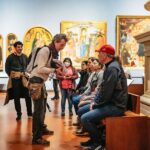
The private format also matters. This isn’t a “stand in place while a guide talks at you” situation by default. The tour is described as customized to your group’s pace and interests, so you can steer the conversation—especially if you’re the kind of group that wants to ask why an artist painted something a certain way, or how one period differs from the next.
A few more Florence tours and experiences worth a look

Getting started at Piazzale degli Uffizi, 2059
Your meeting point is right outside the museum at Piazzale degli Uffizi, 2059, 50122 Firenze FI. The guide meets you there holding a sign with your name. That sounds small, but it saves real time. In Florence, a few minutes can turn into a 20-minute search if you’re not careful.
Plan to arrive a little early. One of the cautionary notes from past visitors is that when a guide arrives right at the start time, you may end up near the end of the skip-the-line access flow. I’d rather you be early than perfect—give yourself a cushion so you don’t start your tour stressed.
Good news: the area is near public transportation, so you’re not locked into taxis or complicated routes. And the tour ends back at the same meeting point, which makes it easier to continue your day without figuring out a second location.
Stop-by-stop: the Uffizi highlights you’ll actually remember
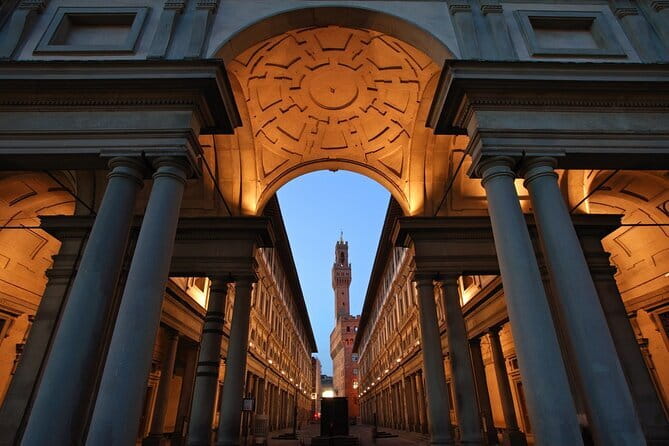
This tour moves through the museum in a way that’s meant to feel like a guided timeline. You’ll see a range of works from the 13th to 18th centuries, with extra time aimed at the artists most people come to see—plus a few that help connect the dots.
Stop 1: Le Gallerie Degli Uffizi (start with the early Renaissance story)
You begin right at the entrance, where your guide takes you through as you use your skip-the-line ticket. Once inside, the tone is set: this isn’t just a list of famous paintings. The guide’s job is to give you handles—style, time period, and what changed from one artist to the next.
You’ll get an introduction to the “birth of the Renaissance,” beginning in the 13th century. The idea is simple: before you jump to the big names everyone knows, you learn what came before. That context makes later works hit harder.
During this early section, you’ll encounter examples like Giotto, often described as a breakthrough artist for adding more dimensional, human presence to painting. You’ll also see references to Gothic works such as Madonna and the Child, known here for bright colors and golden accents.
Practical note: at this stage, you’ll be in motion and the rooms may feel packed. If you’re sensitive to noise, it helps to be ready with your group’s plan: listen first, then look longer later in quieter moments.
Stop 2: international Gothic turning points
Next, the tour shifts to international Gothic, a turning point where painting becomes more narrative. Instead of only showing figures, artists start telling clearer stories inside the frame.
A key example mentioned is Gentile da Fabriano’s Adoration of the Magi. This is a great stop because it shows what changes across time: the painting starts to behave like a story scene. You can look for how the figures are arranged, and how that arrangement guides your eye.
This is one of those parts where a guide can really make or break the experience. A strong guide helps you see the story structure—where your attention should land first, and what details matter.
You can also read our reviews of more private tours in Florence



Stop 3: the shift toward space, drama, and experimentation
Then you move into a phase where art gets more experimental with depth and realism. You’ll focus on works that reflect that movement toward three-dimensional space.
One standout described here is Battle of San Romano, a vivid battle scene between Siena and Florence in 1432. If you like art that feels like it has action, this is your kind of stop. The guide should help you connect the painting to broader cultural forces—how politics and identity showed up on canvas.
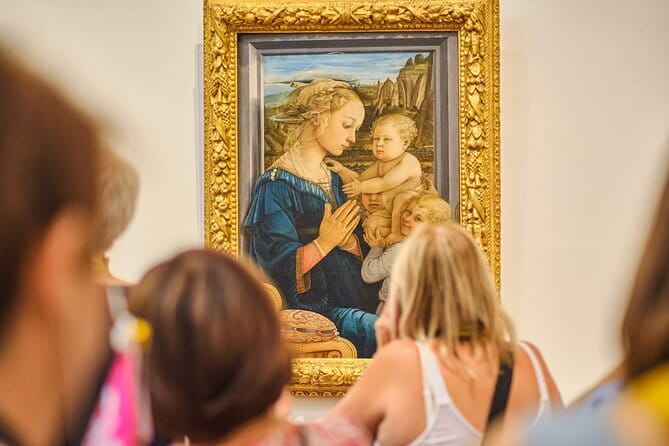
You’ll also encounter works like Filippo Lippi’s Madonna with Child and Two Angels and Piero della Francesca’s Dukes of Urbino. These help illustrate another pattern: how artists idealized features and shaped the look of human presence in later Renaissance art.
If you care about art history beyond the obvious names, this middle chunk is where the timeline starts to feel real instead of theoretical.
Stop 4: Botticelli and the Renaissance artists people travel for
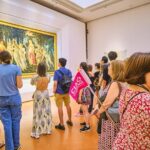
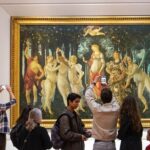
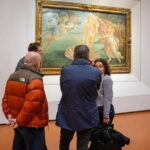
At this point, the tour slows down where it matters most for many first-timers: Sandro Botticelli. You’ll spend plenty of time on his mystic, distinctive works, including Primavera and Birth of Venus.
This is the section where you’ll likely feel a double effect. First, you get a clearer explanation of what you’re seeing. Second, you start noticing how the symbolism invites multiple interpretations. Even if you only catch part of the symbolism, you’ll still come away with a better sense of why these paintings are famous.
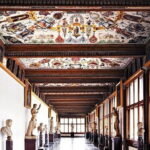
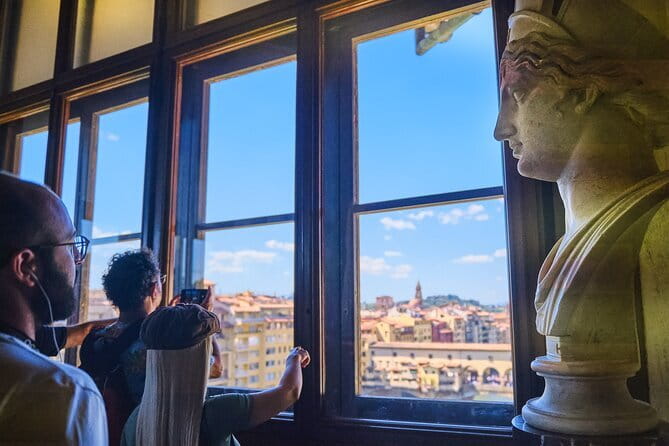
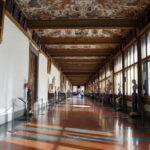
After Botticelli, you continue chronologically, which keeps your brain from treating the Uffizi like one big random museum room. You’ll also get views of Florence from the tall windows as you move through the hallways—yes, this is a real part of the experience. It’s easy to forget that the artists admired the same city you see today.
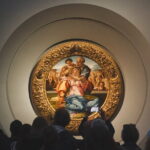
You’ll also spend time around works tied to Michelangelo and Leonardo da Vinci, including Michelangelo’s Rondo Tondi and Leonardo’s Annunciation and Baptism of Christ.
Stop 5: the big-hitters in the giant halls
Finally, you’ll reach three large halls with major names: Raphael, Titan, and Caravaggio. The point here is breadth and contrast. Each artist has a distinct style, so this part should feel less like a lecture and more like a sequence of visual “what changed here?” moments.
You’ll end the private portion and then you’re free to explore on your own. This matters because the Uffizi rewards repeat looking. One tour rarely gives you enough time to study everything. The best outcome is that you leave with the few works you now know how to approach on your second pass.
The guide’s pace: what to ask for if your group wants time to look
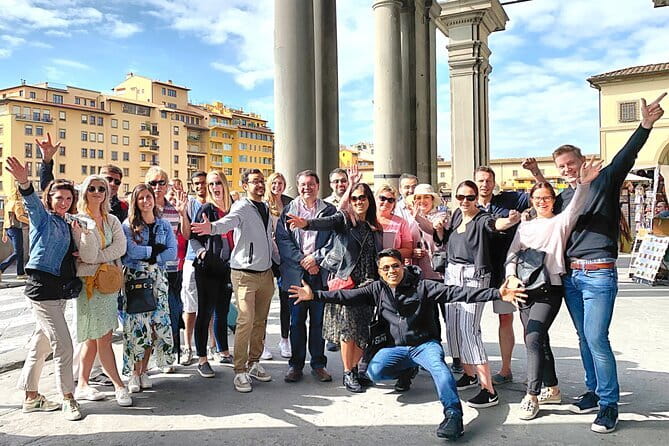
Private tours are only as good as the guide’s rhythm. The tour is advertised as private and customizable, but the real-world difference comes down to how much time you get per room.
One common complaint tied to a guide style was that the guide talked about one painting for roughly 8–10 minutes and then moved on quickly, sometimes not turning back to let the group see the artwork closely while listening. Another issue was that the group felt pushed to look at the guide rather than the paintings.
I can’t control your guide, but you can steer the experience. Right at the start, you can set a simple expectation:
- Tell your guide you want more looking time in each room.
- Ask for a moment after the explanation to stand and study the painting.
- If your group includes slower walkers or anyone who needs a pause, mention it early.
Some guides, like Giacomo, are described as navigating the huge museum without rushing and explaining artwork in detail, with time that felt respectful. Others, like Greta, were described as so-so by one past visitor due to pacing. Carmen was praised for staying pleasant and making the tour feel longer than planned. Francesca and Alessandro and Tiziana also appear as names tied to engaged, enthusiastic explanations.
You don’t need to guess which guide you’ll get. Just make sure your guide knows how your group learns: listen, then look.
How the chronological flow helps (and when it can feel rushed)
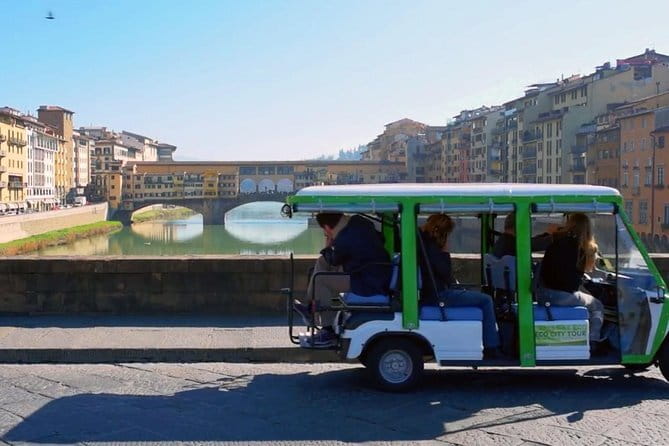
This tour’s big idea is that history isn’t a random museum list—it’s a timeline. Starting in the 13th century and moving forward helps you understand why the style changes you notice were normal for that era, not random artistic quirks.
When it works, you’ll start seeing patterns like:
- Early work focuses on iconic religious subjects and gold-accented color.
- Transitional periods start turning paintings into clearer story scenes.
- Later Renaissance painting experiments more with space and human form.
- Artists like Botticelli become recognizable because you can place them in context.
- Major “name” artists later feel less like magic and more like a result of experimentation before them.
When it doesn’t work, it’s usually because there’s not enough time to pause. Some artworks need time to absorb details—faces, gestures, background stories, and technique choices. If your group likes to read visual details slowly, you may have to ask your guide for extra seconds here and there.
The good part: this is private. If you set expectations early, you’re more likely to shape the tour into something that fits how you actually want to experience art.
Tickets, timing, and how long you should plan for
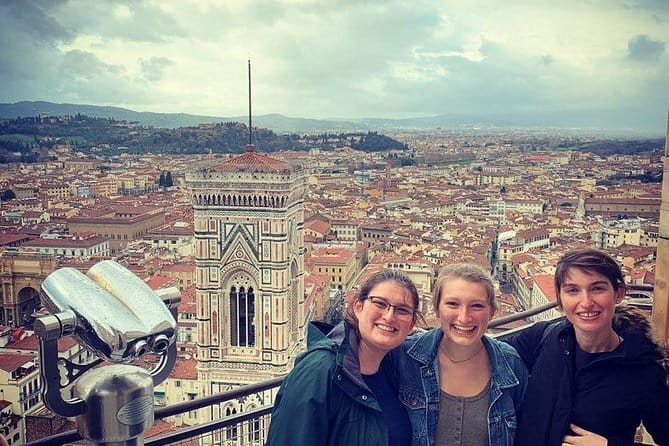
The tour is listed as about 2 hours, but real life can stretch. One past visit ended up close to 3 hours, which can happen when a guide adapts to your group’s interest level or gives extra time in the most requested rooms.
Your departure time is also subject to museum availability. The tour operator does say they will try to confirm what you selected, but if that timing can’t be confirmed, you should expect an email or phone call with an alternative departure time.
Because this is a private tour, only your group participates. That’s helpful: you aren’t sharing the tour guide’s time with strangers. Still, you’ll be in the museum with other visitors, and rooms can become tight.
Also, no headsets are included. In crowded galleries, you’ll likely hear your guide best when you’re close and when the room isn’t at peak congestion. If your group is large, the distance problem increases—so bring that up in advance if audio clarity matters to you.
One more practical point: you receive a mobile ticket, which can simplify entry once you’re ready to go. Less paper to manage means less fumbling when you’re close to the entrance.
Price: what $189.27 per person buys you
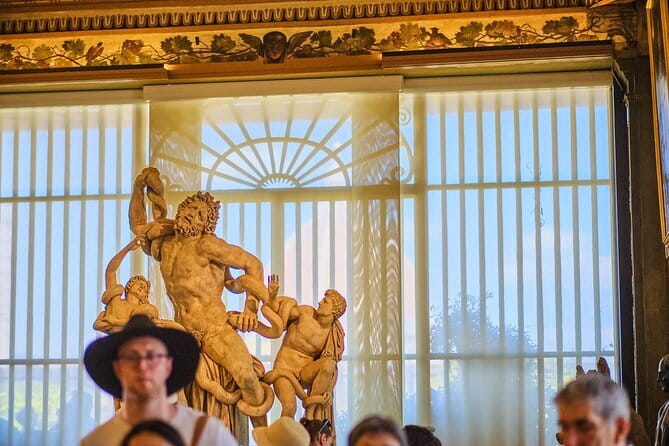
At $189.27 per person for roughly 2 hours, you’re paying for three things:
- A private guide (not just a generic audio route).
- A skip-the-line ticket to reduce waiting.
- A guided, chronological experience built for first-timers (or anyone who wants a strong highlight framework).
If you’re traveling as a couple or small group, private pricing often starts to feel more reasonable because you’re buying time and stress reduction. You also get flexibility: you can ask questions and adjust pacing.
If your group is art-super-enthusiasts who want to study slowly on your own, you might decide the cost isn’t worth it—because the Uffizi needs time, and any timed tour will always be a “best-of” approach.
My practical take: if you’re trying to get oriented quickly, this is strong value. If you already know exactly what you want to see and you’re happy to plan your own route, you might save money.
Who should book this Uffizi private tour
This tour fits you best if:
- You’re a first-time visitor and want a clear path through the museum highlights.
- You like learning from a guide and want someone to point out what matters.
- You’re short on time in Florence and don’t want to spend it stuck in lines.
- Your group includes different art interests, and you want the tour pace adjusted to match.
It’s less ideal if:
- Your group insists on a slow, read-the-details pace for every work.
- You strongly need quiet audio help, since headsets aren’t provided.
- You prefer wandering independently with minimal structure.
If you’re pairing this with other Florence sights, I’d treat it like a “make sense of the Uffizi” session, then plan an unhurried return—or at least use the final free-explore time to revisit the works that grabbed you.
Should you book this Uffizi private tour?
If your goal is to get oriented fast, see the key masterpieces, and understand how Renaissance art changes over time, this booking makes sense. The skip-the-line benefit helps you start earlier and waste less time. The private format helps you tailor the pace to your group instead of following a fixed script.
Book it if you’re the type who likes stories behind the paintings and wants to come out saying, I get what I’m looking at. Consider skipping (or going self-guided) if you’re a slow-studier who wants hours of quiet looking with no time-box.
Either way, do yourself a favor: arrive a bit early for the Piazzale meeting, ask the guide for time to look after explanations, and plan to enjoy the free-explore period afterward. The Uffizi rewards that approach.
FAQ
How long is the Uffizi private tour?
The tour is listed as approximately 2 hours.
Is a skip-the-line ticket included?
Yes. Your skip-the-line ticket for the Uffizi Gallery is included.
Do I get a mobile ticket?
Yes. The tour includes a mobile ticket.
Where do we meet for the tour?
The meeting point is Piazzale degli Uffizi, 2059, 50122 Firenze FI, Italy. The tour ends back at the meeting point.
Is this a private tour or a group tour?
It’s a private tour/activity, meaning only your group participates.
Are headsets included?
No. Headsets are not included.
What if the departure time can’t be confirmed?
The departure time depends on museum availability. If the requested time can’t be confirmed, you’ll be contacted by email or phone to agree on an alternative departure time.