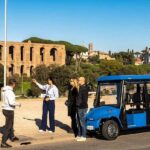
Rome from a golf cart feels like cheating. You get wraparound views and quick, story-filled stops close to the action, with an English-speaking guide and a small group capped at seven. It’s a smart way to see the main icons and still get some back-street context for how the city actually grew.
I also like the pace: you choose a departure time, hit major landmarks in about 2.5 hours, and leave with photos you can actually frame. One possible drawback to know up front: most stops are external, so you won’t tour inside the Pantheon, and the Trevi Fountain photo time can shift depending on traffic.
If you want the highlights with less walking and more context, this is the kind of Rome “first-weekend plan” that helps you move through the rest of your trip with confidence.
In This Review
- Key things to notice before you go
- Why a Rome golf cart beats buses and long walks
- Meeting point to end point: how you start and finish strong
- Colosseum photo pass with gladiator stories you’ll remember
- Riding past Rome’s earliest days and emperors’ palaces
- Circo Massimo: chariot-racing track and a fun fountain moment
- Pantheon exterior, plus the anti-rain explanation about the oculus
- Trevi Fountain coin toss with photography timed for traffic
- Spanish Steps and Piazza Navona: people-watching, Bernini fountains, and best spots
- Panoramic garden finish: a calmer end above the city
- Price and value: what $163.33 really buys in 2.5 hours
- Who should book this Rome golf cart tour
- Smart tips for better photos and a smoother day
- Should you book this golf cart Rome tour?
- FAQ
- How long is the Golf Cart Tour Rome?
- What’s the price per person?
- Is the tour offered in English?
- How many people are in the group?
- What’s included in the tour?
- Can I cancel for a full refund?
Key things to notice before you go
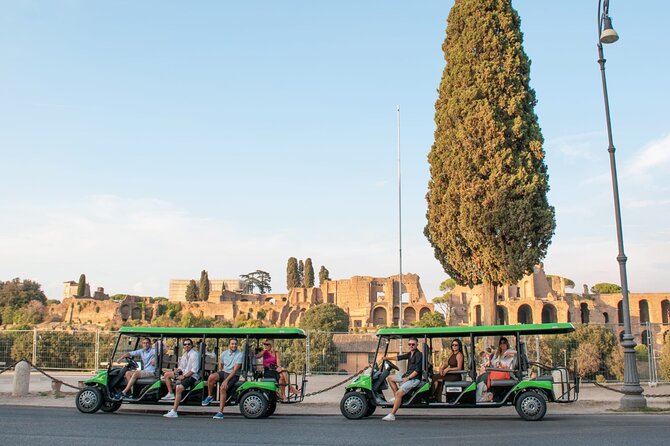
- Small group cap of seven for a more personal ride and easier photo stops
- Wraparound golf cart views so you’re not always craning your neck
- Colosseum-first guiding style with stories that start where Rome’s arena history begins
- Exterior-only landmark access that still gives you the key sights and explanations
- Traffic-aware timing at Trevi so you can plan your day around a busy area
- Plenty of short photo moments built into the route
Why a Rome golf cart beats buses and long walks
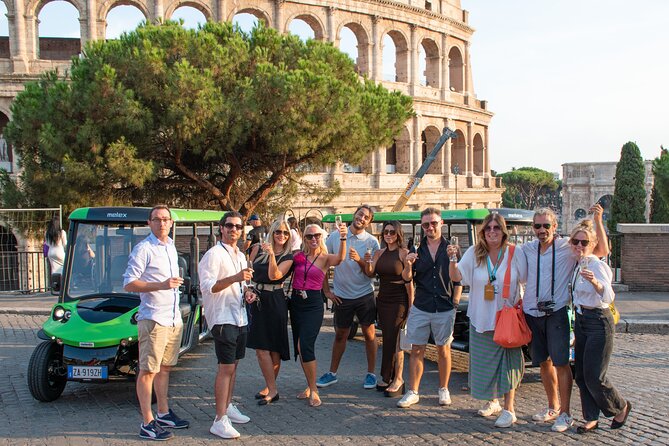
Rome is famous for big stone landmarks and crowded streets. This tour solves the classic problem: you can spend less time in traffic gridlock between sights by riding where carts can move, and you can keep your legs for actual exploring later.
The golf cart matters more than you might think. From your seat, you get a smoother line of sight and a steady rhythm for photos. Instead of hopping on and off every few blocks, you’re moving through neighborhoods with the guide narrating what you’re seeing in real time. That’s what makes the experience feel like orientation, not just sightseeing.
Also, the group size helps. With a maximum of seven, there’s less waiting around and more flexibility when you want one extra picture or a quick question. It’s the difference between being herded and being included.
You can also read our reviews of more tours and experiences in Rome.


Meeting point to end point: how you start and finish strong
The tour starts at Largo Gaetana Agnesi and ends at Piazza Campo de’ Fiori. That end point is useful because it puts you near one of the city’s lively central areas—handy if you’re planning dinner or a second walk after the tour.
The route is designed as a loop of Rome’s most recognizable scenes, plus a few stops that help you understand the city’s layers. Since the tour is about 2 hours 30 minutes, you’re not stuck in “tour fatigue” for half a day. It’s also ideal as a first outing because it helps you later connect neighborhoods to monuments instead of memorizing a map.
One more practical note: the tour uses a mobile ticket, and it’s offered in English. You’ll also get bottled water during the ride, which is a small thing that makes a long day in Rome easier.
Colosseum photo pass with gladiator stories you’ll remember
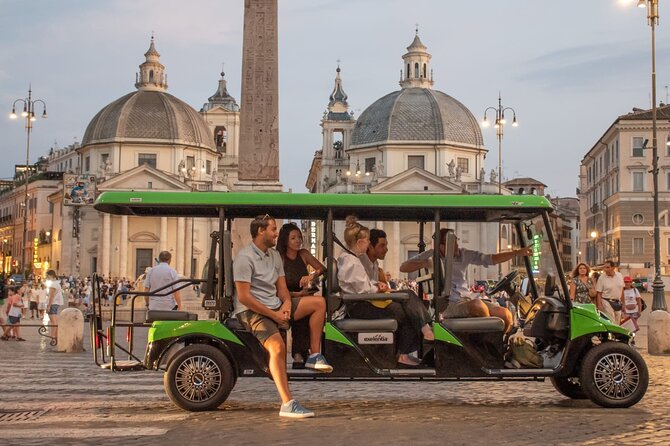
The day kicks off with a close, iconic view of the Colosseum. Even though you’re viewing it from the outside, the story focus is the point: you’ll hear quick context about what happened there and how the arena worked in practice—gladiators, crowds, and the theater of ancient power.
What makes this start feel special is the guide background. The guides are described as starting their guiding careers at the Colosseum, and that tends to come through as sharper details and more natural explanations. Names you may encounter include Vladimir, Vitaliy, and Federico/Frederico—and in past experiences, they’ve been highlighted for clear storytelling and strong pacing.
The best part here is the combination of time and access. You get a memorable photo moment without the long lines and logistics that come with full-entry museum days. If you later decide you want to go inside, this tour gives you a mental framework so the visit makes sense.
Riding past Rome’s earliest days and emperors’ palaces
After the Colosseum, you’ll ride past Rome’s older roots, including the birthplace of Rome theme, with panoramic views along the way. You’ll also hear about emperors’ palaces and how different rulers shaped the city.
This segment is less about one single landmark photo and more about “reading” the city while you move. From a cart, it’s easier to take in the spacing between areas—what’s a hill, what’s a boulevard, where major sights cluster. That’s the kind of context that makes the rest of your trip feel easier.
A fair consideration: because the stops are short, you won’t get an extended walk-through of every detail in this area. If you’re the type who loves studying buildings from every angle, you’ll probably want to use this part as your orientation and then plan a separate deep-dive day later.
Circo Massimo: chariot-racing track and a fun fountain moment
Next up is Circo Massimo, the ancient chariot racing track. You’ll drive along it and get a mental picture of the finish-line area and how intense those races were—complete with the feel of cheering crowds.
What I like about this stop is that it’s built around imagination and simple observation, not a long lecture. You’ll get a fun photo stop, and you’ll even learn how to use a fountain in a Roman style (quick, playful, and easy to remember when you’re standing there).
If you’re traveling with family or friends who get bored by pure monuments, this is one of those “okay, wait, this is cool” moments. It also helps you avoid the trap of seeing only one era—Rome changes fast, and Circo Massimo helps you feel the city as entertainment and spectacle, not just stone ruins.

Pantheon exterior, plus the anti-rain explanation about the oculus
At the Pantheon, you get one of Rome’s best-preserved ancient structures from the outside. You’ll spot the oculus and hear a short tale about why it survived and what it means for the building’s engineering.
Yes, you won’t go inside. Instead, you’ll get a guide-led explanation with a private video that focuses on a specific phenomenon: how it generally never rains inside the Pantheon, tied to a clever “fireplace effect” the Romans mastered.
That trade-off is smart if you’re short on time. Full Pantheon entry is great, but it often turns into a bottleneck with crowds and slow movement. This tour gives you the story payoff without forcing your schedule into a slow, line-heavy scenario.
Tip: if you care about photos, arrive ready to shoot quickly. The stop is short, and Rome’s famous landmarks attract cameras by the minute.
Trevi Fountain coin toss with photography timed for traffic
Then comes the big one: Trevi Fountain. You’ll do the classic coin toss and take your photos in one of the city’s most recognizable spots. The guide also shares traditions, so it’s not just a tourist ritual—it connects to how the fountain became part of modern Rome’s identity.
Here’s the practical part: the tour notes that the best Trevi Fountain photo opportunities are possible only when traffic allows. That means your timing might feel tighter than the written schedule, and the guide will likely work quickly when access is good.
This is also where the guides’ photography skill matters. You’ll hear that guides have a strong eye for unique shots from a landmark everyone photographs. That’s useful because you’ve got two options at Trevi: shoot the usual postcard angle, or try a slightly different composition that still feels true.
If you want maximum flexibility, plan your day so you’re not rushing immediately afterward. Trevi is one of those areas where “one more picture” turns into 20 minutes fast.
Spanish Steps and Piazza Navona: people-watching, Bernini fountains, and best spots
Next, you’ll head to the Spanish Steps for a short stop where you can climb a few steps or just pause and watch the square life around you. The guide shares history and also brings in pop-culture connections—Hollywood films, local life, and Roman context—so the area feels like more than steps and selfies.
You’ll also get guidance on the best spots for photos, plus time for a group shot. That part is underrated: standing where a guide tells you to stand often means better lines, fewer heads in the frame, and a photo that looks like you found a place instead of just being there.
After that, you’ll explore Piazza Navona, including Bernini’s fountains and street performer energy. You’ll learn to spot famous river gods and you’ll likely have a chance to take photos up close around the square.
One more practical perk: your guide can recommend a good authentic Italian lunch or dinner spot right in the heart of the square. If you’re trying to avoid “menu for tourists” traps, having a local suggestion tied to where you’re already standing can save time.
Panoramic garden finish: a calmer end above the city
The tour wraps with a peaceful stop at a panoramic garden. This is a smart closing move. After a day of major landmarks and crowds, you get a quiet view where you can breathe, grab final photos, and soak in the scale of Rome from above.
This is also a good time to ask a few “what should I do next?” questions. You’ve just seen the major geometry of the city; now you can decide what to return to on your own with a more informed plan.
If you’re one of those people who likes to end on something scenic rather than rushing straight into dinner, this final stop is a genuine value add.
Price and value: what $163.33 really buys in 2.5 hours
At $163.33 per person, you’re paying for three things that matter in Rome: transportation by golf cart, guided narration, and efficient sight coverage in a short window.
This isn’t a bargain price in the way a simple hop-on bus can be. But it can be good value if you count what you avoid:
- less walking than a standard “see everything” route
- fewer hours spent figuring out where sights are and how to connect them
- a guide who explains what you’re seeing without making you commit to entry tickets
Also, the tour’s structure leans on external landmark viewing, and the stop details list admission ticket free for the viewing moments. That means your cost is mainly the guided experience and the cart ride, not a pile of entry fees.
If you only want the Colosseum and Trevi, then you may feel the price is high. If you want a fast, guided orientation across multiple top sights—and you value the small-group cap—then it starts to look like a solid way to spend a couple of hours well.
Who should book this Rome golf cart tour
This works especially well if:
- you’re on a first trip to Rome and want a clear overview fast
- you’d rather conserve energy for your later neighborhood wandering
- you like your sightseeing with short, story-driven stops
- you want a smaller group experience rather than a big-bus crowd
- you’re traveling with family members who may tire out during long walks
From the guide names and repeated comments in prior experiences, you might be in good hands with people like Vladimir, Vitaliy, Federico/Frederico, or Antonio. The consistent thread is the ability to keep everyone engaged and make time for photo moments.
Smart tips for better photos and a smoother day
A few practical moves make this tour land better:
- Charge your phone/camera before you start. The stops are short, and you’ll want to use burst mode and get quick angles.
- Wear comfortable shoes anyway. You’ll do short photo pauses and a bit of movement at places like the Spanish Steps.
- Bring a small layer. Rome’s weather can shift, and sitting in the cart for a bit of time can feel cooler than expected.
- Expect short explanations. This is a “highlight + context” tour, not a museum-style deep dive at each building.
- At Trevi, stay flexible. Traffic affects timing, so don’t schedule a tight appointment immediately after.
- Use the guide for next steps. Ask what neighborhood to explore on your own after Piazza Navona and the panoramic garden.
One more note: the tour allows service animals, and it runs with proximity to public transportation, which helps if you’re connecting from elsewhere in the city.
Should you book this golf cart Rome tour?
I’d book it if you want a high-efficiency Rome day with fewer steps, strong storytelling, and a small group. The small cap of seven, the golf cart’s photo-friendly views, and the way the route hits Colosseum, Circo Massimo, Pantheon (from outside), Trevi, Spanish Steps, and Piazza Navona make it a smart use of time.
I wouldn’t book it if you’re chasing long interior visits or you want lots of walking for its own sake. This tour is about exterior views, quick photo moments, and historical context on the move.
If you’re deciding between “see less with more time” vs “see the big stuff now,” this one clearly favors the second option. It’s a good way to get your bearings fast and then spend the rest of your trip with better choices.
FAQ
How long is the Golf Cart Tour Rome?
The tour runs about 2 hours 30 minutes.
What’s the price per person?
It costs $163.33 per person.
Is the tour offered in English?
Yes, the tour is offered in English.
How many people are in the group?
The tour has a maximum of 7 travelers.
What’s included in the tour?
Included items are the 2.5-hour golf cart tour, an expert guide, external visits to major landmarks (including the Colosseum, Spanish Steps, and Trevi Fountain), and bottled water.
Can I cancel for a full refund?
Yes. You can cancel up to 24 hours in advance for a full refund.