REVIEW · FLORENCE
Skip the Line Accademia Gallery Small Group Walking Tour
Book on Viator →Operated by Walkabout Florence Tours · Bookable on Viator
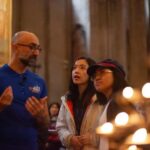
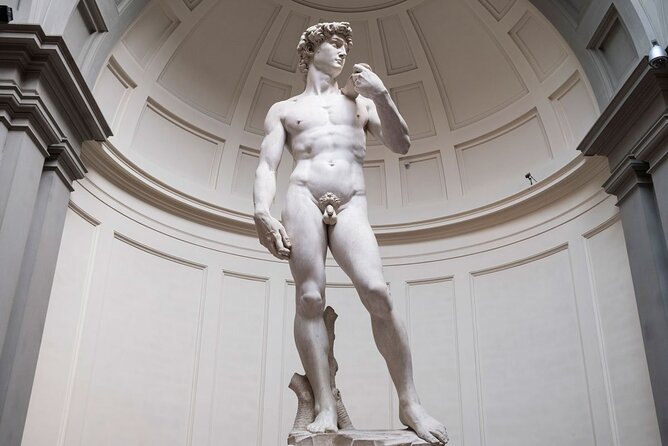
David hits different in Florence. This small-group tour strings together the places that shaped Michelangelo’s David, starting in Piazza della Signoria and ending inside the Accademia Gallery. You get guided storytelling (in English) plus a mobile ticket plan meant to reduce the usual museum chaos.
My favorite part is how you don’t just get the statue. You also get the Florence context that makes it click: politics, artists, and the city’s Renaissance mindset before you ever step into the gallery. Another big win is the way the Accademia visit is framed, with David plus Michelangelo’s other works like the Prisoners.
One thing to keep in mind: the Accademia is crowded, so even with a group entry setup, you may still face some waiting time once you arrive. Build in some patience and be on time at the meeting point.
In This Review
- Quick highlights
- Piazza della Signoria at 3:00 pm: where the story starts
- The replica of David: why the outdoor view matters first
- Orsanmichele and the Michelangelo connection you’ll actually remember
- Santa Maria del Fiore: the marble block story behind the masterpiece
- Accademia Gallery: seeing David and The Prisoners with real guidance
- Pace, group size, and the listening gear in noisy crowds
- Skip-the-line expectations: what to count on at the Accademia
- Is this tour worth it for you?
- Should you book this David-focused skip-the-line tour?
- FAQ
- Where does the tour start and end?
- How long is the tour?
- Is the tour offered in English?
- Is Accademia Gallery admission included?
- How big is the group?
- What is the cancellation window?
Quick highlights
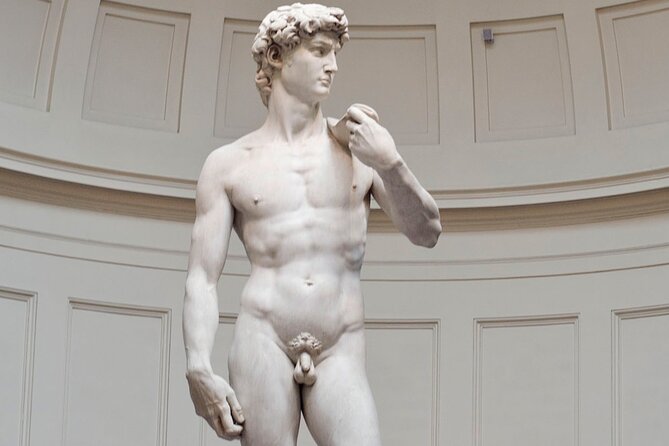
- Piazza della Signoria intro: You start in the square where a David replica now stands in the original spot.
- Orsanmichele stop: A church and nearby statue connected to the ideas behind David.
- Duomo-area context: Learn about the marble block story and David’s planned placement on the Florence Duomo.
- Accademia focus: David plus The Prisoners, explained as part of Michelangelo’s style and impact.
- Small group size: Maximum 19 people, which helps you stay together and hear the guide.
- Ear devices: Provided for listening, and they can make a big difference in noisy crowds.
Piazza della Signoria at 3:00 pm: where the story starts
Meet near Piazza della Signoria, right in the thick of Florence’s most famous outdoor “stage.” The tour kicks off at 3:00 pm and runs about two hours, walking at a relaxed pace and finishing inside the Accademia Gallery. If you’re the type who likes to understand what you’re looking at, this opener is a smart move because it sets the tone for why Michelangelo’s David mattered in Florence.
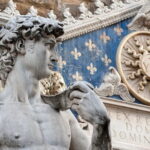
You’re not just standing in a photo-friendly spot. The guide frames the square as a political and cultural hub, so when you hear about Renaissance power and artistic competition, the city stops feeling like a backdrop and starts feeling like a living machine. And yes, you also see the David replica positioned where the original masterpiece once stood, which makes the whole “what you’re about to see” feeling immediate.
This kind of start also helps you manage expectations. When you later walk into the Accademia and the crowd pushes in, you already know what David symbolizes and why people cared so much about where it would go.
You can also read our reviews of more walking tours in Florence
The replica of David: why the outdoor view matters first
This tour spends time in Piazza della Signoria for a reason: the replica gives you a first mental image, but it also teaches you how Florence thought about David. You’re introduced to the idea that David wasn’t only a sculpture. It was a statement. A message. A public symbol built for real civic life.
Here’s what I like about starting with the replica instead of jumping straight into the museum. You get a “before” experience. You see how the statue’s meaning was tied to placement in the city, then you step toward the real thing with that placement story already in your head.
It also makes the walking portion feel purposeful. As you head onward, you’re listening for connections: who funded art, why certain images were persuasive, and how Michelangelo’s approach fit the moment Florence was living through. By the time you reach the Accademia, you’re not only looking at David’s surface. You’re reading it like part of a bigger plan.
Orsanmichele and the Michelangelo connection you’ll actually remember
Next comes the Church and Museum of Orsanmichele, a quick stop (about 10 minutes) that works well as a mental palate cleanser between the big square and the museum visit. You walk cobblestone streets while the guide points out details and keeps the conversation moving.
The key payoff here is the link to Michelangelo’s world. You’ll see mention of a statue believed to have inspired Michelangelo’s David. Even without turning this into a lecture marathon, that one connection helps you see David as something born from earlier models and ideas, not just a random burst of genius.
This stop also keeps you in “Floresnce mode.” You’re still outdoors, still surrounded by the scale and texture of the city. That matters because Accademia can feel intense: bright rooms, heavy foot traffic, and visitors pressing in toward the same focal point. Orsanmichele helps you arrive ready, not overstimulated.
Practical tip: wear shoes you’re comfortable walking in for short cobbled sections. The pace is easy, but Florence doesn’t use flat carpets.
Santa Maria del Fiore: the marble block story behind the masterpiece
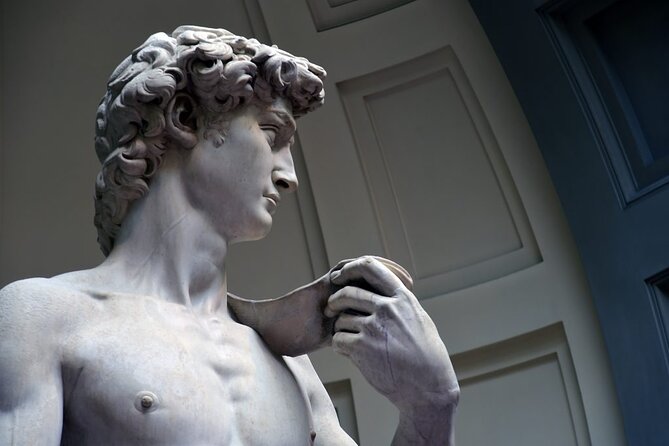
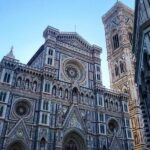
Then you shift to the Cathedral area—Santa Maria del Fiore—with a meaningful stop (around 20 minutes). This isn’t about milling around the big facade. The guide explains the place as part of David’s making and planning.
You learn that Michelangelo sculpted David here, and you hear about the original marble block that was stored for years because it was considered too problematic to work on. That detail changes how you see the sculpture. It turns David from something you simply admire into something with a backstory of obstacles, risk, and persistence.
You also get the thread of intended placement. The guide shares where David was meant to go within the Florence Duomo setting. For many first-timers, this is the moment when David stops being just “a statue in a museum.” It becomes an artwork designed for civic visibility—tied to where it would speak to the public.
This is also a nice time buffer before the Accademia. You’re building context while you still have room to think. Once inside the gallery, you’ll spend less time processing the “why” and more time absorbing the “what.”
Accademia Gallery: seeing David and The Prisoners with real guidance
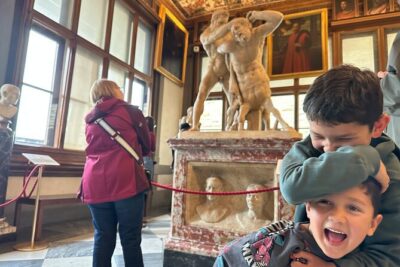
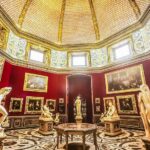
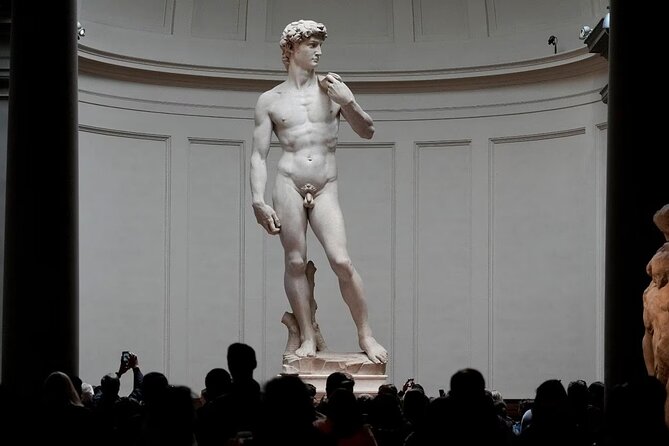
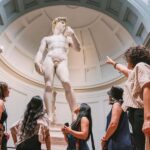
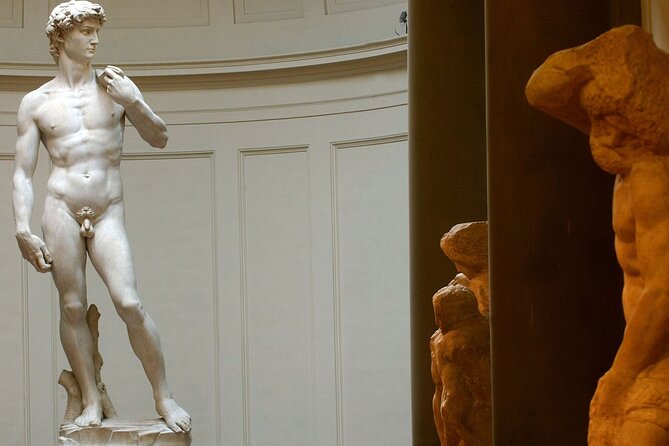
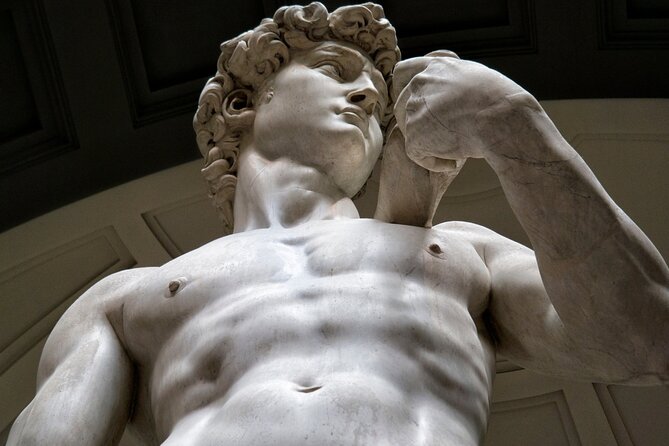
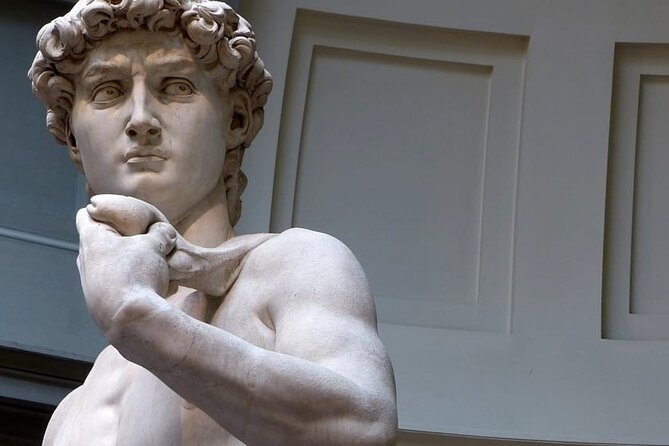
The main event is the Accademia Gallery, and the schedule gives it the time it deserves: about 1 hour 15 minutes inside. The tour ends inside the museum, and this is where the highest value usually shows up—because David is crowded, and you can’t always find the best viewing angles on your own.
Your guide uses the time to do two things at once:
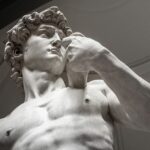
- Point out David and explain what you’re looking at.
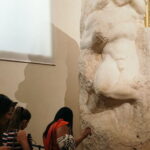
- Connect it to Michelangelo’s broader output, including The Prisoners, so David feels like part of a continuing artistic evolution.
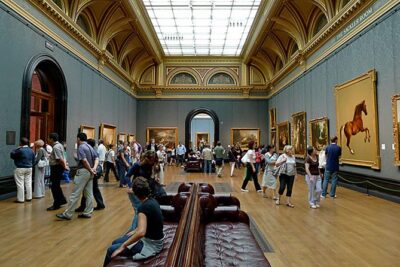
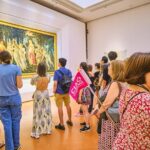
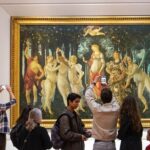
The crowd reality is real. Even with a group entry setup, the Accademia gets packed. What you’re paying for (in experience terms) is help navigating that reality. A good guide helps you keep your bearings, find spots where you can actually see and hear, and make sense of what you notice in the moment.
One reason this tour earns such strong praise is that the tour doesn’t treat David like a standalone “check-the-box.” It gives you the context for why Michelangelo’s style mattered—how his approach influenced other artists and continued to echo well beyond his own time.
If you love Renaissance art history, this is the portion that will feel most satisfying. If you’re more casual, it still lands because you’ll come away knowing what makes David powerful: not only the anatomy and proportions, but the intention behind it.
You can also read our reviews of more museum experiences in Florence
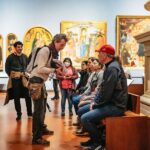

Pace, group size, and the listening gear in noisy crowds
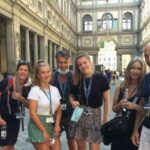
This is a small-group tour with a maximum of 19 travelers, and that size is a practical advantage in Florence. In big groups, you get split attention. Here, the guide can keep you together enough to make the story coherent.
You’ll also receive ear devices. In practice, that helps a lot when you’re walking through streets with traffic noise, and especially when you’re inside a crowded museum. One potential downside: if you have sensitive ears or dislike wearing devices, the fit can be annoying for some people. Still, the point is clear—you should be able to hear the guide without yelling over the crowd.
Timing also works in your favor. The itinerary builds in short, focused stops outdoors, then commits a solid block of time inside. You’re not stuck inside waiting the whole time, and you’re not spending your energy wandering with no payoff.
And yes, being on time matters. The meeting point is at Piazza della Signoria, and arriving late can disrupt the flow. If you want the smoothest experience, show up early enough to locate your guide and get oriented before the group moves.
Skip-the-line expectations: what to count on at the Accademia
The tour is built around a skip-the-line concept and uses a mobile ticket. In plain terms, that means you’re not relying purely on general admission lines, which can be long.
But I wouldn’t treat it as magic. The Accademia is one of the most visited museums in Italy, and crowds can still slow everything down once you reach the museum area. Think of the skip-the-line as “better odds,” not “zero waiting.”
What makes this tour still worth it is how the time gets used. Even if entry takes a bit, the guide doesn’t leave you idle. You’ve already been getting value outside—context, landmarks, and the why behind David—so the day doesn’t feel like a long wait for one famous statue.
If you’re planning your Florence schedule tightly, keep one buffer hour near the Accademia. That way, you’re not stressed if crowds stretch entry a little.
Is this tour worth it for you?
This tour is best if you want David with context. If you love learning how art connects to politics, public life, and artist networks, you’ll enjoy the way the guide links Piazza della Signoria, Orsanmichele, and the Duomo area to the final Accademia payoff.
It’s also great for first-time Florence visitors because it turns a single museum stop into a “mini Florence history route” in about two hours. And if you prefer small-group pacing—enough structure to keep you focused, not so rigid that you can’t ask questions—you’ll likely feel at ease.
Choose another plan if you’re the kind of visitor who wants total freedom to wander the museum at your own speed. This tour is structured, and the value is in that structure.
Should you book this David-focused skip-the-line tour?
My quick take: if Michelangelo’s David is at the top of your Florence list, booking this tour is usually a smart move. You’ll get the statue, yes, but more importantly you’ll get the framework that makes David feel like a public masterpiece, not just a famous object behind rope barriers.
I’d book it if:
- You want a guided, English-speaking explanation with clear pacing.
- You don’t want to waste time figuring out where to stand in a packed gallery.
- You like outdoor context as much as museum time.
I’d pause if:
- You hate any form of queue risk and need guaranteed instant entry.
- You plan to rely only on self-guided reading and prefer no scheduled structure.
If you want David plus the Florence clues that explain why it matters, this is a strong way to spend an afternoon.
FAQ
Where does the tour start and end?
The tour starts at Piazza della Signoria (P.za della Signoria, 50122 Firenze FI, Italy) and ends inside the Accademia Gallery at Via Ricasoli, 58/60, 50129 Firenze FI, Italy.
How long is the tour?
The tour lasts about 2 hours.
Is the tour offered in English?
Yes, the tour is offered in English.
Is Accademia Gallery admission included?
No. The Accademia Gallery admission ticket is not included.
How big is the group?
The tour has a maximum of 19 travelers.
What is the cancellation window?
You can cancel for a full refund up to 24 hours before the experience starts. If you cancel less than 24 hours before, the amount paid is not refunded.