REVIEW · BOGOTA
Graffiti Tour: a fascinating walk through a street art City
Book on GetYourGuide →Operated by Capital Graffiti Tours · Bookable on GetYourGuide
A street wall can be a history book. This graffiti tour in Bogotá uses art to explain the city’s past, its peace process, and where people hope it’s going next. I love that you focus on stories behind the art, not just pictures, and I like the social-impact angle that connects the murals to real community work.
One thing to consider: this is a walk through urban spaces, so if you’re hoping for a sit-down, museum-style experience, the tone may feel more street-level and political than you expect.
In This Review
- Key Points You’ll Notice on This Graffiti Walk
- Meeting Next To Bogotá’s Gold Museum: Getting Started Fast
- How This Tour Frames Bogotá Through Street Art and Politics
- The Tallest Illegal Graffiti in Colombia: What You Should Look For
- Political Posters and Social Issues: Reading the Walls Like News
- False Positives and Community Resilience: The Part That Feels Real
- Learning From Artists: Techniques, Inspiration, and Context
- Price and the Shared-Option Tip Model: Where Your $15 Goes
- What’s Included, What You’ll Do, and What to Skip
- Timing, Languages, and Simple Rules That Matter
- Should You Book Capital Graffiti Tours?
- FAQ
- How long is the graffiti tour?
- Where is the meeting point for the tour?
- How much does the tour cost?
- What’s included in the tour?
- What languages are available for the live guide?
- Is the tour wheelchair accessible?
- Is the tour refundable if plans change?
Key Points You’ll Notice on This Graffiti Walk
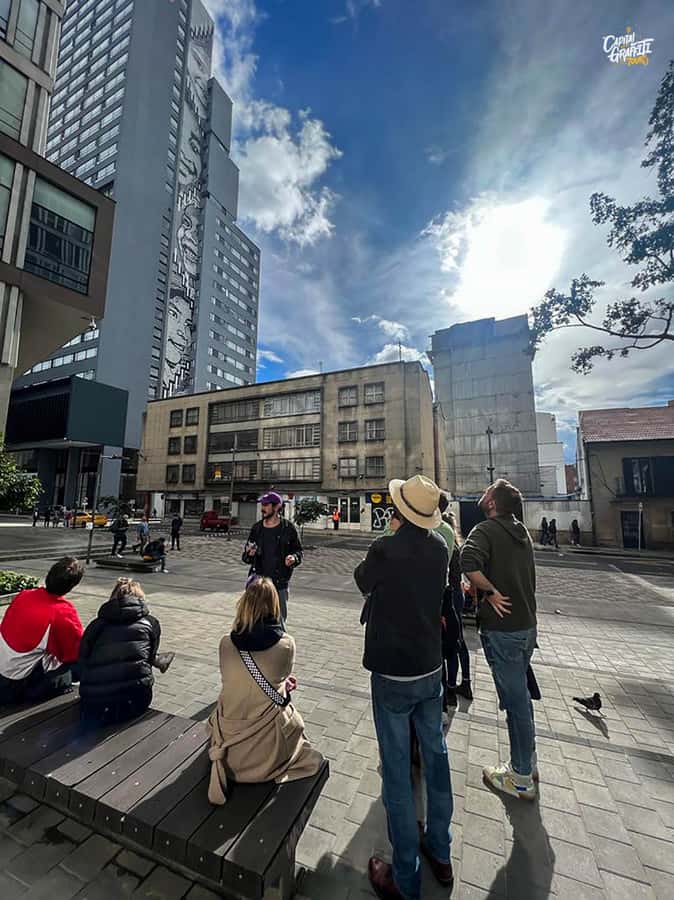
- Colombia’s tallest illegal graffiti: the main wow moment, with the context that makes it matter.
- Political poster walls focused on current social issues, not abstract slogans.
- Community resilience in the face of false positives, showing how art survives setbacks.
- Guides who are also artists and promoters, so you’ll get technique + meaning together.
- Multiple stops around the area, building a bigger picture instead of one mural stop.
Meeting Next To Bogotá’s Gold Museum: Getting Started Fast
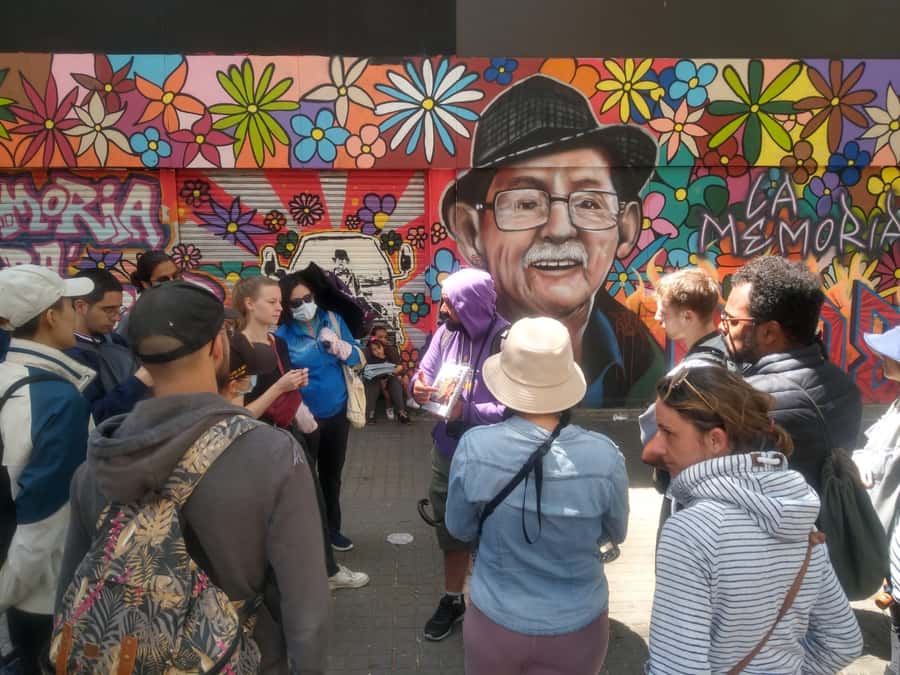
You’ll meet next to the Gold Museum, at Carrera 6 # 15-88. Look for your guide wearing a purple hoodie, cap, or umbrella. That matters more than you’d think on a city sidewalk: it keeps the whole group from doing the usual first-10-minutes shuffle of confusion.
This tour lasts 150 minutes, and it’s a true walking experience. So I recommend you treat it like a planned stroll, not a quick photo sprint. Bring water if you like, and wear shoes that can handle steady walking. Also note the rule: valuables aren’t allowed. Keep your important stuff secure and easy to manage so you’re not distracted.
You can also read our reviews of more tours and experiences in Bogota.
How This Tour Frames Bogotá Through Street Art and Politics
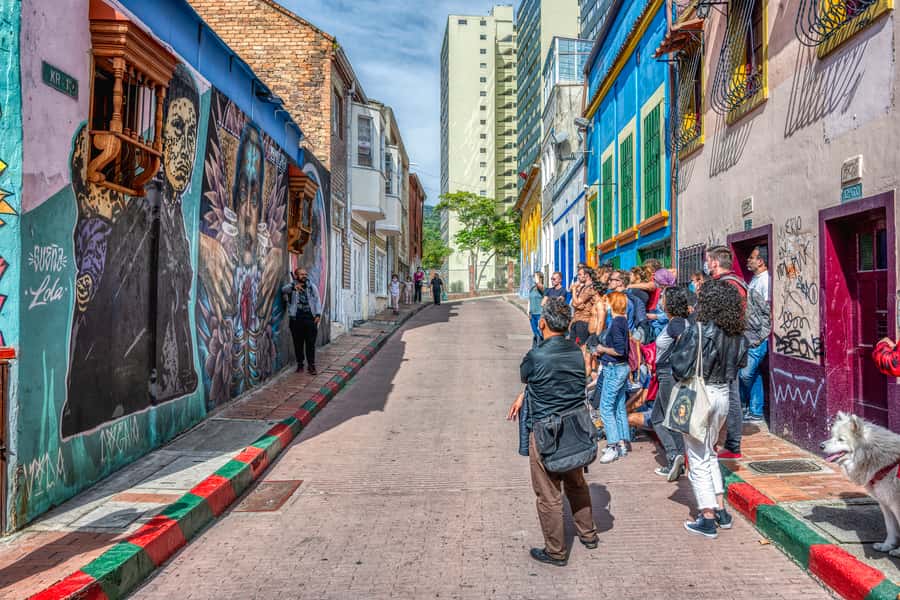
Bogotá is famous for street art, but this tour gives you the meaning underneath. You’ll hear stories tied to the city’s complex past, the present peace process, and the aspirations for a better future. That’s a big deal. Street art can look like style first, message second. Here, your guide helps you read the message as part of Bogotá’s ongoing story.
What I especially liked is the way the tour treats the walls like a living conversation. You’re not just observing. You’re learning how art connects to social issues, political debate, and community identity. It’s also described as pedagogical and cultural, meaning the goal is education and inspiration, not only sightseeing.
The Tallest Illegal Graffiti in Colombia: What You Should Look For
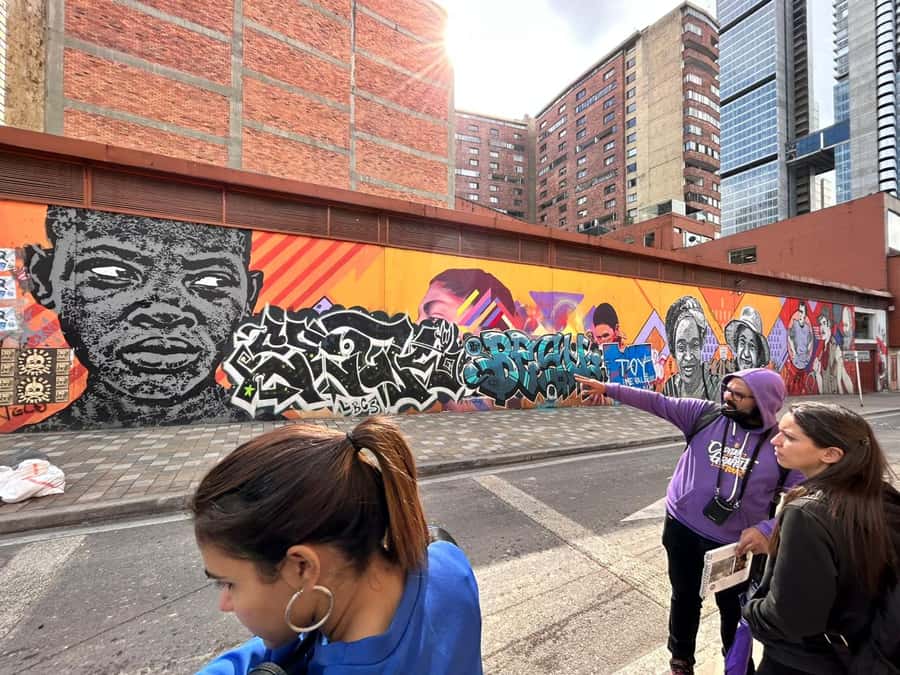
The headline moment is the tour’s visit to the tallest illegal graffiti in the country. Illegal matters here. It signals risk, tension, and urgency—because the people making and displaying it are responding to something happening now. Your guide will explain the story behind the piece, which is where the stop becomes more than a photo opportunity.
When you stand there, slow down. Don’t just try to capture it all at once. Pay attention to what the guide points out about the artwork’s sources of inspiration and the techniques used. Even if you’re not an art person, technique clues you in on intent. And intent is the whole point of a political graffiti tour.
Political Posters and Social Issues: Reading the Walls Like News
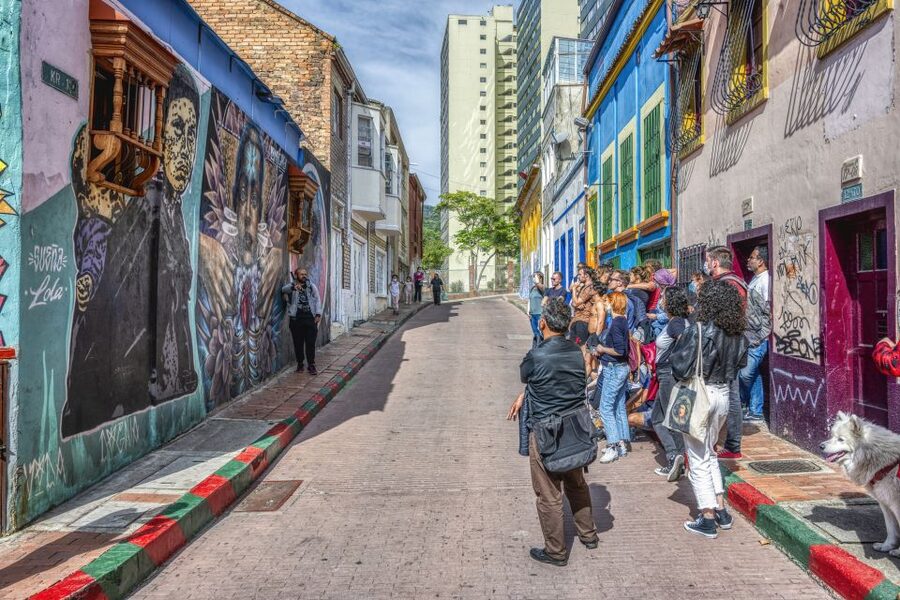
After the big illegal graffiti stop, you move through an area with political posters that address current social issues. This is where the tour shows you how street messaging shifts from murals to posters, and from visual style to direct commentary.
Posters tend to be more immediate, sometimes more blunt. Murals can be slower, more symbolic. Seeing both helps you understand how public communication works in Bogotá’s streets. Your guide connects what you see to the bigger cultural and historical context, so the messages don’t feel random or purely decorative.
False Positives and Community Resilience: The Part That Feels Real
One of the tour’s most powerful highlights is learning about the resilience of the community in the face of false positives. That phrase points to a harsh reality: sometimes people get targeted or removed under mistaken assumptions. In other words, street art can be treated like a problem to eliminate, even when the community sees it as a form of voice.
This stop (and the discussion around it) helps you understand why the tour isn’t only about art history. It’s about survival and persistence—how communities keep creating when conditions are difficult. You end up thinking differently about why new murals appear after cleanup cycles, and why people keep returning to the walls.
Learning From Artists: Techniques, Inspiration, and Context
Your guide isn’t just an explainer. The experience is described as artist-led, with guides who are artists and promoters themselves. They work closely with local artists and community leaders, and the tour reinvests part of the process into financing and managing new murals.
That’s practical in the long run. When an art tour is funded only by tourism, the art can feel temporary. When a tour actively supports mural creation, the street art keeps evolving beyond the day you visit. It also gives your guide credibility: you’re not only hearing political commentary, you’re hearing what the work is made from—sources of inspiration and techniques used.
If you want a takeaway, it’s this: you’ll learn to connect political, cultural, historical, and geographical context to what you’re seeing. That’s the difference between looking at street art and understanding street art.
Price and the Shared-Option Tip Model: Where Your $15 Goes
The price is listed as $15 per person, and that’s a key part of the tour’s value story. On the shared option, you’re essentially paying a package that covers the guides’ work and supports their mural financing, minus the commission. The description also says that at the end of the tour, you don’t have to pay anything extra, even if other travelers do.
So you avoid the awkward end-of-tour scramble. You also know the tour isn’t only about walking and talking. It’s tied to ongoing work on the urban landscape through partnerships with local creators. For a 150-minute street art experience, that’s good value—especially if you care about how your money connects to community culture rather than just a guide’s hourly wage.
If you’re comparing options in Bogotá, don’t just compare cost per minute. Compare what the tour actually supports.
What’s Included, What You’ll Do, and What to Skip
Included in the experience:
- Experienced English-speaking guides (and the tour offers multiple languages)
- Multiple street art and graffiti locations during the walk
You’re getting a guided route with interpretation. This is not a self-guided hunt where you read plaques in your head and hope you guessed right.
What’s not included:
- The data doesn’t list transport, entry fees, or museum access. You’re basically doing street art as street art—walking from spot to spot.
- Valuables aren’t allowed, so plan to travel light.
Group style is flexible. There are private or small groups available, which can be a nice fit if you want slower pacing for photos or deeper questions.
Timing, Languages, and Simple Rules That Matter
Duration is 150 minutes, with starting times depending on availability. That’s long enough to connect the dots between different walls, styles, and messages.
Language coverage includes English, Spanish, Italian, French, and German. So if your group language needs are specific, you have options.
Wheelchair accessibility is listed as wheelchair accessible. Still, any street walk involves uneven sidewalks and real-world paving. If you use a wheelchair, it’s smart to confirm the route style when you book, especially since the data emphasizes a walking tour across urban spaces.
Finally, keep your valuables out of the mix. With street art, you want to focus on looking and listening, not managing stress.
Should You Book Capital Graffiti Tours?
I’d book this tour if you want Bogotá’s street art with context. The big reasons are clear: the tour highlights Colombia’s tallest illegal graffiti, it takes on political posters and current social issues, and it deals with community resilience in the face of false positives. That combination turns photos into understanding.
You might skip it if you only want neutral aesthetics, or if you prefer a quieter, less political experience. This is a walk where art is tied to real social pressure—so expect your thoughts to shift as you go.
If you do book, go in with two mindsets. First: look for the story, not just the style. Second: treat the tour as cultural support, not just entertainment. When guides and local leaders are reinvesting into new murals, you’re participating in something that keeps moving after you leave the sidewalk.
FAQ
How long is the graffiti tour?
It lasts 150 minutes.
Where is the meeting point for the tour?
You meet next to the Gold Museum, Carrera 6 # 15-88. Look for the guide with a purple hoodie, cap, or umbrella.
How much does the tour cost?
The price is listed as $15 per person.
What’s included in the tour?
It includes experienced English-speaking guides and exploration of multiple street art and graffiti locations.
What languages are available for the live guide?
The tour offers live guiding in English, Spanish, Italian, French, and German.
Is the tour wheelchair accessible?
Yes, it is listed as wheelchair accessible.
Is the tour refundable if plans change?
Yes, it offers free cancellation up to 24 hours in advance for a full refund.