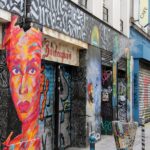
REVIEW · PARIS
Paris Street Art, smartphone audioguided tour
Book on Viator →Operated by REWIND · Bookable on Viator
Street art feels bigger in the 13th. This smartphone audioguided walk turns a neighborhood into an open-air lesson, with stories that trigger right where you are. You’ll track murals, meaning, and the local economy behind the walls, all at your own speed.
I really like the automatic GPS audio. You don’t need to line up with a live group or constantly check your phone screen; directions and commentary are meant to start in place as you walk. I also like the real street-art context, from artist shout-outs to how the scene took root in the arrondissement.
One possible drawback: the walk is short, so you’ll see major works but not every wall worth photographing. If you want an all-day mural hunt, plan to stretch beyond the route after you finish.
In This Review
- Quick hits
- Why the 13th arrondissement is Paris’s street-art classroom
- Rewind on your phone: how the GPS audioguided format works
- The walk’s spine: from Zabou’s Paper planes to Boulevard Vincent Auriol
- Stop-by-stop: what to look for at each artwork
- Stop 1: Fresque Paper planes by Zabou
- Stop 2: Rue Pinel and the street-art business model
- Stop 3: Place Pinel and big-name works in a public square
- Stop 4: OBEY and the 2015 Paris memorial
- Stop 5: Boulevard Vincent Auriol and the open-air museum stretch
- What you actually learn: art, identity, and why the neighborhood picked up speed
- Pace and timing: how to make the 1–1.5 hours feel like enough
- Meeting point and ending point: simple wayfinding in a city that likes to complicate
- Price and value: why $11.85 can work well here
- Who should book this tour
- Should you book this Paris street art smartphone tour?
- FAQ
- How long is the Paris Street Art smartphone audioguided tour?
- Where does the tour start and where does it end?
- What does the tour include?
- Do I need to pay for admission to the street art stops?
- Will the audio play automatically while I walk?
- What if I take the wrong turn while walking?
- Can I pause the tour and resume later?
- Is this tour private?
- Are service animals allowed?
- What are the available hours?
Quick hits
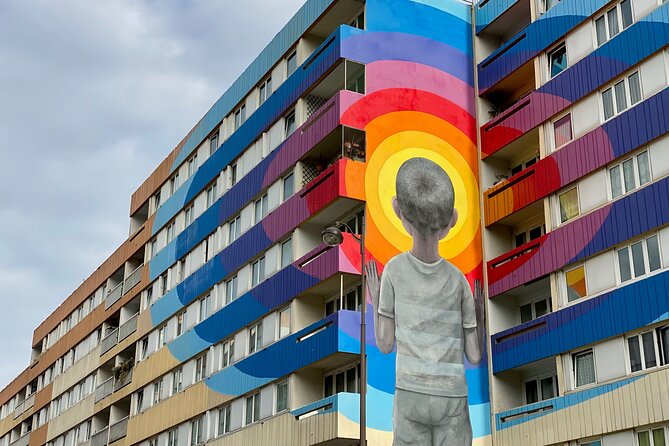
- Rewind app GPS guidance keeps you pointed in the right direction in real time
- Automatic audio triggers so commentary plays as you reach each artwork
- Huge, recognizable artists like DFace, C215, Obey, Invader, and more
- A thoughtful stop at OBEY’s 2015 Paris memorial adds a serious side to the scene
- Self-paced with pause/resume means you can stop for a snack and keep going
- Free admission sites during the route keep your budget simple
Why the 13th arrondissement is Paris’s street-art classroom
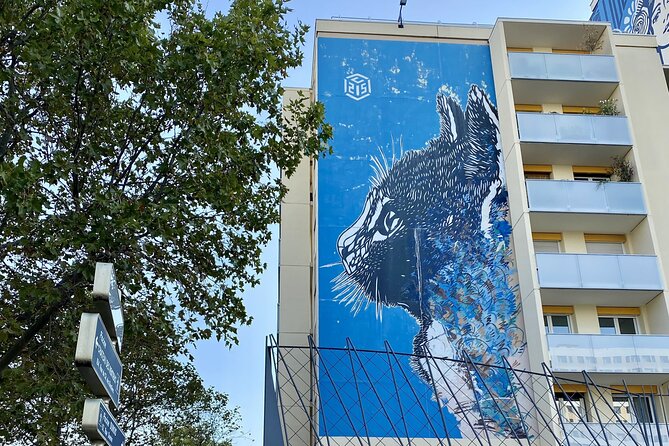
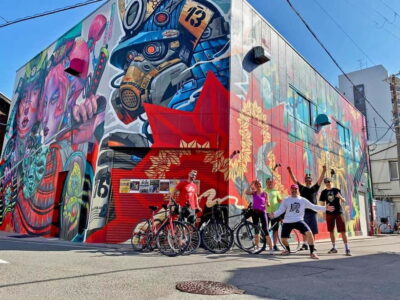
Paris has its famous sights, but the 13th arrondissement is the part that teaches you how street art actually lives. Here, it’s not tucked into a gallery room. It’s on building sides, along streets, and in squares—right where people walk to work, meet friends, grab groceries, and pass by art without buying a ticket.
That changes how you see the work. In a museum, you read a label and move on. On these streets, you notice scale, placement, and who the artwork is speaking to. You also get the sense that the arrondissement’s identity and street art have grown up together, not as an afterthought, but as part of the neighborhood fabric.
And because you’re using a smartphone audioguide, you get more than visuals. You get commentary designed to explain what you’re looking at and why it matters.
You can also read our reviews of more tours and experiences in Paris.


Rewind on your phone: how the GPS audioguided format works
This is a smartphone tour, not a bus tour. The big win is how it handles navigation and timing. The audio commentaries are designed to play automatically when you reach the correct spots, so your attention stays on the street instead of on menus.
You’ll also get a map with clear directions. The system is built for the moment you turn the wrong way—geo-localization is used to get you back on track fast. In plain terms: you can wander a bit, and the app is meant to rescue you.
The pause/resume feature is handy in a city like Paris. If you stop at a terrace or duck into a shop, you don’t have to start from scratch. You can resume right where you paused, which makes the whole walk feel flexible rather than rushed.
One more practical note: the tour is private for your group. That matters if you prefer a calm pace and don’t want to follow a line of strangers.
The walk’s spine: from Zabou’s Paper planes to Boulevard Vincent Auriol
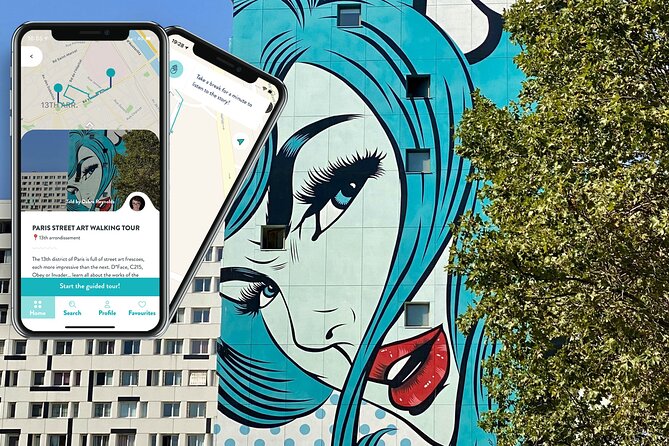
The route starts at the town hall of the 13th arrondissement, at 1 Pl. d’Italie. It ends at 78 Rue Dunois. It’s an easy way to spend about 1 to 1.5 hours getting your bearings in an area that’s known for murals.
From there, the tour builds momentum. You begin with a specific fresco by Zabou, then step into street-art history and the business model behind the scenes. After that, you move through key squares and streets where multiple famous styles show up. The walk also includes a deeper emotional moment, thanks to OBEY’s homage to the victims of the 2015 terrorist attacks in Paris.
By the time you reach Boulevard Vincent Auriol, you’re basically walking through an open-air museum. The route is designed so the big names are not only named, but placed in context as you encounter them.
Stop-by-stop: what to look for at each artwork
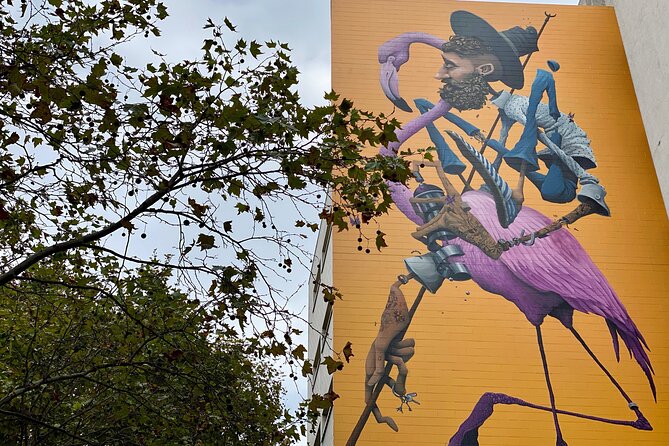
Here’s how the main stops feel and what you’re getting from each one.
Stop 1: Fresque Paper planes by Zabou
The first artwork is Zabou’s fresco Paper planes. It’s listed at almost 15 minutes of focus time, which tells you the tour wants you to actually look, not just snap a picture and move on.
Zabou’s style often feels both graphic and human—so the audio guide is a good match here. You’ll likely get help reading symbols, composition, and the way street art can feel like a story you walk through.
Practical tip: start with comfortable walking shoes. Fresco details can make you slow down, and the first stop sets that tone.
A few more Paris tours and experiences worth a look


Stop 2: Rue Pinel and the street-art business model
Next is Rue Pinel. This part isn’t about one mural only; it’s about the way street art operates. The audio is meant to explain history and the business model behind street art that’s now recognized internationally.
That’s useful because street art can be misunderstood as purely spontaneous or purely rebellious. This segment is there to help you connect the dots between artists, visibility, commissions, local walls, and the reality that big brands of recognition can follow big talent.
If you like art with context—who pays, why it spreads, how it becomes part of the mainstream—this is the stop that rewards you.
Stop 3: Place Pinel and big-name works in a public square
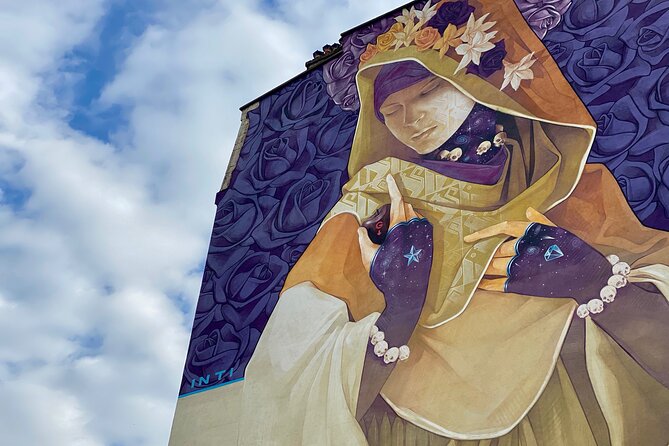
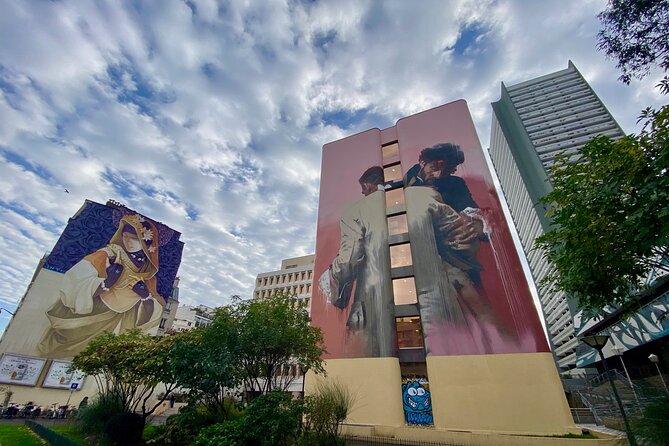
Then you arrive at Place Pinel. This is where the tour shifts back to visual impact: you’ll admire major works by some of the world’s greatest street artists.
A public square is a different stage than a wall on a quiet street. People see the art while they’re waiting, chatting, or moving through. You get a sense of street art as something shared, not something hidden behind museum walls.
The guide’s timing here is important. You’re meant to look around as you listen, not just fix your eyes on one spot.
Stop 4: OBEY and the 2015 Paris memorial
Stop four is OBEY, featuring an homage to the victims of the 2015 terrorist attacks in Paris. This is a heavy note within a route that also includes playful, graphic styles.
I appreciate that the tour doesn’t treat street art like a decorative sideline. It’s also a language for memory and public grief. If you’re the type who likes art with a message, you’ll likely find this segment more moving than you expect—because the emotional weight changes how you view the visuals.
Take your time here. This isn’t a “quick look” stop.
Stop 5: Boulevard Vincent Auriol and the open-air museum stretch
The final stretch is Boulevard Vincent Auriol, and it’s the longest chunk—about 30 minutes. This is where you see an ongoing gallery wall, with works linked to big names such as DFace, C215, Obey, David de la Mano, Pantonio, and Invader.
This part matters because it lets you zoom out. Instead of thinking of street art as isolated murals, you start seeing it as a connected conversation across walls and styles. You might notice recurring themes or how different artists use different visual languages.
Also, if you’re new to street art, this end section is a strong “I get it now” moment. By the time you reach it, you already have enough background to understand the choices behind what you’re seeing.
What you actually learn: art, identity, and why the neighborhood picked up speed
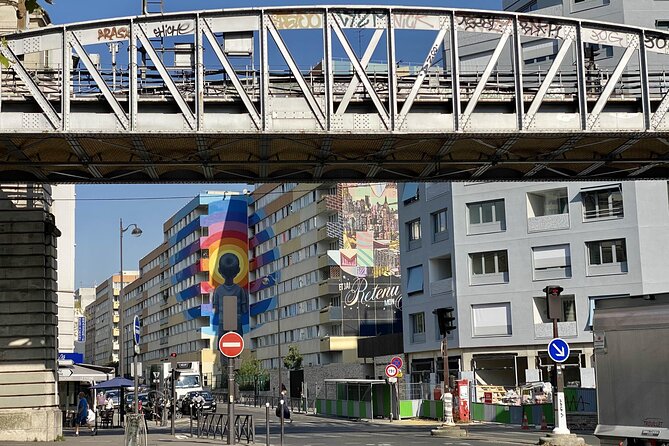
The tour’s messaging leans into a paradox: street art is made in public, for public viewing, yet it becomes internationally recognized. That tension shows up through what you’re told at the historical and economic stops.
You’ll get explanations meant to cover both the artists and the works, then connect that to why the 13th arrondissement became a key hub. The route doesn’t just point at famous names; it explains how street art took root in this area and how its model evolved.
That’s valuable because street art changes over time. When it first appears, it can feel like a surprise. When it’s widely known, it can feel like a brand. Learning about the business side helps you interpret murals with clearer expectations: who initiates work, how recognition happens, and why the public space becomes part of the deal.
Pace and timing: how to make the 1–1.5 hours feel like enough
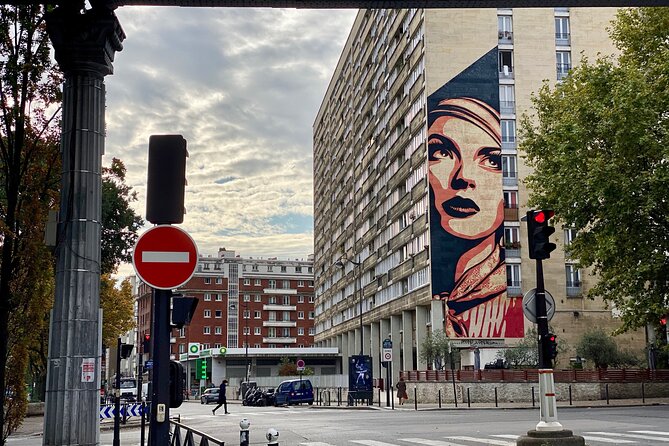
This is designed to take about 1 to 1.5 hours. That’s an ideal length if you want something you can fit between museum blocks, day trips, and meal plans.
But because it’s short, pacing matters. I’d do it early enough that you’re still curious when you finish. Then, after the audio walk ends, you can keep exploring around the same streets while the meanings are still fresh.
Weather is also a factor. You’re outside, and rain can make reading details harder. The flip side is that when the light is good, the art on flat walls and building faces looks crisp and dramatic.
One thing I like about this format is that you’re not forced to match someone else’s speed. If you want to linger at OBEY or re-check details on Paper planes, you can. If you’re hungry or you want to browse a nearby shop, you can pause and return to the route without losing your place.
Meeting point and ending point: simple wayfinding in a city that likes to complicate
You meet at the town hall of the 13th arrondissement, 1 Pl. d’Italie, 75013 Paris. You finish at 78 Rue Dunois, 75013 Paris.
Why does that matter? Because street art routes often end in random places, forcing you to plan your transport like a puzzle. Here, the route has a clear start and finish. With the map guidance and real-time directions, you also have a built-in safety net if you stray.
And because it’s near public transportation, you can usually connect to the rest of your day without a long scramble.
Price and value: why $11.85 can work well here
At $11.85 per person for about 1–1.5 hours, this is one of the lower-cost ways to get guided street-art context. The reason it can feel like good value is that admission for the stops is listed as free, so you’re paying for interpretation and navigation—not entrance fees.
You’re also paying for the friction-free format. You don’t need to coordinate a live group, and you don’t need to spend time guessing where to go next. The GPS audio triggers are central to the value proposition: you’re getting the right commentary at the right time and place.
If you already love street art, you’ll likely treat it as a fast, organized way to see what matters. If you’re new to street art, it can act like a starter kit so you don’t leave confused or just impressed by size.
Who should book this tour
I’d point you toward this tour if:
- You want street art in Paris but don’t want to spend your time researching each mural alone
- You prefer self-paced walking with audio that starts automatically
- You like context: artists plus the “how did this become real” side of street art
- You want a short activity that still feels meaningful
It may be less ideal if:
- You want a long, exhaustive mural crawl (this route is intentionally compact)
- You’re only interested in artwork photos and don’t care about interpretation
Given the private-group setup, it’s also a good fit for couples, friends, or anyone who wants a quieter experience.
Should you book this Paris street art smartphone tour?
If your goal is a smart first encounter with the 13th arrondissement, I think it’s a strong yes. The route hits major works, uses automatic GPS audio so you don’t get lost, and teaches you enough background that the art connects to real meaning—history, economics, and even memory.
If you’re the type who wants to see dozens of murals beyond the highlights, treat this as a kickstart rather than a final word. Do the walk, then keep roaming nearby while the stories are still in your head.
FAQ
How long is the Paris Street Art smartphone audioguided tour?
The duration is listed at about 1 hour to 1 hour 30 minutes.
Where does the tour start and where does it end?
It starts at the town hall of the 13th arrondissement, 1 Pl. d’Italie, 75013 Paris, France, and ends at 78 Rue Dunois, 75013 Paris, France.
What does the tour include?
It’s a smartphone audioguided walk in Paris street art areas, with professional guide commentaries that are triggered automatically, plus a map and GPS guidance.
Do I need to pay for admission to the street art stops?
The stops on the route list admission ticket free.
Will the audio play automatically while I walk?
Yes. The audio commentaries are designed to trigger automatically when you reach the relevant spots.
What if I take the wrong turn while walking?
The tour uses integrated geo-localization to get you back on track if you turn the wrong way.
Can I pause the tour and resume later?
Yes. If you pause for a break, you can resume the visit right where you stopped.
Is this tour private?
Yes. It’s private, so only your group participates.
Are service animals allowed?
Yes, service animals are allowed.
What are the available hours?
The listed opening hours are Monday through Sunday from 7:00 AM to 6:00 PM.