REVIEW · ATHENS
Private Athens Street Art & Culture Tour
Book on GetYourGuide →Operated by Greeking.me · Bookable on GetYourGuide
Athens reads best on foot. This private street-art walk takes you off the main sights to Monastiraki, Psyrri, Metaxourgheio, and Gazi, where murals feel like an outdoor gallery. I love that the guide, street artist Eugenia, teaches you how to spot the details and read the stories behind each wall with street-art lingo.
I also like the art itself: you’ll come face to face with big names such as iNO, Sonke, and Vasmoulakis, plus the techniques from stencils to paste-ups and tags. The only catch is the route is on foot through smaller streets, so it’s not a great match if you’re mobility limited or traveling with pregnancy.
In This Review
- Quick hits
- Why graffiti in Athens feels like a language, not a hobby
- Starting at Monastiraki: where the tour stops being touristy
- The neighborhoods you’ll actually want to return to
- The murals and names: iNO, Sonke, Vasmoulakis (and more)
- Stencils, paste-ups, throw-ups: learning the street-art toolkit
- How street art becomes politics you can walk past
- Guided photos and the small moments that make the walk work
- Price and value: $259 per group up to 4
- Who this tour suits best (and who might want a different plan)
- End point at Omonoia Square: finishing where Athens feels wide open
- Should you book this Athens Street Art & Culture Tour?
- FAQ
- Where does the tour start and where does it finish?
- How long is the Athens street art tour?
- Is this a private tour, and what group size is it?
- What’s included in the price?
- What’s not included?
- Is it suitable for everyone?
- Can I cancel, and can I pay later?
Quick hits
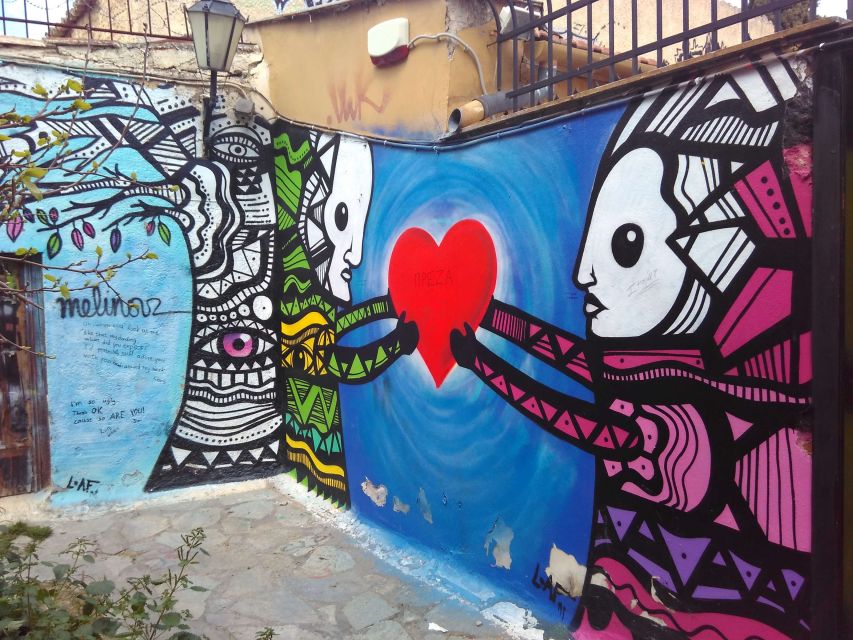
- Street-artist guide (Eugenia) who can explain what you’re seeing in plain English
- Private 3-hour route designed for local neighborhoods, not the postcard loop
- Big mural names like iNO, Sonke, and Vasmoulakis, plus evolving wall work
- Street-art terminology made usable: tags, pieces, stencils, paste-ups, throw-ups, and more
- Art as social commentary, including how graffiti connects to politics and daily life
Why graffiti in Athens feels like a language, not a hobby
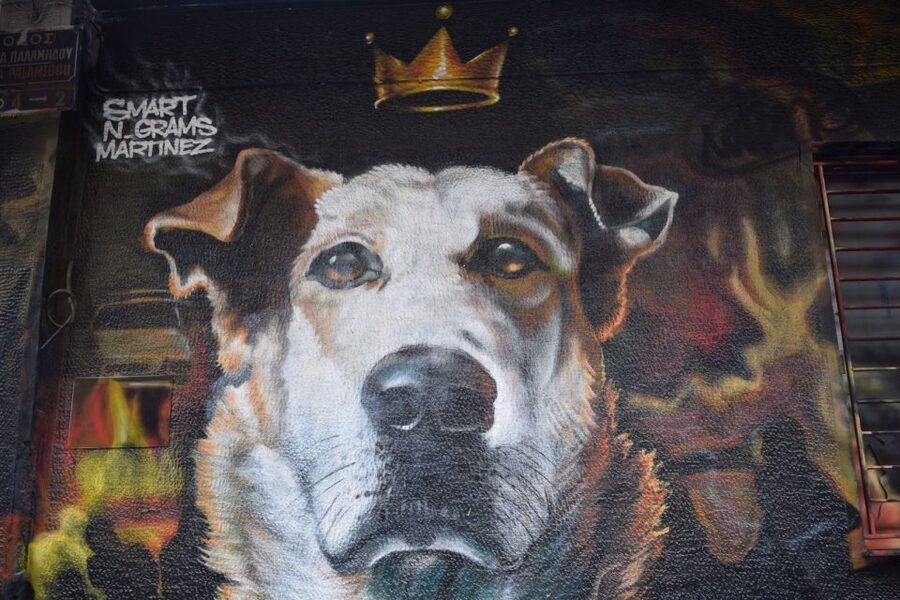
Athens treats street art like public communication. You’ll see it everywhere once you know what to look for, but the real magic is learning how the pieces fit together: style, location, timing, and message. The word graffiti itself has Greek roots, which makes the whole scene feel less like imported street culture and more like a local one.
On this kind of tour, the walls stop being background. They become your guide. You’ll walk past murals, post-graffiti, and guerilla art that can change quickly, so the city feels more like a living exhibit than a museum. That matters because Athens street art isn’t just about the finished painting—it’s about what’s happening now, and what people want to say.
And because this is private, you’re not stuck following a rigid script. If you’re the kind of person who wants to linger at one wall and ask why it was made, you’ll likely get that room.
You can also read our reviews of more private tours in Athens


Starting at Monastiraki: where the tour stops being touristy

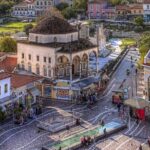
You’ll meet outside Monastiraki Metro Station, right where many visitors start their first loop. The difference is what happens next. Instead of drifting into the usual highlights, the walk steers you into neighborhoods that feel more lived-in and less curated.
Monastiraki is a smart starting point because you can orient quickly: you’re near major transport, and it’s easy to arrive on your schedule. From there, you’ll have a mix of guided walking and photo stops as the route transitions into smaller streets. You’ll also get scenic views along the way, but in practice it’s the change of atmosphere that stands out.
One practical note: the walk is described as suitable for all ages, yet it’s still a walking tour with smaller streets. If you’re sensitive to uneven pavement or long stretches without breaks, plan your day around comfortable shoes and an unhurried pace.
The neighborhoods you’ll actually want to return to
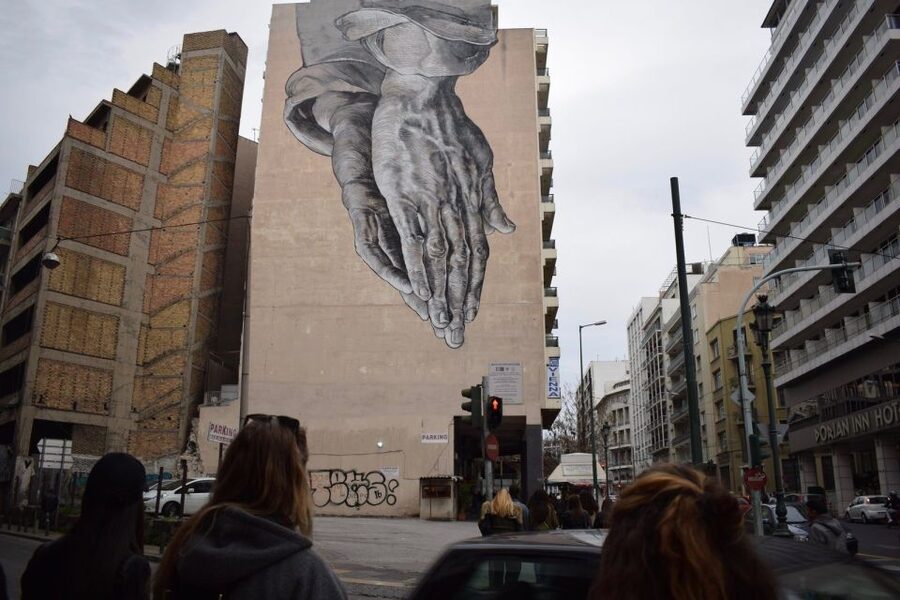
This tour doesn’t just promise street art. It routes you through specific neighborhoods that street artists already treat like playgrounds. Expect time around:
- Monastiraki (a familiar entry point, then a quick shift away from the busiest areas)
- Psyrri (often where you feel the city’s creative energy up close)
- Metaxourgheio (a district that feels more under-the-radar than the main tourist spine)
- Gazi (another area where the street-art scene shows up in modern city life)
What I like about neighborhood-focused routes is how they change the types of walls you see. Street art isn’t only a style. It’s also a local behavior. Different areas attract different artists and messages, so the tour becomes a quick crash course in how Athens expresses itself block by block.
Also, the artworks can shift over time. You’re not chasing a checklist of permanent landmarks. You’re learning how to interpret the walls you find today—which is exactly what makes street art fun on a short trip.
The murals and names: iNO, Sonke, Vasmoulakis (and more)
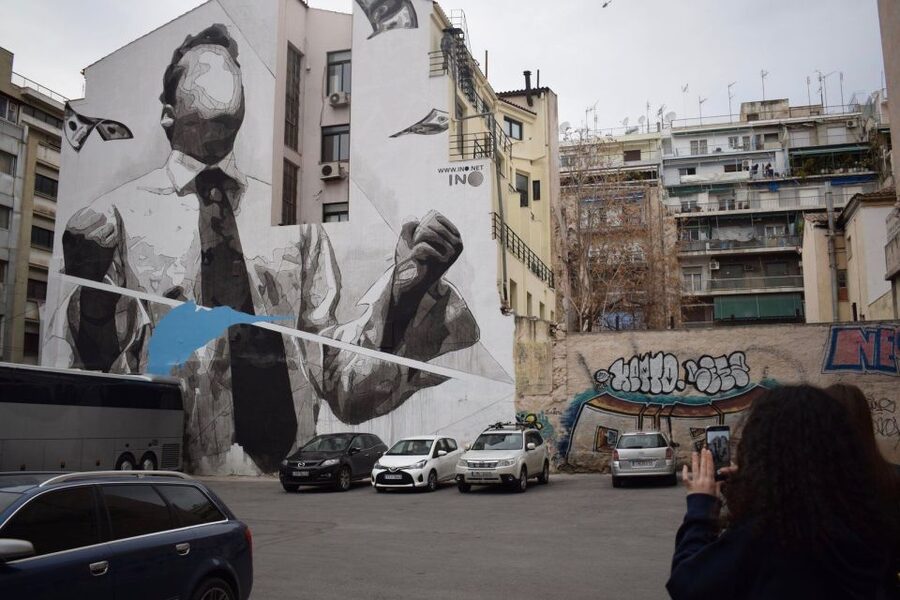
A huge reason to book a street-art tour in Athens is the artist lineup. This experience explicitly points you to works by well-known names, which helps you connect the dots when you see similar art online later.
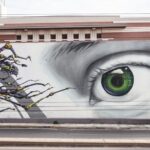
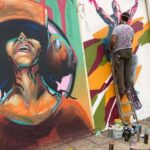
You can expect to admire works by iNO, Sonke, Vasmoulakis, and other artists. That matters because each artist often brings a recognizable feel—color choices, lettering approach, and how the piece relates to the street around it. When you learn what makes a style distinct, you start noticing patterns faster than you would on your own.
Even if you’re not a street-art superfan, you’ll still get value. Why? Because these murals are often big enough and specific enough to spark questions:
- What’s the message here?
- Why is this wall chosen?
- Does this style feel like protest, humor, or commentary?
The tour’s promise is that you’ll go beyond just seeing the artwork. You’ll also learn to read how the city uses it.
Stencils, paste-ups, throw-ups: learning the street-art toolkit
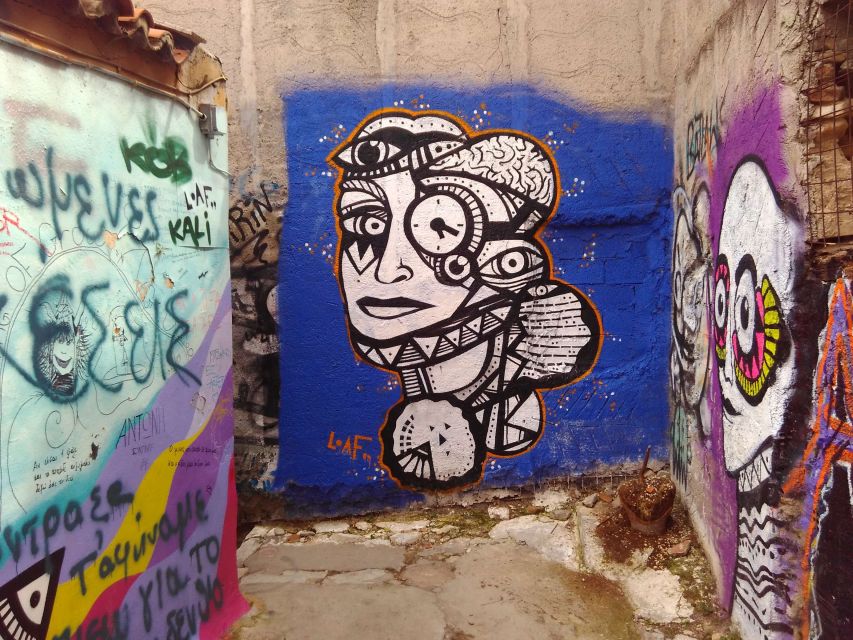
One of the best parts of this tour is the way it turns jargon into something you can use while walking. Street art has its own vocabulary, and once you learn it, Athens becomes easier to navigate visually.
You’ll hear explanations of styles and techniques such as:
- stencils
- paste-ups
- throw-ups
- bombings
You’ll also get the terms people use for different types of marks:
- tags
- pieces
- murals
- installations
- wild-style graffiti
That might sound technical, but it’s actually practical. When you understand the difference between a quick tag and a longer piece, you understand the creator’s intent and time investment. And when you know what wild-style means, suddenly the letters stop looking like messy scribbles and start looking like a skill set.
A guide who can explain this well also changes your entire experience if you’re traveling with kids or teens. One of the reviews highlights an especially strong reaction from young visitors, which tracks: the tour gives structure to something kids can spot instantly but might not know how to interpret.
A few more Athens tours and experiences worth a look


How street art becomes politics you can walk past
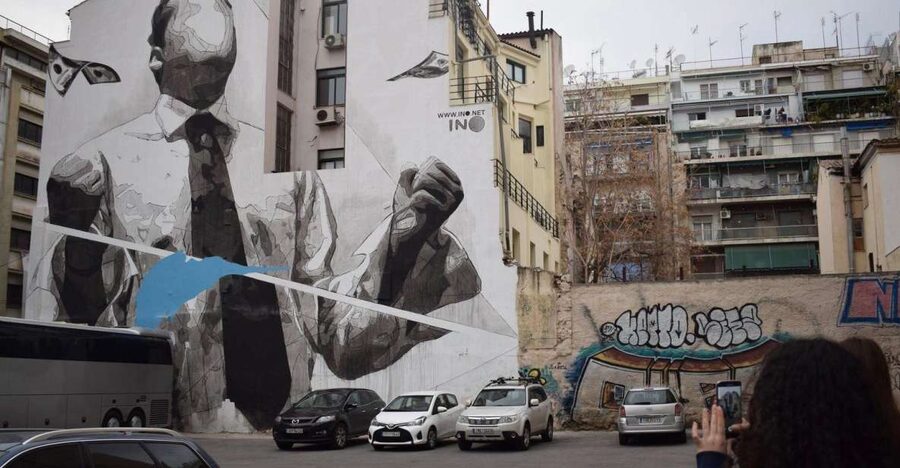
Athens street art is not shy about politics and social questions. The tour focuses on how artists use walls to make political and social statements, and that changes what you notice as you move from mural to mural.
You’ll talk about why street art flourishes, and you’ll discuss the reasons behind the artwork’s growth in these neighborhoods. The context is important. Without it, street art can feel like random visual noise. With it, it becomes part of the city’s conversation.
One specific example of that kind of political energy is protest-era graffiti connected to austerity-era demonstrations and recognizable public symbols. If you’ve seen photos online of street art tied to protest themes, this is where you learn what those images are responding to—and why the style matters.
This isn’t propaganda class. It’s more like media literacy for the street. You’ll learn to ask the right questions: who’s speaking, who it’s for, and what emotion the artist is pushing you toward.
Guided photos and the small moments that make the walk work
This tour lasts about three hours, and it’s built for a walking rhythm: guided tour, photo stop, then more guided tour. The short format is ideal because street art is everywhere, but you still need time to process it.
A private group setup helps here. You can move at a pace that matches your attention span. If you want a photo and a quick explanation, you’ll get that. If you want more conversation about technique or politics, you’ll get that too.
From the practical side, I’d treat the tour like an early afternoon or late morning activity. You’ll want a window where your brain isn’t fried and you can still spot details. You’ll also be grateful you’re not hopping between distant sites on transit.
Price and value: $259 per group up to 4
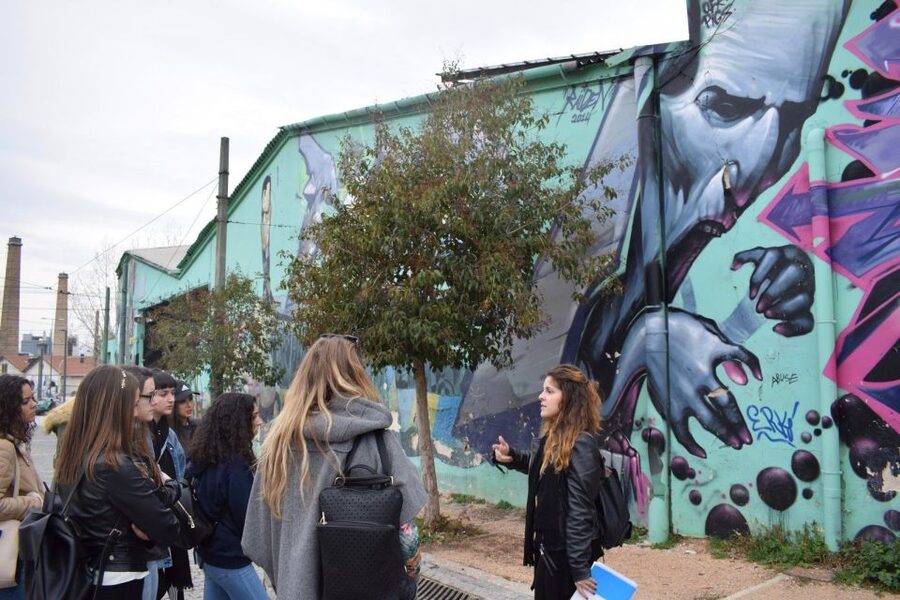
At $259 per group (up to four people), this isn’t a budget street-art stroll. But it can be good value when you think about what you’re buying: a private, English-speaking tour with a guide who is also a street artist.
Here’s how I’d frame the math. If you’re two people, you’re essentially paying for a tailored experience with time to ask questions. If you’re a family or a small group up to four, the per-person cost becomes much more reasonable compared with paying for separate individual tours.
You’re also getting specialized guidance rather than a generic walking loop. The tour emphasizes techniques, terminology, and political/social context. That’s hard to replicate with a map and an internet search because street art’s meaning often depends on local context and the artist’s intentions.
So the value question isn’t only price. It’s whether you want to understand street art while you’re seeing it. If yes, this price makes more sense.
Who this tour suits best (and who might want a different plan)
This street-art tour is described as suitable for all ages, which is great if you want a family-friendly activity that still has real depth. It’s also a strong fit if you like contemporary art, protest culture, or you simply want a fresh angle on Athens beyond the usual ruins-and-temples route.
It’s less ideal for people who have mobility impairments, and it’s also listed as not suitable for pregnant women. Since it’s a walking route through smaller streets, the physical reality matters more than the art concept.
If you’re the type who likes to learn while you wander, you’ll probably love it. If you’re hoping for a quiet, sit-down museum experience, you’ll be disappointed. This is a walking conversation with the city’s walls.
End point at Omonoia Square: finishing where Athens feels wide open
You’ll wrap up at Omonoia Square (Athina 104 31). Ending here can be helpful because it connects you back to transit and onward plans. It also gives a sense of movement: you start near one end of the city energy and finish in a more open, central area.
Mentally, I like that wrap-up. You can treat the tour as a reset. After three hours of reading walls, Athens feels different when you continue on your own. You’ll likely notice more street art on the way to dinner, even outside the specific route.
Should you book this Athens Street Art & Culture Tour?
Book it if you want more than photos. This tour is for people who like interpretation: learning street-art terms, seeing specific artists such as iNO, Sonke, and Vasmoulakis, and understanding how the art ties into politics and social statements. With Eugenia guiding the walk, you’re not just watching—your brain gets taught how to see.
Skip it if your trip is built around minimal walking or if accessibility concerns make uneven streets and longer routes difficult. Also, if you hate structured explanations and just want to wander at your own pace with no context, you might find a DIY street-art route more relaxing.
FAQ
Where does the tour start and where does it finish?
You meet outside Monastiraki Metro Station on the square. The tour finishes at Omonoia Square, Athina 104 31, Greece.
How long is the Athens street art tour?
The tour lasts about 3 hours.
Is this a private tour, and what group size is it?
Yes, it’s a private group tour. The pricing is per group up to 4 people.
What’s included in the price?
The price includes the street art tour with a local guide.
What’s not included?
Food and drinks are not included, and you’ll have personal expenses.
Is it suitable for everyone?
It’s listed as suitable for all ages, but it’s not suitable for pregnant women or people with mobility impairments.
Can I cancel, and can I pay later?
Free cancellation is available up to 24 hours in advance for a full refund. You can also reserve now and pay later.