REVIEW · ATHENS
Athens Heart Walking Private Tour
Book on GetYourGuide →Operated by Be a Greek · Bookable on GetYourGuide
One street can teach you a city. This private Athens Heart Walking tour strings together the big sights and the lesser-known paths in one 4-hour loop. You get a local Athenian guide and a walking route that mixes ancient ruins with modern Athens street life.
I especially like the Acropolis-side viewpoints and the down-the-hill storytelling. You start near the Acropolis Museum area, pass the Odeon of Herodes Atticus, stop around the Areopagus, and then head into Anafiotika—those tiny Cycladic-style streets that feel like a secret pocket.
One drawback to plan around: this is not suitable for mobility impairments, and it’s built for comfortable walking. Also, entrance fees are not included, so some stops may require extra payment if you want to go inside.
In This Review
- Key Things That Make This Tour Worth Your Time
- Walking Athens From the Acropolis Down to Syntagma
- Where You Start: Makrigianni and the Acropolis Museum Area
- Odeon of Herodes Atticus: The Theater That Still Feels Alive
- Areopagus Views: A Natural Place to Understand Athens
- Plaka to Anafiotika: When the City Turns Pastoral
- The Ancient Roman Agora and Tower of Winds Stop
- Monastiraki and Ermou Street: Real Athens, Not Just Photos
- A 30-Minute Coffee Break That Actually Helps
- Syntagma Square and the Changing of the Presidential Guard
- National Garden: The Best Kind of Pause in Central Athens
- Panathenaic Stadium and Zappeion: Marble Meets Official Athens
- Temple of Olympian Zeus and the Arch of Hadrian Finish Strong
- Price and Value: What $149 Really Buys You
- Who This Tour Fits Best
- Should You Book the Athens Heart Walking Private Tour?
- FAQ
- How long is the Athens Heart Walking Private Tour?
- Where do I meet the guide?
- What is included in the price?
- Are entrance fees to archaeological sites included?
- Is the tour guide in English?
- Is the tour suitable for people with mobility impairments?
- Is there a break during the tour?
- Can I cancel and get a full refund?
Key Things That Make This Tour Worth Your Time

- Acropolis viewpoints with city-at-your-feet perspective: you’ll get the classic look down over Athens, not just “seen from a distance.”
- Anafiotika + Plaka pacing: you move from dramatic heights to the most old-school, photo-friendly neighborhoods.
- Monastiraki and the market vibe: you’ll get a practical feel for how modern Athens lives around the monuments.
- Syntagma Square moment: you’ll time your walk to the Changing of the Presidential Guard in front of the Hellenic Parliament.
- A real breather in the National Garden: a pause that includes a chance to feed the animals on display.
- Coffee included on the walk: the tour builds in a short refreshment break, so you don’t run out of steam.
Walking Athens From the Acropolis Down to Syntagma

This is a smart way to see Athens if you want orientation fast and you like walking. The tour is private, so you’re not squeezed between strangers or stuck following a rigid pace. At $149 per person for 4 hours, it’s not the cheapest thing in town, but it can feel efficient because you cover a long stretch of central Athens without logistics headaches.
The other big win is the guide. The Be a Greek team is local, and the experience shows in how the stories connect past and present. In past tours, guides like John (with humor and a “first-day Athens” feel) and Bianca (fun and very well-informed on Greek history) have been singled out for keeping the information at a comfortable level. One guide, Dimitrios, was described as speaking Italian perfectly and making a full week of sites feel less overwhelming because the pacing didn’t drag.
You can also read our reviews of more walking tours in Athens



Where You Start: Makrigianni and the Acropolis Museum Area

You meet near the Acropolis Metro station area (Makrigianni Street / Makrigianni 13). That’s a practical start point: you’re close to the action from the jump, and you avoid a long transfer just to begin sightseeing.
From there, the route begins with the modern layer—specifically the new Acropolis Museum area—before you move toward the older stone world. I like this choice because it helps you understand what you’re looking at later. You’re not just chasing landmarks; you’re building a mental map.
Odeon of Herodes Atticus: The Theater That Still Feels Alive

One of the first major stops is the Odeon of Herodes Atticus, a stone theater on the southwest slope of the Acropolis. Even if you only see it from outside, the setting tells you a lot about how Athenians once gathered—public space was part of civic life, not an afterthought.
This portion also functions as a warm-up. You get a short walk and time to settle into the guide’s rhythm before the route turns toward viewpoints and denser neighborhood streets.
Areopagus Views: A Natural Place to Understand Athens
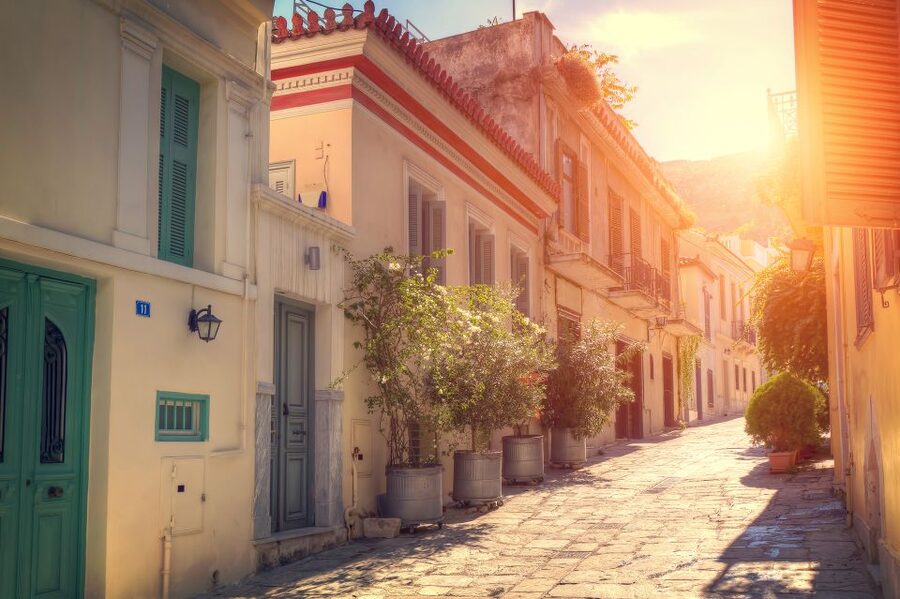
Next comes the Areopagus, a spot that’s both historic and visually practical. From here, you start to understand how the city is laid out around the Acropolis and why so many roads and neighborhoods cluster the way they do.
This is the kind of stop where a good guide can do the most work. Instead of listing dates, you’ll likely get “what to look for” cues: where power used to sit, how the modern city bends around old structures, and how sightlines affect what people built where. That’s why I like the private format—you can ask a question without waiting your turn.
Plaka to Anafiotika: When the City Turns Pastoral
As the route shifts into Plaka, the tour leans into the neighborhood feel. Plaka is where you stop seeing Athens as a museum city and start seeing it as a lived-in place with winding lanes, side streets, and constant visual clues.
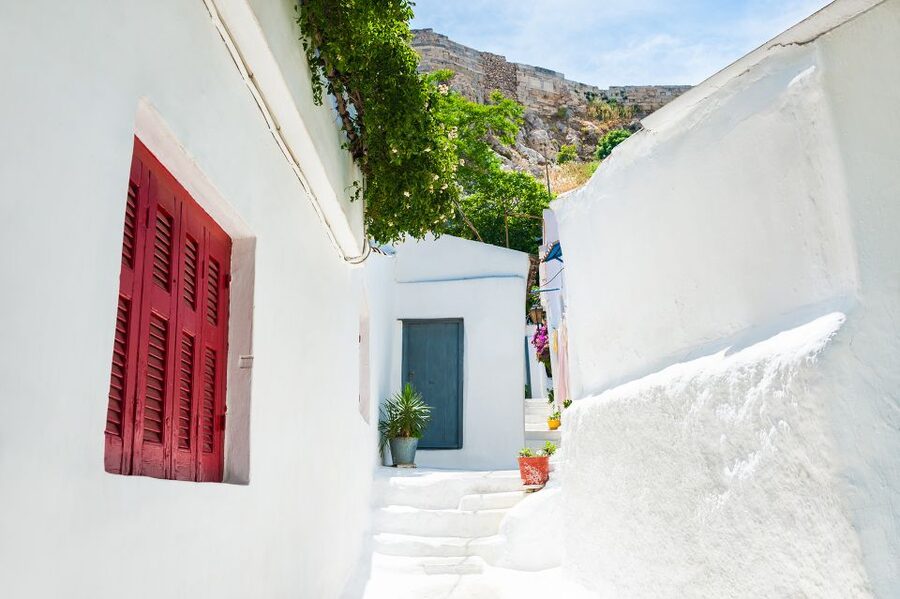
Then you reach Anafiotika, downhill from the Acropolis. This area is famous for its architectural look—small, Cycladic-style streets that feel almost like an island settlement dropped into the middle of Athens. I love this contrast because it breaks the heavy “archaeological mode.” You’re walking through a place that looks different from the surrounding city fabric, and that jolt helps the whole day stay fun.
Practical note: these lanes can mean more uneven pavement and turns. Comfortable shoes are not optional here.
You can also read our reviews of more private tours in Athens



The Ancient Roman Agora and Tower of Winds Stop
After Plaka and market-adjacent streets, the walk moves toward the Ancient Roman Agora area. Here, you’ll have a chance to admire the Tower of Winds.
This is a great mid-tour shift. Earlier, you focused on the big political and religious landmarks near the Acropolis. Now you start thinking about daily life—how Athenians measured time, navigated the city, and used public structures as practical tools, not just monuments.
If you like seeing how ancient and modern Athens overlap, you’ll enjoy this stretch because it’s where the city feels most layered.
Monastiraki and Ermou Street: Real Athens, Not Just Photos
Monastiraki is next, with a look toward the flea-market atmosphere. Even if you don’t shop, it’s useful to walk through once, because it shows you how the city breathes at street level.
Then you move onto Ermou Street, Athens’ main commercial road—named after Hermes (Ermis in Greek), the protector of commerce. This is a smart inclusion because it reminds you: Athens wasn’t only ancient—it kept functioning, trading, selling, and moving people around.
This segment also helps you pace the tour. After the heavier archaeology stops, it’s easier to keep your energy when the streets feel lively and human-scale.
A 30-Minute Coffee Break That Actually Helps
You’ll get a brief break—about 30 minutes—built into the tour. During that stop, you can taste a traditional Greek coffee, tea, or another beverage of your choice.
I like that the included refreshment isn’t just a token. It’s timed so you don’t hit the day’s biggest ceremonial stop (Syntagma Square) running on fumes. It also gives you a natural moment to ask questions and reset.
Syntagma Square and the Changing of the Presidential Guard
Syntagma Square is one of the easiest places in Athens to feel the country’s public rituals. You’ll be in front of the Hellenic Parliament and can watch the Changing of the Presidential Guard.
This stop works well even if you’re not deeply into ceremony. The choreography makes it visually engaging, and the setting is so central that it’s hard to feel like you’re “just passing through.” It also anchors the tour in modern Athens—right in the middle of the city’s political heart.
National Garden: The Best Kind of Pause in Central Athens
From Syntagma, you’ll head toward the National Garden, including a pass through the underground archeological exhibition at the Syntagma metro station. After the crowds and official buildings, the Garden feels like a reset button.
This is where you relax with family and feeding animals on display. I like stops like this on walking tours because they prevent the classic problem: you end up seeing everything but feeling none of it.
Even if you only spend a short time here, it’s a helpful counterweight to the monument-heavy parts of the day.
Panathenaic Stadium and Zappeion: Marble Meets Official Athens
Next is the Panathenaic Stadium, also called Kallimarmaron. It’s described as the biggest stadium in the world constructed exclusively by marble, and walking near it helps you grasp why it’s such a signature site.
Then you’ll visit the Zappeion Megaron. This part of the route brings you into “official Athens”—more formal architecture, more public presence, and a sense of place that feels different from the market streets.
If you’re the type who likes contrasts, this combination works. You go from ceremonial and parks to marble grandeur and then toward the monumental religious structures at the end of the walk.
Temple of Olympian Zeus and the Arch of Hadrian Finish Strong
The final major landmarks include the Temple of Olympian Zeus and the Arch of Hadrian. Together, they make a strong close because they’re both visually massive and conceptually tied to Athens as a city of empires and grand projects.
The Arch of Hadrian is a reminder that the ancient story isn’t one chapter; it shifts with new rulers and new ambitions. And the Temple of Olympian Zeus—one of the biggest ancient temples in Greece—lands you with a clear sense of scale before the tour ends near the Acropolis metro area again.
Even without entering ticketed areas, these exterior views can give you a lot to think about. I’d still plan extra time (and extra money) if you want to go inside any archaeological sites, since entrance fees aren’t included.
Price and Value: What $149 Really Buys You
At $149 per person for a private 4-hour walk, you’re paying for three things: guide expertise, a tight route, and reduced decision fatigue.
You also get one Greek coffee or traditional refreshment per person, plus taxes and fees. That coffee break may sound minor, but on a walking day it matters because it’s built in.
What you need to budget separately: food beyond the coffee/tea stop, entrance fees to archaeological sites, and personal expenses. If your travel style includes paid museum time and you want to enter several sites, you may end up spending more than the base tour price. If you’re happy seeing monuments from streets and viewpoints, the value can feel stronger.
Who This Tour Fits Best
This tour is a great fit if you:
- want an efficient first-day overview of Athens
- like neighborhood walking (Plaka, Anafiotika, Monastiraki) as much as big monuments
- prefer a private pace with an Athenian guide who answers questions
- enjoy a mix of ancient structures and modern public life (like Syntagma Square)
It may not be ideal if you:
- need mobility-friendly routes (the tour is not suitable for mobility impairments)
- expect every stop to include entrance tickets (entrances aren’t included)
- hate walking on uneven streets or hills around the Acropolis area
Should You Book the Athens Heart Walking Private Tour?
I’d book this tour if you want Athens in one connected story: Acropolis views, Anafiotika charm, market streets, ceremonial Athens at Syntagma, and monumental finish at Olympian Zeus. The private format and the built-in coffee break make it feel designed for real humans, not just checklists.
I’d skip—or at least rethink—if you strongly want to enter many archaeological sites. Since entry fees aren’t included, you’ll need to plan on extra payments if you want ticketed access everywhere.
If you do book, keep your eye on the guide language and match. The experience has been praised for guides like John and Bianca for keeping the day informative without overload. There’s also been at least one negative note about a guide not speaking well, so it’s worth confirming you’ll get English (and that you’re comfortable with the guide’s style) before you go.
FAQ
How long is the Athens Heart Walking Private Tour?
It lasts 4 hours.
Where do I meet the guide?
The meeting point is outside the Acropolis Metro station on Makrigianni Street (Makrigianni 13).
What is included in the price?
The price includes an expert guide from the Be a Greek team, all taxes and fees, and a Greek coffee or other traditional refreshment per person.
Are entrance fees to archaeological sites included?
No. Entrance fees to points of interest are not included.
Is the tour guide in English?
Yes, the tour is in English.
Is the tour suitable for people with mobility impairments?
No, it is not suitable for people with mobility impairments.
Is there a break during the tour?
Yes. There is a brief 30-minute break for Greek coffee, tea, or another beverage.
Can I cancel and get a full refund?
Yes. Free cancellation is available up to 24 hours in advance for a full refund.