REVIEW · FLORENCE
Private Skip-the-Line Uffizi Gallery & Vasari Corridor Tour
Book on GetYourGuide →Operated by Walks of Italy · Bookable on GetYourGuide
Florence gets personal fast in a private tour. You’ll pair the art-machine of the Uffizi with a once-secret Medici passage over the Arno, all guided by a real human and kept to just your party. I especially like the private pace—you can linger on the pieces that pull you in—and the Vasari Corridor access, which has a big story behind it and feels different from a normal museum walk.
The main thing to weigh is time. The Vasari Corridor is exciting, but it’s also a hallway crossing, so if you’re mainly there for maximum Uffizi masterpieces, you may feel the corridor steals minutes from gallery time.
In This Review
- Key things to know
- Private Uffizi + Vasari Corridor: why this combo works
- Where you meet and what the first minutes feel like
- Entering the Uffizi with a guide you can actually talk to
- Vasari Corridor over the Arno: the Medici’s private walkway
- Palazzo Pitti area and the Buontalenti Grotto payoff
- Price and value: is $623 per person worth it?
- Who should book this tour (and who might feel disappointed)
- Small tips to get the most from your time
- Should you book this private Uffizi and Vasari Corridor tour?
- FAQ
- How long is the Private Skip-the-Line Uffizi Gallery & Vasari Corridor Tour?
- Where do we meet, and when should we arrive?
- Is this tour private?
- What’s included in the tour price?
- Is hotel pickup or drop-off included?
- Is the tour wheelchair accessible or stroller-friendly?
- What ID do I need to bring?
Key things to know
- Private group, no outsiders: you won’t be sharing your questions with strangers.
- Skip-the-line entry: you avoid the long ticket bottleneck at both the Uffizi and the Vasari Corridor.
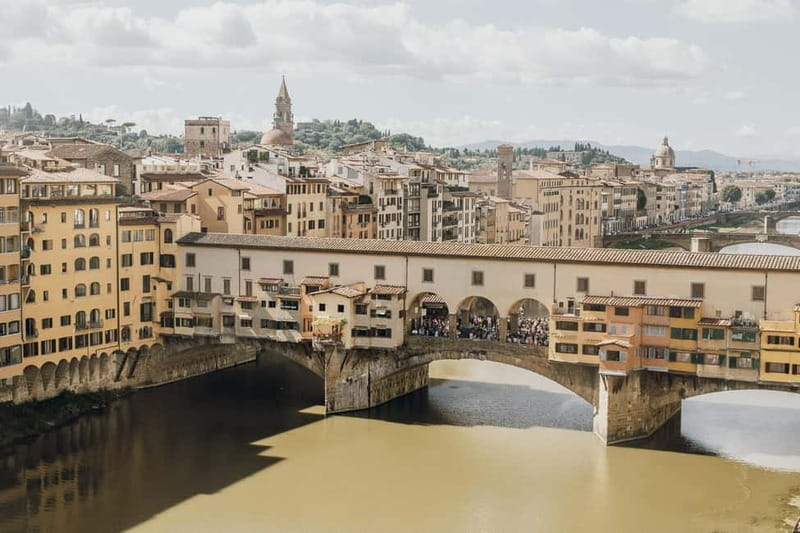
- Medici-built Vasari Corridor: built in 1565 for the Medici family and crossing the Arno on their terms.
- Boboli Gardens finale: the Buontalenti Grotto ends the tour with dripping-stone theatrical weirdness.
- English guide with room for questions: praised for adapting to what you want to focus on.
Private Uffizi + Vasari Corridor: why this combo works
This tour hits Florence in two very different modes. At the Uffizi, you’re in the thick of Renaissance painting and sculpture. In the Vasari Corridor, you’re walking a piece of political plumbing—privacy, power, and movement—built for the Medici family.
I like that the pairing makes the city feel connected instead of compartmentalized. You see why certain art was commissioned, why certain views mattered, and how the Medici controlled access and image-making. If you’ve ever wondered how Florence’s elite shaped what you see today, this route gives you that missing link.
It’s also a practical choice. The Uffizi can eat up your day with waiting and crowd flow. A skip-the-line entry plus a guided route helps you spend your energy on looking, not queuing. You’re paying for convenience, yes, but also for a smoother use of a short visit.
You can also read our reviews of more private tours in Florence


Where you meet and what the first minutes feel like
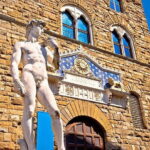
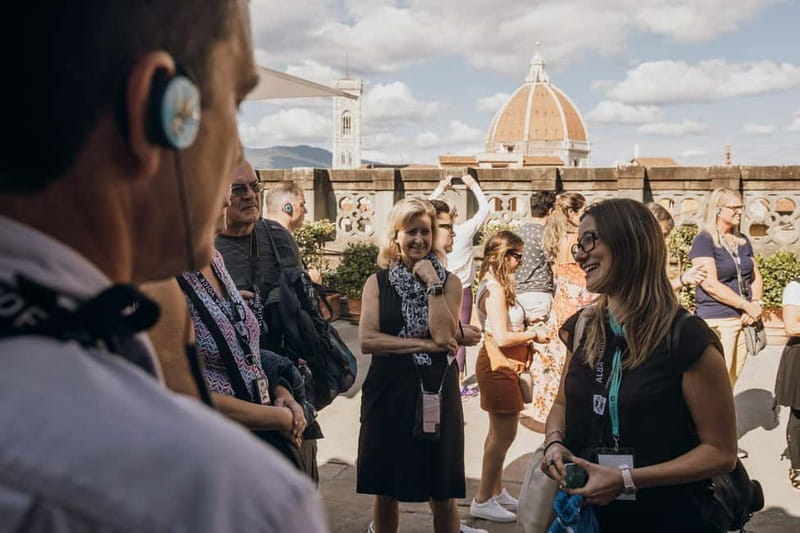
You start in Piazza della Signoria, at the tail of the bronze equestrian statue of Cosimo I. Your guide will be holding a green Walks sign, and you should arrive 15 minutes early.
That matters more than it sounds. Piazza della Signoria is busy, and you’ll want a clean start so the guide can get you into the Uffizi without delays. Also, this is a walking tour with a moderate pace, so starting on time helps you avoid the “we’re rushing now” feeling later.
One more heads-up: no strollers, and it’s not suitable for wheelchairs or mobility impairments. If your group includes someone who moves slowly, you’ll feel the pinch on an older-stone city route.
Entering the Uffizi with a guide you can actually talk to
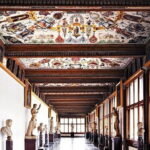
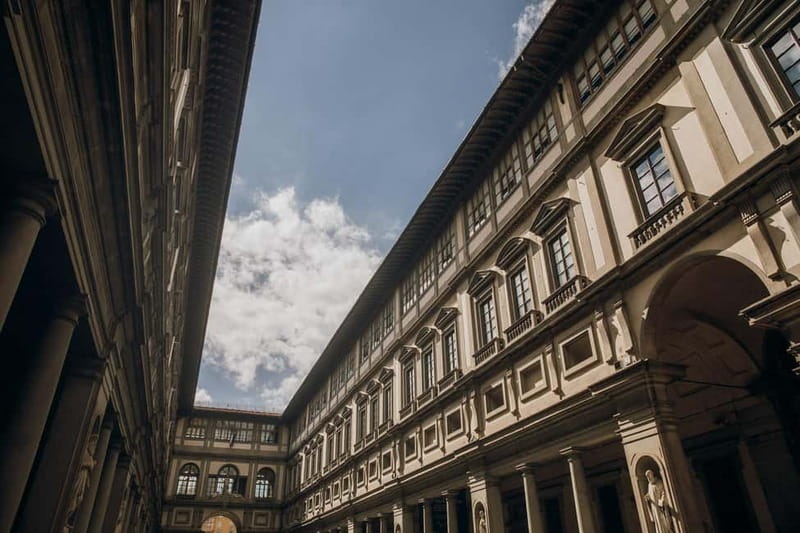
The Uffizi Gallery portion lasts about two hours, and it’s structured as a guided visit with a route designed to keep things focused. You skip the ticket line, then follow your guide through standout works rather than wandering like a confused tourist with a phone flashlight.
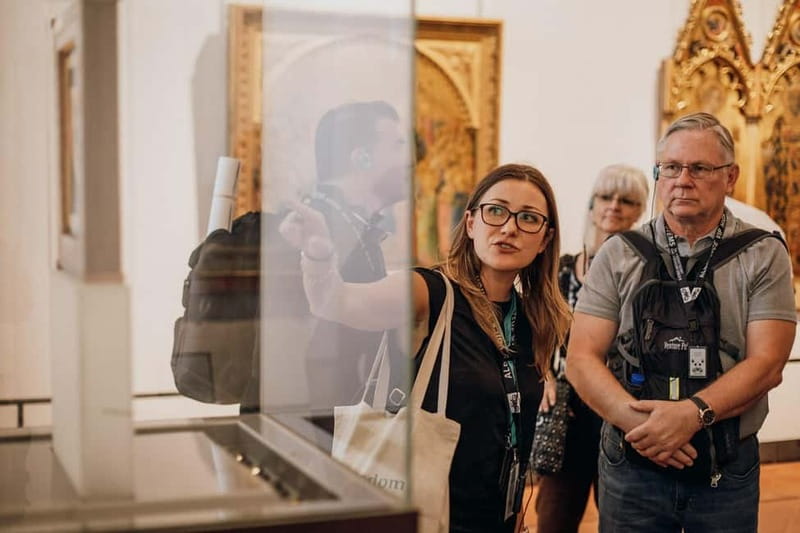
Here’s the big value of a private format: you don’t have to hold back your questions. In a crowded group, you often learn to stop asking, or you ask and lose your place. In a private setting, you can ask follow-ups and slow down when a painting demands it.
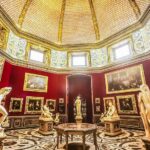
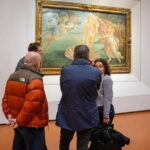
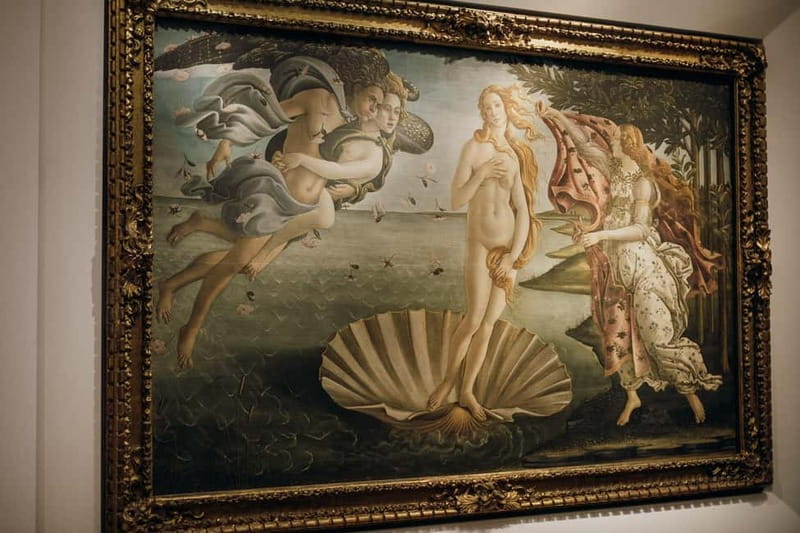
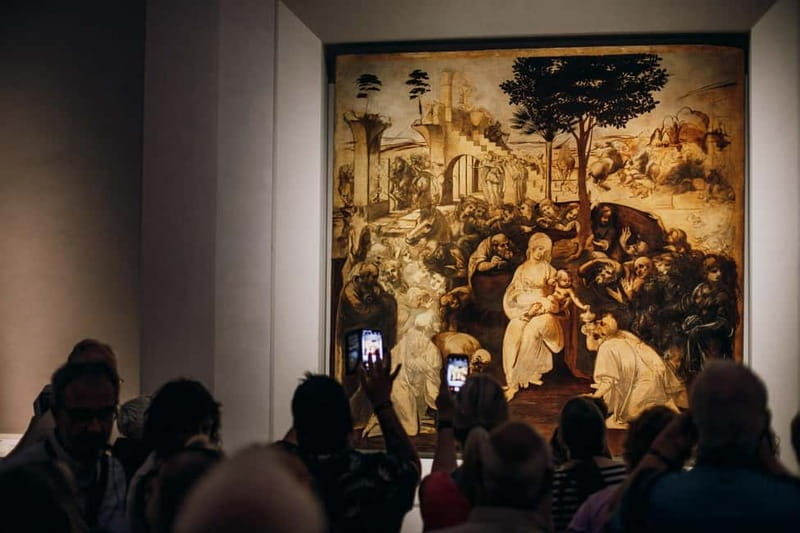
The Uffizi pieces included in your route are the kind people travel for. Expect major Renaissance highlights such as Botticelli’s Birth of Venus, along with works connected to big names like Michelangelo and Da Vinci. Your guide’s job is to translate what you’re seeing into something you can use—where the ideas came from, how the patronage worked, and why Florence became the creative center people still talk about.
And yes, you’ll have time where you want it. The point isn’t to sprint through everything. It’s to leave understanding how to see the next painting a little better, even when you’re done with the tour.
Vasari Corridor over the Arno: the Medici’s private walkway
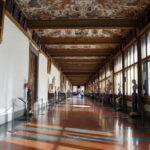
After a short break, you switch gears and enter the Vasari Corridor. This is the part that feels like Florence goes undercover. Access is tied to history and control, and the corridor only recently reopened after being closed for more than eight years.
The corridor is built to connect the seat of power with the Medici palace world. It crosses the Arno and links the administrative heart of Florence with Palazzo Pitti. Walking it gives you a “made for insiders” feeling that you don’t get in a normal museum. Your guide explains how the Medici used this kind of movement for privacy and political strategy, so it stops being just a cool structure and becomes a story you can walk through.
Reality check: it is, in practical terms, a long corridor. One piece of feedback you should take seriously is that the Vasari Corridor is essentially a glorified hallway, and that you’re trading some Uffizi time for the experience. If you’re expecting another full gallery of masterpieces, you’ll likely be less impressed.
If you’re the kind of person who enjoys context—the reason a building exists, how people controlled access, how power shows up in architecture—then the corridor is the “aha” moment. You’re seeing a Renaissance machine designed for watching and being unseen.
Palazzo Pitti area and the Buontalenti Grotto payoff
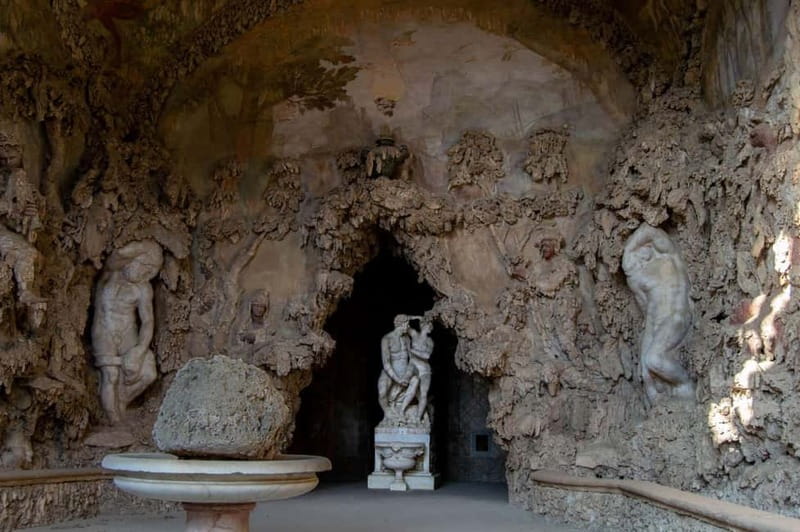
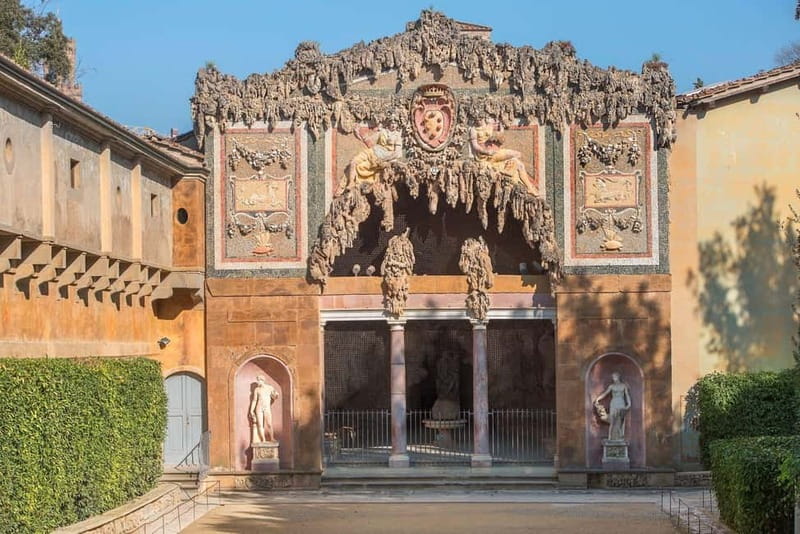
The tour’s end ties into the Palazzo Pitti side of the Medici world, with the finale at the Buontalenti Grotto in the Boboli Gardens. You get the best of both sides: the political corridor experience, then a shift to something strange and theatrical.
The Buontalenti Grotto is famous for its surreal, fantastical vibe: sculpture elements, dripping stone effects, and creatures that feel more like dream logic than strict realism. It’s an ending that helps the whole day click. You go from corridors built for control to garden drama built for wonder.
This also gives you optional momentum if you want to keep exploring on your own after the tour. Since you finish at Palazzo Pitti, you’re positioned to wander the gardens or move toward whatever you’re most curious about next. Just be ready for the fact that gardens mean more walking on slopes and uneven surfaces.
You can also read our reviews of more museum experiences in Florence




Price and value: is $623 per person worth it?
At $623 per person for about three hours, this isn’t a budget tour. You’re paying for three things that add up:
1) Private guiding in two major sites
You’re not sharing attention. That’s huge at the Uffizi, where crowd pressure can make you miss details.
2) Skip-the-line access
Getting inside on your schedule can save a chunk of a short Florence visit. With major attractions, waiting is time you can’t “get back” later.
3) Vasari Corridor access
This is the expensive-feeling component. Even with its hallway nature, the corridor’s Medici backstory and the fact it had been closed for years adds to the cost.
So who wins at this price? People who want the “big ticket” Florence experiences in one focused sweep, and people who like having an expert steer their attention. One note from feedback you should treat as a decision tool: if you mainly care about artworks, you might feel the Vasari Corridor portion isn’t worth the trade compared with putting that time deeper into the Uffizi.
My practical advice: decide what you’d rather remember more—more time staring at masterpieces, or walking a secret Medici-designed crossing. If corridor history excites you, the value often lands well.
Who should book this tour (and who might feel disappointed)
This works best for you if:
- You want a private Uffizi Gallery tour where questions are welcome and pacing is yours.
- You’re interested in the Medici family as more than a name in art textbooks.
- You like architectural storytelling—power, privacy, movement—alongside painting and sculpture.
- You’re comfortable walking for about three hours at a moderate pace.
It may not be the right fit if:
- You’re limited on walking and need wheelchair access (this tour is not suitable for that).
- You’re traveling with a stroller (strollers aren’t allowed).
- You’re expecting the Vasari Corridor to function like another art gallery. Think hallway, not museum.
If your group has mixed interests, you can still make it work, but be honest with yourselves. The Uffizi is where most of the “wow” comes from for many people. The corridor is where the “how did they do that?” story comes from.
Small tips to get the most from your time
You’ll get the best outcome when you show up ready to look, not just to check boxes.
- Bring ID for everyone. This includes children, and ID is required on the day of the tour.
- Have names ready exactly as booked. Full names must match ID/Passport, and name changes aren’t permitted.
- Expect walking. This is not a sit-and-watch experience, even though the route is planned.
If you want to maximize your Uffizi time, tell your guide early what you care about most—my advice is to say it at the start, so the route can match your interests. In small private settings, guides can often tailor the emphasis on the spot.
Should you book this private Uffizi and Vasari Corridor tour?
Book it if you want the best of Florence’s Renaissance story in a tight, well-guided format: art first at the Uffizi, then the Medici’s private passage over the Arno, then a surreal ending at the Buontalenti Grotto. For the right kind of visitor, the private setup and the corridor access make the price feel less shocking.
Skip or reconsider if you’re trying to stretch every minute for artwork-only viewing, or if walking constraints make this route hard. In that case, it’s smarter to plan a pure Uffizi experience and spend your time in the galleries.
If you’re on the fence, ask yourself one question: do you want to remember what you saw on walls, or what you walked through?
FAQ
How long is the Private Skip-the-Line Uffizi Gallery & Vasari Corridor Tour?
The tour lasts about 3 hours.
Where do we meet, and when should we arrive?
Meet at the tail of the bronze equestrian statue of Cosimo I in Piazza della Signoria. Arrive 15 minutes early, and your guide will be holding a green Walks sign.
Is this tour private?
Yes. It’s a private group tour, with skip-the-line access for the Uffizi Gallery and the Vasari Corridor.
What’s included in the tour price?
Included are a local English-speaking guide, the guided walking tour, and skip-the-line tickets for the Uffizi Gallery and Vasari Corridor.
Is hotel pickup or drop-off included?
No, hotel pickup and drop-off are not included.
Is the tour wheelchair accessible or stroller-friendly?
No. The tour is not suitable for wheelchair users, guests with mobility impairments, or baby strollers.
What ID do I need to bring?
All participants must bring a passport or ID card. A copy is accepted. Full names of all participants must match the names on the ID/Passport, and everyone must bring ID on the day of the tour.