REVIEW · ROME
Rome- Golden Hour Golf Cart Tour
Book on Viator →Operated by RoamRome · Bookable on Viator
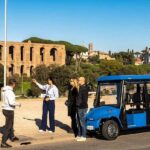
Rome cools down and the city glows. This Rome Golden Hour Golf Cart Tour strings together major landmarks in a few hours, with time to look, not just rush. You’ll get golden-hour views without the worst daytime heat and crowds, and the guide does more than recite dates.
I like that the tour keeps things intimate with a small group, then layers in history, culture, and architecture at each stop so the monuments make sense. One possible catch: the Pantheon stop has admission not included, so if you want to go inside, budget extra.
In This Review
- Key Things I’d Mark on Your Map
- Golden Hour by Golf Cart: Why This Works So Well in Rome
- Getting On and Off: Where to Meet and How the Route Feels
- Terrazza del Pincio (Villa Borghese): The View That Sets the Mood
- Piazza Barberini and the Triton Fountain: Ancient Scale, Baroque Drama
- The Colosseum at Dusk: More Than the Postcard
- Trevi Fountain and the Pantheon: Two Icons, Two Different Moods
- Bocca della Verità and the Forum Boarium Area: Stories You’ll Remember
- Parco Savello (Orange Garden): A View Break Worth the Detour
- Piazza Navona: Baroque Energy on an Ancient Base
- Largo Argentina and Piazza Venezia: Assassination, Politics, and Scale
- Monti and Imperial Fora Views: The Old Streets Feel Real
- Circus Maximus: Big Spaces, Lost Noise
- Forum Boarium to Theatre of Marcellus: When the City Layers Make Sense
- Price and Value Check: Is $96.23 Worth It?
- Who Should Book This Tour (and Who Might Prefer Something Else)?
- Should You Book the Rome Golden Hour Golf Cart Tour?
- FAQ
- How long is the Rome Golden Hour Golf Cart Tour?
- Where does the tour start and end?
- Is pickup available?
- What language is the tour guide?
- How large is the group?
- Are admissions included at the stops?
Key Things I’d Mark on Your Map
- Golden hour timing for nicer photos and less crowd pressure than midday
- Small group setup (max 14) so questions don’t get lost in the noise
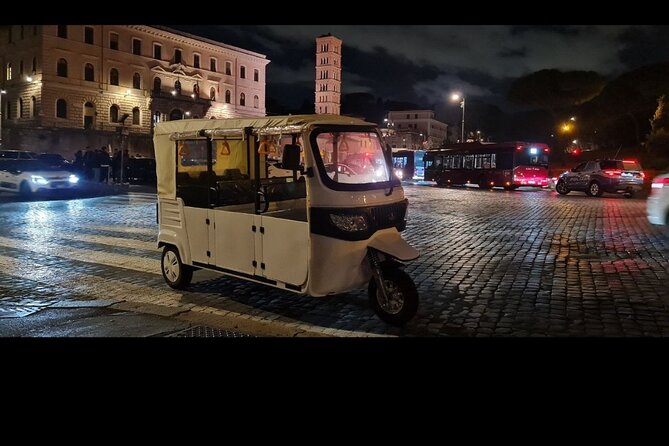
- Golf cart comfort between quick stops, especially helpful if your feet need a break
- Big-name landmarks plus smart context from a guide who answers questions
- Easy flow to the Spanish Steps at the end, so you can keep exploring afterward
Golden Hour by Golf Cart: Why This Works So Well in Rome
Rome can be brutally efficient at daytime sightseeing. Lines build, pavement heats up, and the crowds turn even iconic places into a slow shuffle. This tour targets the late-afternoon-to-evening window, when the light softens and the city feels more like a living place than a checklist.
The golf cart part matters more than you’d think. Yes, you still do short stops for photos and short walks, but you get frequent resets where you’re not burning energy fighting traffic or finding parking. With a group capped at 14, you also tend to move as a unit without that long, strangled “everyone follow me” feeling.
Most of the stops are designed for quick “look and learn” moments—good for first-time orientation. If you’ve got limited time in Rome, this is the kind of tour that helps you understand what you’ll want to revisit later, on your own schedule.
You can also read our reviews of more tours and experiences in Rome.

Getting On and Off: Where to Meet and How the Route Feels
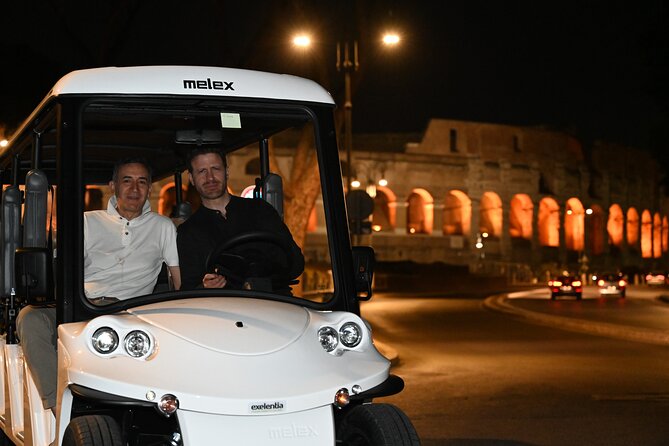
You meet at Piazzale Flaminio, Roma, at number 15, right in front of McDonald’s. It’s a straightforward meeting spot and easy to find with public transit nearby. The tour ends at the Spanish Steps (Piazza di Spagna), so you’re not stuck back where you started.
Pickup is available on request for an extra €20, but it’s limited to accommodations in central Rome. Drop-off at your lodging isn’t included, so plan to finish near the Spanish Steps and head onward from there. The tour uses a mobile ticket, and you’ll get confirmation within 48 hours of booking (as long as availability holds).
One more practical note: this experience is weather-dependent. If conditions aren’t right, you’ll be offered a different date or a full refund, so it pays to keep an eye on the sky as your day approaches.
Terrazza del Pincio (Villa Borghese): The View That Sets the Mood
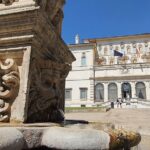
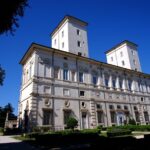
The tour starts with a short stop at Terrazza del Pincio, on Pincian Hill in Villa Borghese. This is the kind of viewpoint that instantly gives your bearings. You see Rome spread out in layers, and the Golden Hour timing makes the whole scene feel staged—without you needing to chase the perfect photo angle for too long.
You’ll spend about five minutes here. That’s not long, but it’s enough to take in the panorama and snap a few shots before moving on. The bonus is what the guide does with the moment: you’re not just staring at rooftops, you’re learning what you’re actually looking at.
Piazza Barberini and the Triton Fountain: Ancient Scale, Baroque Drama
Next up is Piazza Barberini and a quick drive-by/stop that highlights the area’s famous ancient amphitheatre connection, plus the Fountain of the Triton, often linked to Bernini’s masterpieces. Rome loves mixing eras, and this is a strong example. Even when you’re only there for about a minute, it helps you notice the “ancient inside baroque” effect that makes the city so distinctive.
This stop is brief by design. The value here is orientation: you’ll recognize the area later if you pass through it on foot or by transit. It also breaks up the big monuments so you don’t end up with five nonstop postcard moments in a row.
The Colosseum at Dusk: More Than the Postcard
You get around ten minutes by the Colosseum—enough time to see it lit up and not just from one compressed camera angle. The guide’s framing is where this stop becomes more than scenery: the Colosseum isn’t treated like a single famous relic. It’s presented as a symbol of Rome and an amphitheatre on a scale the ancient world had never really seen before.
And here’s the real advantage of the timing. At dusk, the crowds often feel more manageable than during peak daylight hours, and you can actually look at architectural details without feeling boxed in.
If you’re hoping to go inside the Colosseum itself, this tour stop doesn’t position that as the main focus. It’s geared to viewing and understanding, then moving on quickly.
Trevi Fountain and the Pantheon: Two Icons, Two Different Moods
Trevi is next, with about ten minutes at Trevi Fountain. The “famous and beautiful fountain of all” approach fits the reality: this place is always visually intense, and evening light helps it look extra crisp. You’ll get time to see it from close enough to feel the scale, and you won’t have to spend the whole outing stuck in the same spot.
Then comes Pantheon for about five minutes. This is where you should pay attention to your expectations. Admission is not included, so if you want to enter, plan on paying separately. Even without going inside, the Pantheon is worth a stop because it’s so instantly recognizable. And the guide will connect it to why it mattered: it’s described as Rome’s most important Roman temple and noted for its massive unreinforced dome.
Bocca della Verità and the Forum Boarium Area: Stories You’ll Remember
After Pantheon, the tour heads to Bocca della Verità, the legendary Mouth of Truth, with around five minutes here. Pair that with the nearby Forum Boarium, and you get a stop that feels like more than a photo op. This is the kind of location where the guide’s storytelling turns a small moment into a scene with context.
You also get time tied to market history—because Forum Boarium isn’t just “an old square.” It’s described as one of Rome’s oldest market areas, which helps you understand why so many temples and structures were clustered here.
Parco Savello (Orange Garden): A View Break Worth the Detour
Then you move to Parco Savello, also known as the Orange Garden area. It’s a ten-minute stop with admission included. This isn’t about a single monument. It’s about breathing room. From here, you get a panoramic feel that’s different from the dense center, and it helps you reset before the final round of major squares.
There’s one seasonal detail you should know: in the winter (October through February), Parco Savello can stay closed in the evening. If you’re traveling in those months, this is a reason to double-check how your date might impact that specific stop.
Piazza Navona: Baroque Energy on an Ancient Base
Piazza Navona is about five minutes on the route. The focus is its Baroque presence built over an older Roman stadium. That layering is the point: when you see the square in person, you start understanding how Rome keeps repurposing space.
At golden hour, Navona can feel almost theatrical, especially with the fountains and architecture lit up. Even though you’re only there briefly, this is another stop that gives you a “Rome is built on Rome” mental model.
Largo Argentina and Piazza Venezia: Assassination, Politics, and Scale
Next is the Area Sacra di Largo Argentina, where Julius Caesar’s assassination is associated with the site, plus the detail that it’s now a cat sanctuary. You’ll have about three minutes here. It’s a short stop, but it’s memorable because it hits a mix of dramatic Roman politics and a very modern contrast.
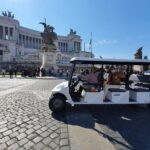
From there, you get Piazza Venezia / Ancient City area for around ten minutes. This is where Rome’s official identity shows up: you’ll see major works associated with Michelangelo and the Altar of the Fatherland (Altare della Patria). If you’re the type who likes understanding how Rome presents itself, this stop helps.
The tour also includes drive-by sights that add flavor even without stopping—like Piazza delle Quattro Fontane, the church of San Carlino, and the Quirinale Palace, described as the former Papal residence and later associated with the king and now the President of Italy. Even if you’re just catching glimpses, those drive-bys help stitch the city together.
Monti and Imperial Fora Views: The Old Streets Feel Real
A quick stop comes in Rione Monti for about five minutes. The neighborhood is described as once being the Suburra, the rough heart of ancient Rome, and today it’s known for its intriguing alleyways. Even in a short stop, it works because it gets you away from the biggest tourist magnets and into a more lived-in Rome vibe.
From Monti, you also get a view opening toward the Imperial Fora, which helps you visualize the ancient city layout. This kind of “look toward the ruins” moment can make your later independent exploration click faster.
Circus Maximus: Big Spaces, Lost Noise
Then comes Circo Massimo for about two minutes. You look over the Circus Maximus, described as the largest stadium in the ancient world and capable of holding up to 300,000 spectators. The guide frames it with racing culture—chariot races, speed, and crowds—then notes that today the noise is gone, but the setting and stories remain powerful.
That’s a useful contrast. You’re not just seeing a grassy expanse; you’re understanding it as an arena that shaped Roman entertainment and public life.
Forum Boarium to Theatre of Marcellus: When the City Layers Make Sense
Near the end, the tour returns to the Forum Boarium area and continues through more of the “Roman layers” idea. Here you’re shown key structures like the Temple of Hercules Victor (a rare circular marble temple) and the Temple of Portunus overlooking the Tiber. There’s also mention of the Arch of Janus, described as mysterious and massive.
You then continue to the Theatre of Marcellus, often mistaken for a smaller Colosseum. The twist is the Renaissance palace built on top by the Savelli family, and the fact that people still live there. That last detail is what makes this stop feel real: Rome isn’t just preserved; it’s used.
This final stretch is where the tour’s “explain what you’re seeing” approach pays off. Even if you only catch pieces, the guide’s connections help your brain connect monuments into a city, not separate pictures.
Price and Value Check: Is $96.23 Worth It?
At $96.23 per person for roughly 2–3 hours, you’re paying for three things at once: guided storytelling, efficient transportation by golf cart, and a tight route that hits major sites without spending your whole day commuting between them.
If you compare this to doing everything alone, the value is strongest when you care about orientation and context. Yes, you can absolutely see Colosseum, Trevi, Pantheon, and Navona on your own. But you’ll usually spend extra time figuring out routes and interpreting what you’re looking at.
The small group cap (max 14) also helps justify the cost. You get a smoother pace, and it tends to be easier to ask questions. If you want a first-pass Rome experience that sets you up for deeper visits later, this is priced in a way that matches that goal.
Who Should Book This Tour (and Who Might Prefer Something Else)?
This tour is a great fit if:
- You want major highlights in a short timeframe without exhausting all your energy
- You prefer evening light and fewer crowd-aggravations
- You like guides who explain architecture and history clearly, and who can answer questions
- You want a small-group feel with a golf cart between stops
It may be less ideal if:
- You want long time inside top-ticket sites (this is mainly view-and-understand focused)
- You strongly prefer fully scheduled museum-style entries for every stop, since Pantheon admission isn’t included
If you’re going in colder months, bring a layer. One review sentiment flagged that evening can feel cold, and it’s easier to enjoy the stops when you’re comfortable.
Should You Book the Rome Golden Hour Golf Cart Tour?
I’d book it if you want a smart, guided first look at Rome’s biggest monuments with the added bonus of evening vibes. The route is built for momentum—short stops where the guide helps you understand what matters, then quick drives that keep the energy up.
If you’re the kind of traveler who gets overwhelmed by crowds and hates waiting around, the golden hour timing plus cart comfort is the winning combo. Just plan for Pantheon separately, and you’ll be set.
FAQ
How long is the Rome Golden Hour Golf Cart Tour?
The tour lasts about 2 to 3 hours.
Where does the tour start and end?
It starts at Piazzale Flaminio, Roma RM 15 (right in front of McDonald’s). It ends at Piazza di Spagna, the Spanish Steps.
Is pickup available?
Pickup is available upon request for an additional €20 fee for accommodations located within central Rome. Drop-off at your accommodation is not available.
What language is the tour guide?
The tour is offered in English.
How large is the group?
The tour has a maximum of 14 travelers.
Are admissions included at the stops?
Most stops list free admission tickets. Pantheon admission is not included, and Parco Savello is included.