REVIEW · ROME
Rome Golf Cart Tour from Villa Borghese Gardens
Book on Viator →Operated by ROME GOLF CART TOUR · Bookable on Viator
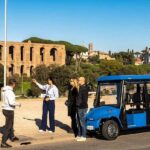
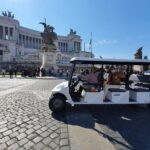
Three hours, ten Roman icons, zero sore feet. This Rome golf cart tour is built for people who want the big sights fast, without spending the whole day on uneven sidewalks. You ride between neighborhoods, park briefly near the viewpoints, and get on-board English commentary that ties the scenes together.
I especially like two things. First, the English-speaking driver guide actually explains what you’re seeing, from ancient engineering to the story behind viewpoints. Second, the max 7 travelers format keeps the pace relaxed, so you’re not getting herded like luggage.
The main drawback to consider is time at each stop. It’s designed for highlights and photos, so if you want long museum time or deep reading at every monument, you’ll likely need a second day on your own.
In This Review
- Key highlights worth knowing
- How a golf cart tour makes Rome easier (and smarter)
- Meeting at Pic Nic and getting comfortable with the route
- Villa Borghese and Piazza del Popolo: starting with big views and famous squares
- Mausoleum of Augustus and the Column of Marcus Aurelius: power, propaganda, and stone stories
- Piazza Venezia, Monument views, and the Imperial Forum mood
- Circo Massimo to Giardino degli Aranci: Rome from above and Rome at stadium scale
- Bocca della Verità and the ancient river temples: playful myths and real architecture
- Pantheon, Trevi Fountain, and Piazza di Spagna: the classic trio with guided context
- Value and comfort: is $171.68 for 3 hours worth it?
- Who should book this golf cart tour
- Book it or keep planning? My quick take
- FAQ
- What’s the duration of the Rome Golf Cart Tour from Villa Borghese Gardens?
- Is the tour in English?
- How many people are on the tour?
- Where does the tour start and end?
- What’s the price per person?
- Do I need admission tickets for the stops?
- Can I cancel for a full refund?
Key highlights worth knowing
- Short, well-placed stops mean you see a lot in 3 hours without sprinting across Rome
- English commentary on board helps you connect monuments across neighborhoods
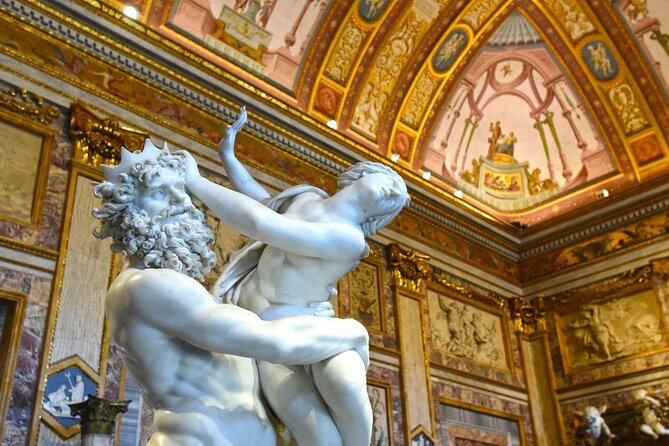
- Villa Borghese and the Orange Garden viewpoints give you Rome from above, not just street level
- Heat- and walking-friendly rides are a real advantage on hot or rainy days
- Photo-friendly guiding: guides often help with pictures so you’re not hunting for strangers to take them
How a golf cart tour makes Rome easier (and smarter)
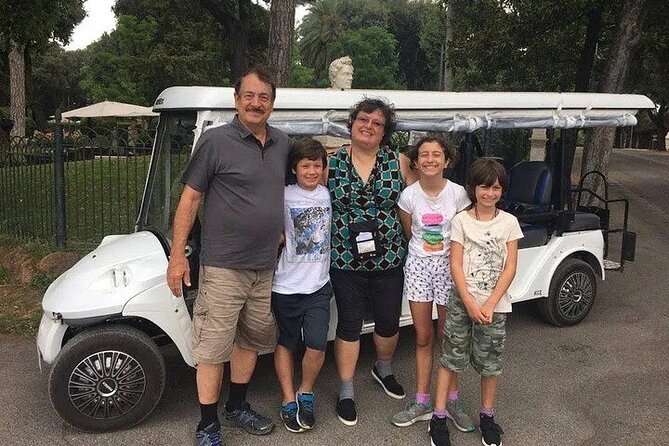
Rome punishes slow days: long distances, steep bits, busy intersections, and lots of cobblestones. A golf cart tour fixes the biggest problem by reducing walking time while still getting you close to sights. You trade some wandering freedom for a guided route that hits major landmarks plus a few quieter, very “only-in-Rome” stops.
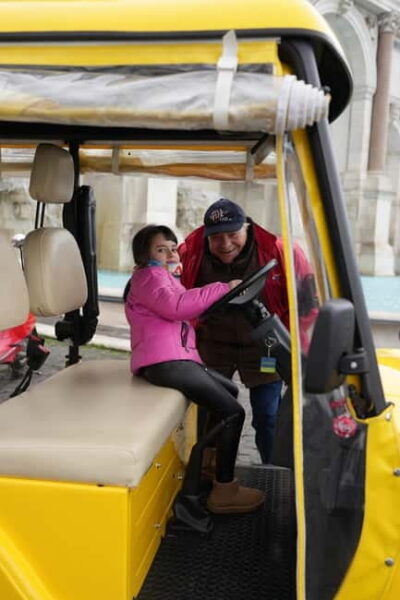
You’ll also appreciate the pace. With a small group (up to 7), you can actually hear what your driver/guide is saying and step off for photos without the usual chaos. On top of that, golf carts help when you’re tired, traveling with kids, or dealing with mobility limits. I like that the experience is built around participation for most people, and several guest notes specifically praised the cart as the practical way to keep the day going.
One more thing: you’re getting a “first orientation” pass. After 3 hours, you’ll understand how areas connect—Vatican-side energy vs. the old imperial core vs. the bridges and viewpoints—so your later solo wandering feels less random.
You can also read our reviews of more tours and experiences in Rome.

Meeting at Pic Nic and getting comfortable with the route
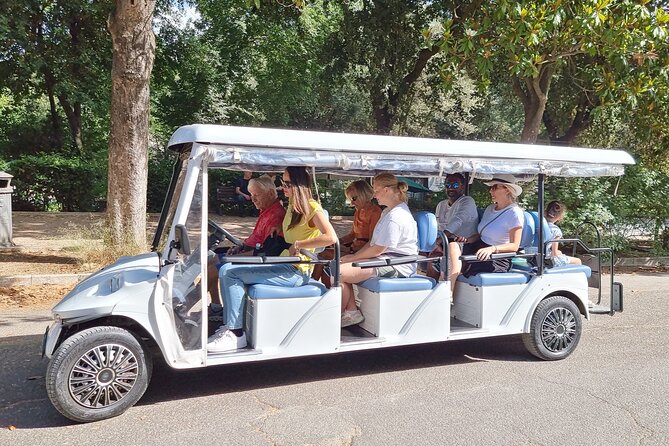
The tour starts at Pic Nic – Just Amir srl, at Piazzale delle Canestre, SNC, 00197 Roma. It also ends back at the meeting point, which is handy if you’re building the rest of your day around dinner plans or a hotel pickup.
The route is paced for sightseeing, not for racing. You’ll spend most of the time in motion, then get brief time at each stop for photos and quick context. That format is perfect if your goal is to see the recognizable highlights quickly—but it’s also the reason you should bring a phone camera with enough battery and plan to come back later for anything that really grabs you.
And since the tour is listed in English and uses mobile tickets, you can stay focused on the day instead of paperwork.
Villa Borghese and Piazza del Popolo: starting with big views and famous squares
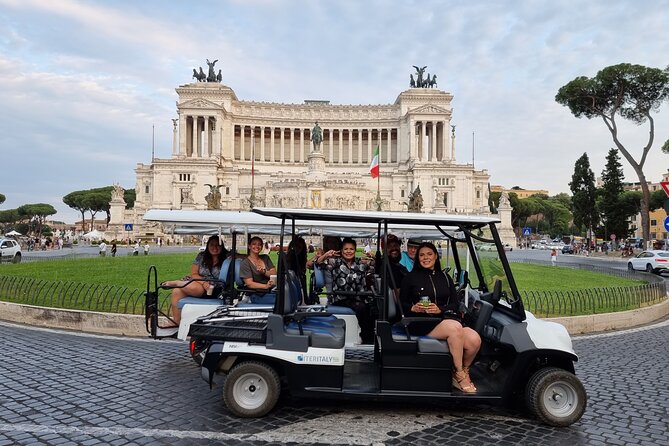
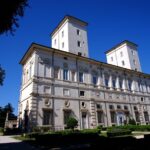
The first stop is Villa Borghese—a huge urban park and one of the best places to get an immediate sense of Rome’s scale. The park was redesigned in the 19th century into an English-style landscape, complete with ponds and fountains. Even if you don’t know the details, the payoff is simple: you’re stepping into a calmer pocket right near the city’s core.
What I like here is the mix of background and payoff. Villa Borghese gives you a break from dense streets, and it sets up the rest of your route with perspective—Rome isn’t just ruins and traffic; it’s also gardens, water features, and layered vantage points.
Then you roll to Piazza del Popolo, a highly recognizable square with the Porta Flaminia area as a reference point. This is the kind of stop that works well at the start of a tour because it anchors you in a major arrival area of Rome. You get the feel of the city’s grand layouts, which makes the later monuments easier to place.
Time is short at each stop (around 10–15 minutes for these moments), so use the window for two things: 1) one wide photo that shows the space, and 2) a quick look around to orient yourself for later walking.
Mausoleum of Augustus and the Column of Marcus Aurelius: power, propaganda, and stone stories
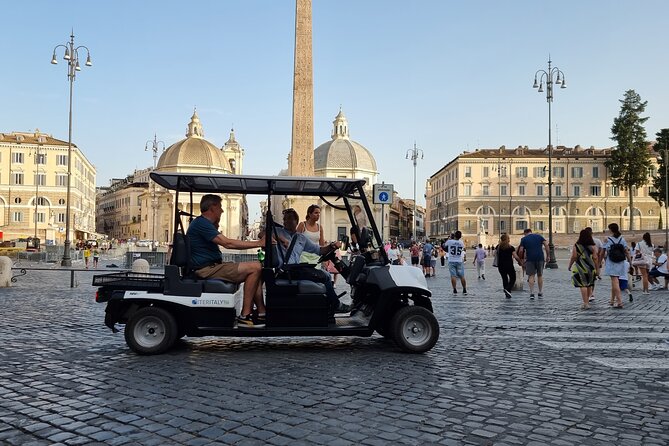
Next you hit two of Rome’s “this was built to last” monuments.
The Mausoleum of Augustus is described as a large circular tomb with a long, complex history tied to how antiquities were reused and rediscovered over time. That matters because Rome doesn’t only show you the ancient world; it also shows you how people in later centuries treated that ancient world—sometimes respectfully, sometimes not. Even a brief stop here makes that clearer.
Then you reach the Column of Marcus Aurelius and Faustina in Piazza Colonna. It’s thought to have been erected by Commodus in memory of his father and mother around 180 CE. The column is covered with high-relief scenes of the emperor’s campaigns against the Quadi across the Danube between 172 and 175 CE. It’s one of those spots where the detail changes your understanding of what monuments are doing. These weren’t just decoration; they were messaging, recorded in stone for anyone passing through.
A quick consideration: columns and tombs can be visually intense, especially in bright sun. If you want to really read the details, plan a longer follow-up on your own later. On the cart tour, your goal is understanding the “what and why,” not memorizing every figure.
Piazza Venezia, Monument views, and the Imperial Forum mood
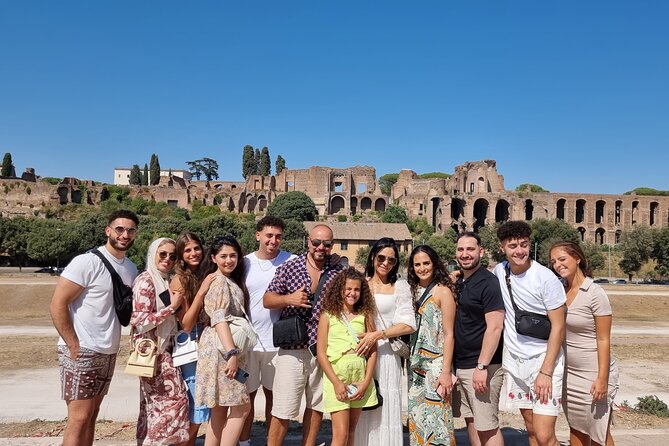
When you head toward Piazza Venezia, you’re stepping into a classic Rome crossroads. This area got reshaped around the turn of the 19th and 20th centuries for the construction of Monumento a Vittorio Emanuele II, so you’re seeing the result of Rome reinventing its center.
This is also where the “imperial core” energy becomes obvious. Even without entering anything, you can feel how the city funnels movement toward the ancient sites.
From there, your route includes a stop connected to Trajan’s Markets and the Imperial Forums. One of the listed features is a museum-style presentation with multimedia displays, explanatory panels, and archaeological artifacts. I like this approach because it’s a way to understand the area without spending half a day in slow pacing.
Practical note: if you’re the type who hates transitions, you might feel a little push-and-go here. But the benefit is you get the bigger picture of the Imperial Forums—how the complex worked and why it was built—so your later walks feel more meaningful.
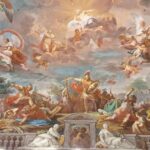
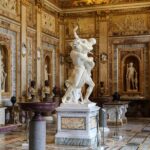
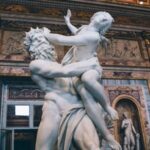
Circo Massimo to Giardino degli Aranci: Rome from above and Rome at stadium scale
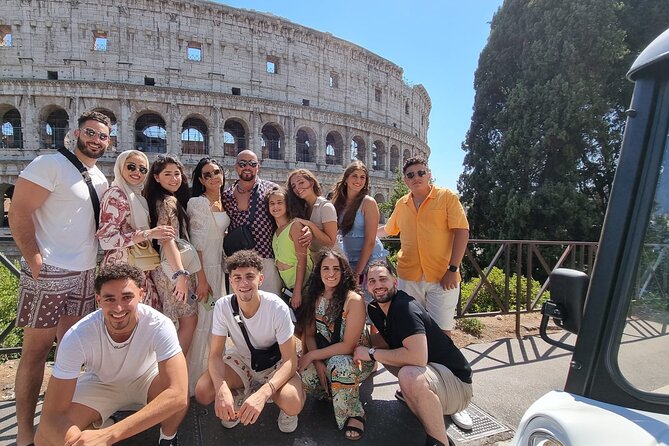
Next comes Circo Massimo, the Circus Maximus area between the Aventine and Palatine hills. The space is listed as able to hold about 300,000 spectators—which sounds almost unbelievable until you try to imagine that many people moving through the same lines of sight.
Even a short stop is useful. It helps you picture Rome not only as temples and palaces, but also as a place where crowds gathered for spectacle. That’s a big part of why Rome feels different at night: you’re still inside a city designed for high human flow.
Then you reach Giardino degli Aranci—the Orange Garden on the Aventine hill. This is one of those Rome stops that’s mostly about the view. The garden covers almost 8,000 square meters and offers a panorama over the city. If there’s time, the route also mentions stopping for the Keyhole of Rome view.
What I like: this is a change of pace. After stone, propaganda, and dense monumental areas, you get sky and distance. It’s also one of the most “easy win” photo moments on the entire tour.
Small drawback: viewpoints can be crowded depending on time of day, and your stop is brief. Aim for photos quickly, then take 60 seconds to actually look around before moving on.
Bocca della Verità and the ancient river temples: playful myths and real architecture
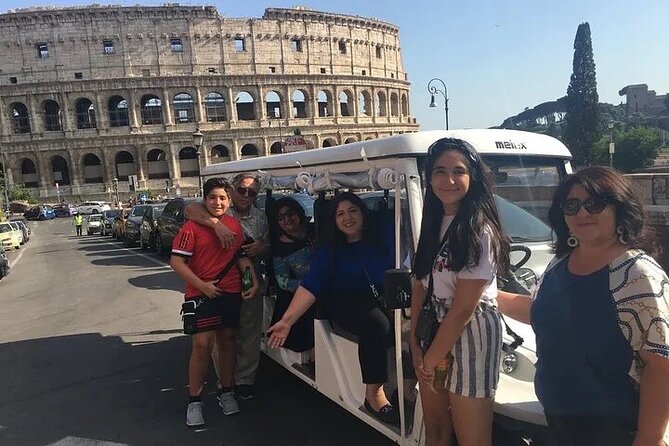
One of the most memorable stops in the route is Bocca della Verità—the Mouth of Truth. The description leans into the legend that the carved face is said to bite the hands off liars. Even if you treat it as a myth, it’s a fun break from the serious monuments, and it’s exactly the kind of Roman story that survives because people keep retelling it.
After that, you get pulled into the older, calmer side of ancient Rome with river-adjacent sacred structures.
The route includes the Temple of Hercules, described as the only surviving sacred structure in ancient Rome made of Greek marble. It’s also thought to be the work of the Greek architect Hermodoros of Salamina. The detail that it’s Greek marble is important—it underlines how Roman culture borrowed, adapted, and physically built with materials and styles that came from elsewhere.
Then you visit the Temple of Portunus, a well-preserved example of Roman architecture near the Forum Boarium by the Tiber. The temple overlooked the fluvial port of Rome, watching over goods entering the city. That’s a strong reminder: Rome’s greatness wasn’t just military. It was logistics—trade, movement, and the flow of goods along the river.
Your route also lists the theatre of Marcellus, described as the largest and most important theatre in Rome, completed in the late 1st century BCE during Augustus’ reign. Even better, it connects forward: the theatre’s architecture influenced later imperial façades, including the Colosseum style.
If you’re the type who likes to compare “then vs. now,” this cluster of stops is the best place to slow yourself mentally. You won’t have time to become an expert, but you’ll end with a clearer map of how sacred sites, commerce, and performance shaped daily life.
Pantheon, Trevi Fountain, and Piazza di Spagna: the classic trio with guided context
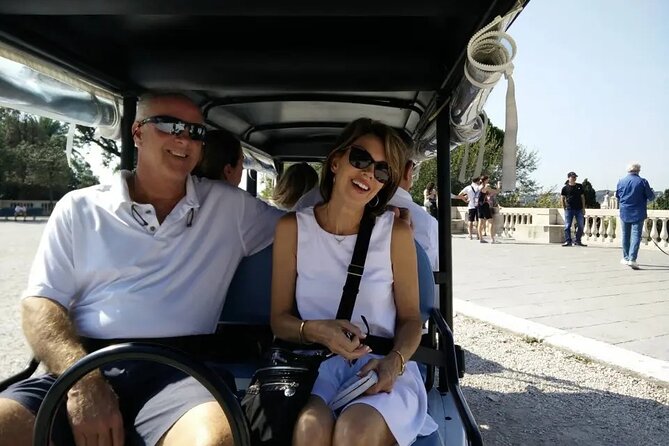
Now you hit the center of the postcard circuit.
The route includes Piazza Navona, commissioned by Domitian in 86 CE. Its elongated shape is explained as the result of its earlier function as the athletics stadium Circus Agonalis, with stands for about 20,000 spectators. That “stadium origin” is a great example of why guided narration matters—you see the square, but you also learn what it used to be.
Then you reach the Pantheon, one of Rome’s most striking survivals. It’s dated to the early 2nd century AD and described as among the best-preserved historic buildings, showcasing Roman building techniques. The dome and its central opening, the oculus, are highlighted as the greatest in masonry. Even in a short visit window, the Pantheon tends to hit you in the chest. It’s big, clean, and oddly calm for a city that never stops.
Next is Fontana di Trevi, the late Baroque masterpiece designed by Nicola Salvi and completed by Giuseppe Pannini in 1762. The coin-toss legend is included: toss coins into the water and you’ll return to Rome. Even if you don’t buy the magic, this stop is worth it for one reason: it’s one of the easiest places to see Roman artistry at a grand, theatrical scale.
Finally, you pass by Piazza di Spagna and the Spanish Steps area. The square’s name connects to the Spanish Embassy’s seat for the Vatican since the 1600s, which gives the spot more than just scenic value. It’s a great place for a quick sit if the group schedule allows it.
A practical note: these landmarks are popular. Your tour format helps because you’re not searching alone for the best angles, and your guide keeps the stops moving at a pace that still gives you breathing room.
Value and comfort: is $171.68 for 3 hours worth it?
At $171.68 per person for about 3 hours, this isn’t the cheapest way to “see Rome.” It’s a buy-your-time kind of experience. The value comes from three things you’d otherwise have to piece together:
- Transportation efficiency: you cover more distance than a walking loop in the same amount of time.
- Interpretation: you’re not just looking; you’re learning what each stop meant and why it matters.
- Comfort tradeoff: especially in heat, the cart turns Rome from an endurance test into a sightseeing day.
In the reviews, a pattern shows up: guides are praised for being patient, friendly, and helpful with pictures, and the cart is repeatedly mentioned as the best way to see Rome when walking is a problem. People also call out a hot-day advantage—cool air on the cart and guides being careful about where they park. That matters because Rome heat can turn “easy walking” into “ruined plans.”
The price also makes sense when you compare it to the opportunity cost. If you spent those 3 hours walking between distant points, you’d likely add fatigue and less curiosity time. With a cart tour, you keep your focus on the sights.
Who should book this golf cart tour
This tour is a strong fit if you:
- want a first-day orientation and a clear mental map of central Rome
- don’t want to spend the whole day on foot, especially on hills and uneven paving
- travel with kids or family members who need more breaks
- prefer a small-group vibe over large, loud bus tours
- like guided history but don’t want it to feel like a lecture
It’s less ideal if you’re the type who wants to linger deeply at interiors every time. This route is built for highlights in motion, not slow museum immersion.
If your schedule is tight and you’re choosing between “lots of wandering” and “seeing the right things with context,” this is an easy decision.
Book it or keep planning? My quick take
I’d book this Rome golf cart tour if your top priorities are: getting your bearings fast, cutting walking time, and learning enough to make your later Rome walks click. The route hits the classics—Villa Borghese, Piazza Navona, the Pantheon, Trevi, and the Spanish Steps—while still sprinkling in sites like Circo Massimo, the Orange Garden, and the Bocca della Verità legend stop.
If you want to do everything slowly and sit through long indoor visits, you’ll probably want a different plan. But if you want a smart, friendly 3-hour highlight loop that keeps your energy for the rest of the trip, this is a good match.
FAQ
What’s the duration of the Rome Golf Cart Tour from Villa Borghese Gardens?
The tour runs for about 3 hours.
Is the tour in English?
Yes, it is offered in English.
How many people are on the tour?
The tour has a maximum of 7 travelers.
Where does the tour start and end?
It starts at Pic Nic – Just Amir srl, Piazzale delle Canestre, SNC, 00197 Roma. It ends back at the same meeting point.
What’s the price per person?
The price listed is $171.68 per person.
Do I need admission tickets for the stops?
The itinerary shows admission ticket free at each listed stop.
Can I cancel for a full refund?
Yes. Free cancellation is available up to 24 hours in advance for a full refund.