REVIEW · DUBLIN
Street Art Walking Tour
Book on GetYourGuide →Operated by Alternative Dublin · Bookable on GetYourGuide
Dublin street art isn’t just background noise. It’s a moving city conversation, and this 2-hour walk pulls you into the underground art culture you usually miss. I like that you’re shown real working spots in the city centre, not generic photo walls, and you get guidance on what you’re looking at as the art changes around you.
My favorite part is the guide-led storytelling. One of the guides I’ve seen tied to these tours is Liam, and the vibe is practical: he’ll help you understand murals, graffiti, stickers, and paste-ups while you stop for photos along the way. I also like that you’re not only looking at art—you get pointed toward what’s happening in Dublin’s art scene right now.
One drawback to plan around: the tour isn’t suitable for people with mobility impairments or wheelchair users. The route includes city-centre walking and parts that won’t work well for everyone, so it’s worth thinking about your comfort level before you book.
In This Review
- Key highlights you should care about
- Where the tour starts: The Grand Social and Ha’penny Bridge energy
- Stop 2: Yamamori Tengu—photo stop + culture clues
- Abbey Court Hostel: where the street art feels lived-in
- The Icon Factory and The Icon Walk: modern Dublin meets street-level storytelling
- Temple Bar, but make it street-art first
- Blooms Hotel: art around the edges of Dublin’s everyday streets
- Project Arts Centre: when street art meets Dublin’s creative institutions
- Crampton Court: the tour’s finish and the street-art storefront feeling
- What you’ll learn to spot: murals, graffiti, stickers, paste-ups
- Guides, photo stops, and how to get the best experience
- Value check: why $17 can work if you’re an art-curious traveler
- Planning for real life: rain, rules, and comfort
- Who this tour suits best (and who should skip it)
- Should you book this Street Art Walking Tour?
- FAQ
- How long is the Street Art Walking Tour?
- What does the tour cost?
- Where do I meet the guide?
- What time does the tour start?
- Is the tour available in English?
- What happens if it rains?
- Is it wheelchair accessible?
- Can I get a refund or change plans?
- Can I tip the guide?
Key highlights you should care about
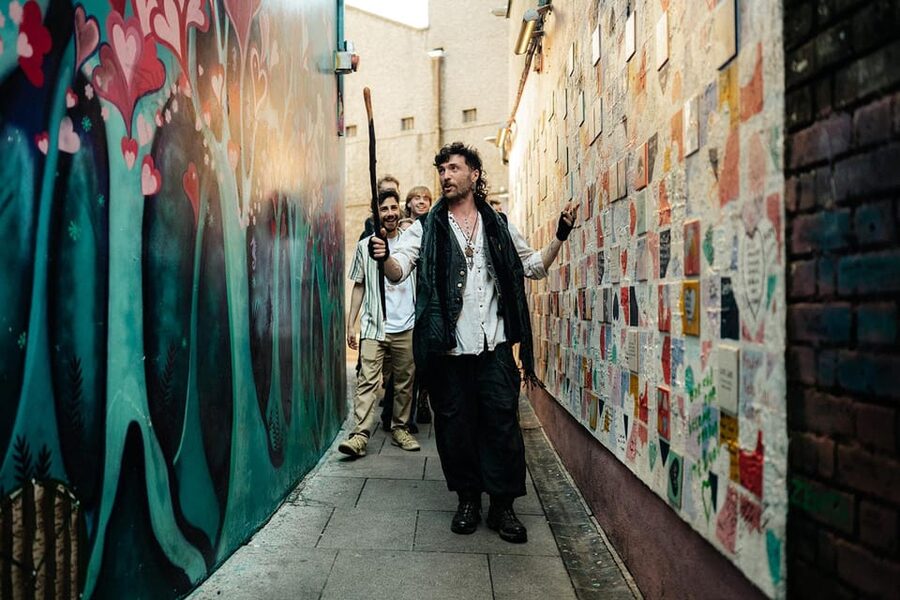
- 30+ public artworks in about 2 hours, with photo stops built into the route
- Street art and graffiti subcultures explained in plain language, not art-school jargon
- Lesser-known spots you’d only find by luck if you were wandering alone
- A tucked-away gallery stop where you can support artists and buy prints or commissions
- Guide recommendations so you can keep the art hunt going after the walk
Where the tour starts: The Grand Social and Ha’penny Bridge energy
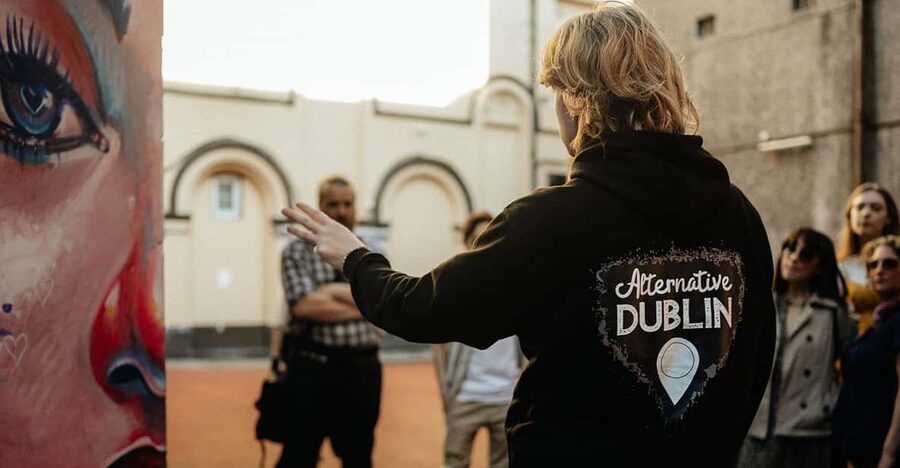
You’ll meet outside The Grand Social on Liffey Street, with your guide waiting in the public space by the trees beside the Ha’penny Bridge. That location is smart. It puts you near one of Dublin’s most recognizable landmarks, while also getting you into the smaller streets and side areas where the street art feels more natural and less forced.
If you’re the kind of traveler who likes to “get oriented” fast, this start helps. You’re already in the centre, so you can arrive, regroup, and then walk with purpose instead of drifting. And because it’s a guided walk, you’re not left guessing which walls are worth stopping for.
You can also read our reviews of more walking tours in Dublin

Stop 2: Yamamori Tengu—photo stop + culture clues
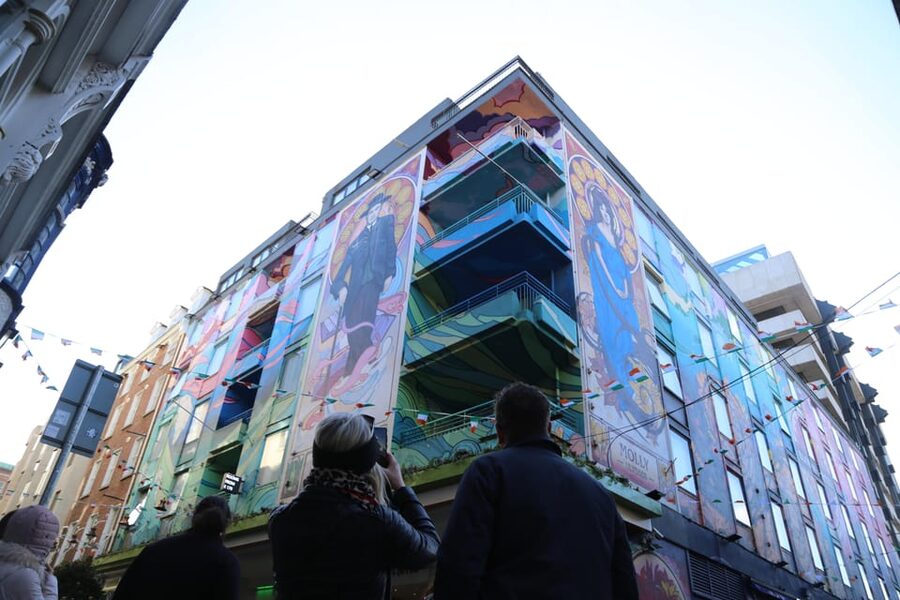
The first art moment after the meet-up is Yamamori Tengu. Expect a short photo stop and guided look (about 15 minutes). This isn’t just a quick snap-and-go. Your guide will point out what to notice so the artwork starts making sense as Dublin street art, not just “a cool picture.”
A good street art tour teaches you how to look. That’s what this stop sets up: you’ll learn the difference between street art styles you might lump together at first, like how graffiti differs from stickers and paste-ups, and how the city uses different surfaces for different messages.
Abbey Court Hostel: where the street art feels lived-in
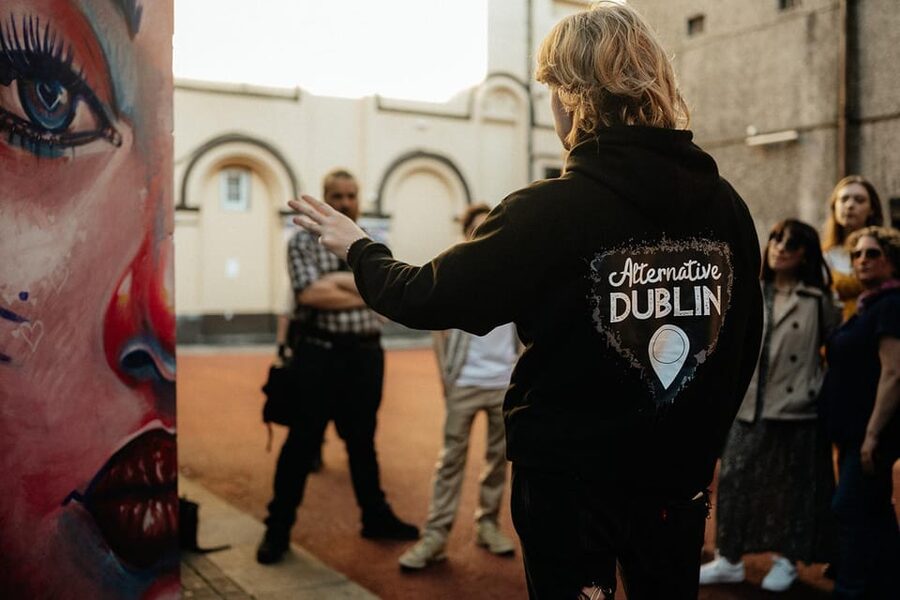
Next up is Abbey Court Hostel for about a 20-minute guided stop. This kind of stop matters because it’s not only about the art itself—it’s about context. Hostels, courtyards, and side streets tend to carry that Dublin mix of visitors and locals, and you’ll often see street art that reflects that mix.
You’ll get time here to slow down. In two hours, you don’t have room to rush every stop. So stops like this help you actually see the layers—how the new piece sits beside older work, how a wall can become a rotating canvas, and how street artists treat visibility like a tool.
The Icon Factory and The Icon Walk: modern Dublin meets street-level storytelling
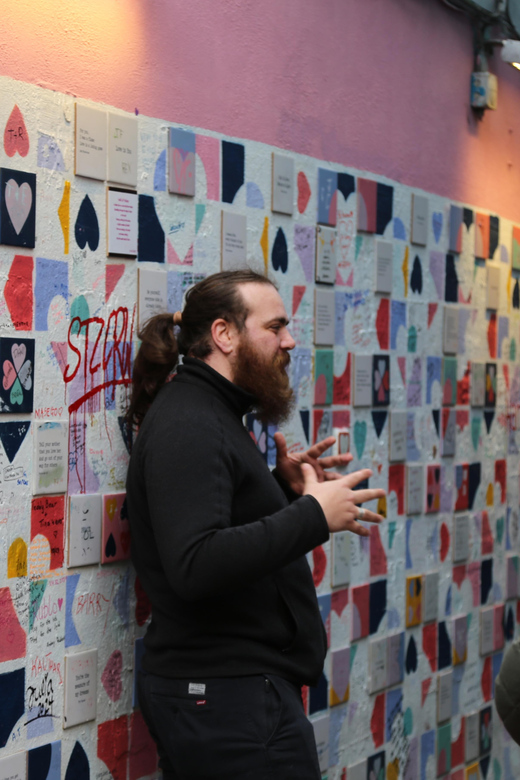
Then you’ll head to The Icon Factory & The Icon Walk with a longer 25-minute guided/photo break. This is a key stop because it bridges the gap between mainstream attention and the street art world. If you’ve ever wondered why Dublin’s street art feels both playful and pointed, this is where you start feeling that balance.
It also helps you understand street art culture as something active, not just leftover vandalism. The guide’s job is to connect dots—what you’re seeing, who it’s for, and why it shows up where it does. You’ll walk away with an easier way to read the city quickly.
Temple Bar, but make it street-art first
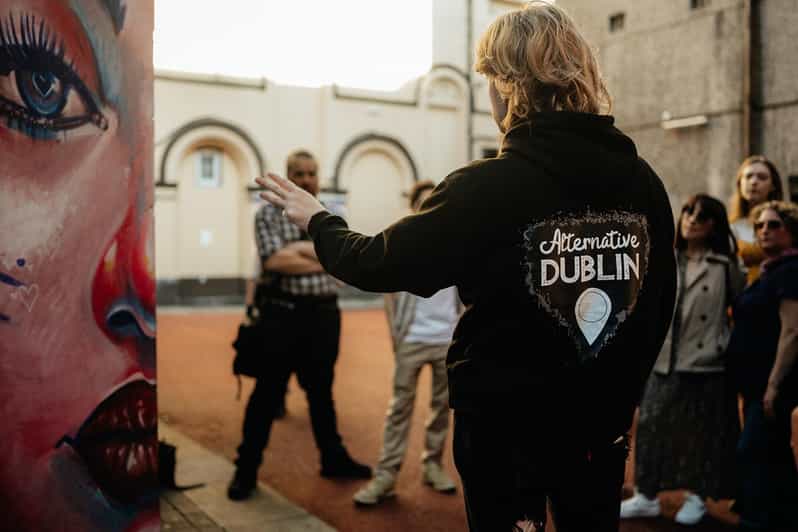
At Temple Bar, you get another 25-minute stop, and yes, this is a high-traffic area. That makes it interesting for a reason. Street art that survives in busy places has to hold up—visually and culturally. You’ll likely spot pieces that look like they’re built for attention, not hidden corners.
The tradeoff is that Temple Bar is crowded, and you’ll need to work with that. Your guide’s job here is to keep you moving through the scene without turning the walk into a slow traffic jam. If you’re patient and okay taking photos in spurts, this stop is a win because the art shows up in a place you already recognize.


Blooms Hotel: art around the edges of Dublin’s everyday streets
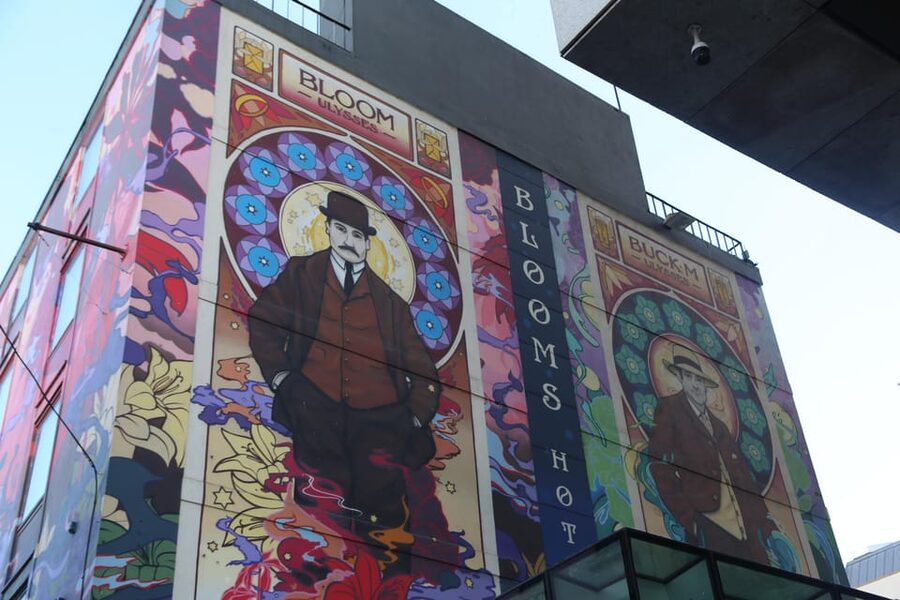
Next is Blooms Hotel for around 15 minutes. This stop is useful if you like seeing how street art lives next to normal life. Hotels are full of footsteps and expectations. When street art shows up in that kind of zone, it signals that Dublin’s creative culture isn’t locked away—it’s out where people pass every day.
This is also where the tour’s photo-stop rhythm becomes clear. You’re not just aiming for one perfect shot. You’re collecting evidence of a bigger story: how Dublin uses walls, doors, and narrow spaces to keep visuals constantly in motion.
Project Arts Centre: when street art meets Dublin’s creative institutions
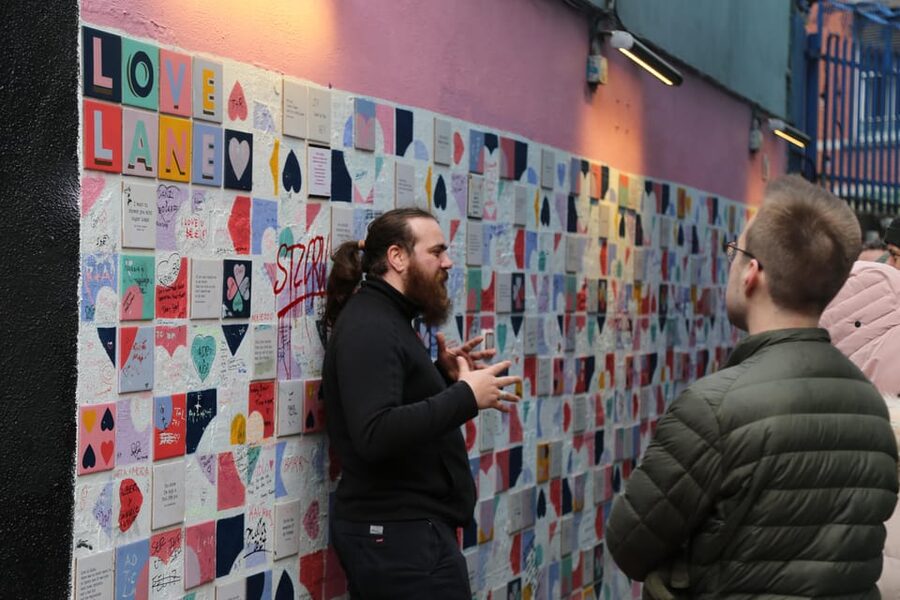
You’ll then visit Project Arts Centre for about 10 minutes. That short time might sound quick, but it works because it’s framed as a guided look rather than a long lecture. This is a good moment to notice how official arts spaces and street art culture can share a city without losing their identity.
If you’re the kind of traveler who likes “where do they hang out” questions, this stop helps. It puts the street art conversation next to an established arts environment, which can help you understand why Dublin’s underground scene still connects to the broader creative world.
Crampton Court: the tour’s finish and the street-art storefront feeling
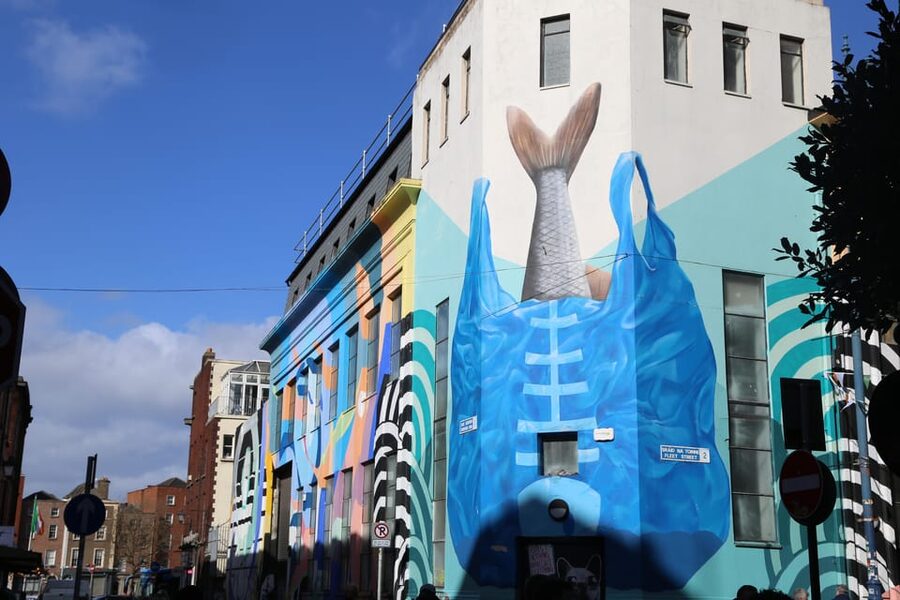
The walk ends at Crampton Court, after a final 10-minute stop there. This is a fitting close because Crampton Court has that sense of art as a place you can return to. Street art tours often end with you walking back into plain streets. Here, you end in an area that feels more like a creative zone.
Crampton Court also links to something practical: you’ll be brought to a gallery as part of the experience where you can support artists. That means the tour doesn’t just point at street art and disappear. You get a way to take the energy home in a real, tangible form—prints, paintings, or even commissioning work if that’s your thing.
What you’ll learn to spot: murals, graffiti, stickers, paste-ups
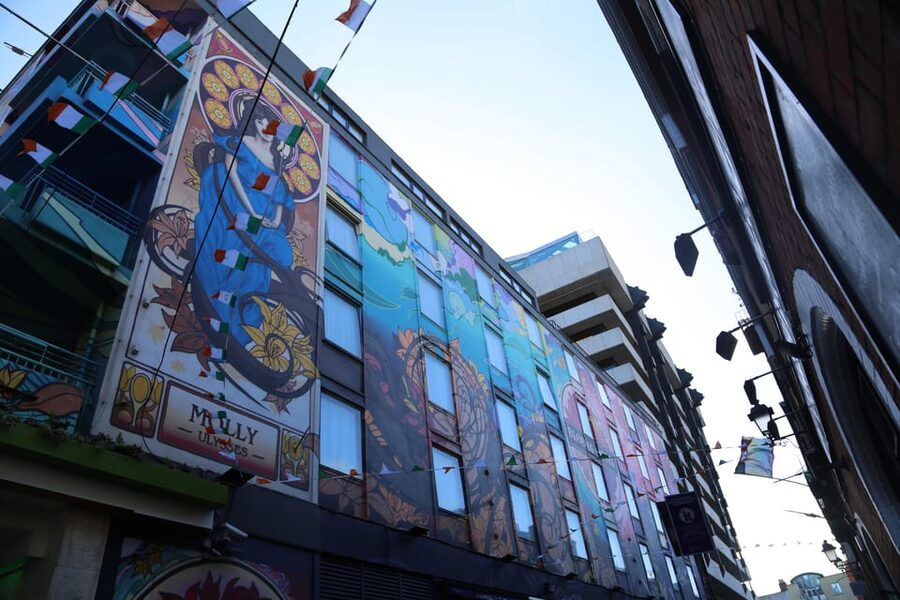
The tour is built around a simple idea: Dublin street art uses multiple formats, and each one works differently. You’ll learn about murals, graffiti, stickers, and paste-ups, plus you’ll hear how these styles show up across the city centre.
In two hours, you won’t become an expert, but you will get better at noticing. The difference you’ll feel after the walk is that you stop seeing street art as one category. You start seeing it as a system: quick tags and stickers for immediacy, paste-ups for texture and message density, murals for statement-making, and graffiti for identity and speed.
And because you’re stopping for pictures at multiple sites, you’ll leave with a visual record that helps you remember what you learned instead of relying on memory alone.
Guides, photo stops, and how to get the best experience
This tour is guide-led throughout, and the pacing includes repeated guided tour moments plus photo stops. That matters because street art can be visually complex. A good guide keeps you from wasting time standing in the wrong spot or missing details.
I also like that the guides are not strangers to the scene. Some guides do street art or graffiti in their spare time. That background changes the tone. You get insights that feel like lived observation, not just “facts about street art.”
One small tip for your photos: give yourself a second look at each piece before you shoot. Street art often rewards angle and distance. If you only snap from one spot, you’ll miss the little things—layering, edges, and how different elements sit together.
Value check: why $17 can work if you’re an art-curious traveler
At $17 per person, this is the kind of price that makes sense for a short, focused city experience. You’re paying for more than walking and pointing. You’re paying for:
- A live guide for up to 2 hours
- Stops that total 30+ pieces of public artworks
- Practical context on what you’re seeing in Dublin’s street art scene today
- A gallery connection where you can support artists and buy prints or commission work
That’s good value if you like to travel with a theme. If Dublin is your destination and you want something more specific than a standard city sights walk, this gives you that structure without asking you to commit to a half-day.
It’s also a decent deal compared with tours that show fewer stops or focus only on one style. Here, you’re seeing multiple formats—so you’re getting range in a short time.
Planning for real life: rain, rules, and comfort
This tour runs even if it rains. So bring an umbrella or rain jacket. Street art still looks good in wet weather—colors can pop—but you’ll be happier if you’re not soaked for the full walk.
There are also some clear conduct rules. Weapons or sharp objects aren’t allowed, and intoxication or alcohol and drugs are not permitted. The tour also avoids explosive substances and making fire, and it’s not a place for nudity. It’s a straightforward community-minded activity, so treat it like a normal shared public experience.
On the comfort side, it’s also noted as not suitable for wheelchair users or people with mobility impairments. If mobility is a concern, plan carefully and choose a different format.
Who this tour suits best (and who should skip it)
This works especially well if you:
- Like to see cities through local creative culture
- Want guidance on street art styles beyond simple aesthetics
- Enjoy photo stops but still want context
- Are interested in supporting artists through a gallery connection
It may not be your best choice if you:
- Need wheelchair-friendly routes
- Prefer long, seated museum-style learning
- Want a tour with minimal walking and strict timing
If you’re somewhere in the middle—curious but not an art specialist—you’ll still get a lot out of it because the tour is built to explain what you’re looking at as you go.
Should you book this Street Art Walking Tour?
Yes, if you want an easy win in Dublin: a short, guided walk that teaches you how to read street art while you rack up real photo moments across the city centre. The 30+ public artworks plus the gallery stop give you both “see it now” and “support it after,” which is a rare combo.
Book it with confidence if you like street-level culture and you’re okay with active walking. Skip it if mobility access is an issue, because it’s not designed for wheelchair users. If you fit the sweet spot, this is one of those Dublin experiences that changes how you look at the city for the rest of your trip.
FAQ
How long is the Street Art Walking Tour?
The guided experience lasts up to 2 hours.
What does the tour cost?
It’s $17 per person.
Where do I meet the guide?
Meet outside The Grand Social on Liffey Street, with the guide waiting in the public space by the trees beside Ha’penny Bridge.
What time does the tour start?
Starting times vary, so you’ll need to check availability to see the schedule.
Is the tour available in English?
Yes, the live guide provides the tour in English.
What happens if it rains?
The tour proceeds even if it’s raining, so bringing an umbrella or rain jacket is a good idea.
Is it wheelchair accessible?
No. It is not suitable for wheelchair users and parts of the tour are not accessible everyone.
Can I get a refund or change plans?
The tour notes free cancellation up to 24 hours in advance for a full refund. For swapping your ticket, it says they need 5 days notice, and ticket transfers are possible if you give that notice.
Can I tip the guide?
Yes. If you enjoy it, you can tip your guide, and tips are kept by the guides.