REVIEW · TIRANA
Tirana Mural Bike Tour: Street Art, Culture & Photography Stops
Book on Viator →Bookable on Viator
Murals in motion around Tirana. This street-art bike tour links Tirana’s walls, monuments, and modern public spaces into a route that makes the city easy to read on the move. I like how the guide stitches each stop to what it’s saying about daily life and identity.
I love the photo-ready pacing: short stops, quick explanations, and enough time to frame shots without turning the ride into a long slog. It’s also built around easy group control, so you’re not fighting to keep up.
One thing to weigh: it depends on good weather, and if plans are tight, it’s smart to leave a little breathing room for any day-of changes.
In This Review
- Key points to know before you ride
- The value: why this bike tour works better than a photo-only walk
- Price and time: what you’re paying for
- Getting started at the Old Bazaar meeting area
- Clothespin by Sizmikazot: surreal humor with a symbol hiding inside
- Reja The Cloud pavilion: modern architecture you can interact with
- Lokomotiva: industrial spaces, street art, and a tank turned symbol
- FAB Art Gallery and the upside-down bunker effect
- DOG and Mots near Kesulekuqja: surreal art beside a small kiosk
- Myslym Shyri: reading murals as messages in daily life
- Rocket01: nature and technology in a futuristic streak
- Brothers by Franko Dine: art that links Albania and Kosovo
- Guide quality: what makes it feel worth the money
- Bike ride comfort and traffic reality
- What to bring for better photos (without overthinking it)
- Timing and expectations: a 2–3 hour route, not a citywide marathon
- Should you book this Tirana Mural Bike Tour?
- FAQ
- How long is the Tirana Mural Bike Tour?
- What is the price per person?
- Is the tour offered in English?
- How large is the group?
- Do I need to pay admission at the stops?
- Where do I meet the guide?
- Is there a mobile ticket?
- Does the tour run in any weather?
- What is the cancellation policy?
Key points to know before you ride
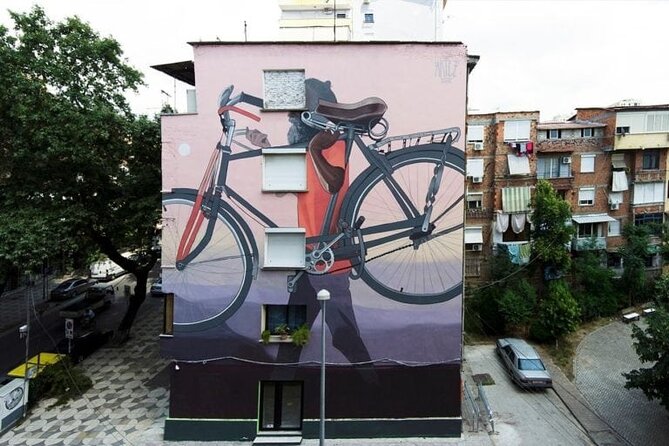
- Small group (up to 10) means faster questions and less chaos at the walls
- Easy bike riding with someone keeping the group together, even with some traffic
- All major art stops have free entry, so your money goes to the guide and route
- Sou Fujimoto’s Reja The Cloud mixes modern architecture with public-art vibes
- Murals with clear themes like peace, surreal humor, and Albania–Kosovo connections
- Multiple photography moments spread across different neighborhoods and textures
The value: why this bike tour works better than a photo-only walk
Street art can look random if you only see it from street level. This tour gives you just enough context to connect the dots: who made what, why it’s here, and how it fits into Tirana’s changing identity. You’re moving between stops quickly, but you’re not left guessing.
At about 2 to 3 hours, it’s a practical commitment. You can fit it between museum time and dinner. And because the stops are free to enter, the price mainly covers the route planning and the guide’s explanations—not entrance fees piling up.
The other big value point is size. With a maximum of 10 people, you’re more likely to get direct attention when you want it. That matters for street-art tours, because the best shots often require timing and a second look at details.
You can also read our reviews of more tours and experiences in Tirana.
Price and time: what you’re paying for
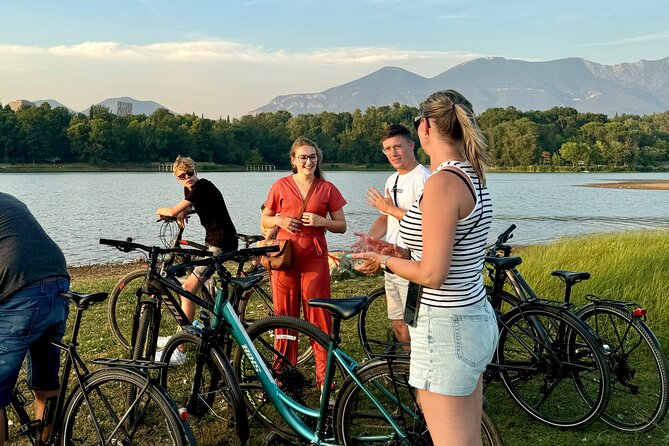
The tour costs $42.06 per person, which is reasonable for a guided bike loop in a city center. You’re getting:
- a structured route through multiple mural sites
- short photo breaks at each key wall
- an English-speaking guide
- a small-group experience
When it runs well, it feels like getting a city lesson plus a photography circuit in the same package.
Booking often happens about 8 days in advance, so if your dates are fixed, don’t wait until the last minute. Also, expect the tour to be weather-dependent. On clear days it’s a smooth ride. If the day turns, it may be rescheduled or refunded.
Getting started at the Old Bazaar meeting area
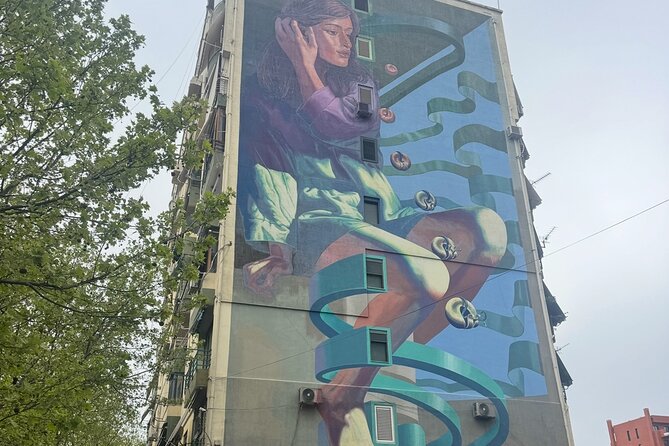
You meet in the Old Bazaar area near Rruga Qemal Stafa (Old Bazaar meeting point). The setting helps because you’re starting where Tirana’s street life already feels close and personal: shops, market energy, and lots of color on the walls.
From the first minutes, you’re not just riding—you’re learning how to look. The guide points out early artwork so you start recognizing patterns: styles, themes, and the way certain symbols repeat across different neighborhoods.
Then the route shifts into murals that feel more like conversations than decorations.
Clothespin by Sizmikazot: surreal humor with a symbol hiding inside
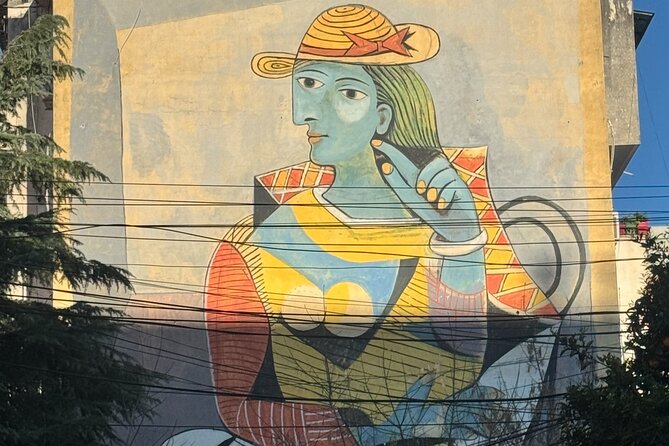
One of the early mural moments is Clothespin by Sizmikazot. The idea is playful—this giant clothespin almost looks like it’s holding the building together. But the joke lands alongside a bigger message about how people try to keep things in place, even when everything feels a bit out of order.
Why it works on a bike tour: you get a quick stop where your brain can reset. You’re not only sprinting from one major site to the next. You’re also training your eye to notice scale and symbolism.
Photo tip: at this kind of mural, getting your angle right matters more than zooming. A step back from the wall often helps you catch the full effect of the oversized shape.
Reja The Cloud pavilion: modern architecture you can interact with
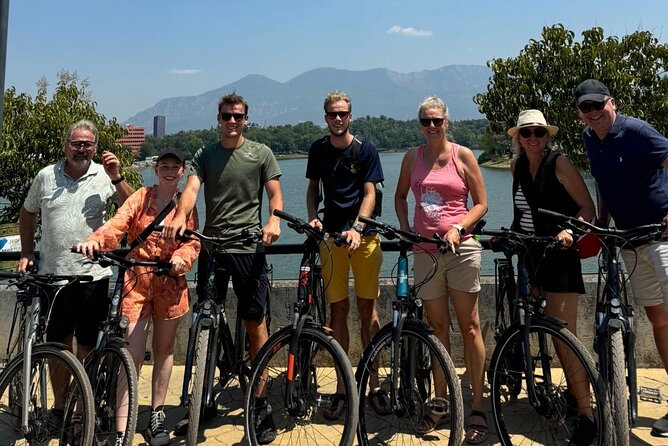
Next comes Reja, also called The Cloud Pavilion, designed by Japanese architect Sou Fujimoto. It’s a white steel structure in front of the National Art Gallery area, and it’s not meant to be just viewed—it’s meant to be used. The airy design invites you to gather, pause, and move around it.
For me, the value here is how it changes the tour’s rhythm. After street murals on concrete, you step into a designed public space. You start seeing Tirana’s art scene not just as wall paintings, but as choices about how people share space.
This stop is also great for photos because the structure offers a clean geometry contrast against the street surroundings.
Lokomotiva: industrial spaces, street art, and a tank turned symbol
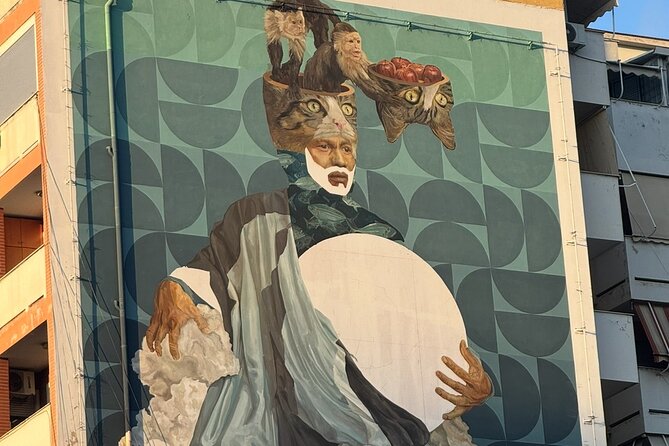
Then you bike to Lokomotiva, a former railway space that now functions like a creative hub. The setting matters. Industrial walls and repurposed buildings make street art feel more grounded—less like an Instagram backdrop, more like part of a living place.
There’s also a striking feature: a military tank that’s been repainted and transformed into a symbol of peace and expression. The contrast is the point. You’re standing near a heavy relic, then watching how artists flip its meaning into something hopeful.
If you like art with politics but without a long speech, this is one of the best moments on the route. Even the people who don’t care about street art often pause here, because the message is immediate.
FAB Art Gallery and the upside-down bunker effect
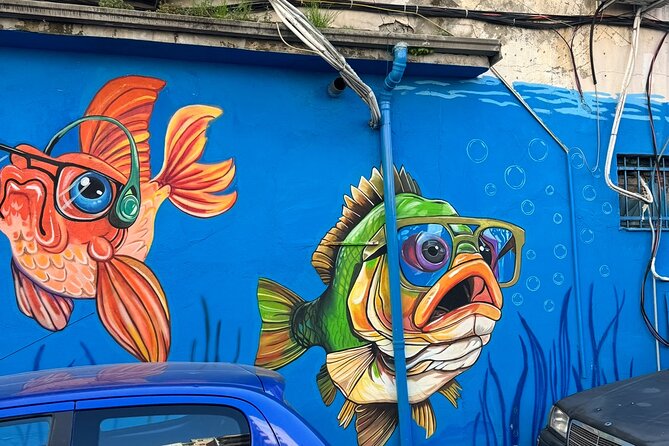
Near the University of Arts, you reach FAB Art Gallery, surrounded by bold mural work. This is the type of stop where the walls feel like they’re talking back to the past.
The standout installation is an upside-down bunker. It flips Albania’s past on its head and turns a symbol tied to isolation into something expressed through art. You don’t need a textbook to get the emotional direction. The angle reversal and scale do the work for you.
Why it’s worth your time even if you’re short on energy: it gives you a strong “meaning first” moment. Street art often surprises you with style; this one surprises you by changing how you think about history.
DOG and Mots near Kesulekuqja: surreal art beside a small kiosk
A shorter pause comes at a mural by DOG and Mots, placed next to a small kiosk known as Kesulekuqja, the Little Red Riding Hood area. The mural mixes abstract forms with surreal imagery, and it’s the kind of work that rewards a slow look.
This stop is only brief, so don’t rush your eyes. Spend your time on pattern and color relationships rather than trying to figure out every element. Surreal street art often works best when you let it stay slightly mysterious.
Myslym Shyri: reading murals as messages in daily life
On one of the city’s well-known streets, Myslym Shyri, you get a different type of street-art experience. The tour doesn’t treat every wall as a masterpiece. It treats them as part of what people talk about—youth expression, social issues, and everyday culture.
You bike through, then stop to interpret what you’re seeing. That turns you from a passive viewer into someone who can notice themes: repetition of symbols, differences in tone, and how graffiti-style tags differ from more planned mural work.
It’s a great place to practice a skill you can use later in Tirana. Once you learn how to ask what a mural is responding to, you’ll spot meaning faster on your own.
Rocket01: nature and technology in a futuristic streak
You also pass a futuristic mural by Rocket01, a UK street artist whose work blends nature and technology. This stop is quick, but it’s the kind of image that makes you slow down without anyone telling you to.
It’s a useful contrast to the more politically loaded pieces you’ve seen. Here the theme is future-facing, mixing growth-like shapes with tech-inspired visuals. If you’re into street art as a whole conversation about time—past, present, and next—this one fits.
Brothers by Franko Dine: art that links Albania and Kosovo
Later, you’ll see Brothers by Franko Dine. The mural shows two boys side by side. The guide’s explanation focuses on unity and shared identity, and how that connection reflects the bond between Albania and Kosovo.
This is the stop where the tour becomes more than visual. It becomes interpretive. The artwork isn’t just a picture; it’s a story people carry.
Photo tip: with human figures, framing matters. Try to include enough context so the image reads even when cropped—street art can lose meaning when it’s only faces.
Guide quality: what makes it feel worth the money
The strongest experiences in this kind of tour come down to the guide. One standout detail from a past bike tour in Tirana was a guide named Santiago, praised for being extremely helpful and for explaining Tirana and Albania in a way that made everything click. Even if you’re on the mural version, the key idea is the same: the guide’s job is to give you context fast, then let you enjoy the art at your pace.
On this route, expect your guide to:
- point out what you’d miss if you were walking solo
- explain the purpose behind certain symbols (like peace themes and flipped-history installations)
- keep the group together so nobody gets lost
That last part matters more than it sounds. In a busy city, getting split up kills the flow of a street-art tour.
Bike ride comfort and traffic reality
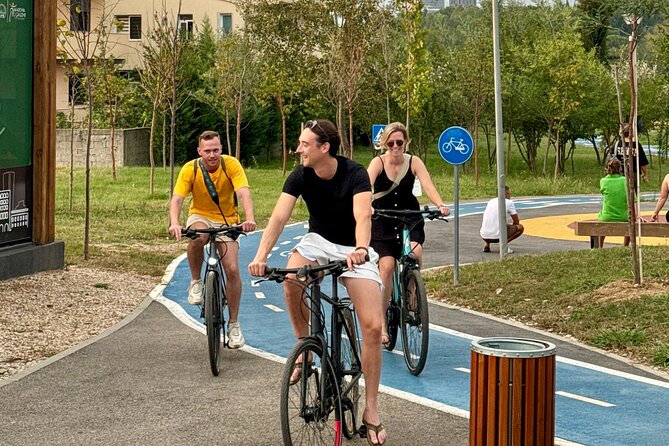
This isn’t an extreme ride. You should expect easy bike riding, with the group kept together and the route managed even where there’s traffic. Still, plan to be alert like you would in any city ride: stay aware at crossings, and keep your attention on the guide and the bike lane situation.
Because this tour is short, the breaks are purposeful. You’ll spend minutes at stops, not hours. If you prefer long contemplative museum-style visits, you might find yourself wanting more time at the biggest mural walls.
What to bring for better photos (without overthinking it)
Street art photography can go wrong when you’re unprepared. Keep it simple:
- your phone or camera fully charged
- a small cloth or tissue for lens smudges
- wear something comfortable for quick stops and getting on/off a bike
- if you take photos, think in layers: face the mural, then back up to capture it in the street environment
Some murals benefit from you stepping slightly away; others look best from close range. The tour’s short stop times mean you’ll want to adjust quickly rather than perfect every shot.
Timing and expectations: a 2–3 hour route, not a citywide marathon
This tour is designed for efficiency. You’ll hit major mural moments across Tirana without turning it into an all-day commitment. Most stops are short, and the ride sections connect the visual themes.
If you’re the type who wants to see every mural on a block, you might feel slightly rushed. But if you like a tight route that teaches you how to look, this is a very good format.
Also, confirm your schedule with a weather check. Since the experience requires good weather, a rainy day can impact the plan.
Should you book this Tirana Mural Bike Tour?
Book it if you want:
- a short, structured way to understand Tirana through street art
- a bike tour format that mixes murals with modern public art
- an English guide and a small group (up to 10) for easier questions
- multiple free stop moments that don’t drain your budget
Skip it or think twice if:
- your schedule is extremely tight and you can’t handle day-of changes
- you expect long stop times at only one or two murals
- you’re not interested in explanations and would rather just wander
My call: it’s a strong choice for first-time visitors who want to see more than postcard sights, and it’s especially good if you like photography with context. If you’re flexible and bring a curious eye, you’ll leave with Tirana’s street art reading as a story, not just colorful walls.
FAQ
How long is the Tirana Mural Bike Tour?
It runs about 2 to 3 hours.
What is the price per person?
The tour costs $42.06 per person.
Is the tour offered in English?
Yes, it is offered in English.
How large is the group?
The tour has a maximum of 10 travelers.
Do I need to pay admission at the stops?
The listed stops show free admission tickets.
Where do I meet the guide?
The meeting point is in the Old Bazaar area at 8RJF+8X2, Rruga Qemal Stafa, Tiranë, Albania.
Is there a mobile ticket?
Yes, it uses a mobile ticket.
Does the tour run in any weather?
It requires good weather. If it’s canceled due to poor weather, you’ll be offered a different date or a full refund.
What is the cancellation policy?
You can cancel for free up to 24 hours in advance for a full refund.